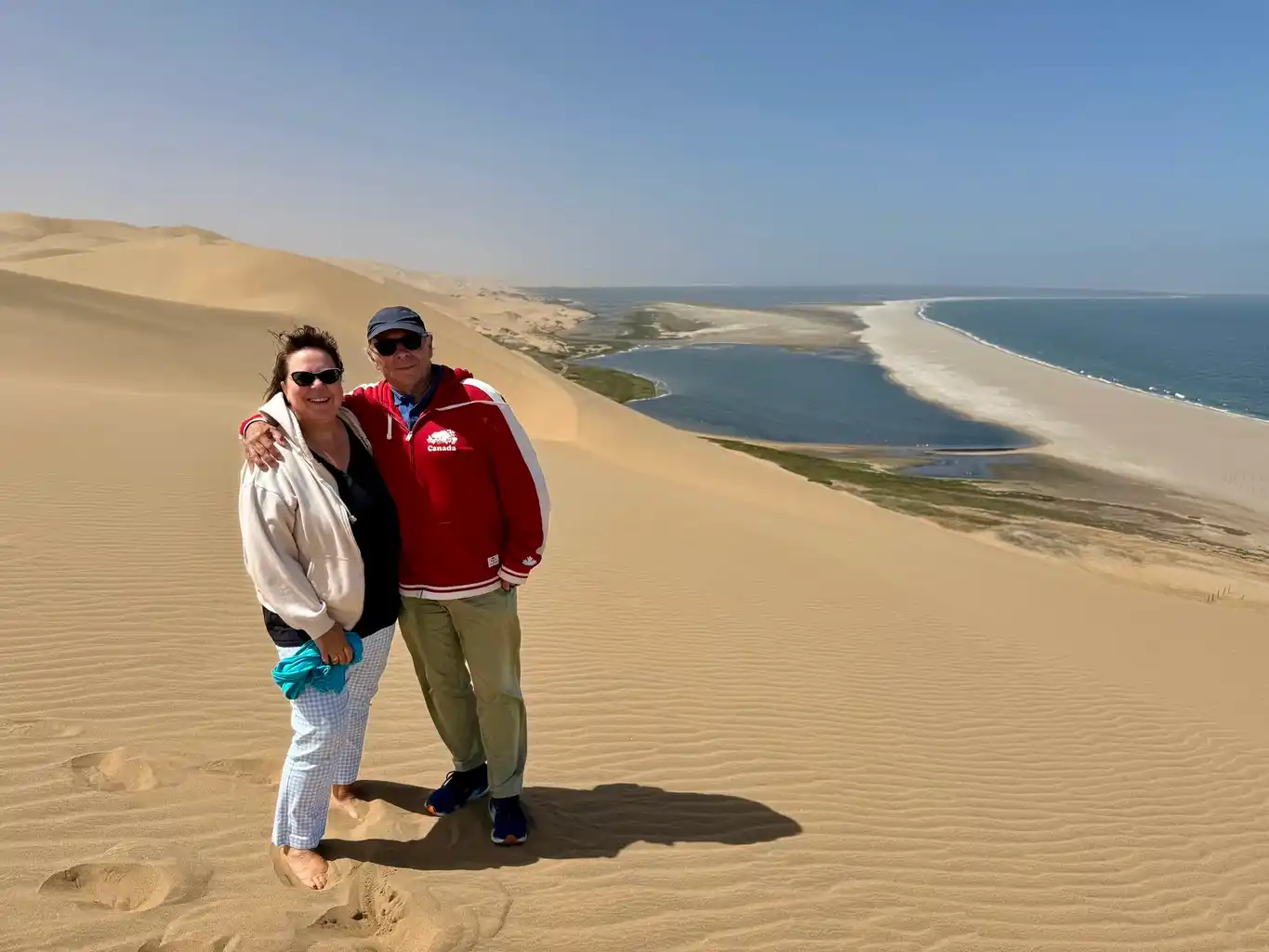
Peter Schiffer with his wife in the Namib Desert in Namibia. In the background: Sandwich Harbour. Source: Peter Schiffer.
English translation of the German portrait.
Since 2016, Peter Schiffer has been writing about life on the road as “Weltrentner”. His second book, “Mit Frau und Rente um die Welt – Rosenhochzeit”, looks back over ten years. Travel was part of his life long before retirement. Later, he was able to devote more time to this passion and fulfil his wish to own an apartment in Cape Town.
1. What came before Weltrentner?
The foundations were laid during his working life: Schiffer travelled as a backpacker and used his holidays to get to know the world. In retirement, he wanted above all to travel for longer. He made that decision together with his wife. They both decide which destinations suit them and how they want to travel. For readers, the interesting question is which existing passion they would like to develop further themselves.
2. What does this kind of travelling life require?
Schiffer names curiosity, optimism, resilience, adaptability, a willingness and ability to communicate, and good health. It also requires a realistic view of one’s own possibilities. Budgeting means bringing expectations, the style of travel and available resources into alignment. How these strengths come into play depends on the person and the way they travel. The practical starting point is the question: What kind of travel suits us?
3. What changed with becoming a “Cape Town swallow”?
Spending longer in a familiar place has added another dimension to travelling. Today, less frequent and shorter trips sit alongside life in one place. That is what makes this development interesting: a vision of travel is allowed to change. The number of destinations and the length of trips alone do not determine whether it still fits one’s wishes.
4. What can we take from this for our own planning?
The starting point is our own needs and, when travelling as a couple, reaching an understanding about them. Next come a realistic budget and a suitable way of travelling. People who enjoy travelling during their working years can gain experience, learn languages and try out what suits them. A journey together does not have to take the same form as that of another couple or a solo traveller.
5. How can we remain open to the future without glossing over it?
Growing older and changing conditions in the countries we visit can alter our plans. They do not allow a reliable prediction of the next twenty years. What is more interesting is how we keep reassessing our wishes and possibilities: What do we still want to experience, what still suits us, and where should we change our plans?
A question for readers
Which existing passion would you like to give more space to in your next stage of life, and what would need to come together to make that possible?
About the book
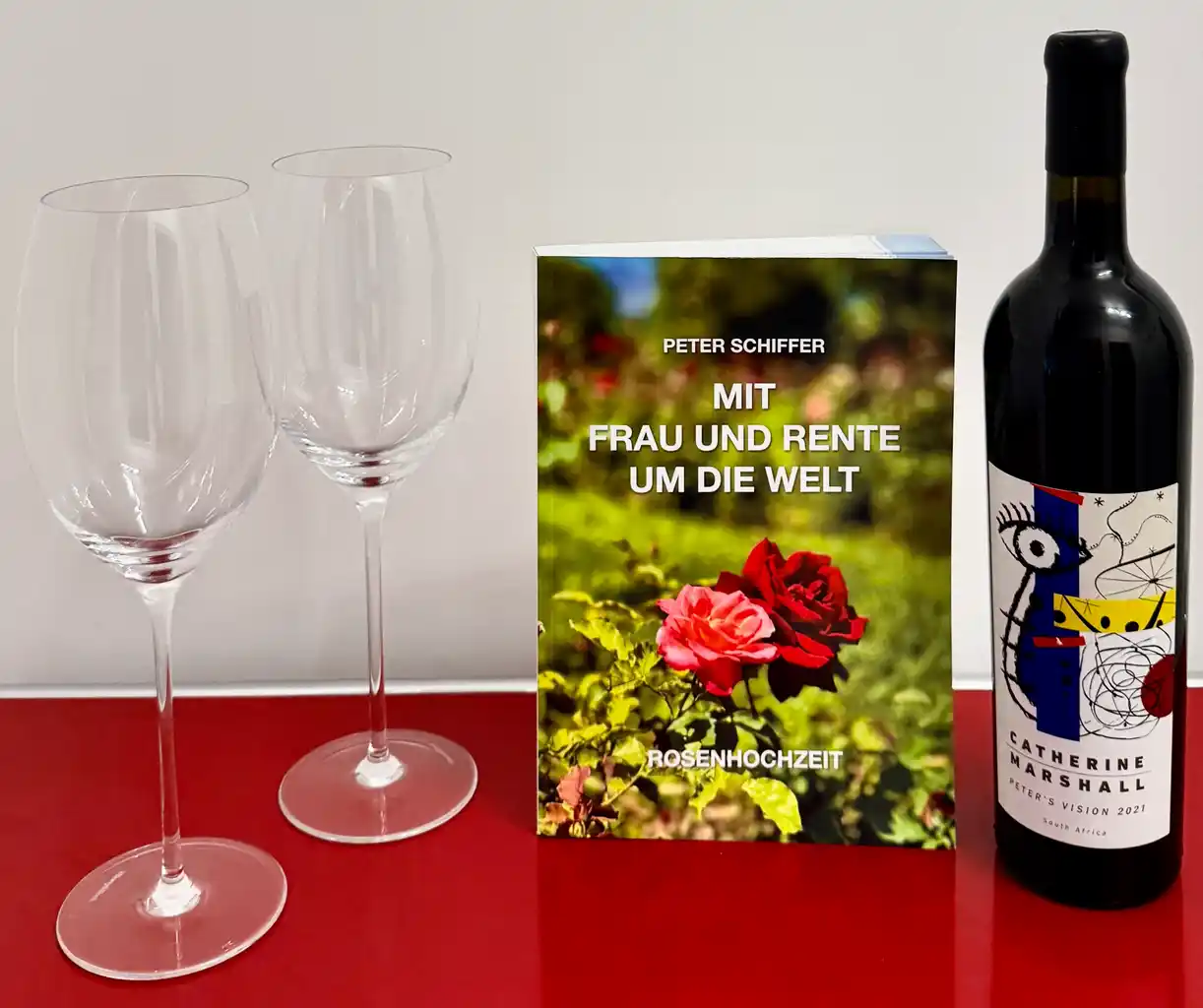
Peter Schiffer’s second book, “Mit Frau und Rente um die Welt – Rosenhochzeit”, combines impressions from ten years as Weltrentner with photographs, short stories, and recommendations for wine and music. More information about the book on his Weltrentner blog.
