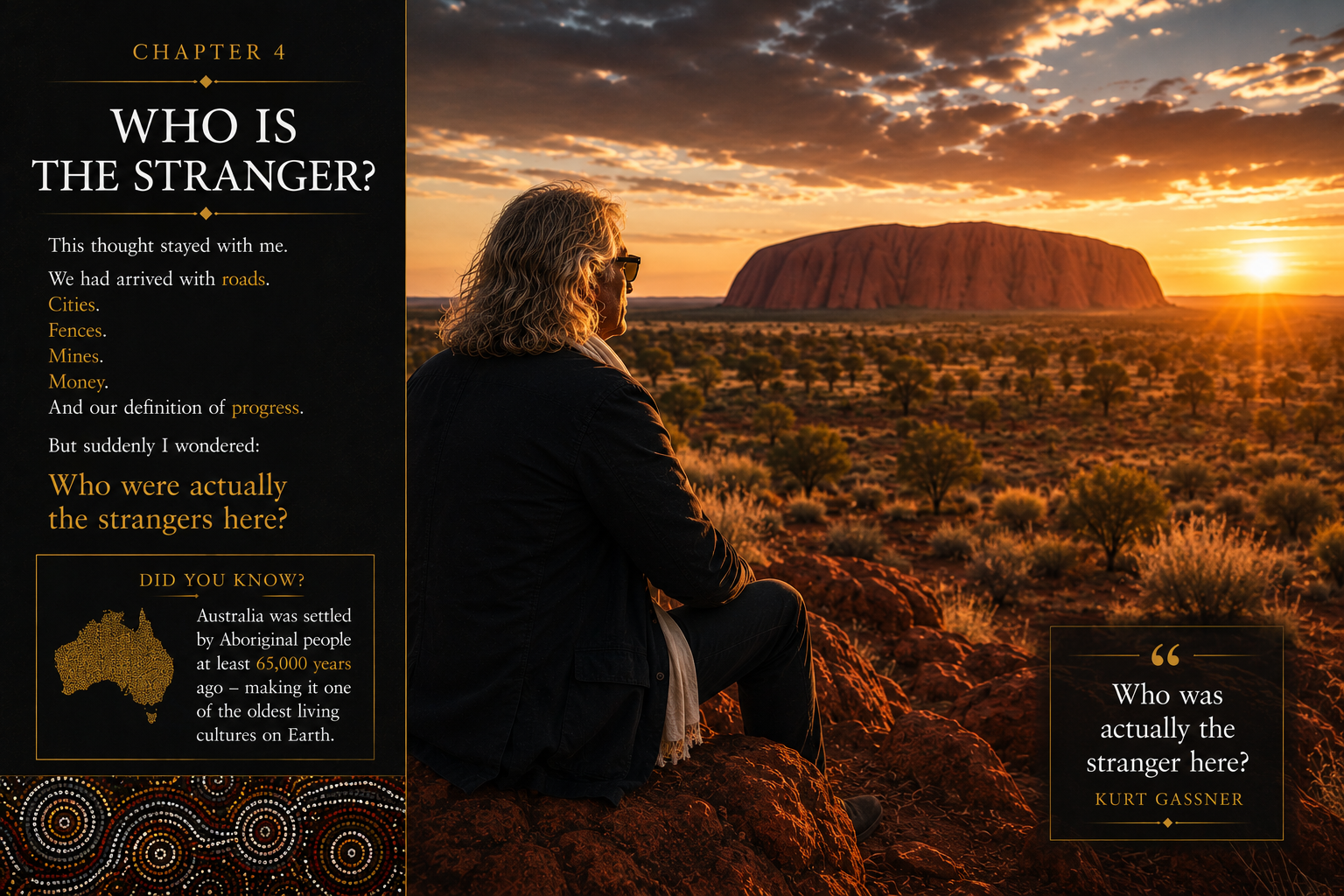
The Land We Never Understood
Chapter 1 —A Continent of Distance
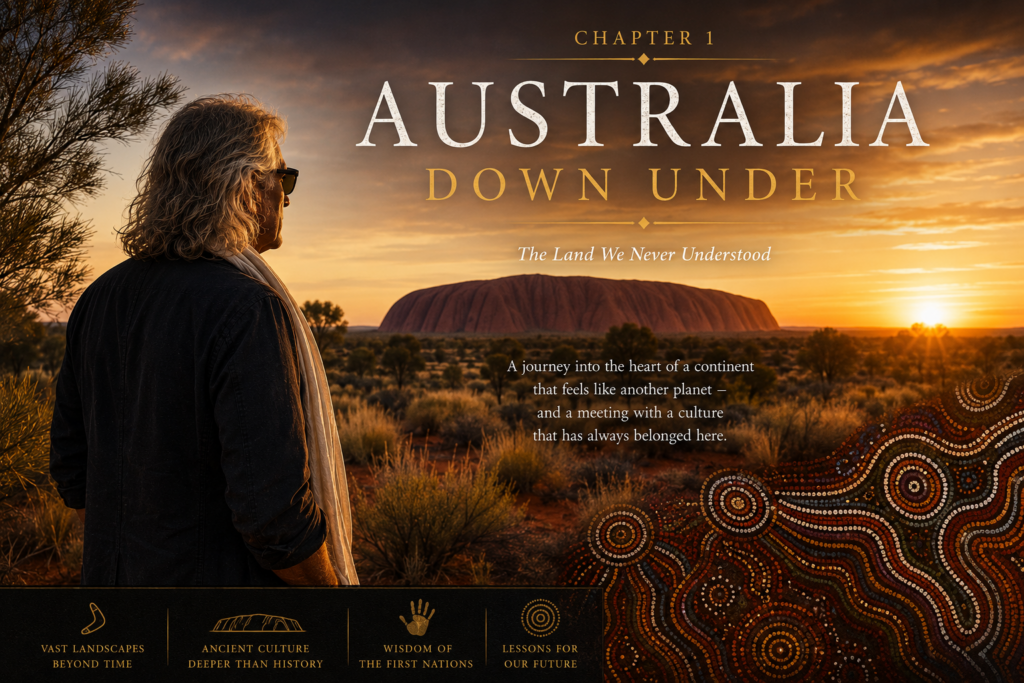
The first thing Australia taught us was distance. The map suggested destinations. The road revealed the truth. Towns disappeared behind us, the landscape stretched towards an unreachable horizon, and hours passed without anything apparently changing. Yet the emptiness was never truly empty. The colours shifted. The light became harder. A tree, an abandoned building or an animal beside the road suddenly acquired significance simply because there was nothing else to distract us. In Europe, distance separates places. In Australia, distance seems to define them. The road forced us to slow down—not physically, perhaps, but inwardly. There was nowhere to escape from our thoughts. The silence travelled with us.
Chapter 2 — The Beauty of Isolation
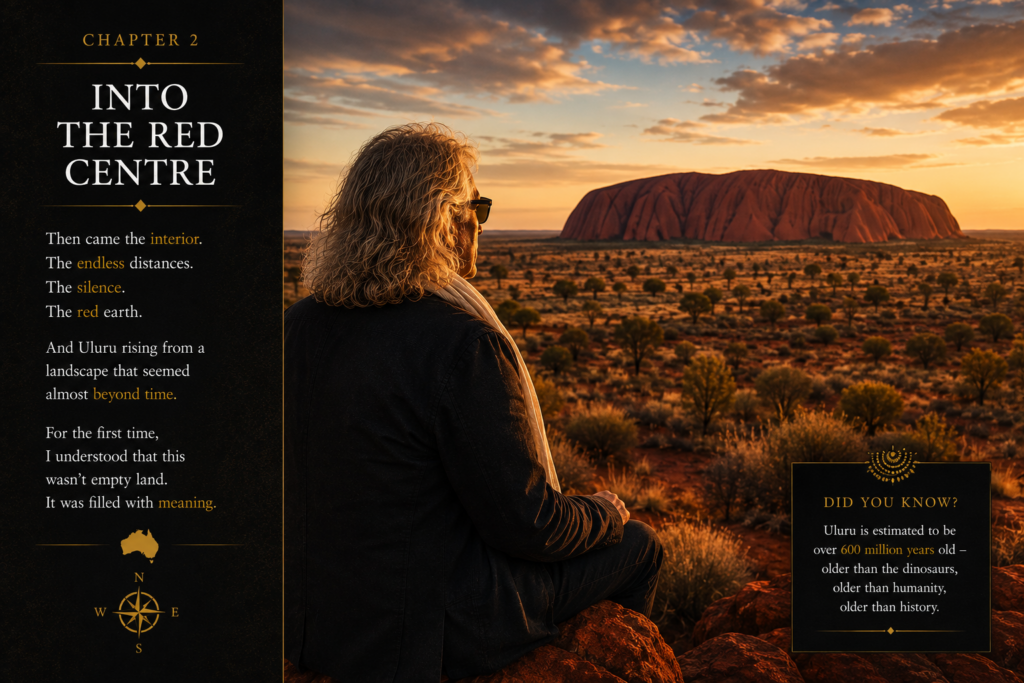
There is a particular kind of beauty in places that do not need us. Australia’s landscapes did not appear to ask for admiration. They existed with an indifference that was both unsettling and liberating. We stood before views that seemed untouched by human urgency. There were no monuments to achievement, no carefully arranged perspectives and no promise that the landscape would reveal its meaning. We were simply present. For a traveller, this can feel like freedom. But freedom and isolation are close relatives. The same vastness that opens the mind can also make a person feel very small. Perhaps that was the attraction: to experience a world in which we were not the centre.
Chapter 3 — Who Is the Stranger?
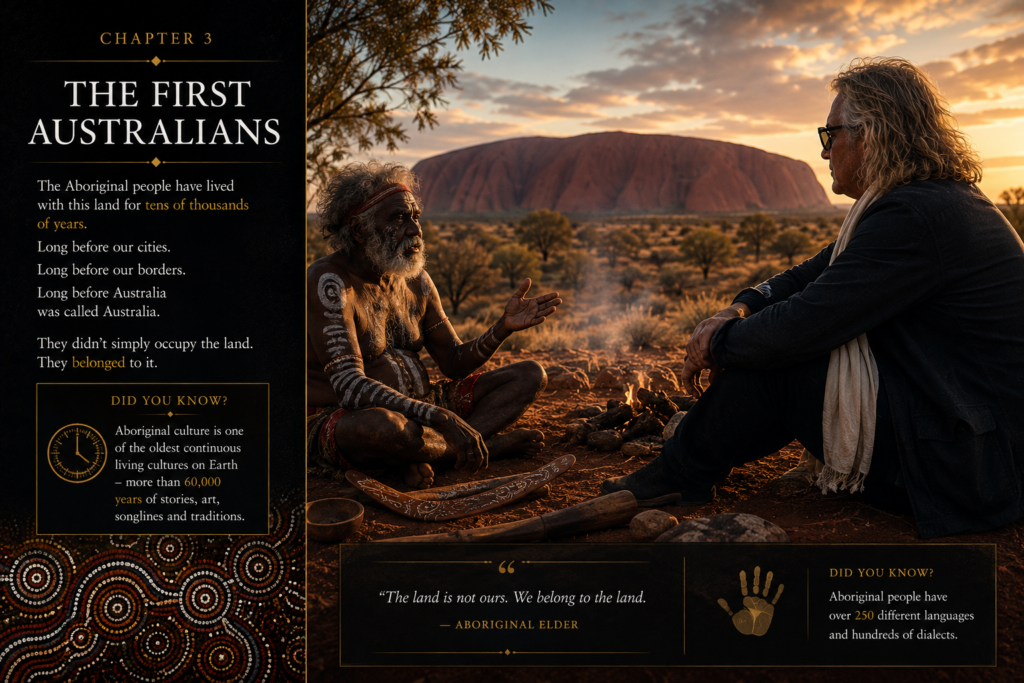
Chapter 4 — Who Is the Stranger?
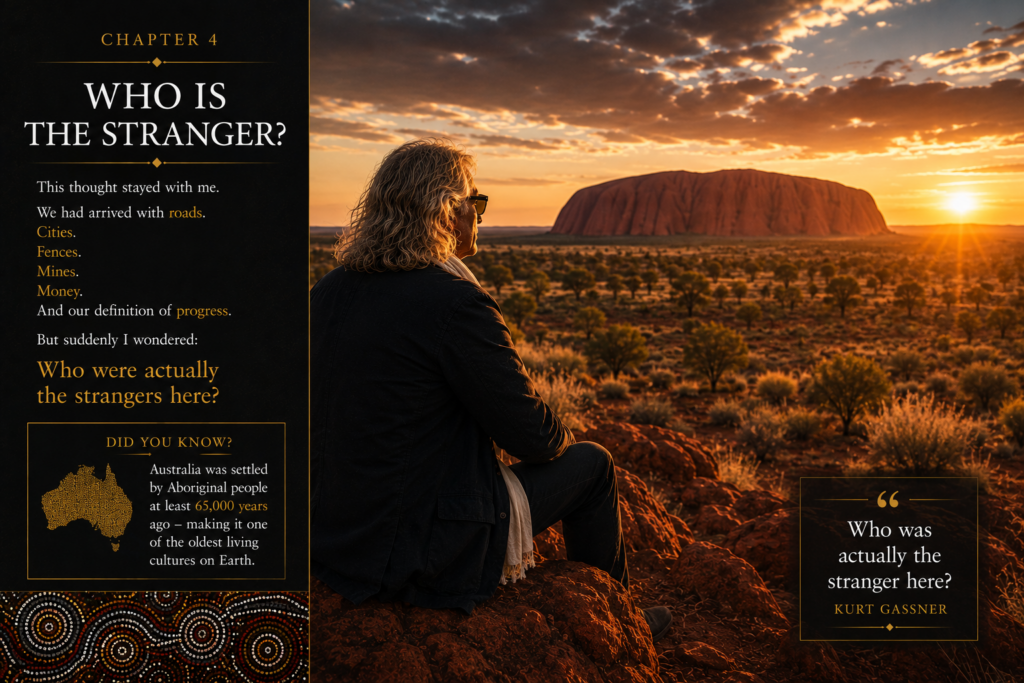
We arrived as visitors and unconsciously expected the country to explain itself to us. But who was the stranger? Was it the person whose life we did not understand—or were we the strangers, travelling across an ancient land with our cameras, schedules and assumptions? The question remained with us. Travel often encourages the illusion that seeing a place means knowing it. We collect impressions, take photographs and remember conversations. Then we return home believing we have understood something. Australia resisted that illusion. The longer we stayed, the more we realised that we were only touching the surface.## Chapter 4 — The People We Did Not See For tens of thousands of years, Aboriginal and Torres Strait Islander peoples have lived in relationship with this land. Yet travelling through modern Australia, their presence was often strangely absent from the places designed for visitors. Their art appeared in galleries. Their symbols appeared on souvenirs. Their history was mentioned on plaques and in museums. But this was not the same as understanding their lived reality. We began to notice the gap between visibility and recognition. A culture can be displayed and still remain unheard. It can be celebrated aesthetically while its history, pain and knowledge are kept at a comfortable distance. We realised how little we knew—and how rarely travellers are encouraged to ask deeper questions.
Chapter 5 — A Land Older Than Our Questions
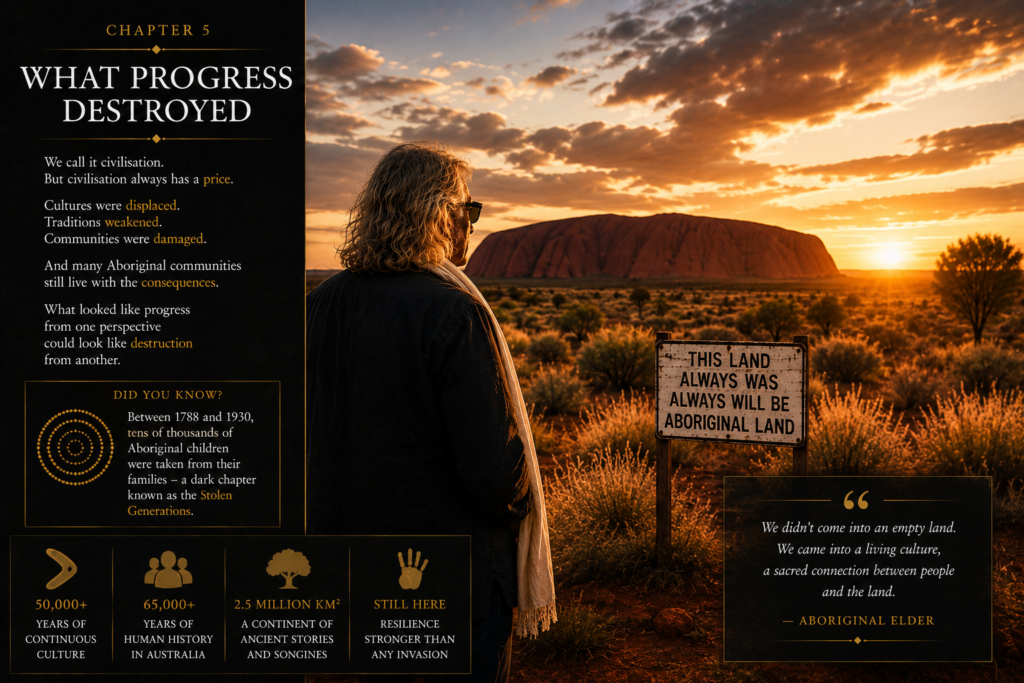
Uluru was not merely a spectacular rock glowing in the evening light. It belonged to a cultural and spiritual landscape far older than the stories we had brought with us. What appeared to us as a destination was part of something living: memory, ancestry, responsibility and belonging. We could admire its form and changing colours. We could walk nearby and listen to explanations. But admiration was not understanding. Some places do not exist to be consumed as experiences. They ask for humility. Standing there, we felt the limits of the visitor’s gaze. We could look, but that did not give us ownership. We could learn, but we would remain outsiders. Perhaps respect begins precisely at that boundary.
Chapter 6 — Can We Still Stand Still?
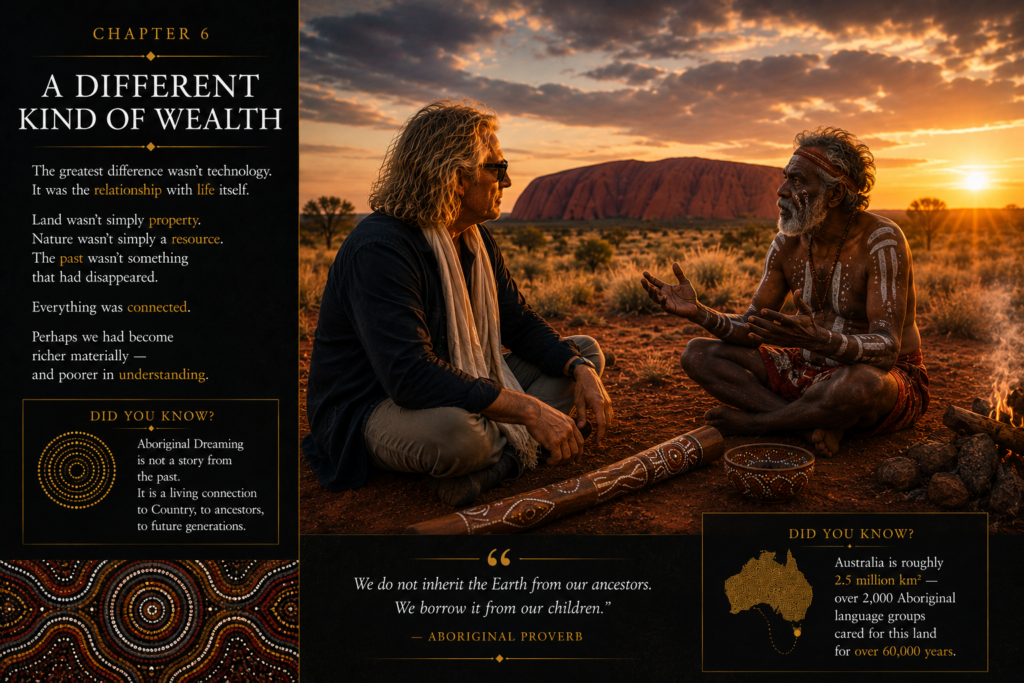
Australia constantly confronted us with scale. In such a vast landscape, our usual concerns seemed strangely small. Plans, appointments and everyday frustrations lost some of their importance. But standing still is difficult. We are accustomed to movement, information and the next destination. Even while travelling, we often hurry towards the experience rather than allowing the experience to reach us. Australia demanded another rhythm. Sometimes there was nothing to do except watch the light change, listen to the wind and accept that the landscape would not entertain us. Those moments became some of the most powerful of the journey. Stillness was not an absence. It was an invitation.
Chapter 7 — What Australia Taught Me
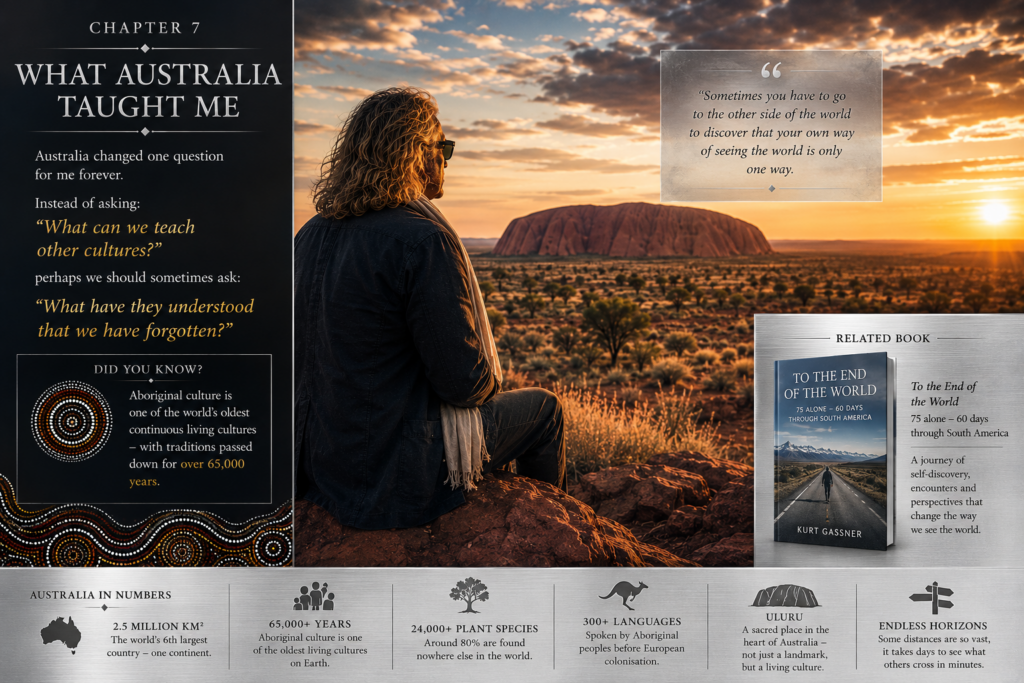
Australia taught me that beauty does not automatically create understanding. A traveller can cross a continent and still remain far away from it. We can photograph a landscape without recognising its history. We can admire another culture without truly listening to its people. The journey therefore left me with questions rather than conclusions. How much of a country do we ever really see? How much do we interpret through the habits and expectations we bring with us? And how often do we confuse access with knowledge? Australia did not reject us. But neither did it offer itself easily. That was perhaps its most honest lesson.
Final Reflection — The Land We Never Understood
When I think about Australia now, I remember its space, light and silence. But I also remember the feeling that something remained beyond our reach. Perhaps every meaningful journey should leave something unresolved. Complete understanding is often another form of possession—the belief that we can reduce a place to a story we can comfortably tell. Australia would not allow that. We arrived with familiar images and left with unfamiliar questions. We had travelled across the country, witnessed its extraordinary beauty and encountered fragments of its history. Yet the deeper Australia—the Australia beneath the roads, cities and celebrated landscapes—remained largely unknown to us. And perhaps admitting that is more truthful than pretending otherwise.
We saw Australia. But we never fully understood it.