16 October 2026 · Kyoto
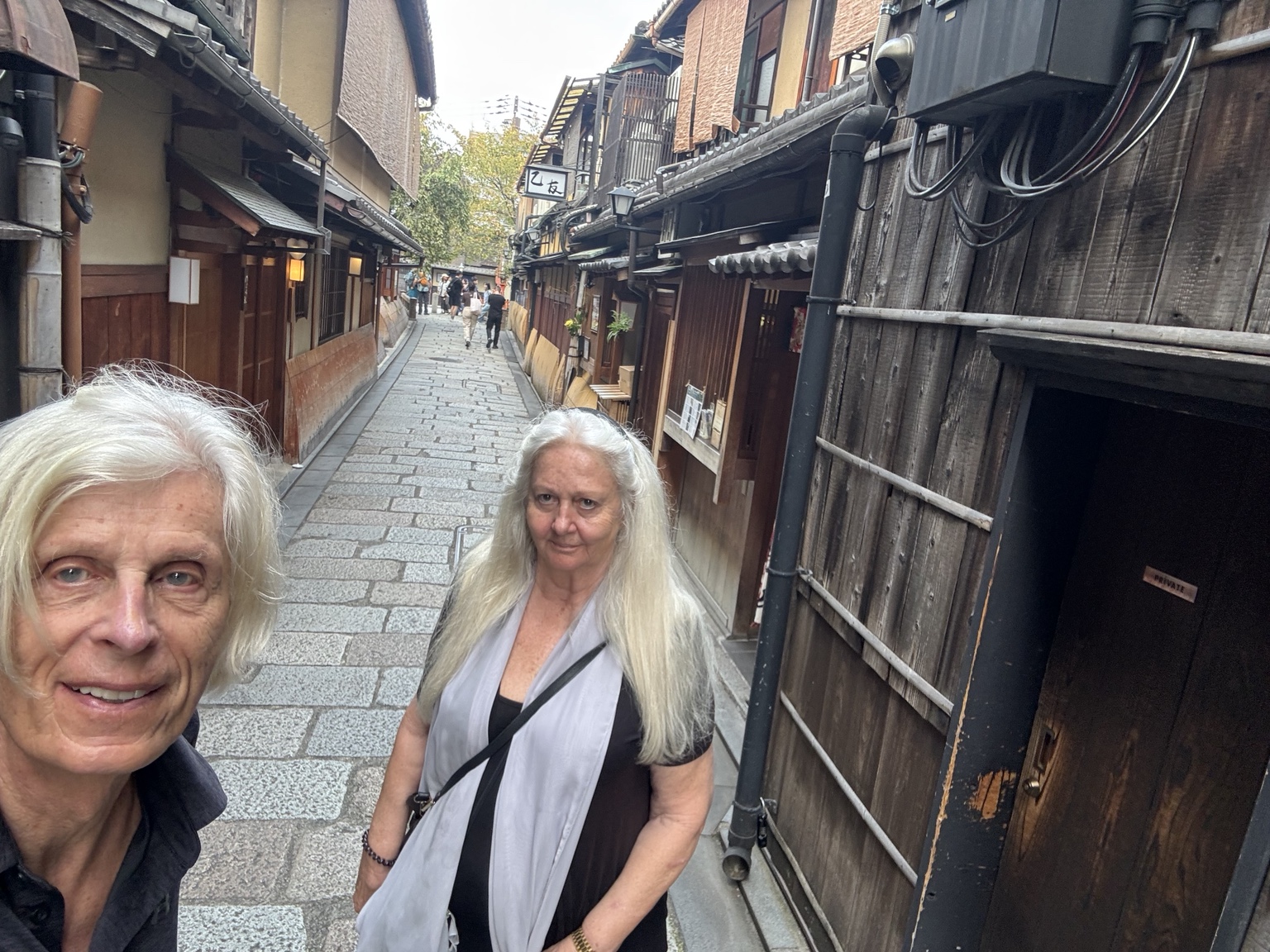
Today we set out to explore Kyoto on foot. And Kyoto, apparently, had plans for us too. By the evening we were certainly tired. But in between lay a day full of small discoveries worth taking time over: an enchanting exhibition, narrow lanes, old wooden houses, tiny entrances and one thing after another that made us stop and look.
In the morning we visited the Genji exhibition at the National Museum opposite our hotel. At its heart is The Tale of Genji, one of Japan’s great literary classics. Written by Murasaki Shikibu over a thousand years ago, it is often called the world’s first novel. It follows Hikaru Genji, the ‘Shining Prince’, his romantic relationships and the human entanglements of life at the imperial court. Paintings, manuscripts and decorative works reveal the story’s lasting influence on Japanese culture. An enchanting world, and a special beginning to our day in Kyoto.
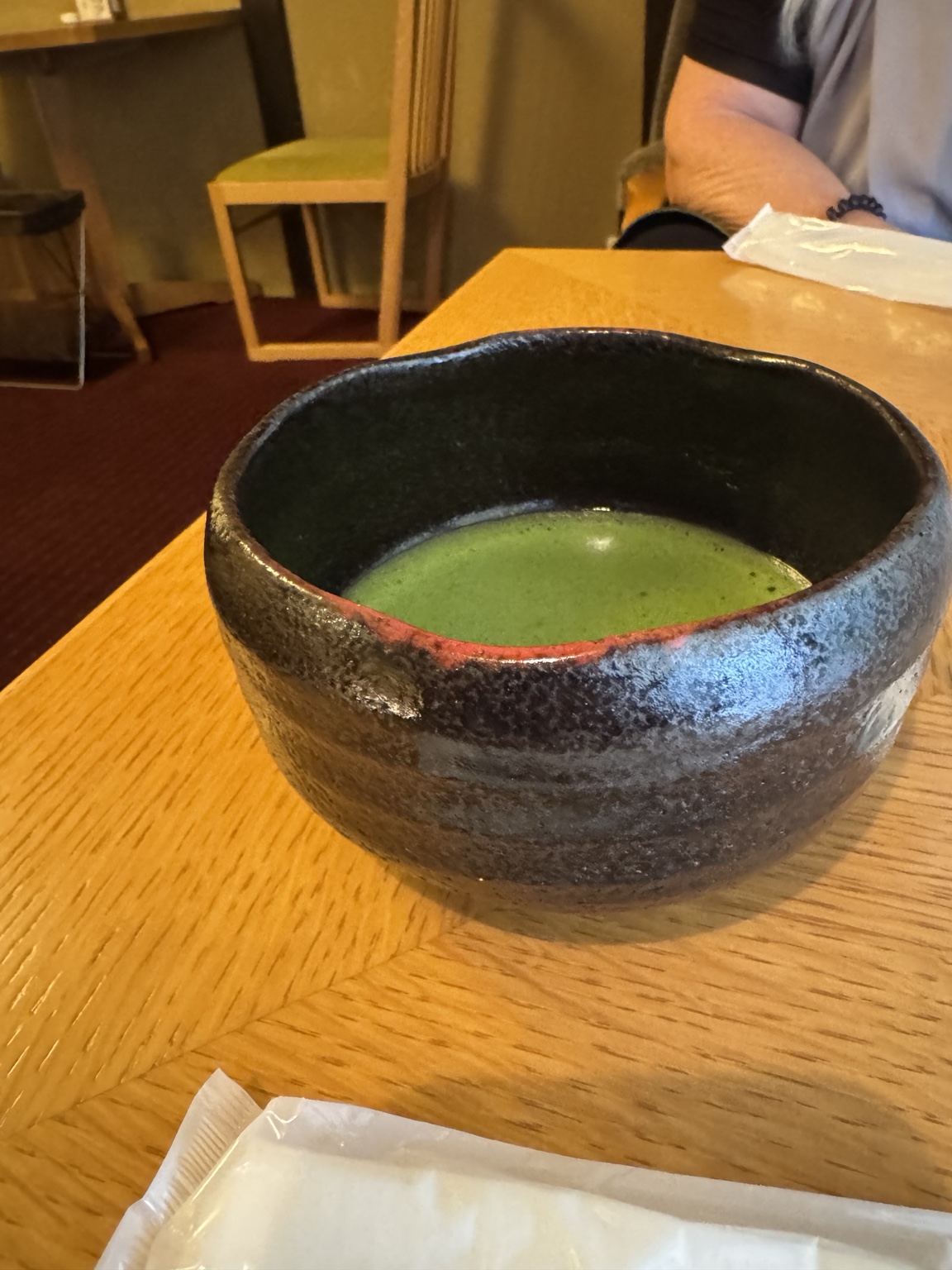
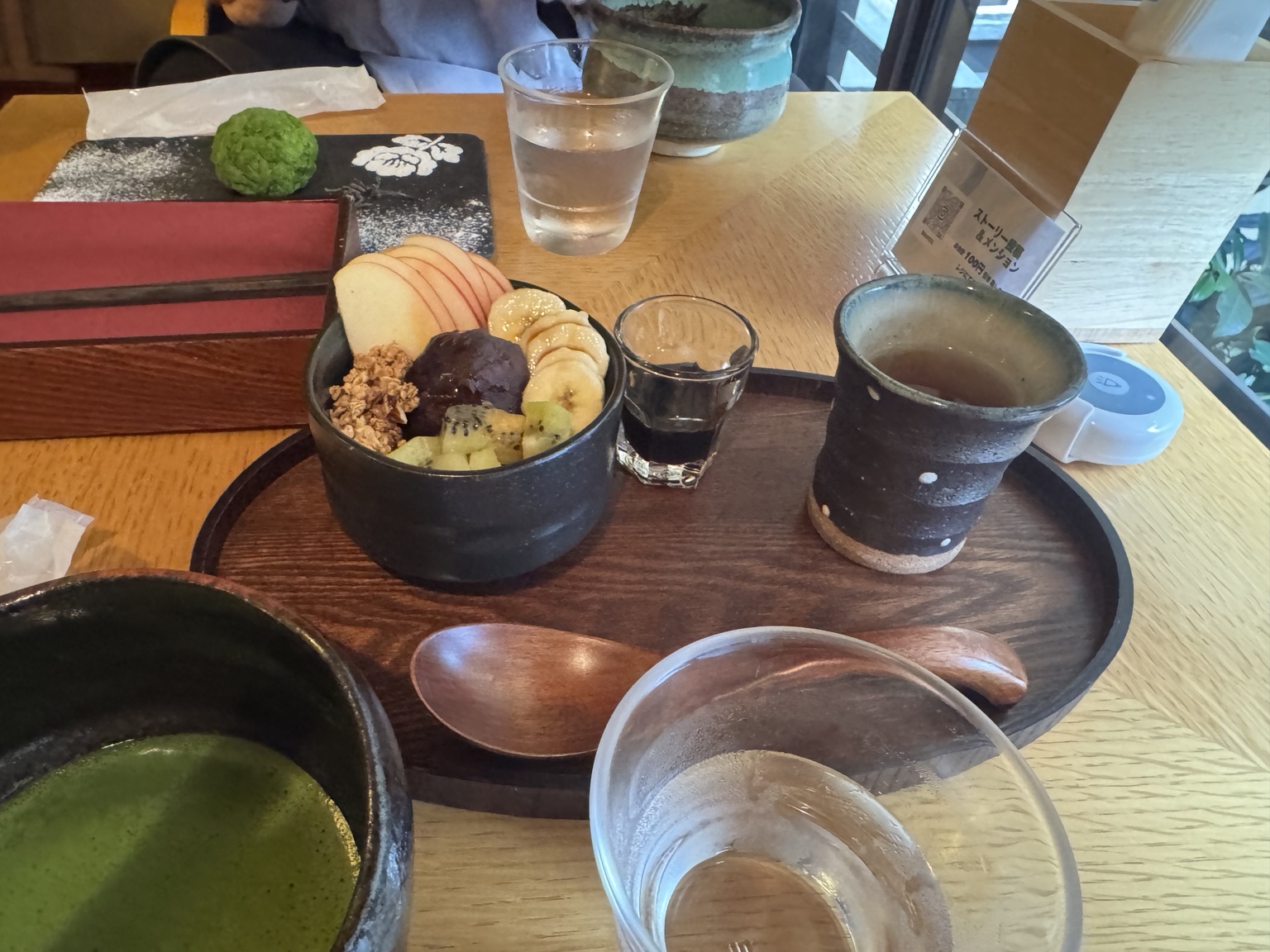
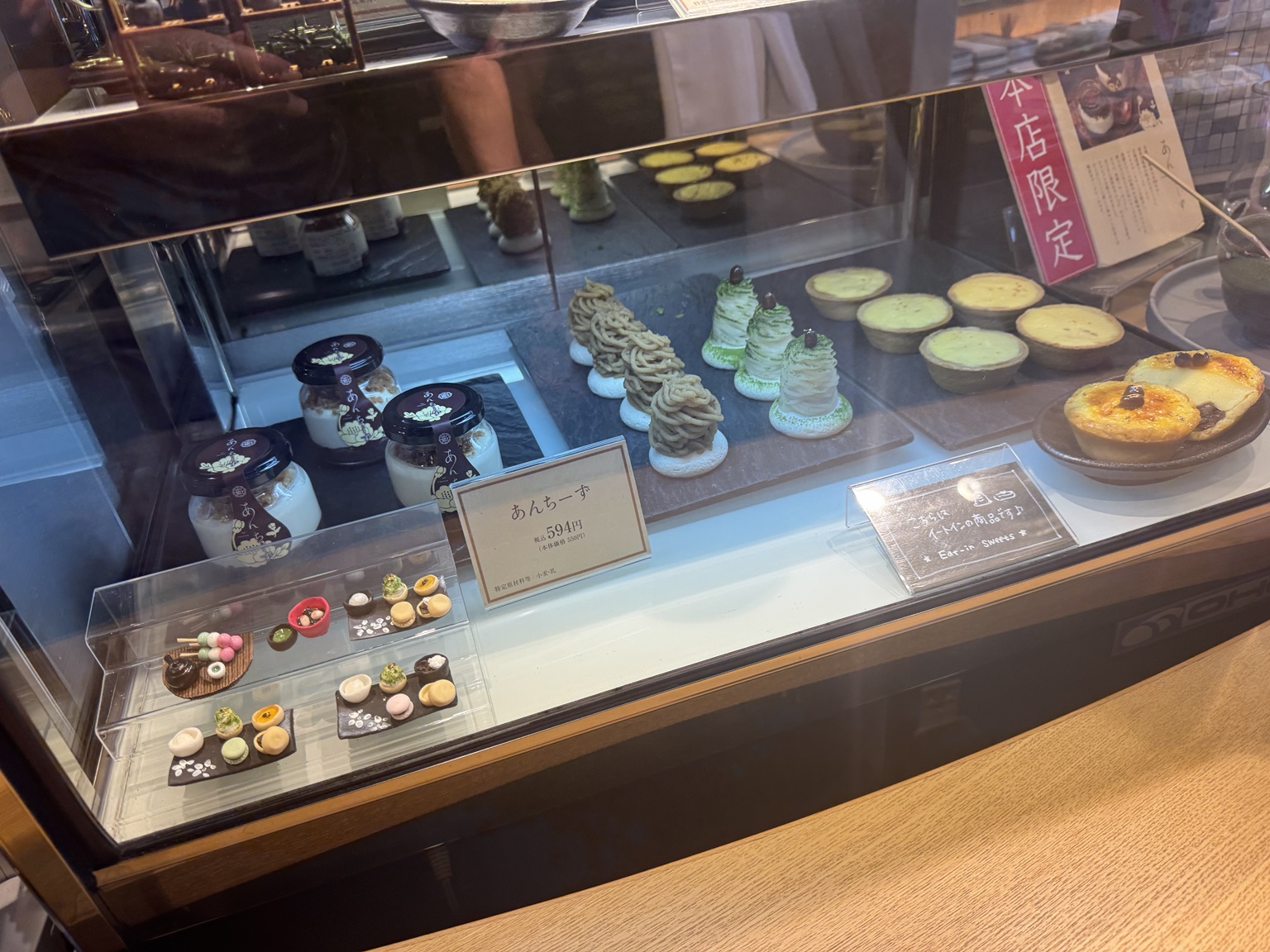
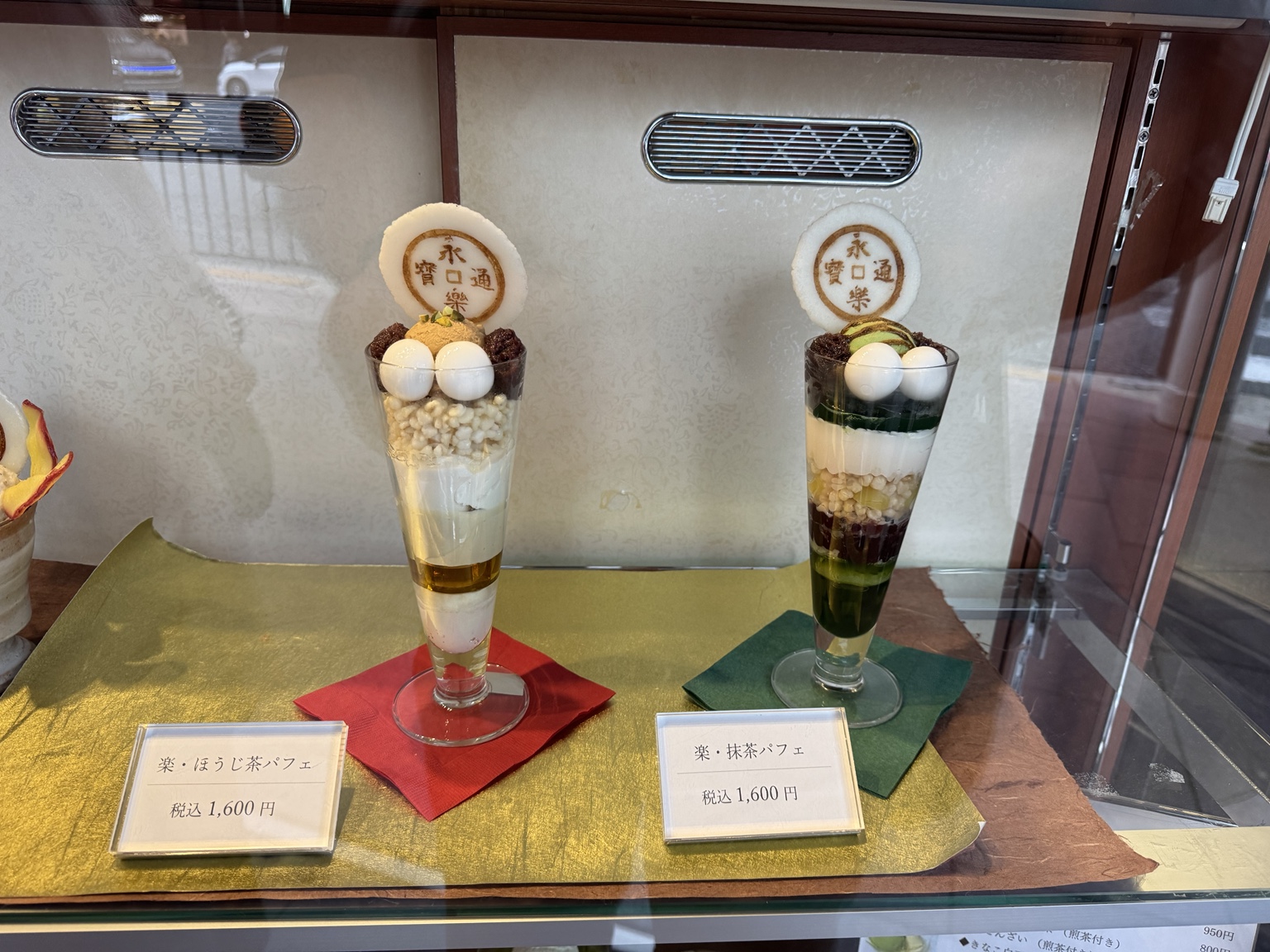
Then we headed out into the city. Even our tea break made a picture of its own. Brilliant green matcha in a dark, irregularly shaped ceramic bowl. Fruit carefully arranged in a fan, and little sweets alongside. The displays held elaborate creations, some like miniature towers, others in bowls or tall glasses. Here, even a short break has its own setting.
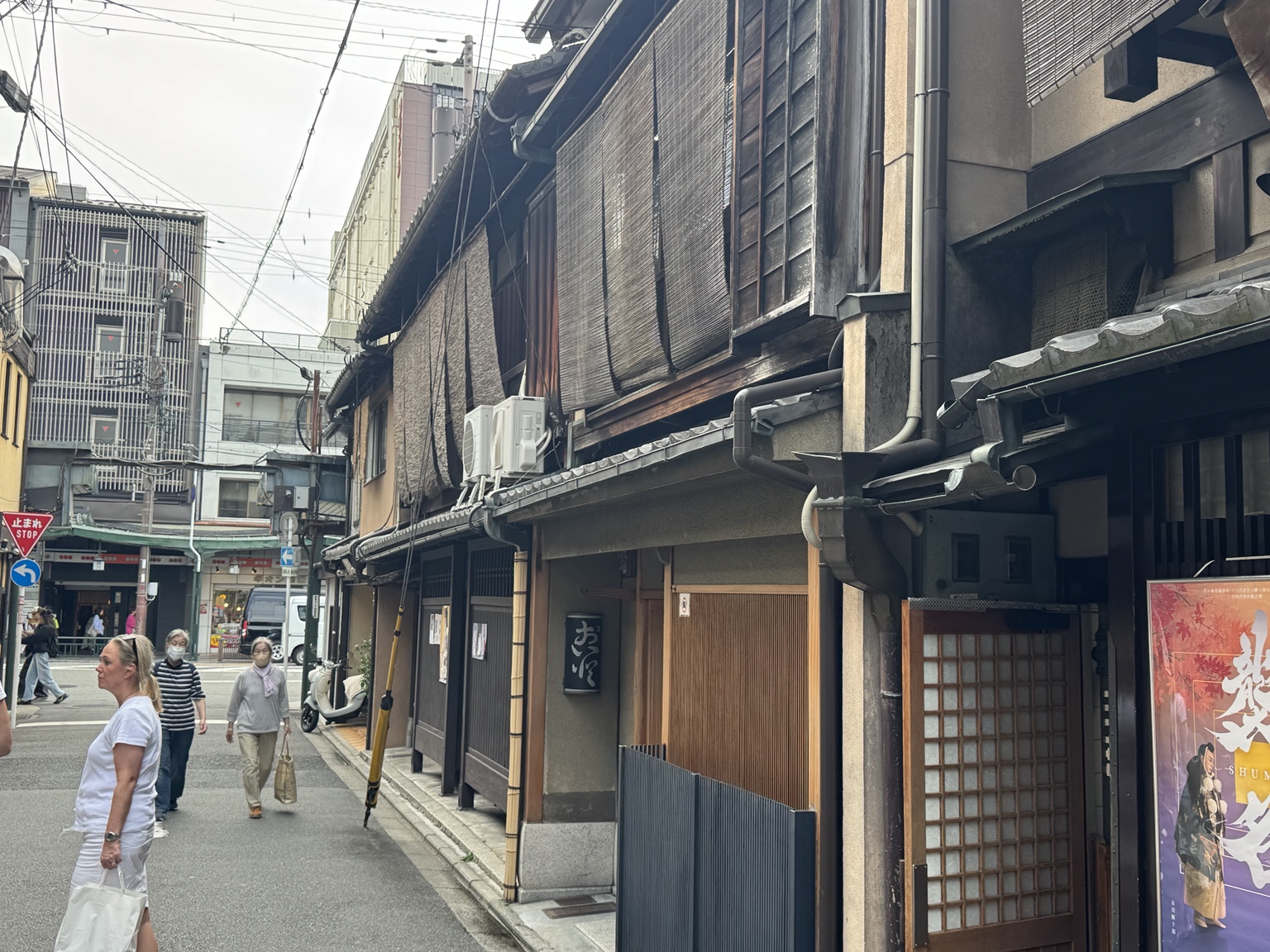
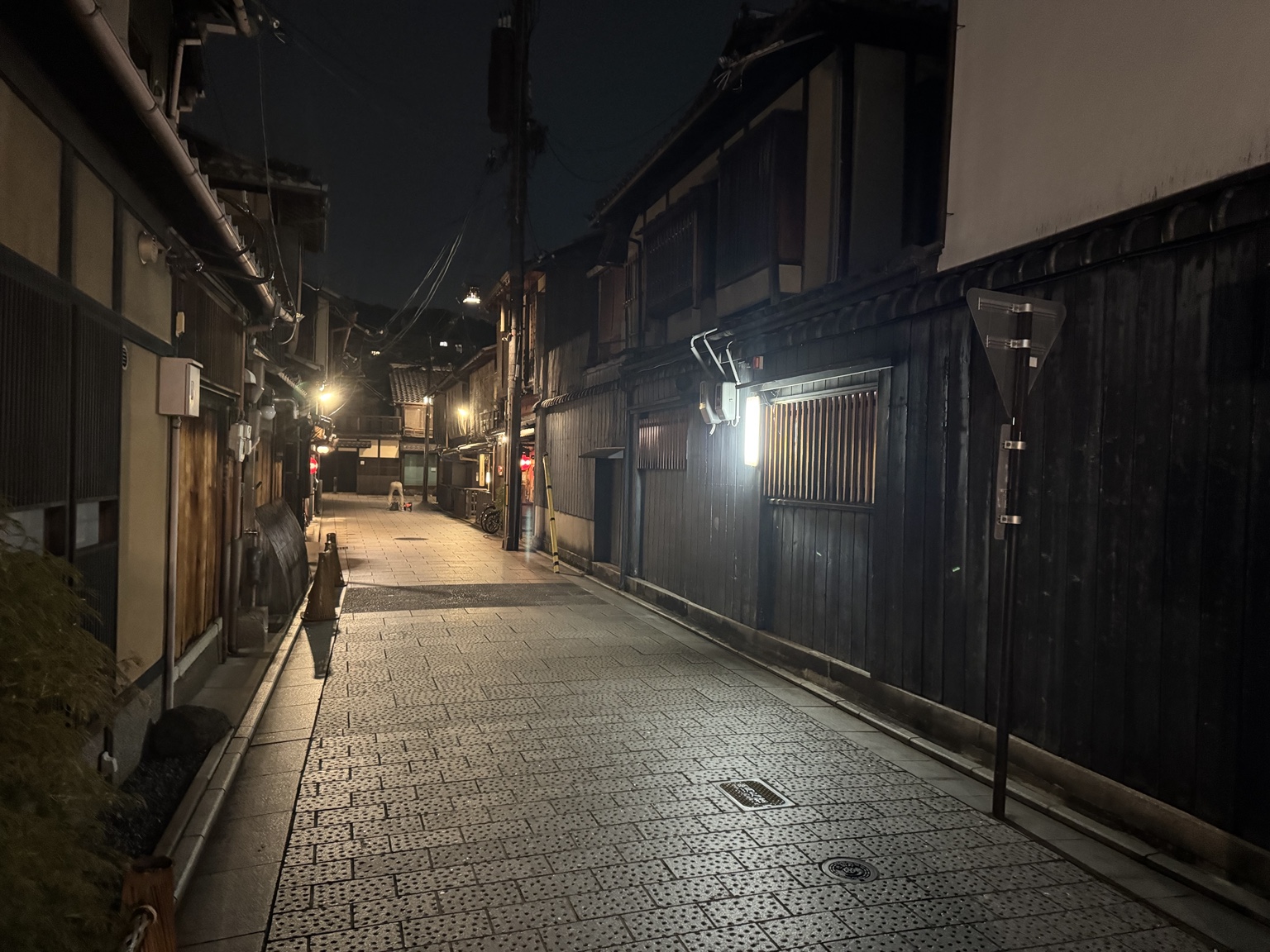
We continued through the old lanes. The houses stand close together, with weathered timber, narrow windows and bamboo blinds across the upper floors. Sometimes you can see only as far as the next bend. That is precisely what makes you curious. What lies beyond it?
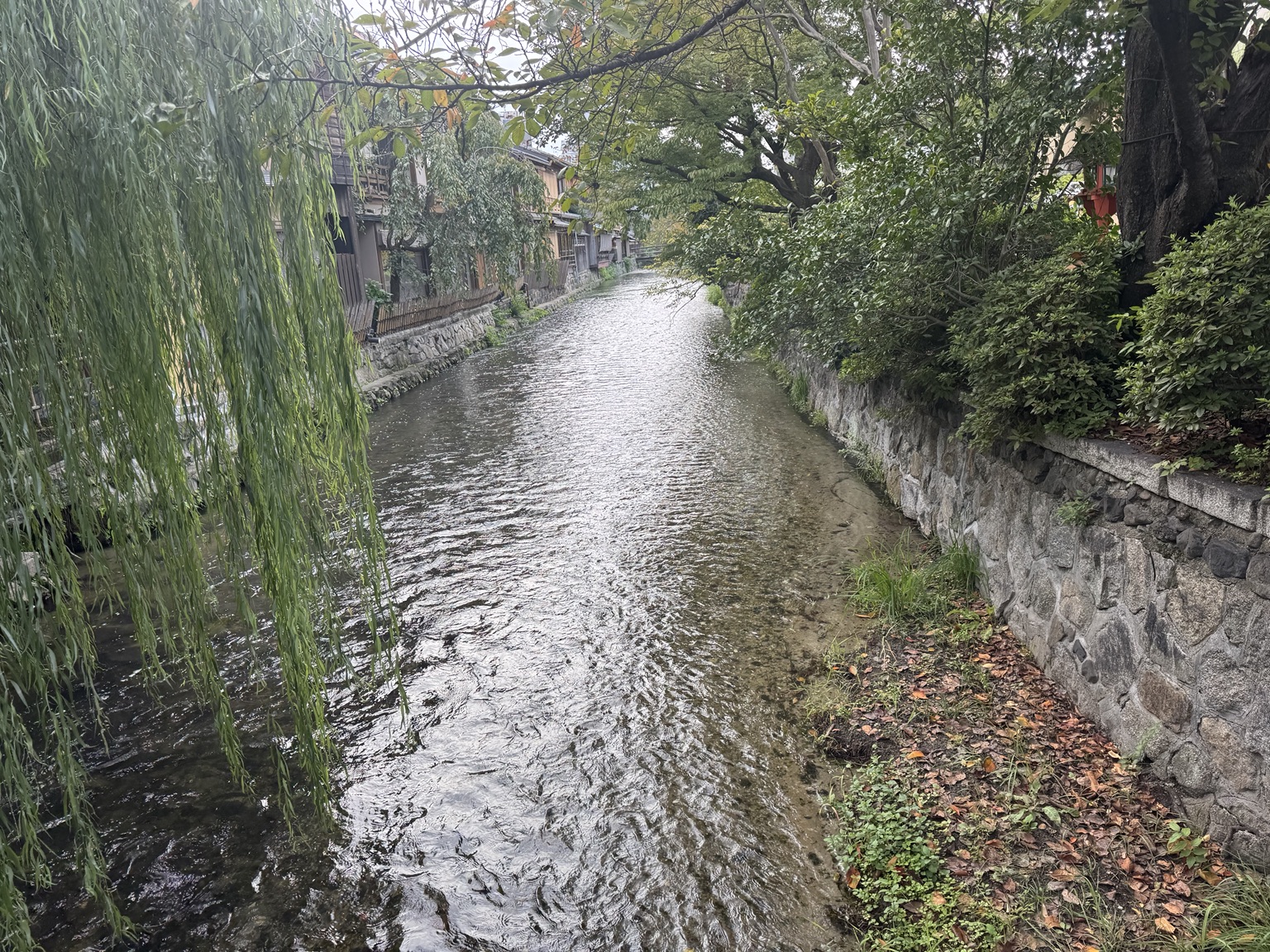
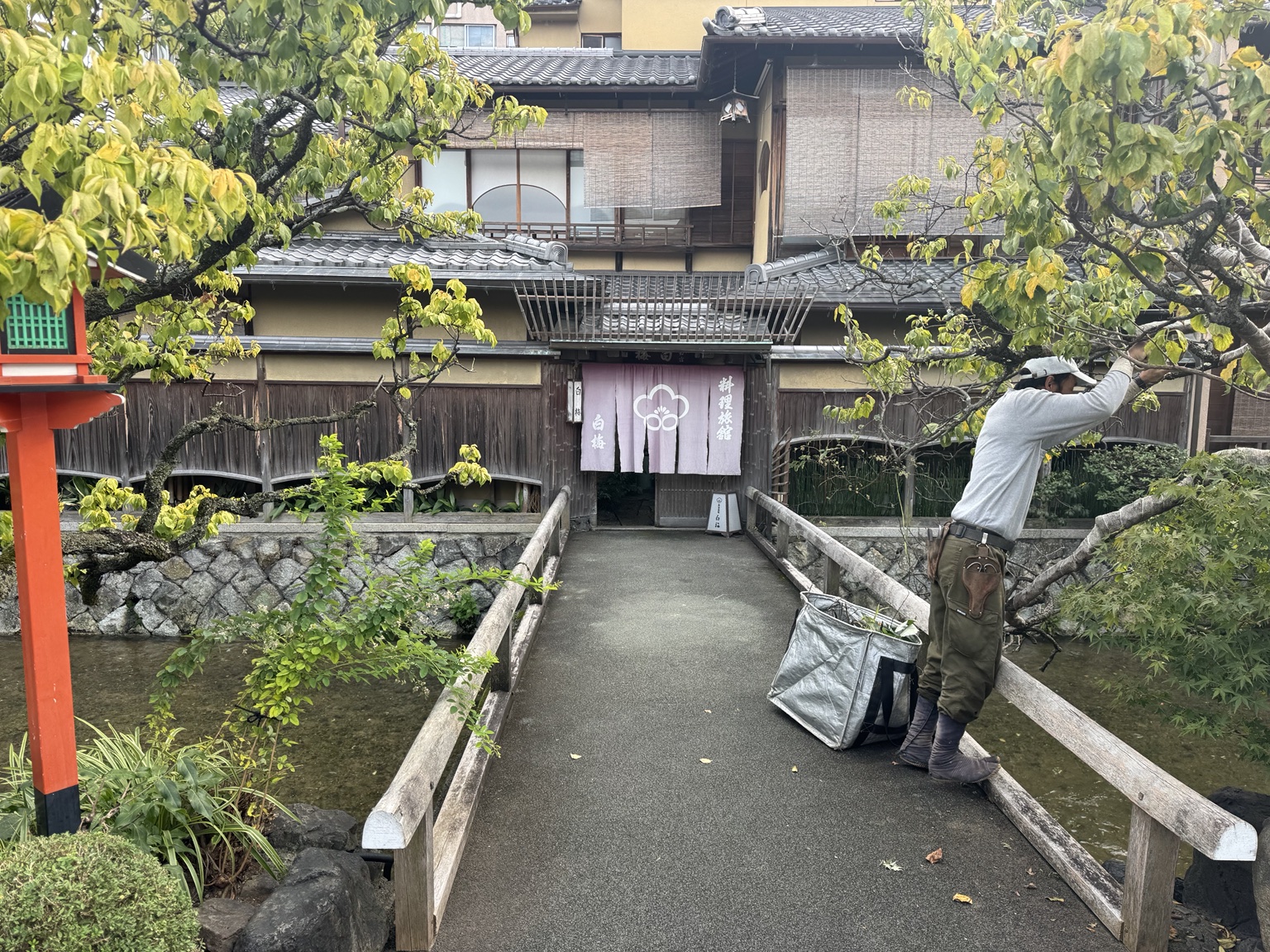
It was particularly lovely by the water. Willow branches hang low over the stream, old houses line the bank, and small bridges lead straight to their entrances. Outside a house with a pale violet doorway curtain, a man was pruning a tree. An everyday moment in surroundings that felt like another world to us.
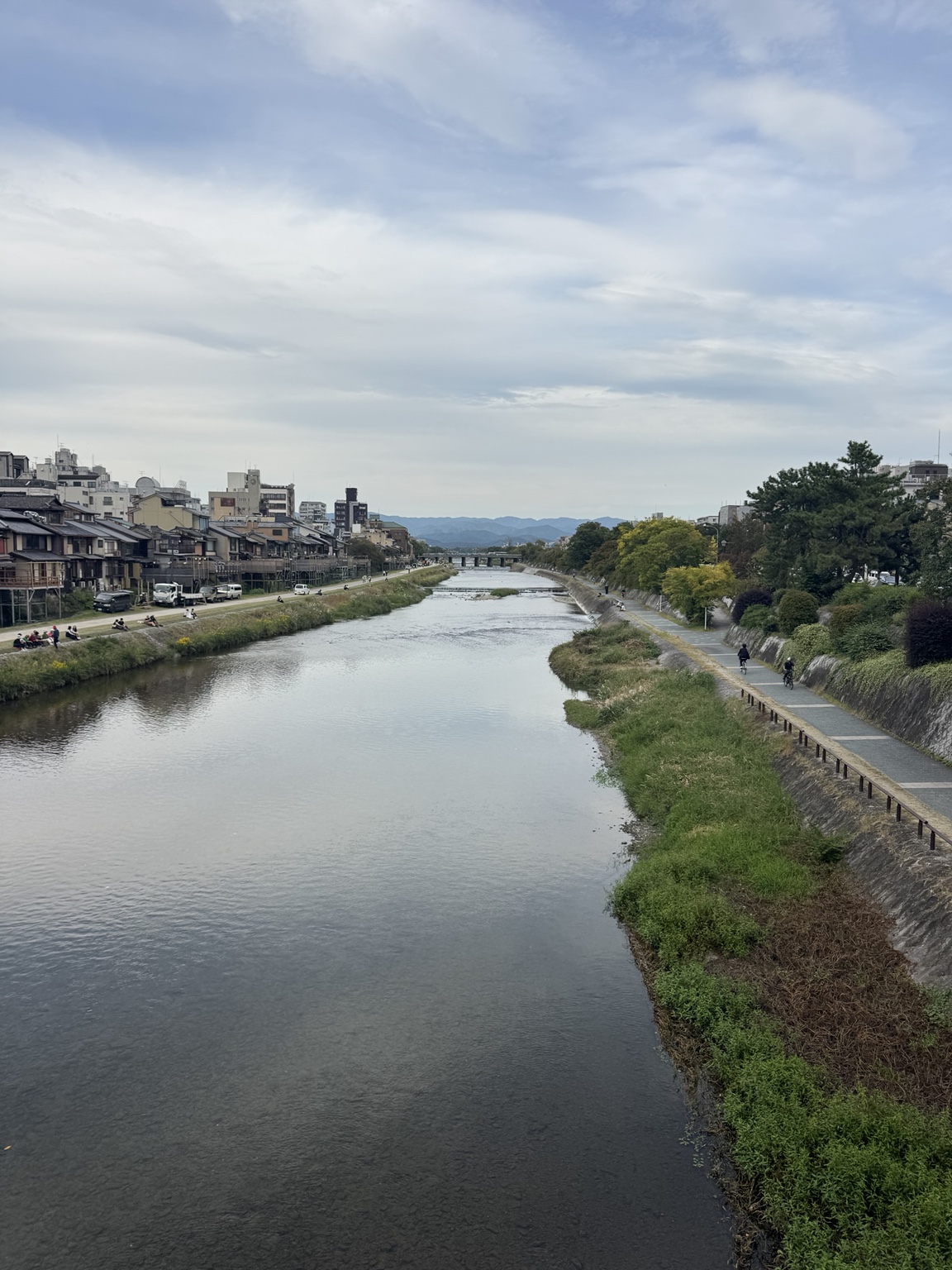
Every so often, the view opens out across the river. After the narrow lanes, suddenly there is so much sky and space. People sit on the banks; others stroll or cycle past. Houses crowd along the water on one side, trees stand opposite, and mountains appear in the distance. This, too, is Kyoto: you emerge from a tangle of little streets and suddenly have room to take a deep breath.
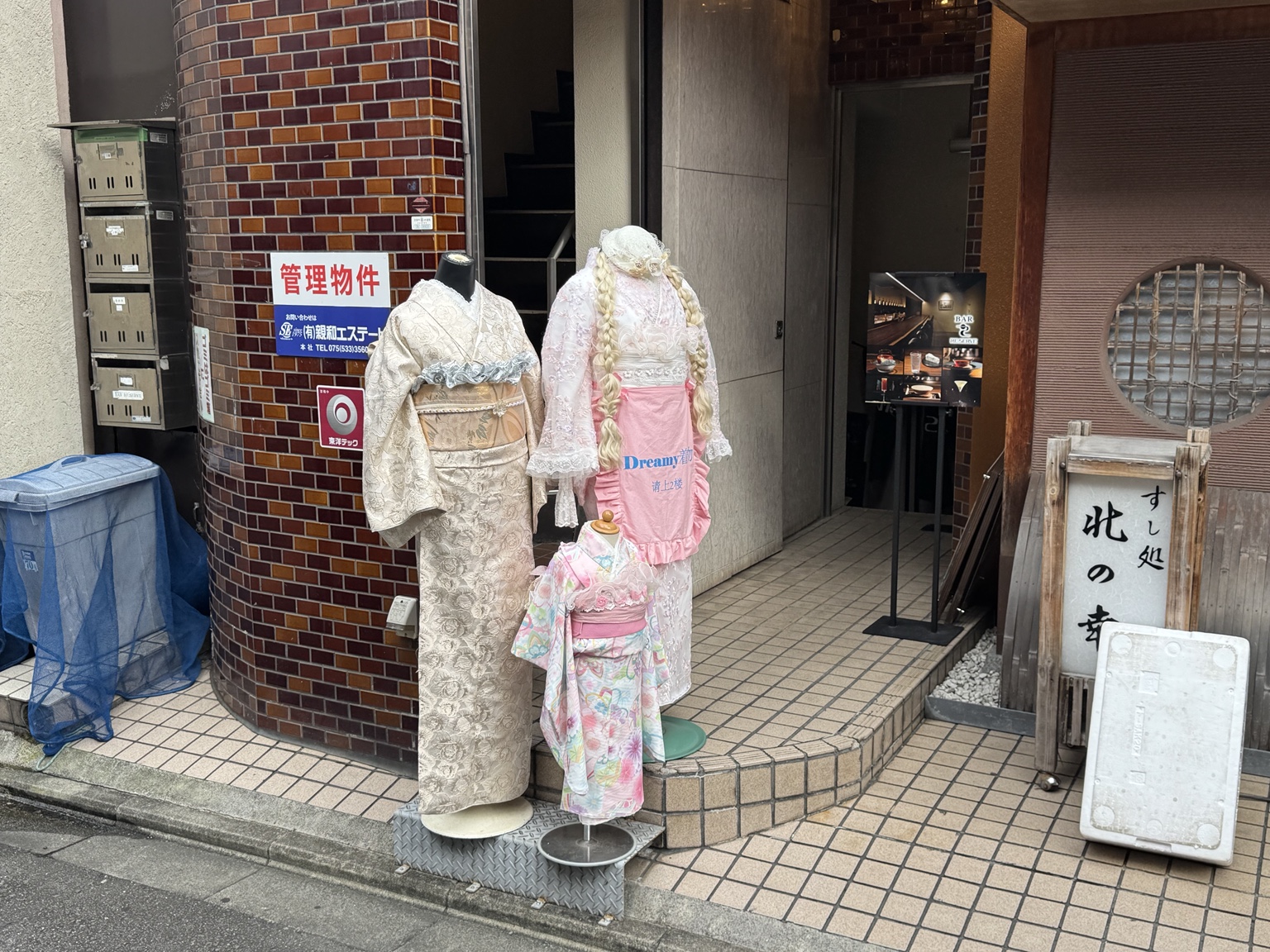
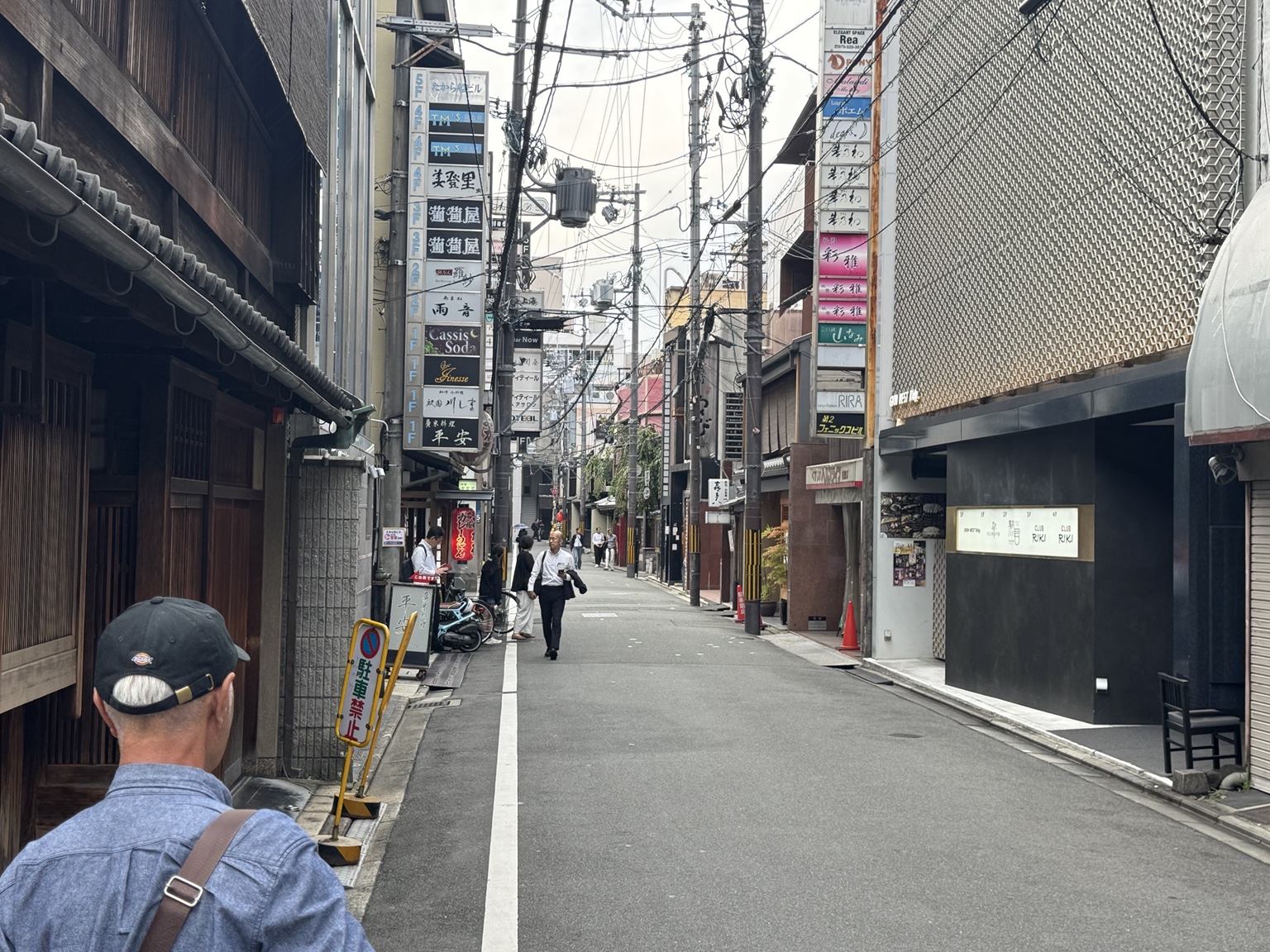
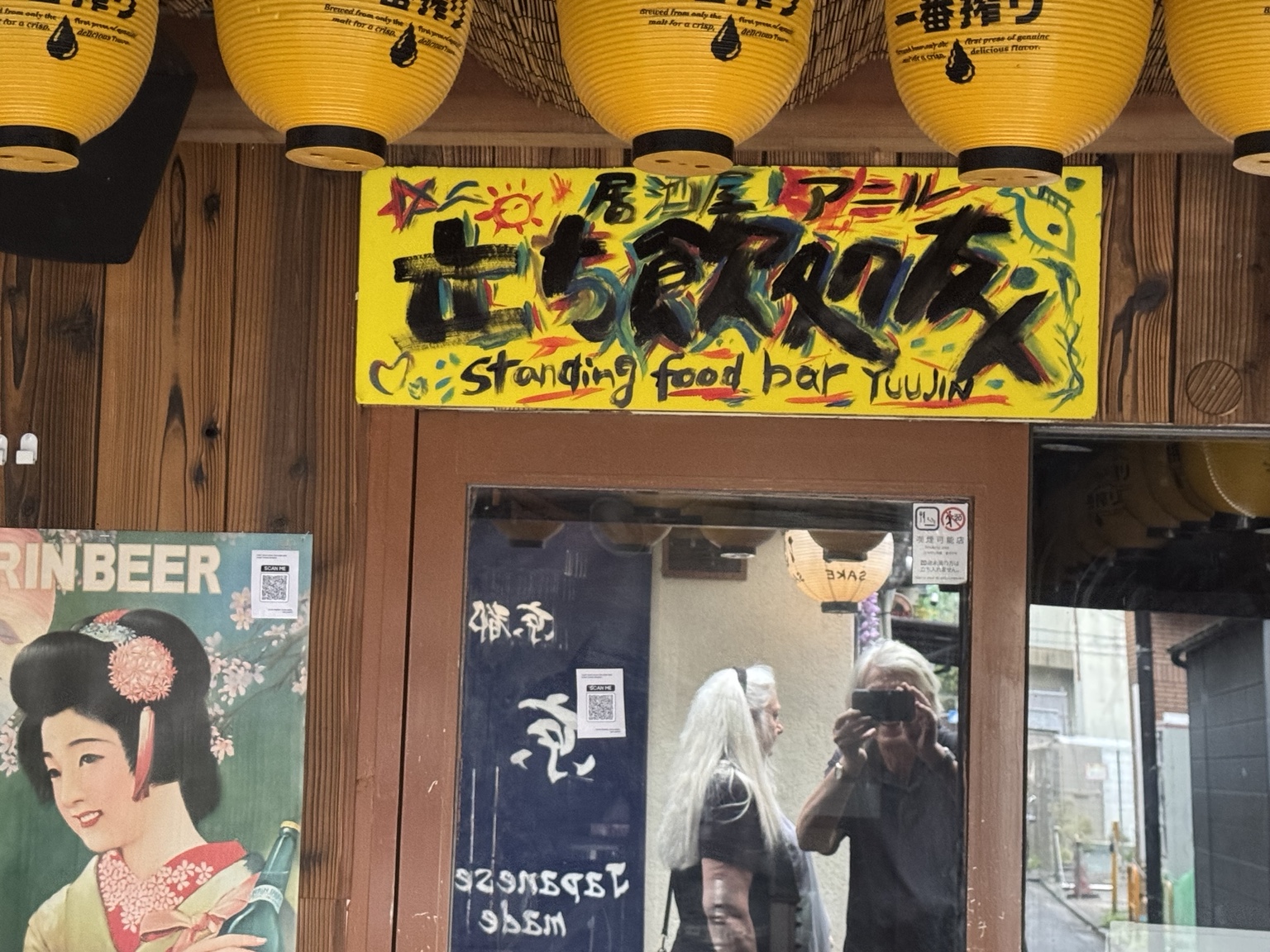
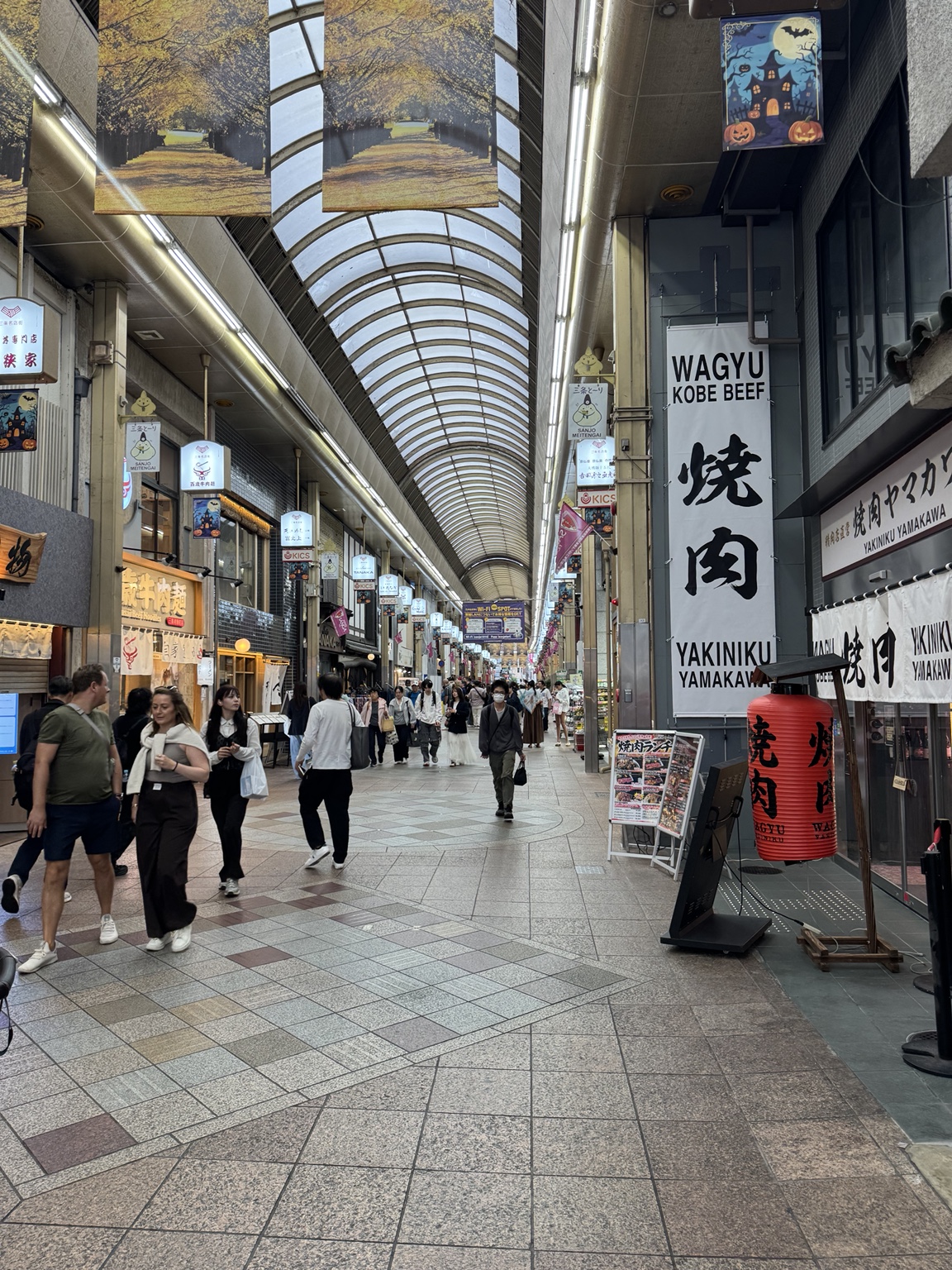
Old Japan sits right in the middle of everyday modern life. Bamboo blinds hang in front of the wooden façades, while power lines crisscross overhead. Next door, signs for little establishments rise several storeys up the buildings. Outside one entrance, mannequins wear pastel-coloured kimonos with lace and frills. Between old teahouses, bars and playful displays like these, there is always something new to notice.
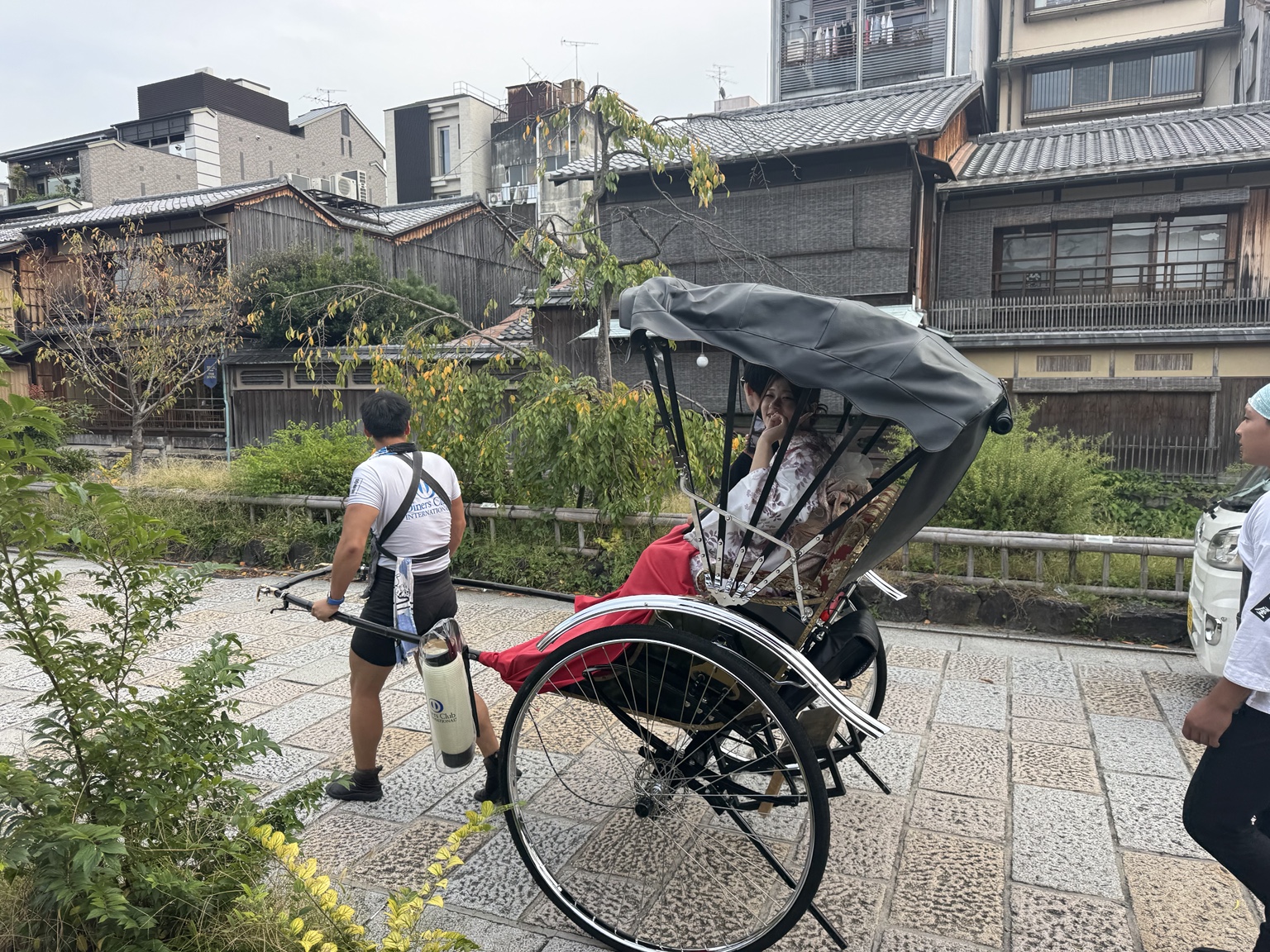
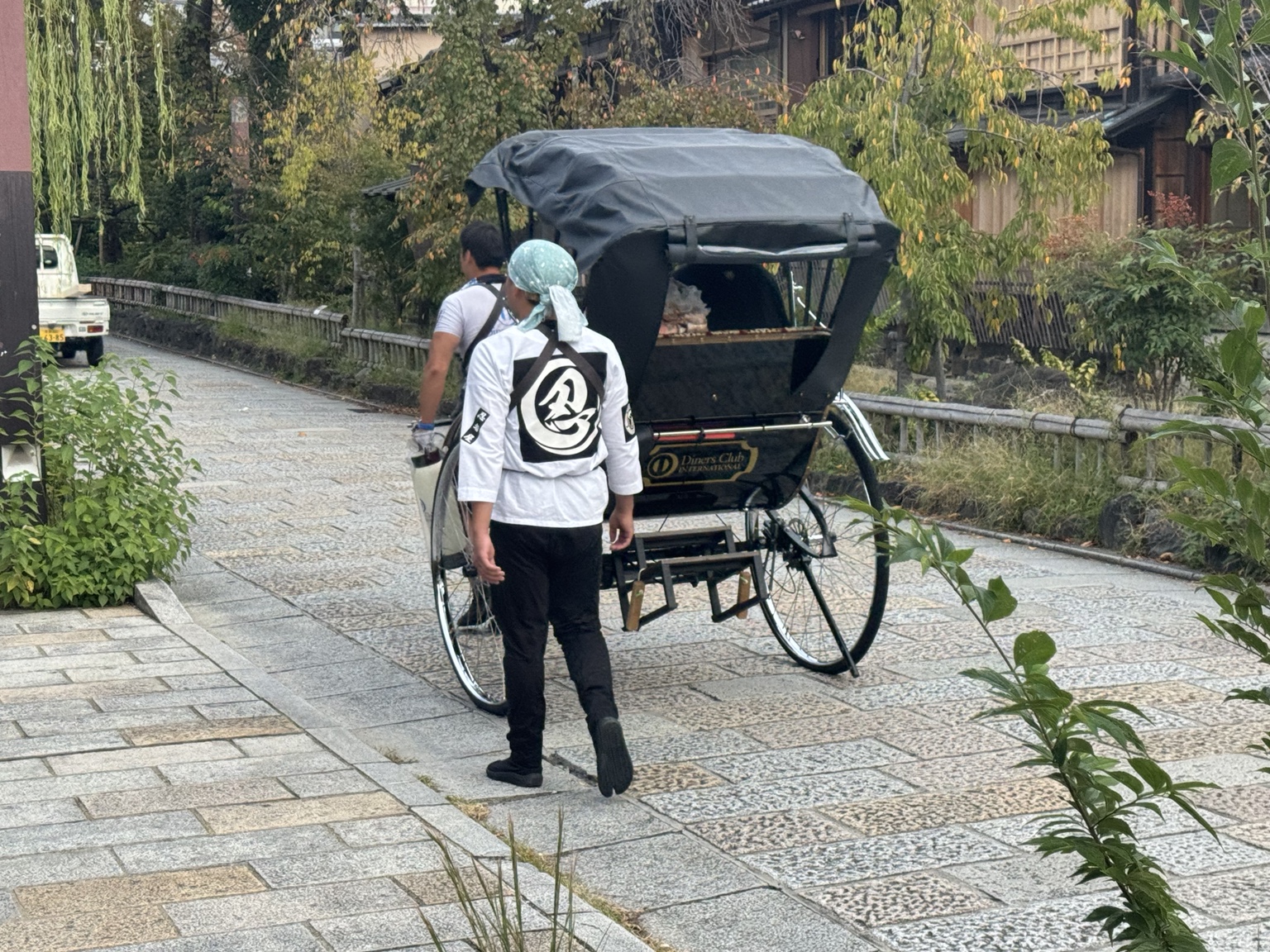
A rickshaw beside the water: large wheels, a black canopy and red fabric on the seat. We stuck with our own feet. They would have something to say about that later.
Along the way there was also a little shop where Anneliese sat down at a round wooden table. Around her were pictures in gilded frames, decorated tins, angels and an old set of scales in front of the window. ‘Angel Library’ was written on one of the pictures. A playful, almost fairy-tale room, with a surprising amount to discover in just a few square metres.
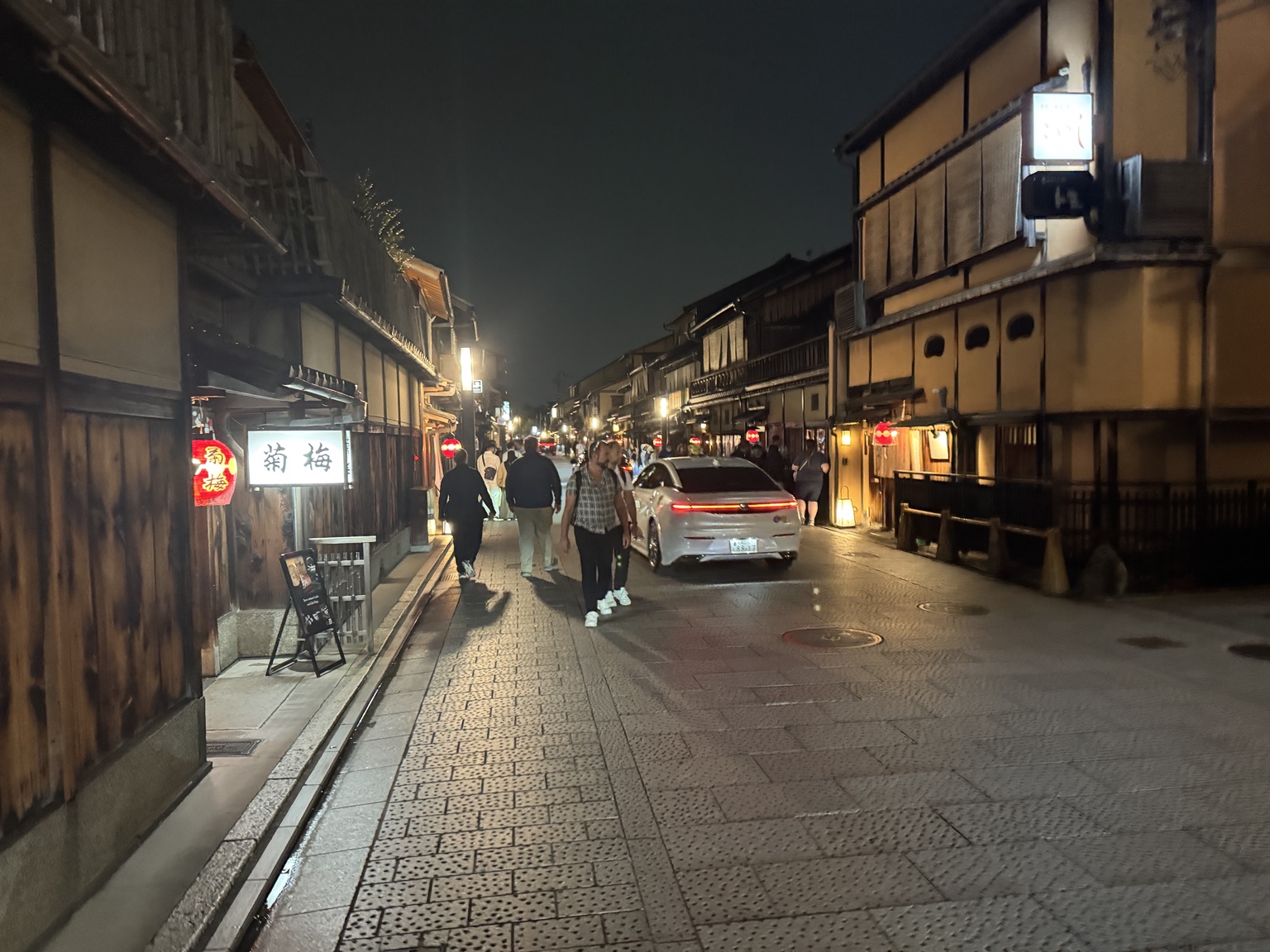
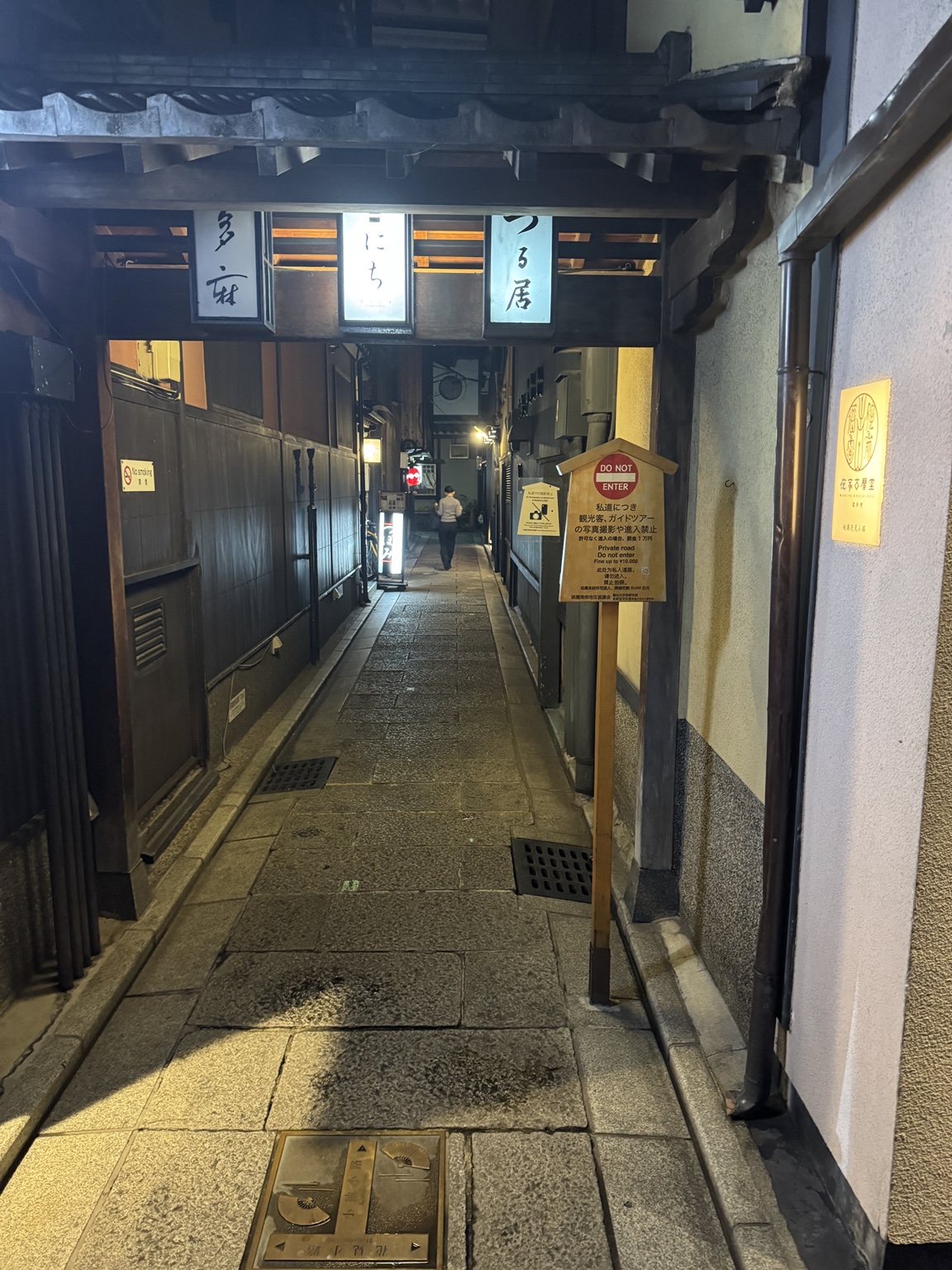
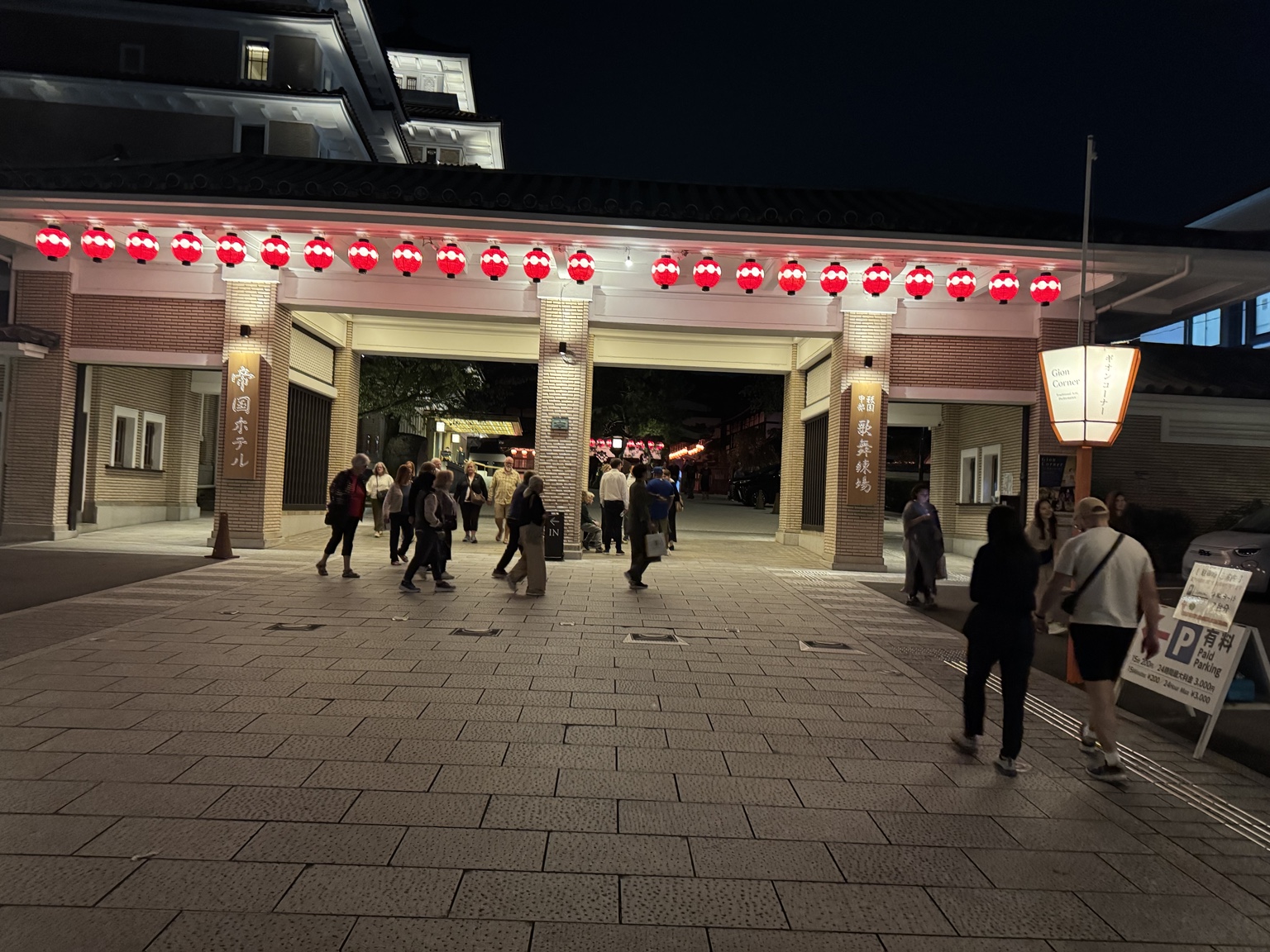
In the evening, Gion took on another mood. Red lanterns glowed against the dark façades, and warm light fell across the paving stones. From outside, the old teahouses seemed discreet, almost closed off. That is just what sets the imagination going.
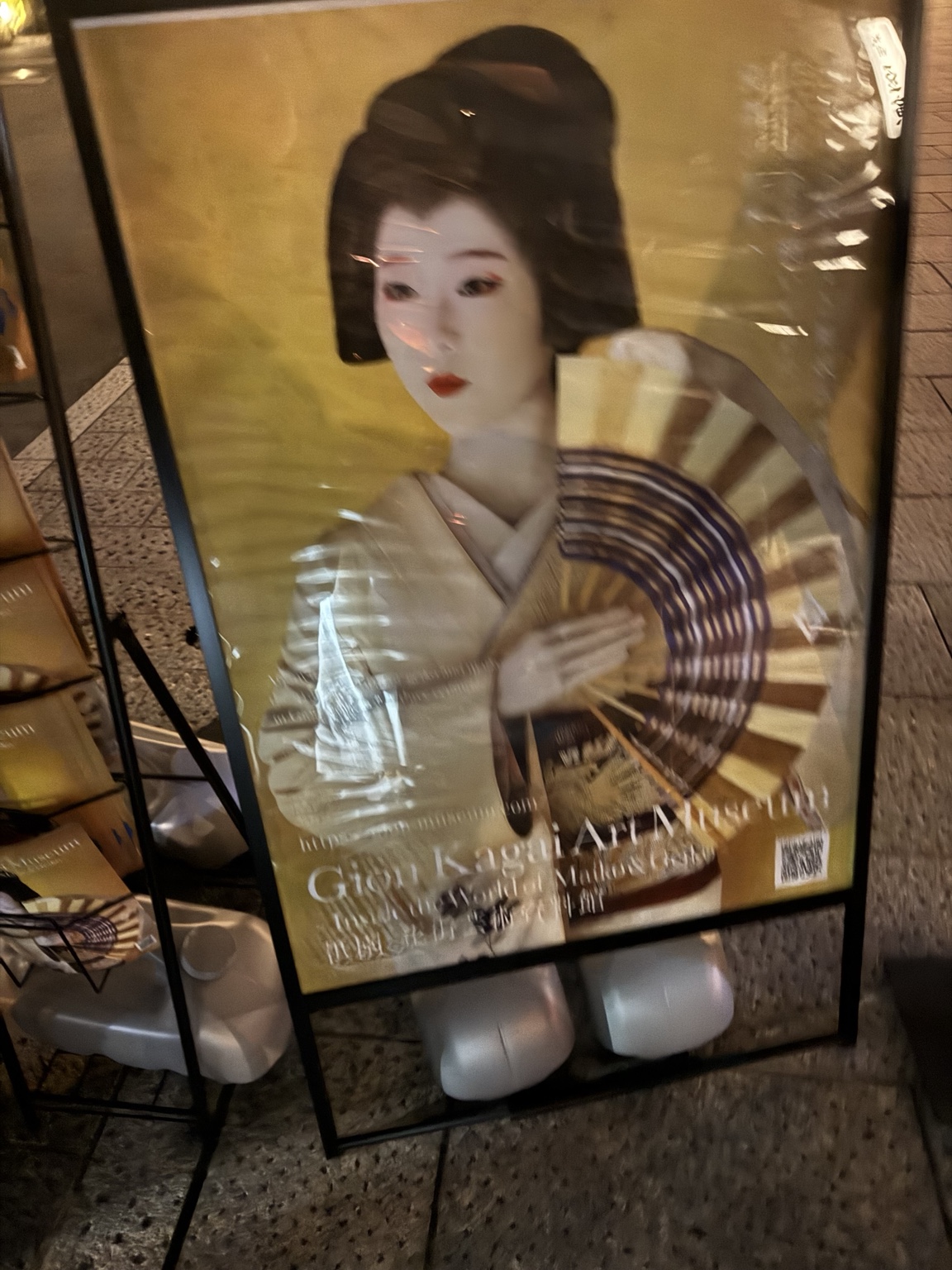
There is something particularly fascinating about geisha culture for me. Wandering through these lanes, you feel transported to an earlier time. You look at the bamboo blinds and imagine that a geisha might be sitting behind them, watching us walk past. We gaze curiously at the houses—and perhaps someone is looking back with just as much curiosity. A thought that suits this neighbourhood, which reveals so much while keeping so much hidden.
Some of the narrow private lanes are closed to visitors. Seeing the crowds, that is easy to understand. People live and work behind these façades. Even in such an enchanting neighbourhood, there has to be somewhere to retreat.
Later, we had a very good dinner in an old teahouse. After all that looking and walking, it was a lovely way to finish the day.
By then, Anneliese had been groaning a little about all the walking. And yes, we were both tired in the end. Gion is simply easier to enjoy with your eyes than with your feet.
Still, it was worth every step.
Kyoto in pictures

Exhibition background: Kyoto National Museum – The Tale of Genji
← Previous chapter · All chapters · Chapter 25: Kyoto in the Morning →