21 October 2026 · Kanazawa – Tokyo – Odawara – Hakone
Yesterday I wondered what would last longer during our change of trains in Tokyo: our time buffer or our nerves. Today we know the answer. We made the connection. But Tokyo Station made quite sure we earned the onsen retreat that followed.
Upstairs, downstairs — with half the household
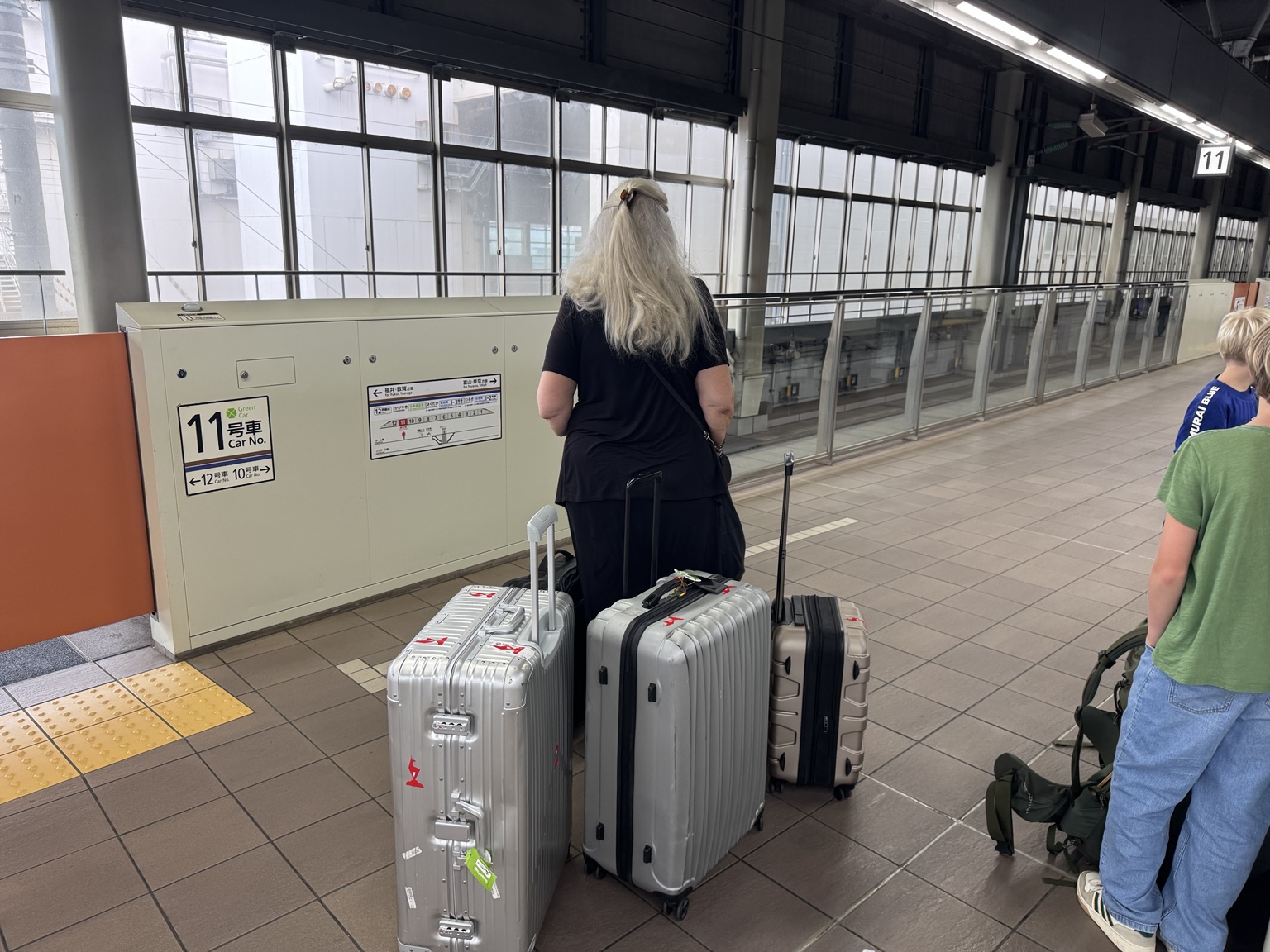
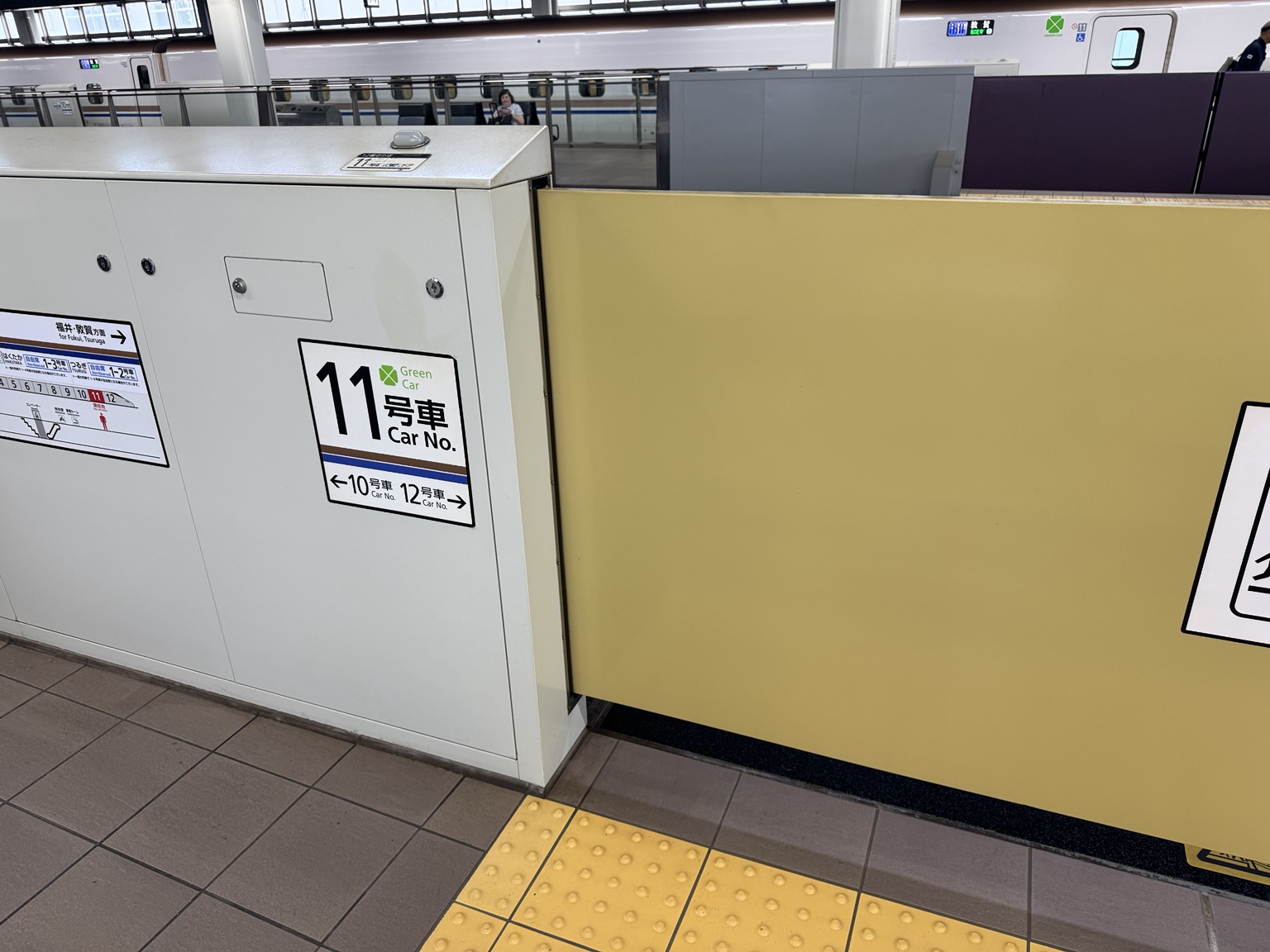
From Kanazawa, we travel via Tokyo to Odawara. On paper, it is a train connection. In practice, part of it turns into a small obstacle course: up the stairs, down the stairs, change trains, find our bearings, keep moving. The halls are packed with people, with queues and movement everywhere. And in the middle of it all are Anneliese and me, accompanied by our rather substantial collection of luggage.
Working our way through it is quite a travel experience in its own right. Tokyo Station certainly earns its own place in my diary. Probably not in the relaxation section.
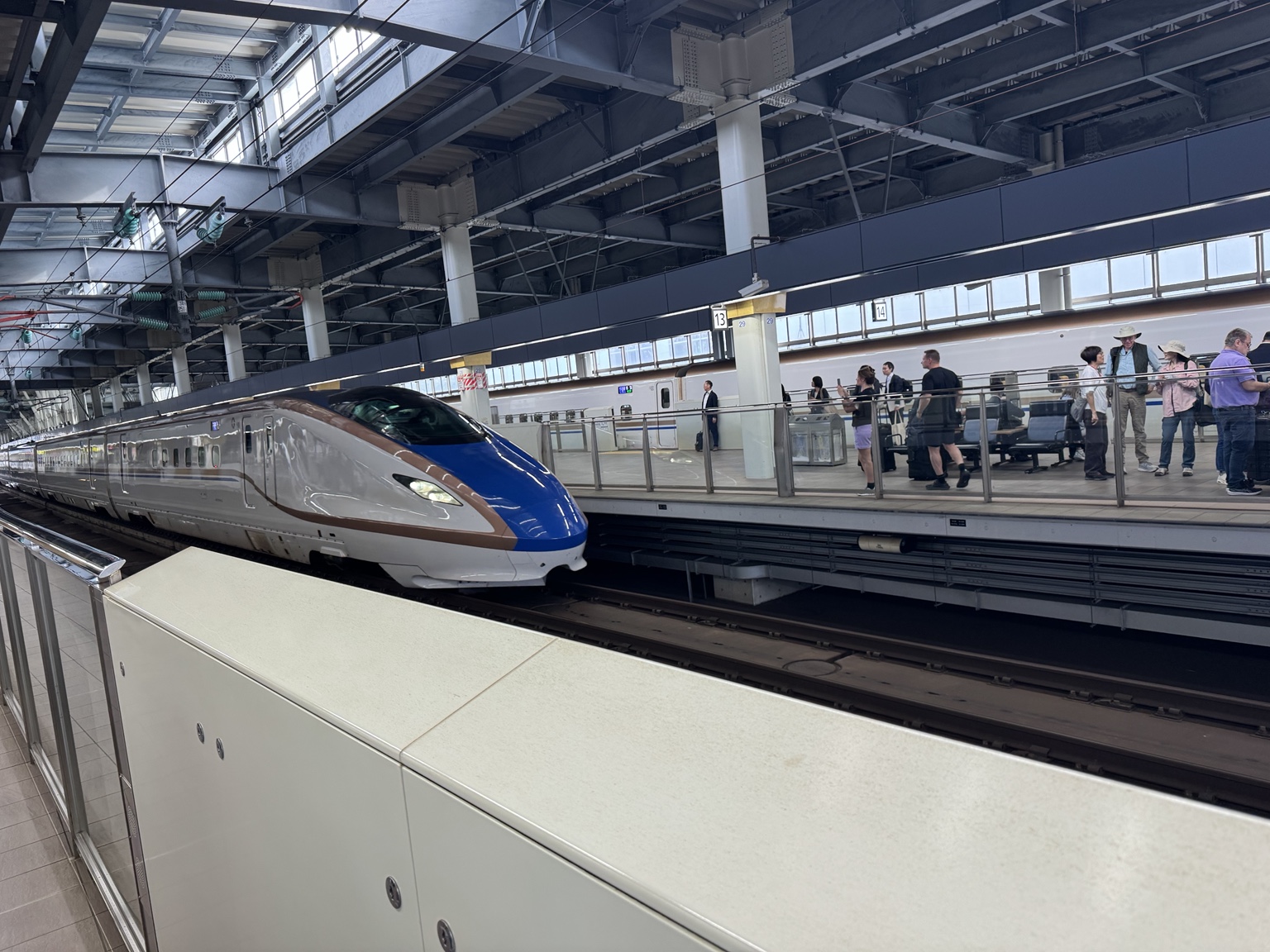
The connection is tight. And Japanese trains have a quality you admire most wholeheartedly once you are already sitting inside: they leave precisely on time. On this journey, I have not experienced a delay of even a minute. Impressive. With several suitcases and a shrinking time buffer, though, that precision takes on a rather different significance.
From the station into the greenery
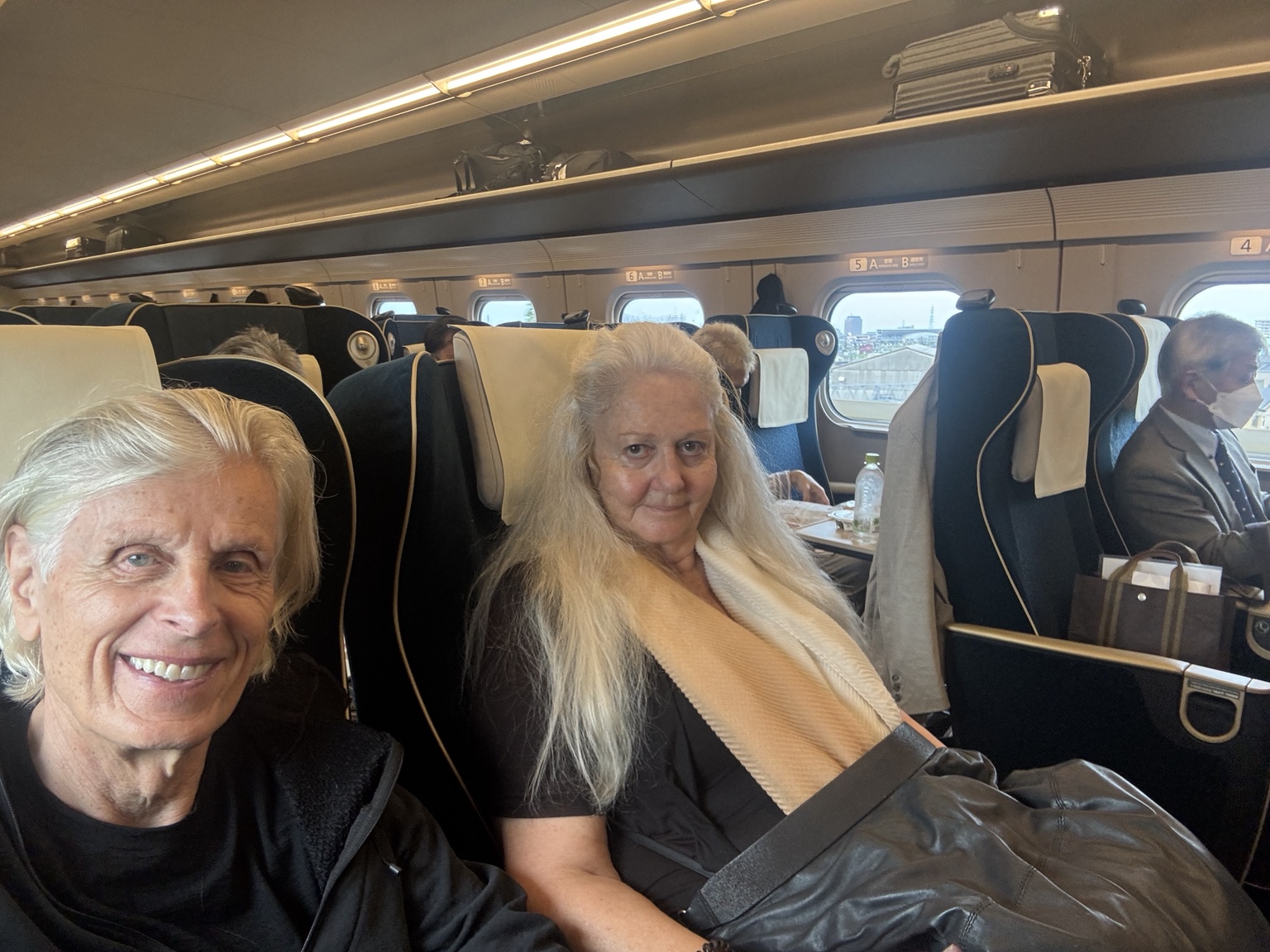
Eventually we are seated on the train, and around midday we arrive safely in Odawara. From there, a taxi takes us to Hakone. After the crowds in Tokyo, the journey to our retreat feels like someone gradually turning down the volume.
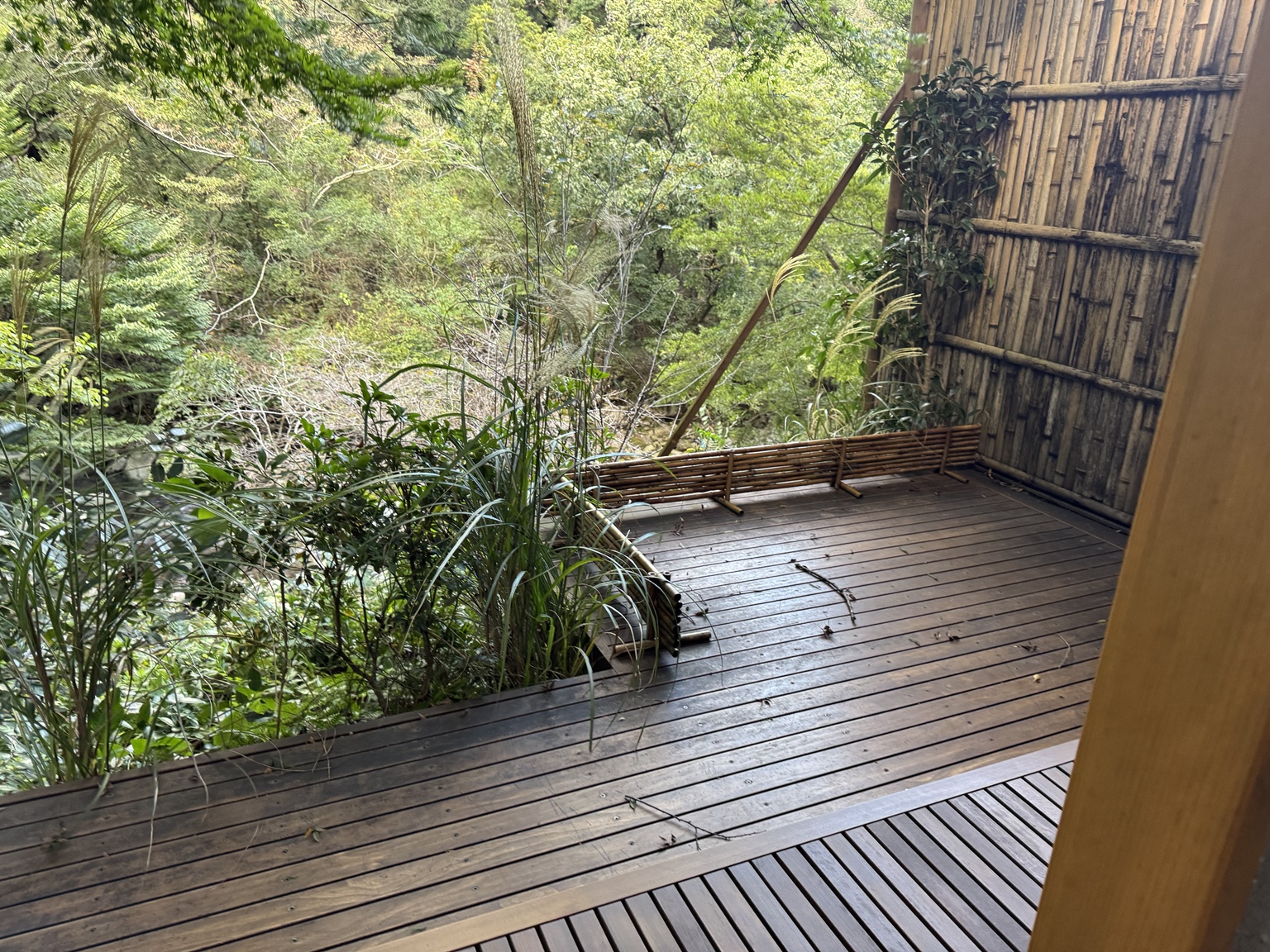
KAI Hakone sits beside the river, among wooded mountain slopes. Beautiful, and wonderfully close to nature. Here, the view is all greenery, trees and water. An extraordinary change of scenery in the space of just a few hours.
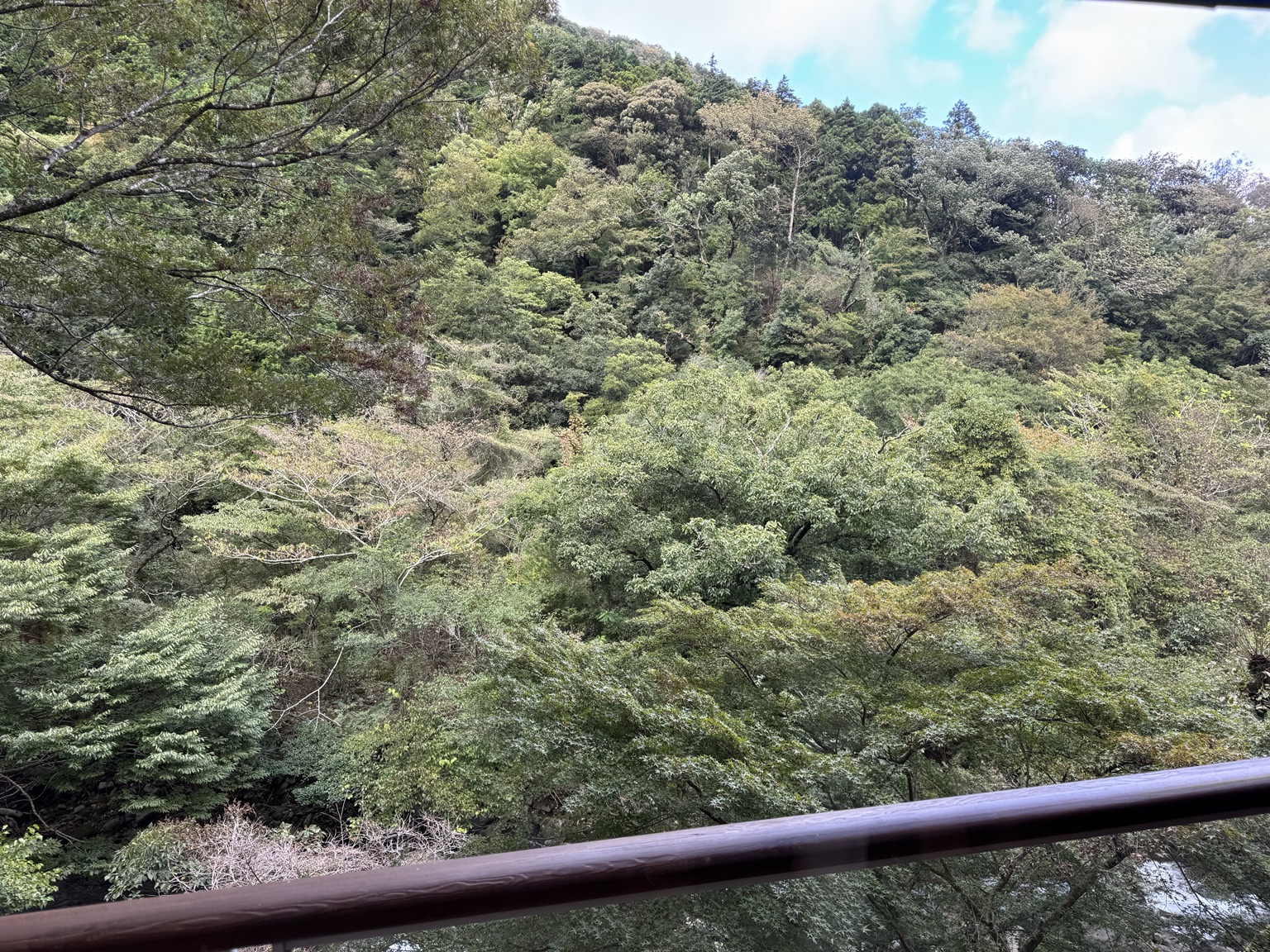
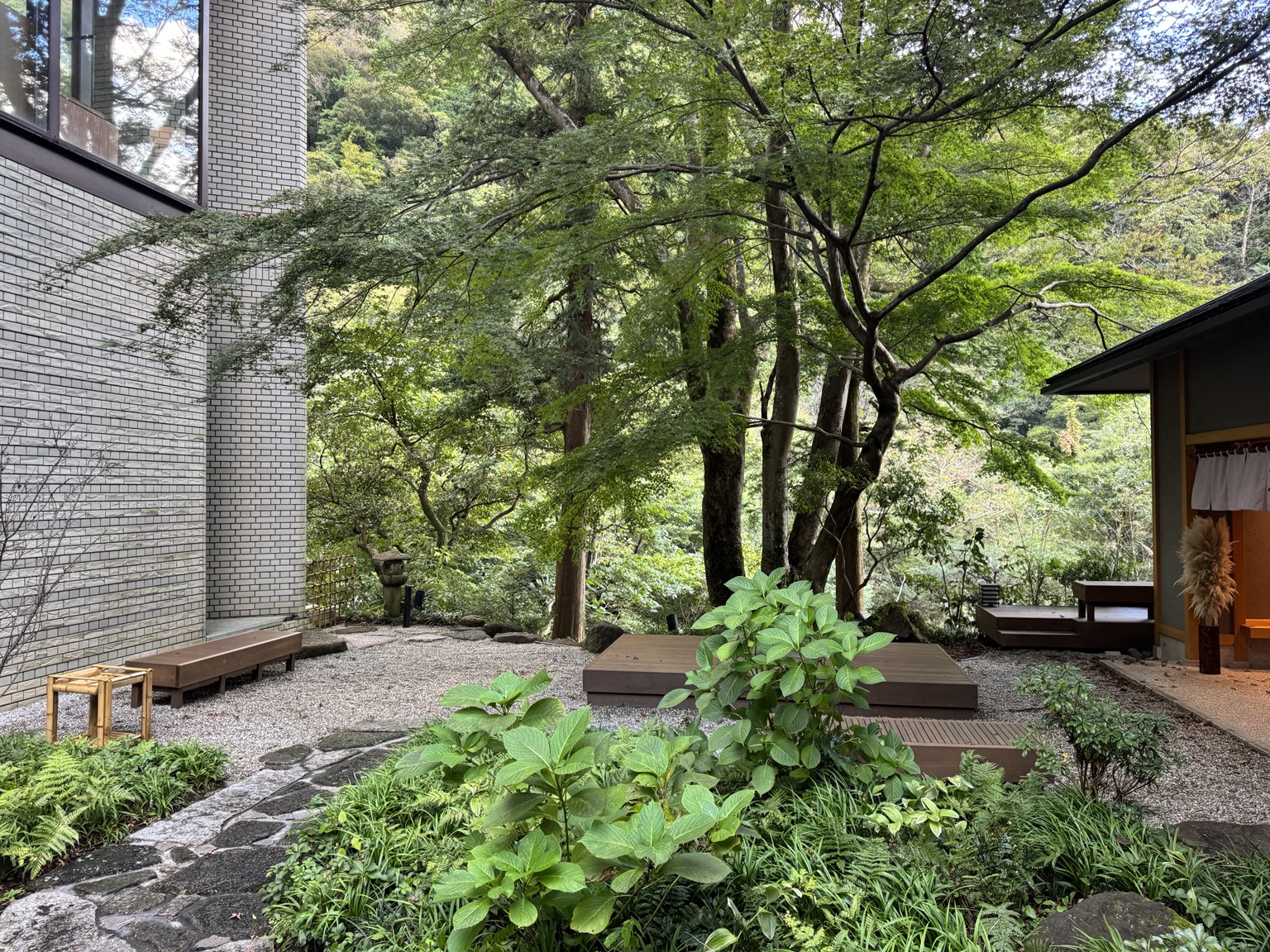
Plenty of space, very little distance from the floor
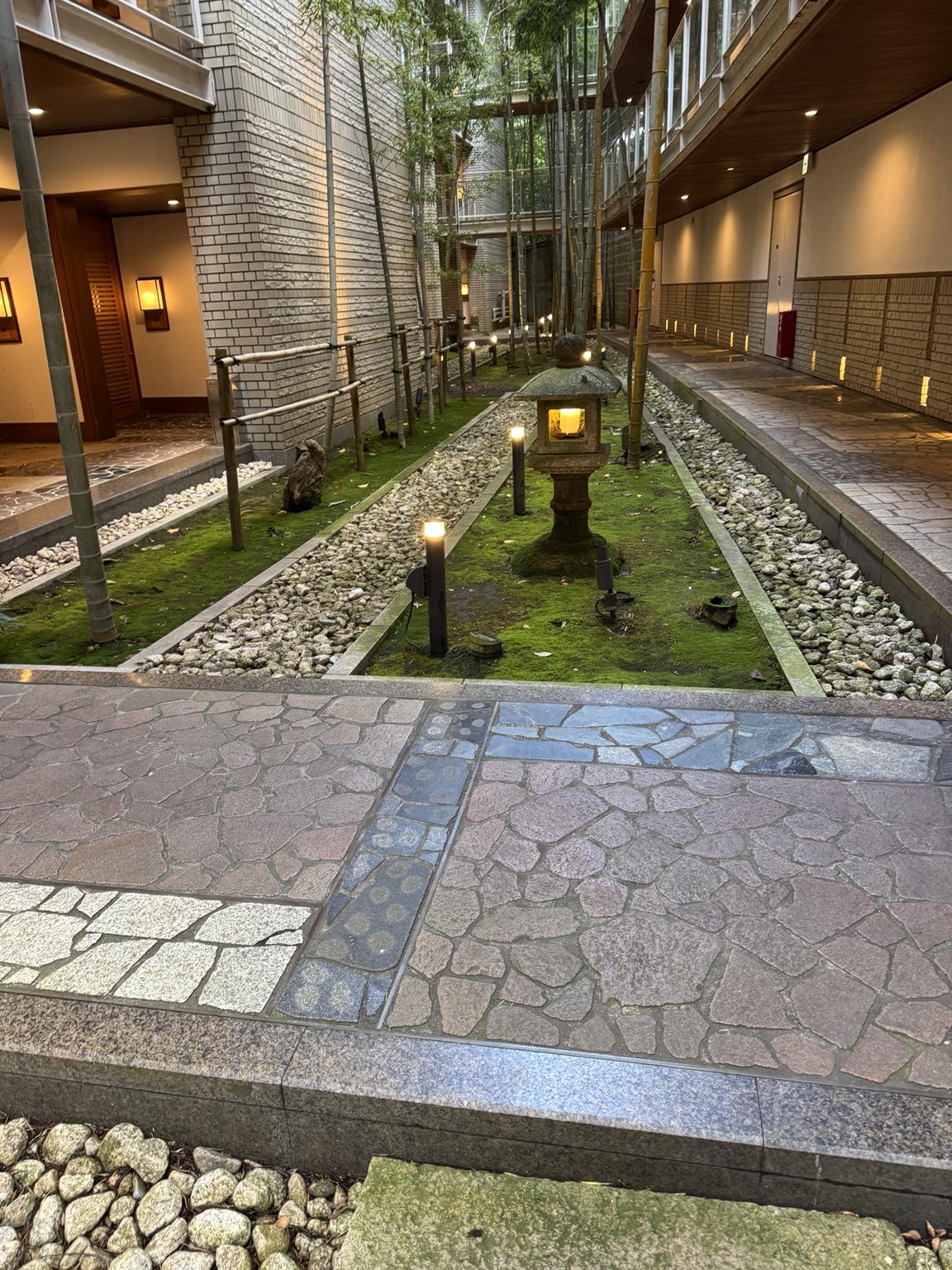
Our Japanese retreat is spacious, almost like a small apartment. A very tastefully arranged living area, plenty of room, and a calm style that feels especially welcome after a day of travelling like this one.
We will be sleeping almost at floor level. Not directly on the tatami mat, but on a very low mattress. Another change of perspective: this morning we were constantly going up and down inside the station. For the night, we are keeping closer to the ground.
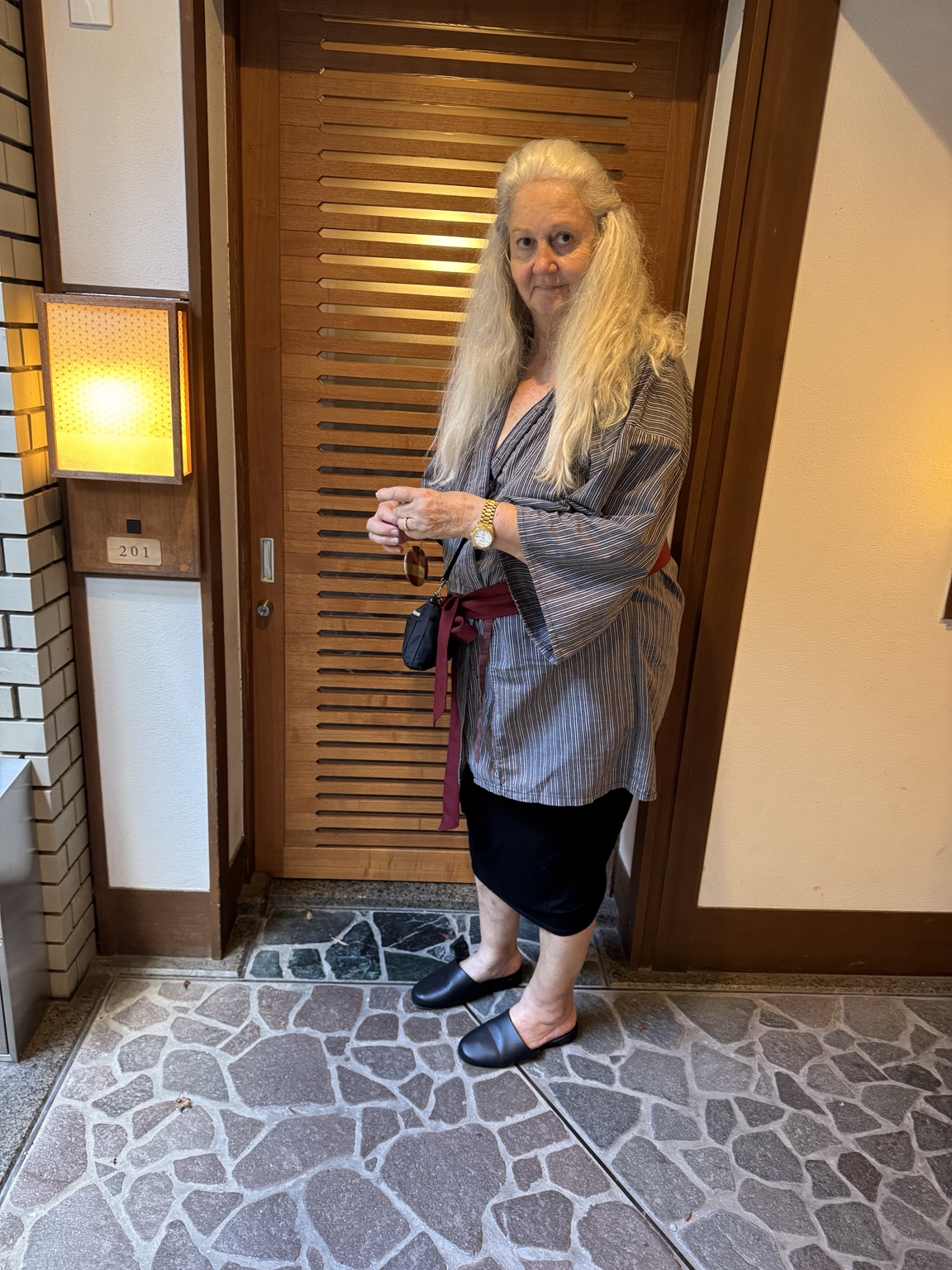
Now the day can slow down
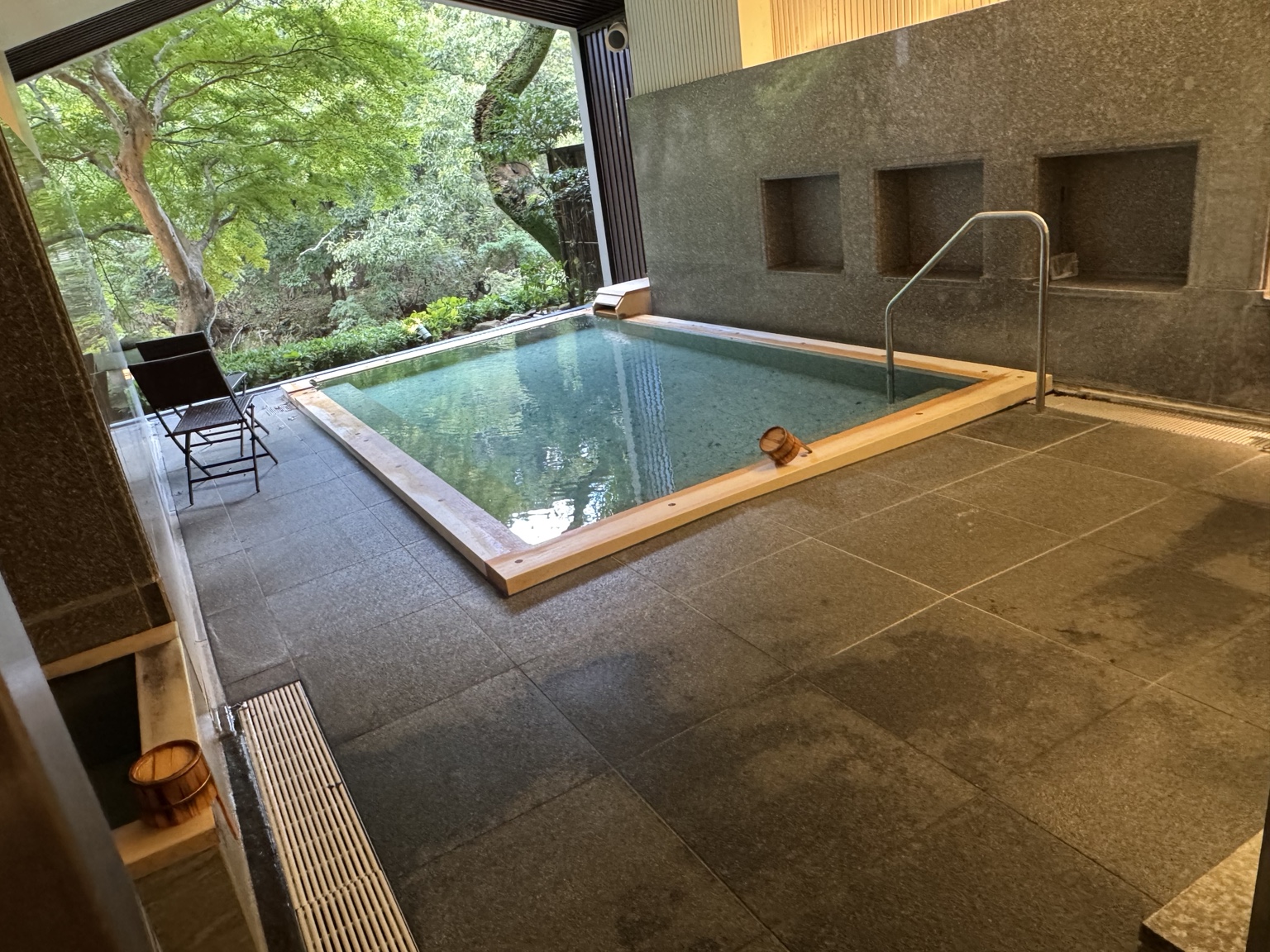
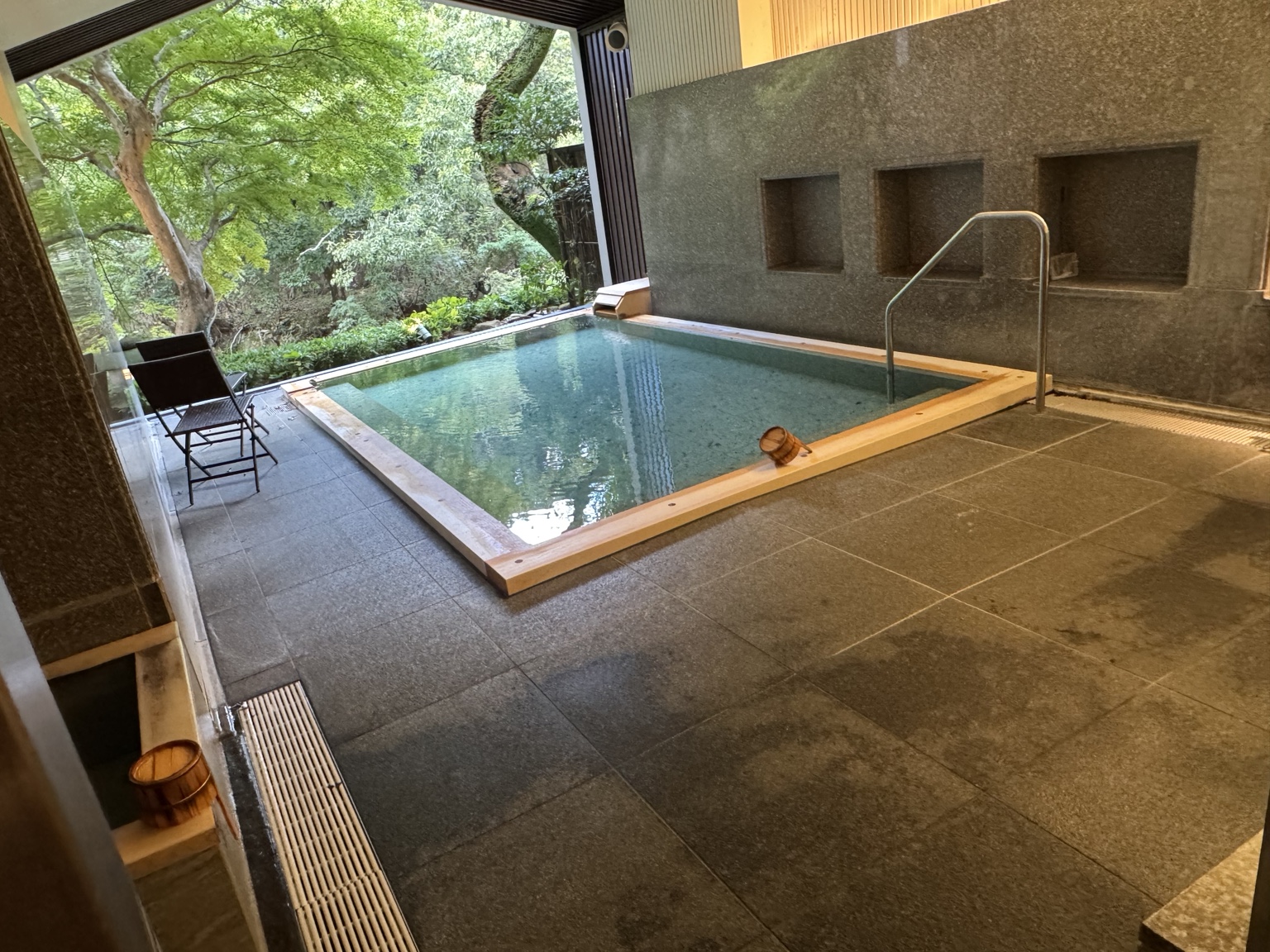
There is an onsen, too. A warm bath with a view of the greenery fits rather well with what we have in mind after today’s journey. The retreat also offers various cultural activities.
For now, we are simply happy to have arrived. The suitcases can stay where they are. The river keeps flowing. And there are no more trains for us to catch today.
21 October 2026 · A Feast at KAI Hakone
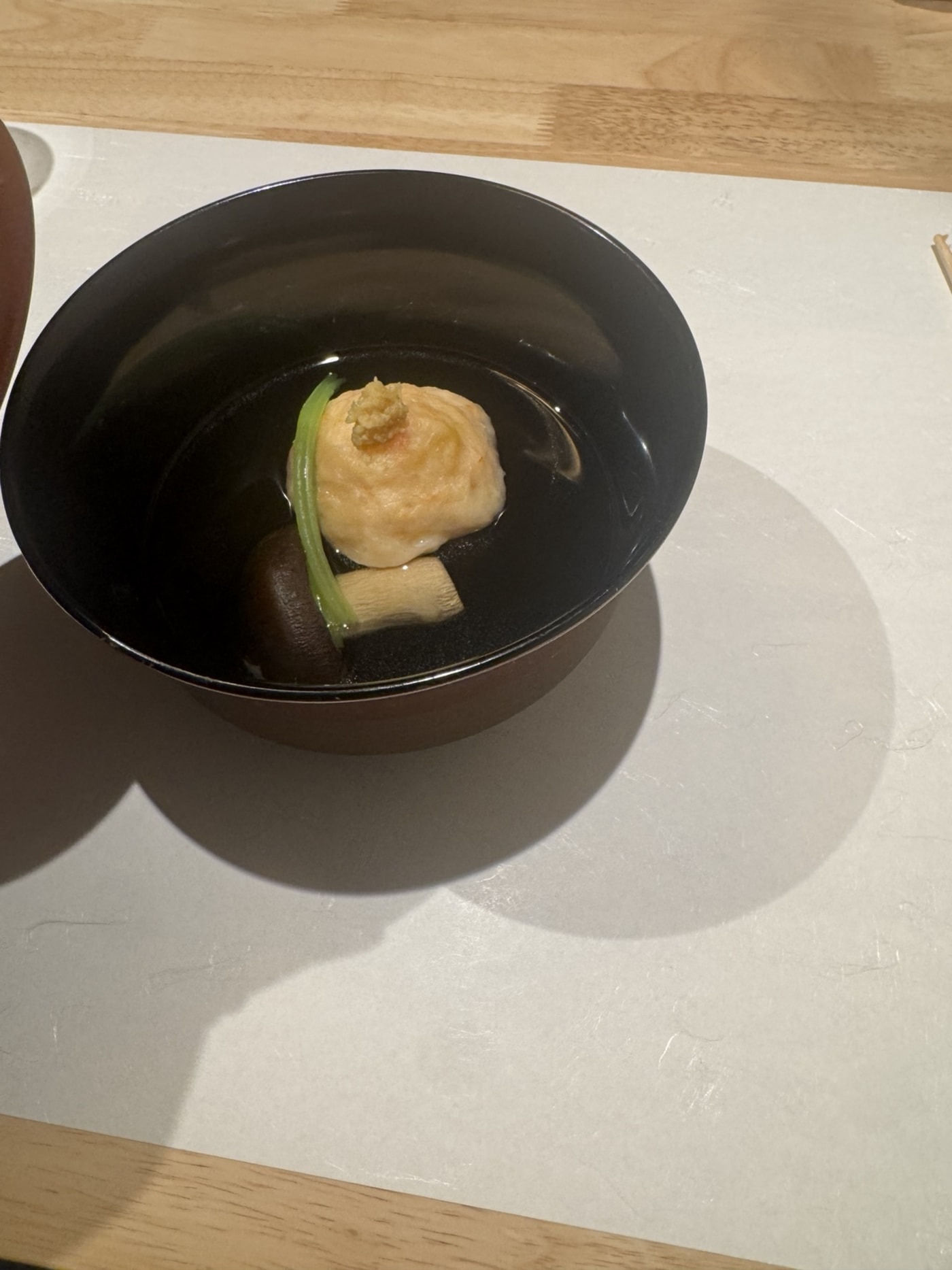
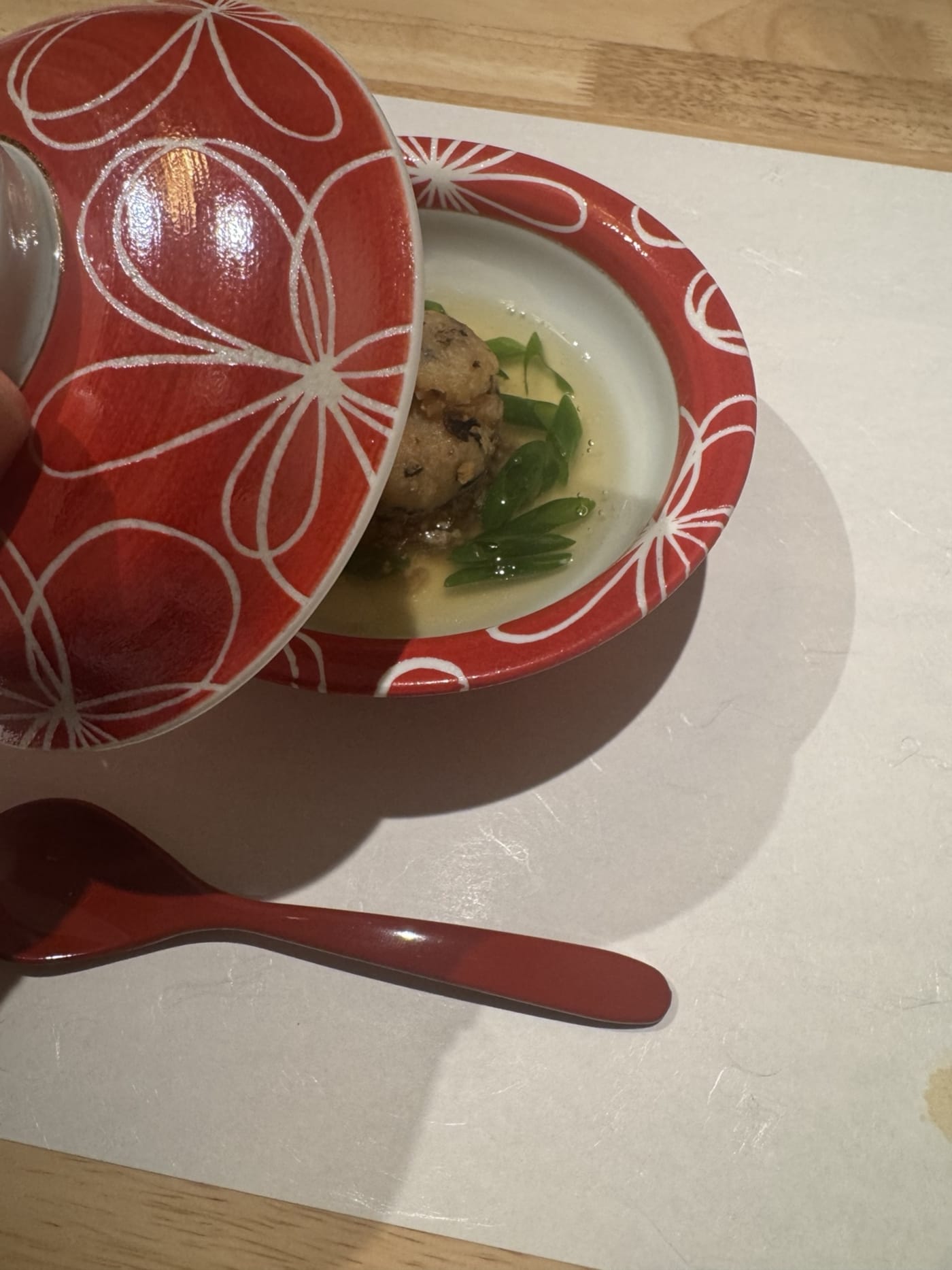
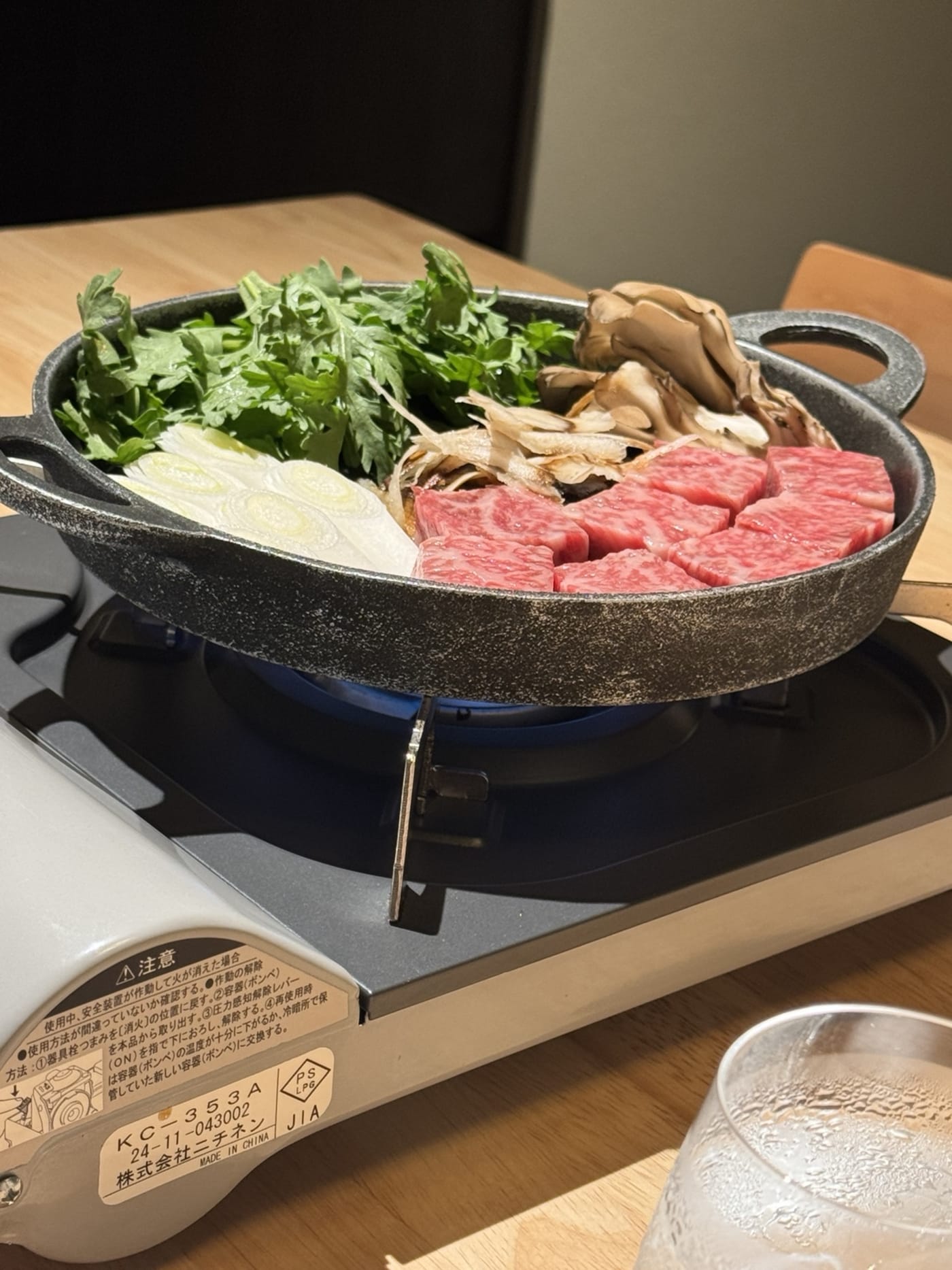
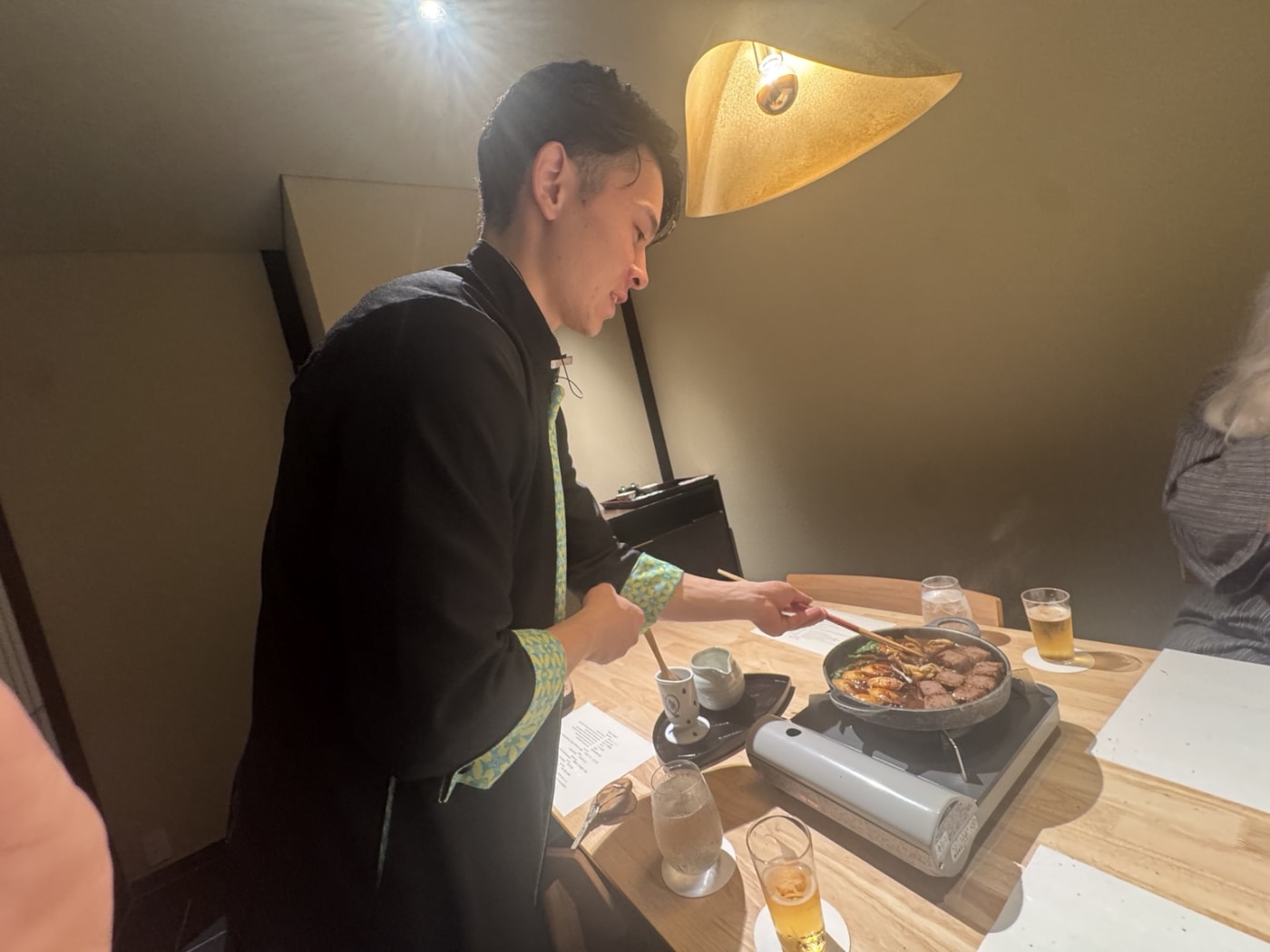
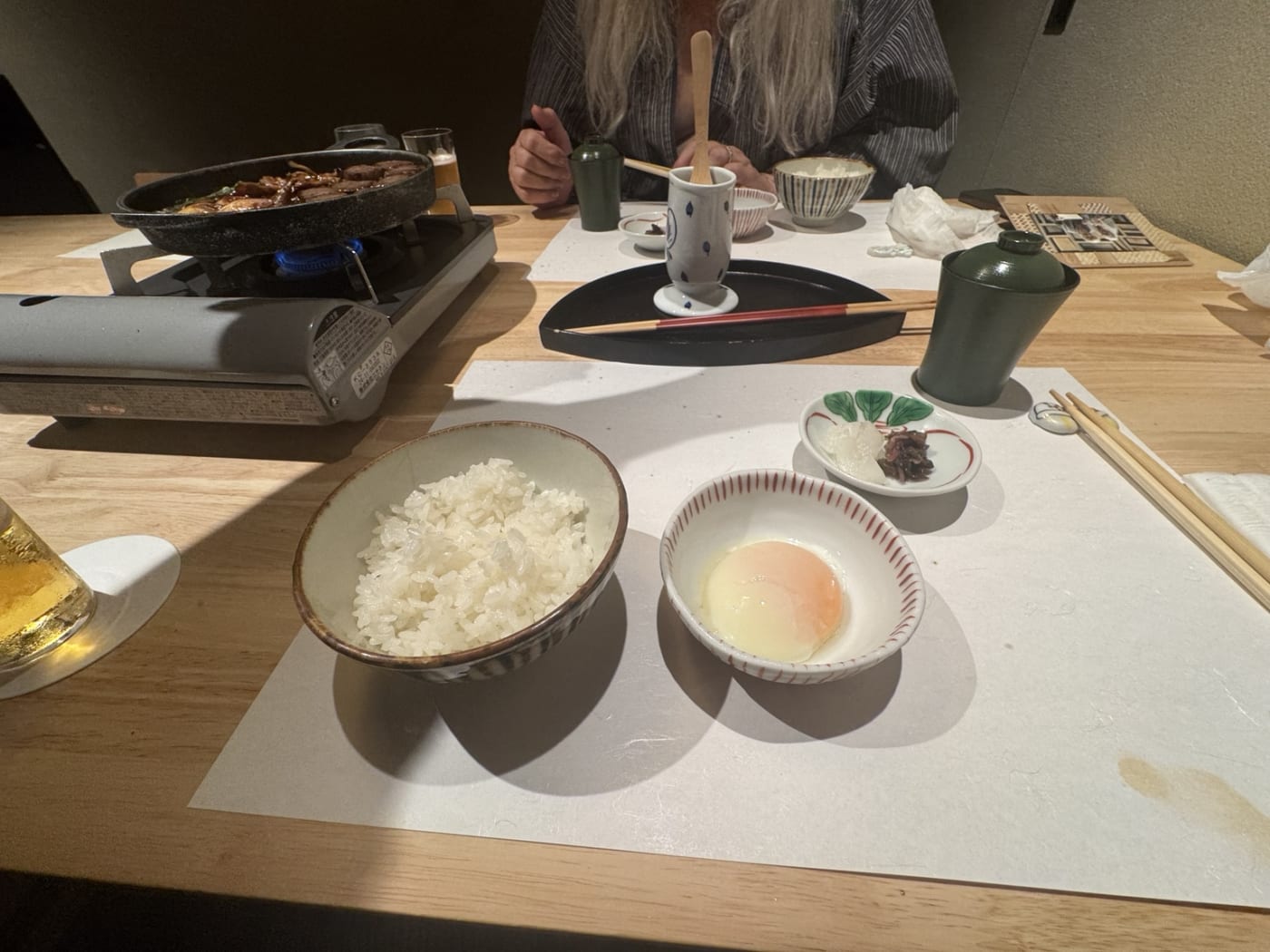
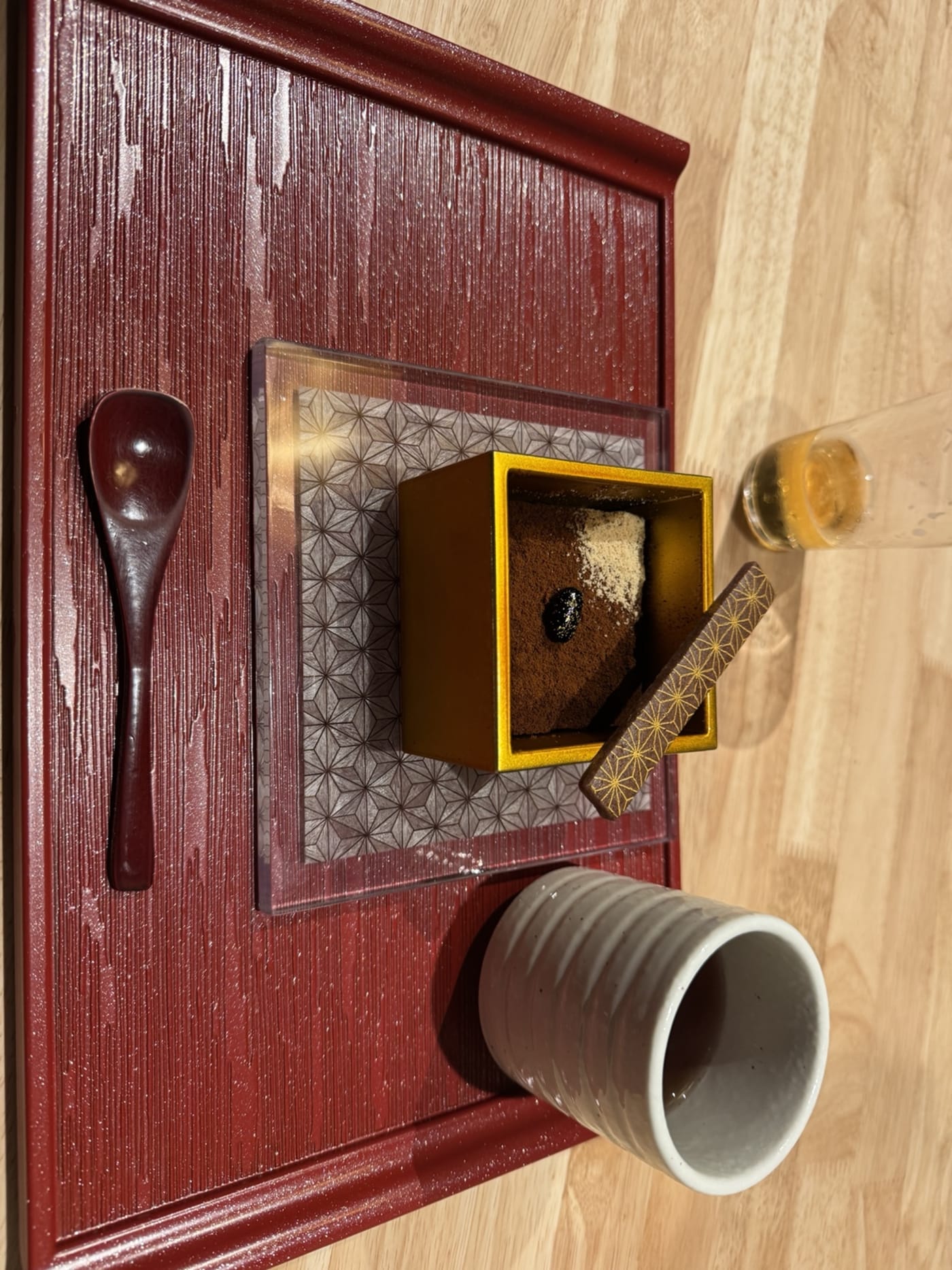
That evening, KAI Hakone raised the bar once again. What arrived at our table was no ordinary hotel dinner, but an opulent Japanese feast.
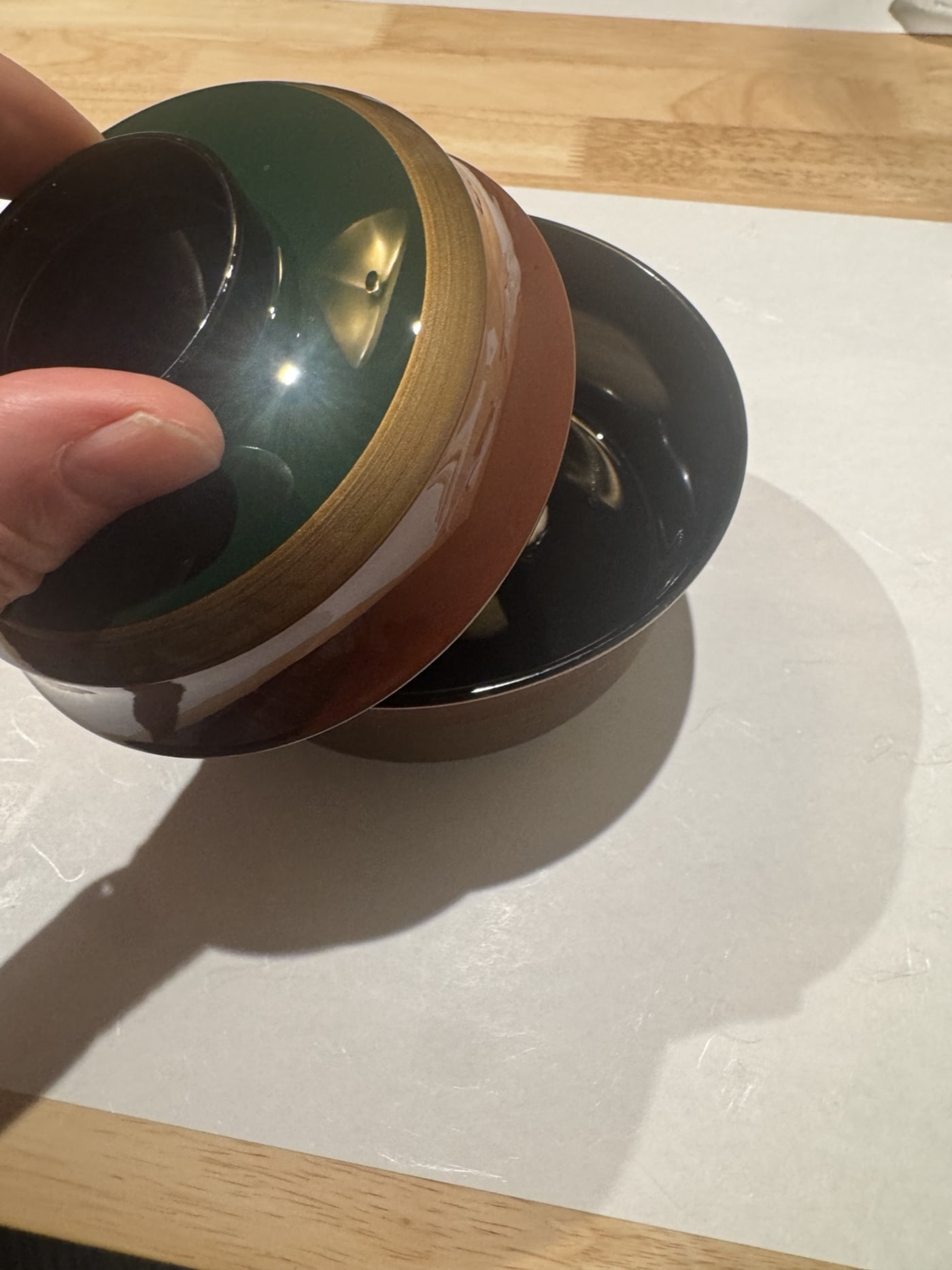
Course after course appeared, carefully arranged in beautiful bowls. Part of the meal was prepared right in front of us – calmly, attentively and with the kind of precision that can turn even dinner in Japan into a small ceremony.
Above all, it was delicious. The quality was exceptional, and we enjoyed the evening enormously. A big compliment to KAI Hakone: after the railway-station adventure, this was a rather elegant reminder that travel can also bring you back to calm through the stomach.
22 October 2026 · Hakone: The Road to Lake Ashi
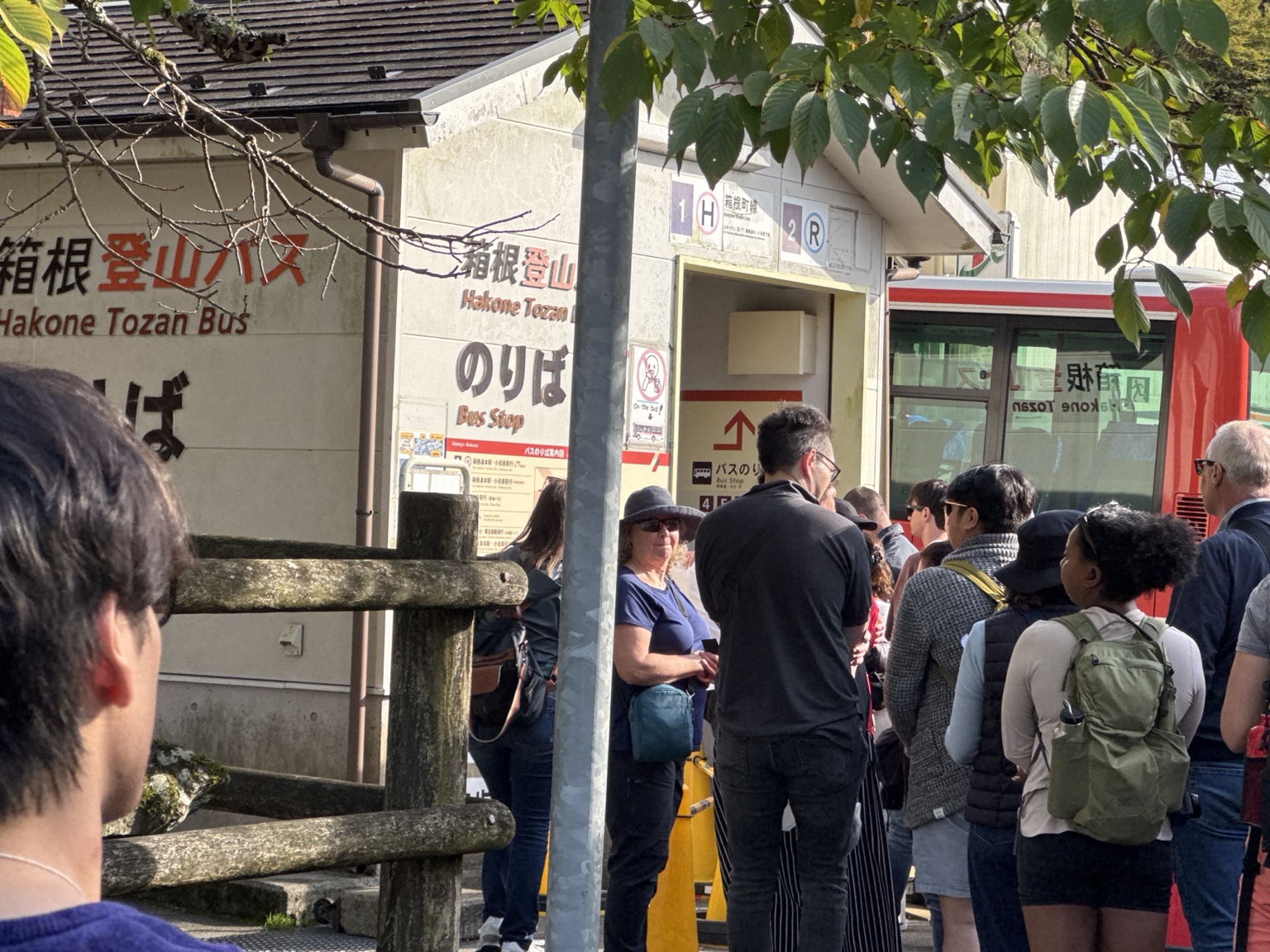
Today we set out to take the ropeway towards Lake Ashi. It sounds elegant enough. Reality, however, had its own timetable: no taxi, so first a train, then a bus – plus a wait that I described quite unambiguously as a “nightmare.”
When I sent my update, we were still on the ropeway and had just begun the section down towards Lake Ashi. Hakone is teaching us not only about nature, but also the Far Eastern art of patience. Lunch, the boat trip and the return journey were still open at that point – so no premature success story.
By now I am sitting in a restaurant looking out at the boats. Outside, by my estimate, tens of thousands of visitors are pressing through Hakone, while taxis remain conspicuously absent. One thing is clear, though: I did not come all the way to the lake simply to return by bus. I want to cross the water. Whether and how we actually get aboard and make it back to the hotel is still unresolved at this moment.
And then, at last: across the lake
Hakone turned the outing into its own obstacle course. First came a bus and a train, then two mountain-railway and ropeway stretches. Between them came queues again and again: altogether we spent more than an hour and a half waiting. The reward was the steaming volcanic landscape high above Hakone – and even Mount Fuji appeared between the clouds.
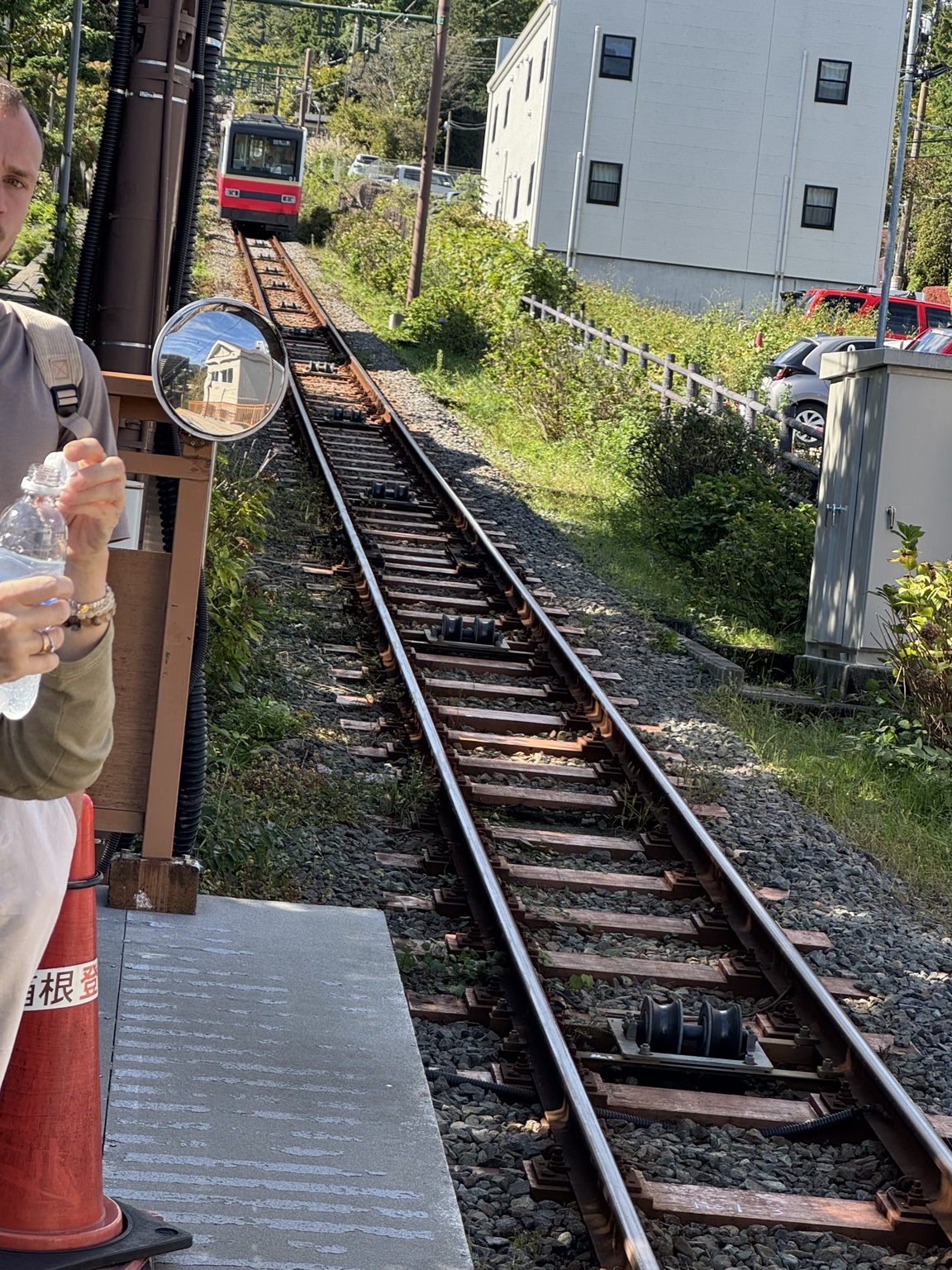
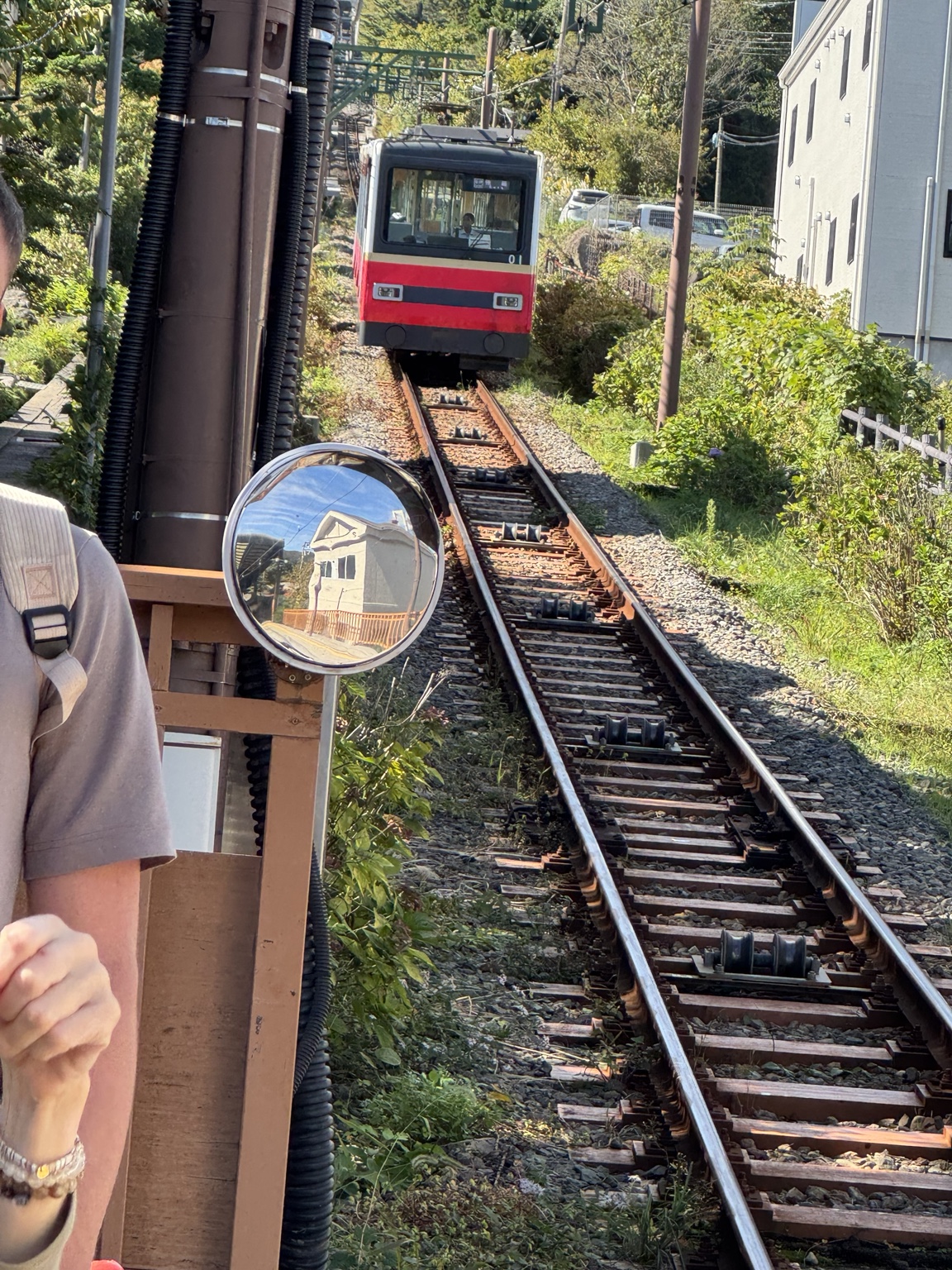
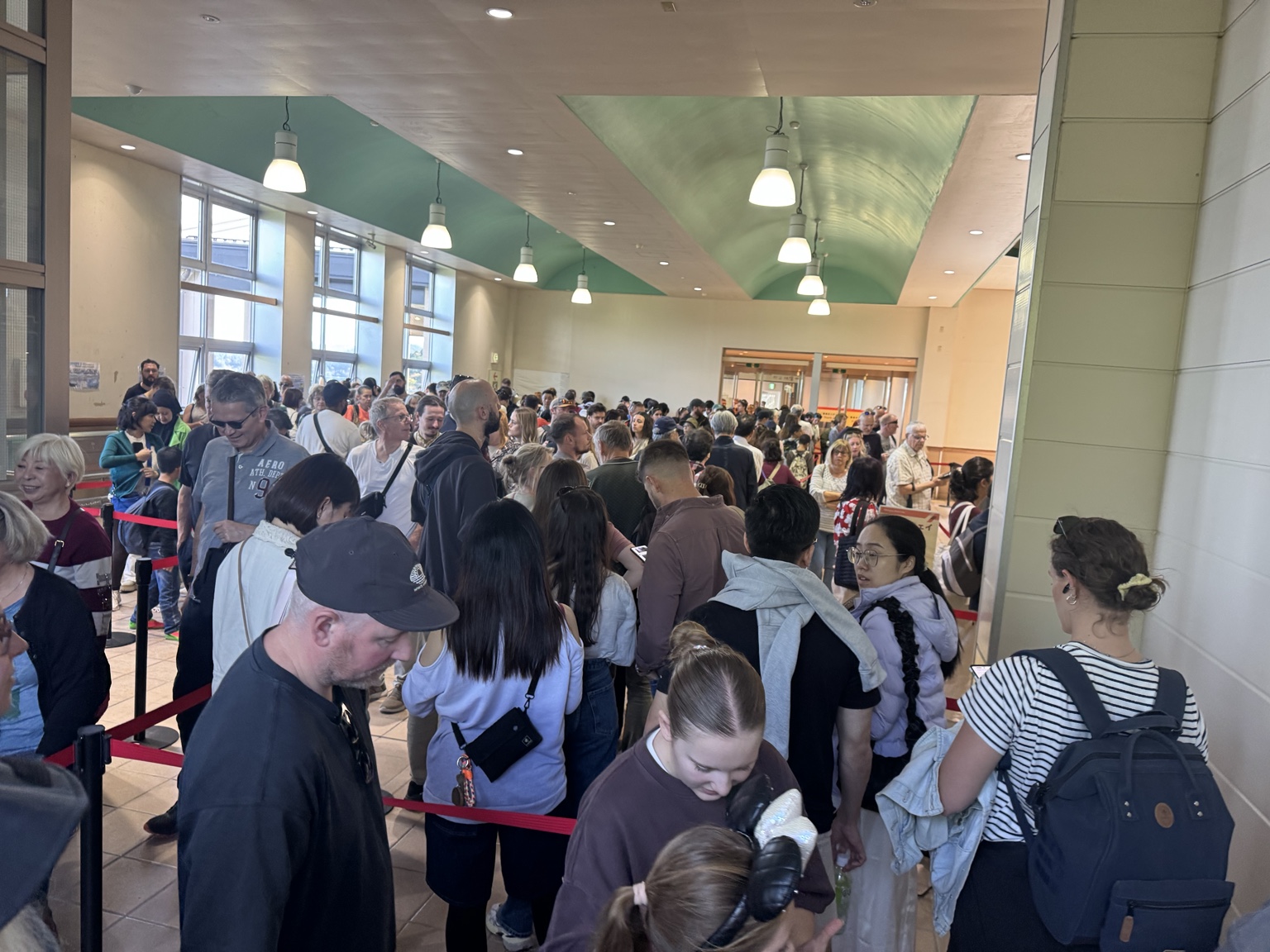
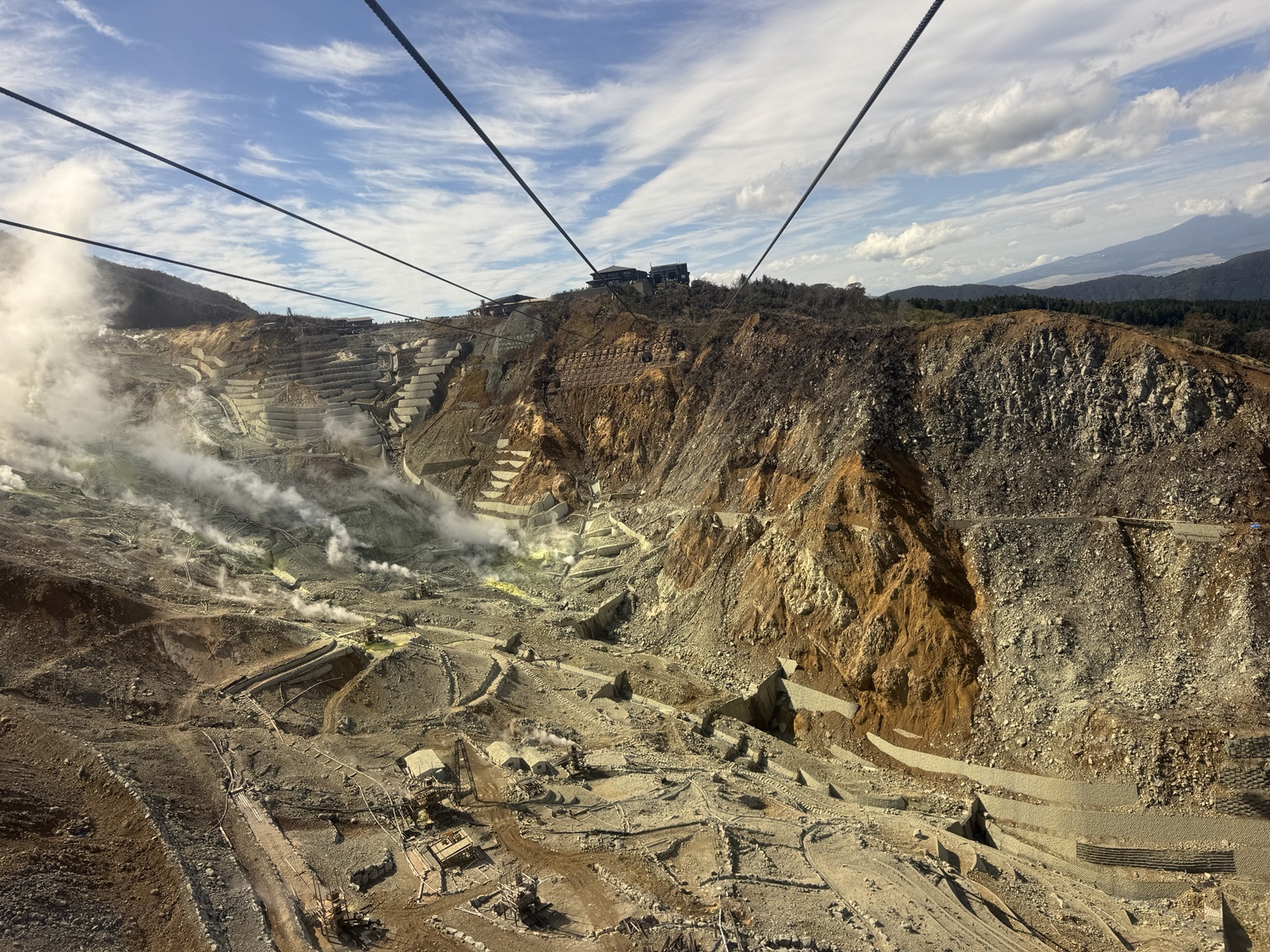
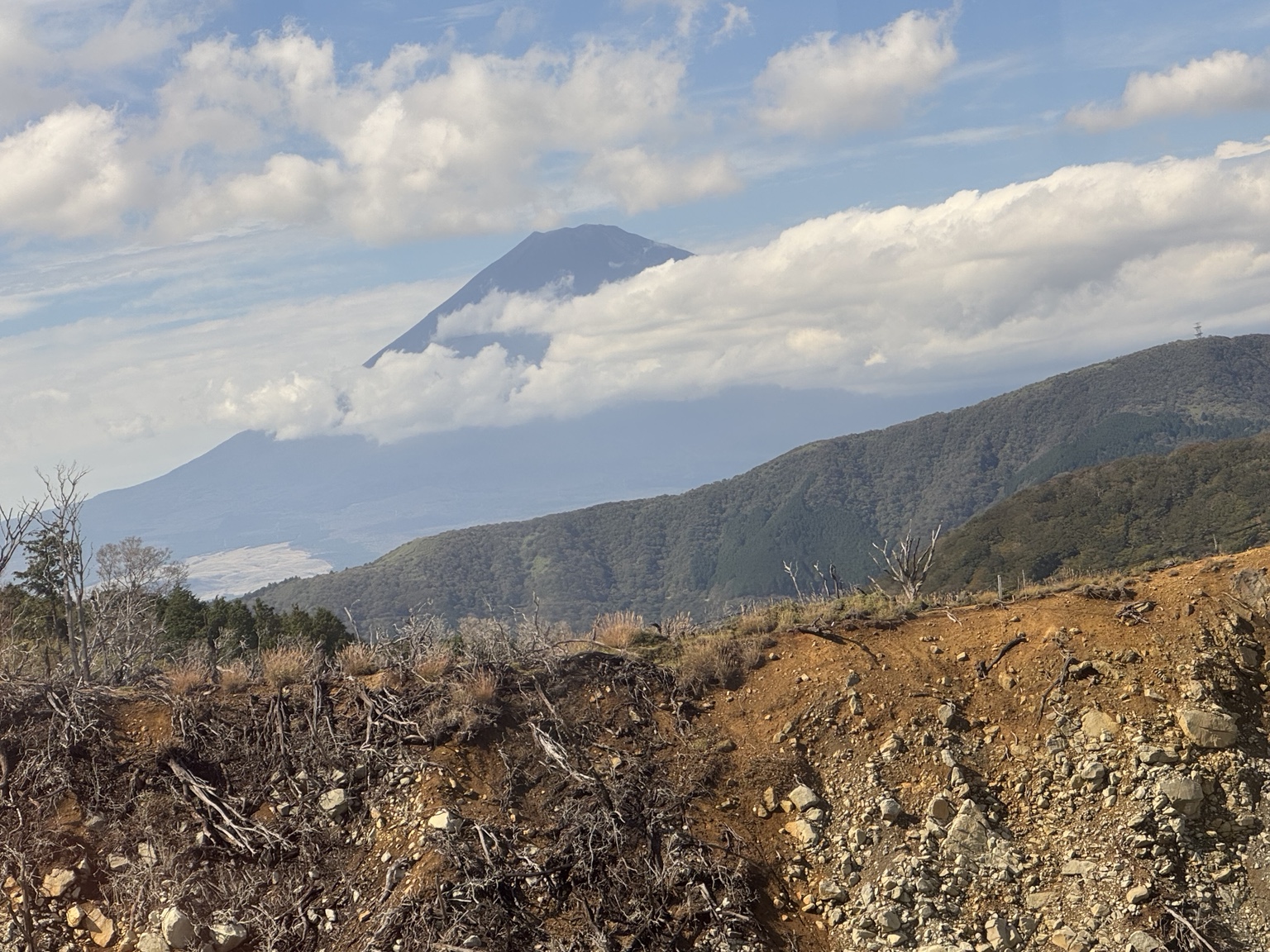
On the way down to Lake Ashi, the crowds did not exactly disappear. We ate first and then really did board one of the pirate sightseeing ships. After so much standing, a little comfort seemed justified, so we chose first class. Anneliese and I sat in the quieter forward section while lake, mountains and shoreline drifted past.
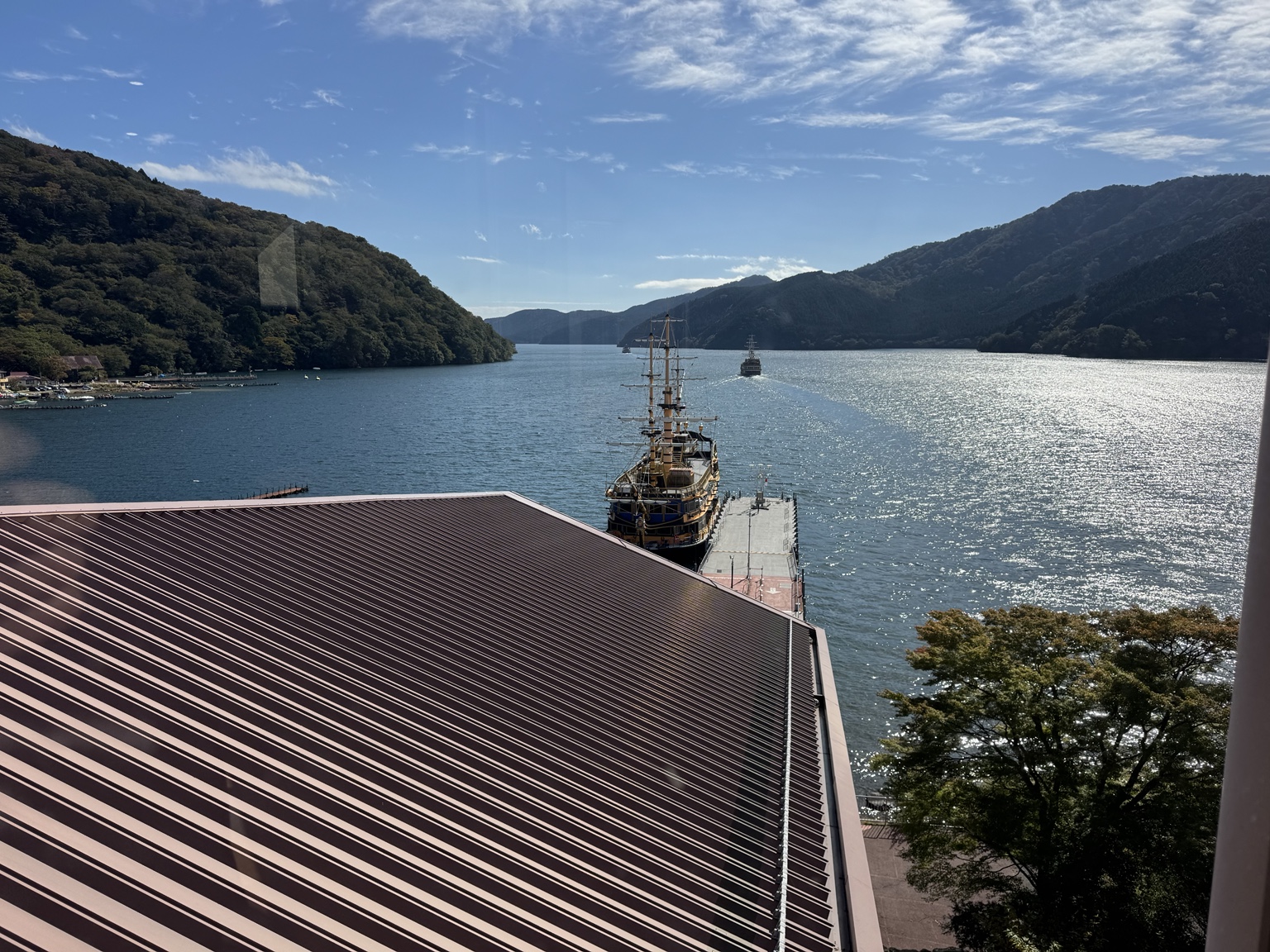
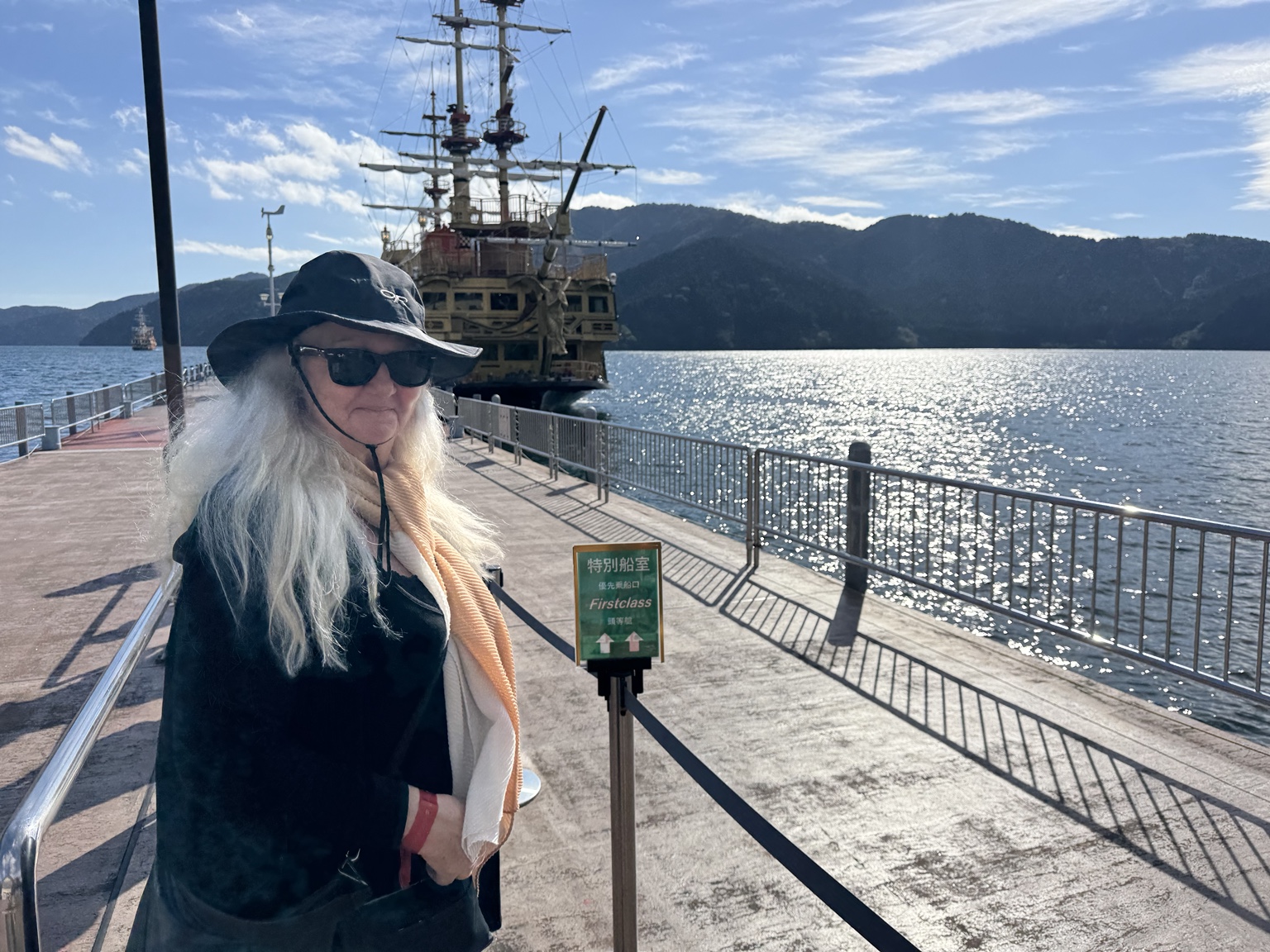
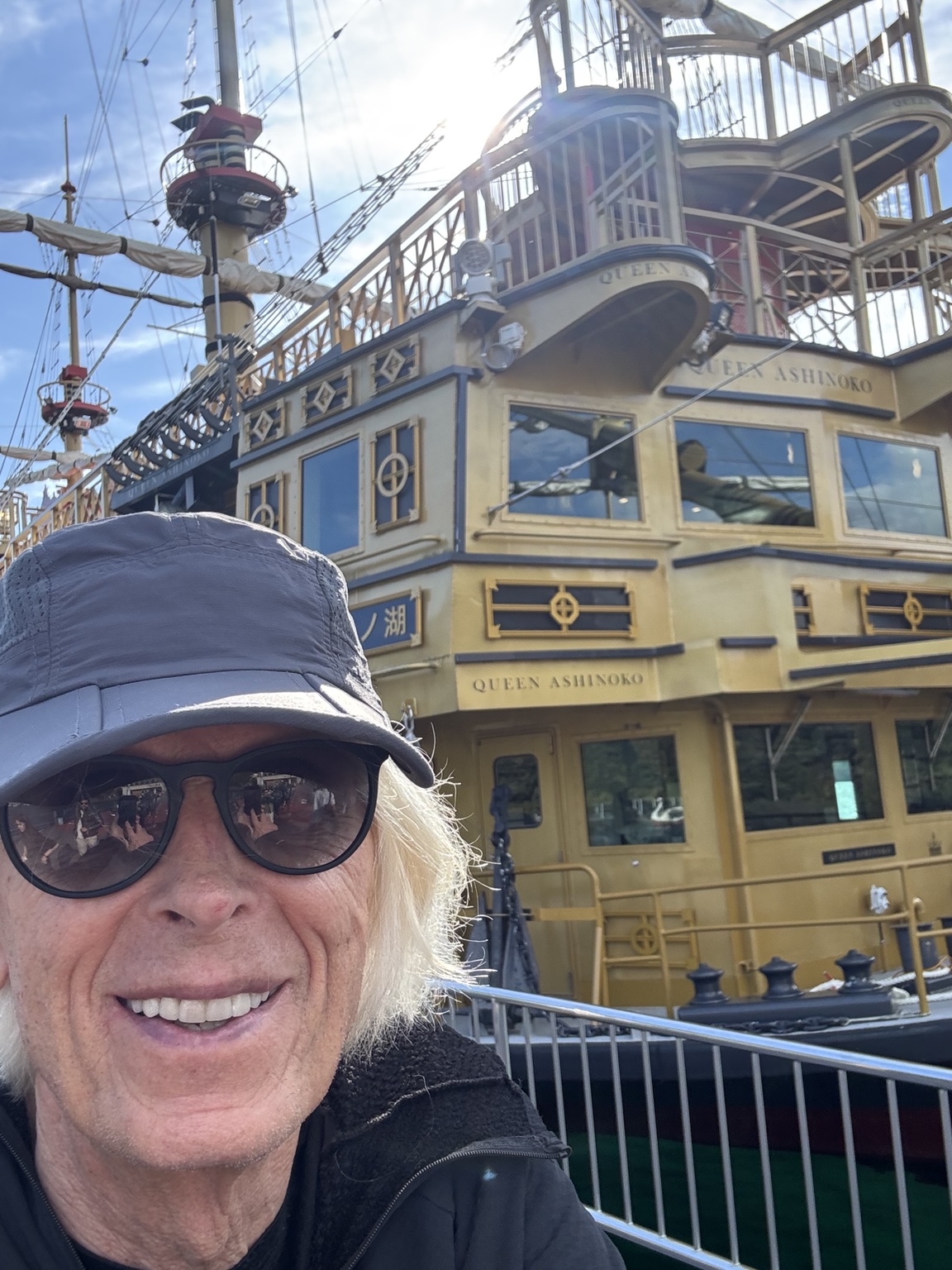
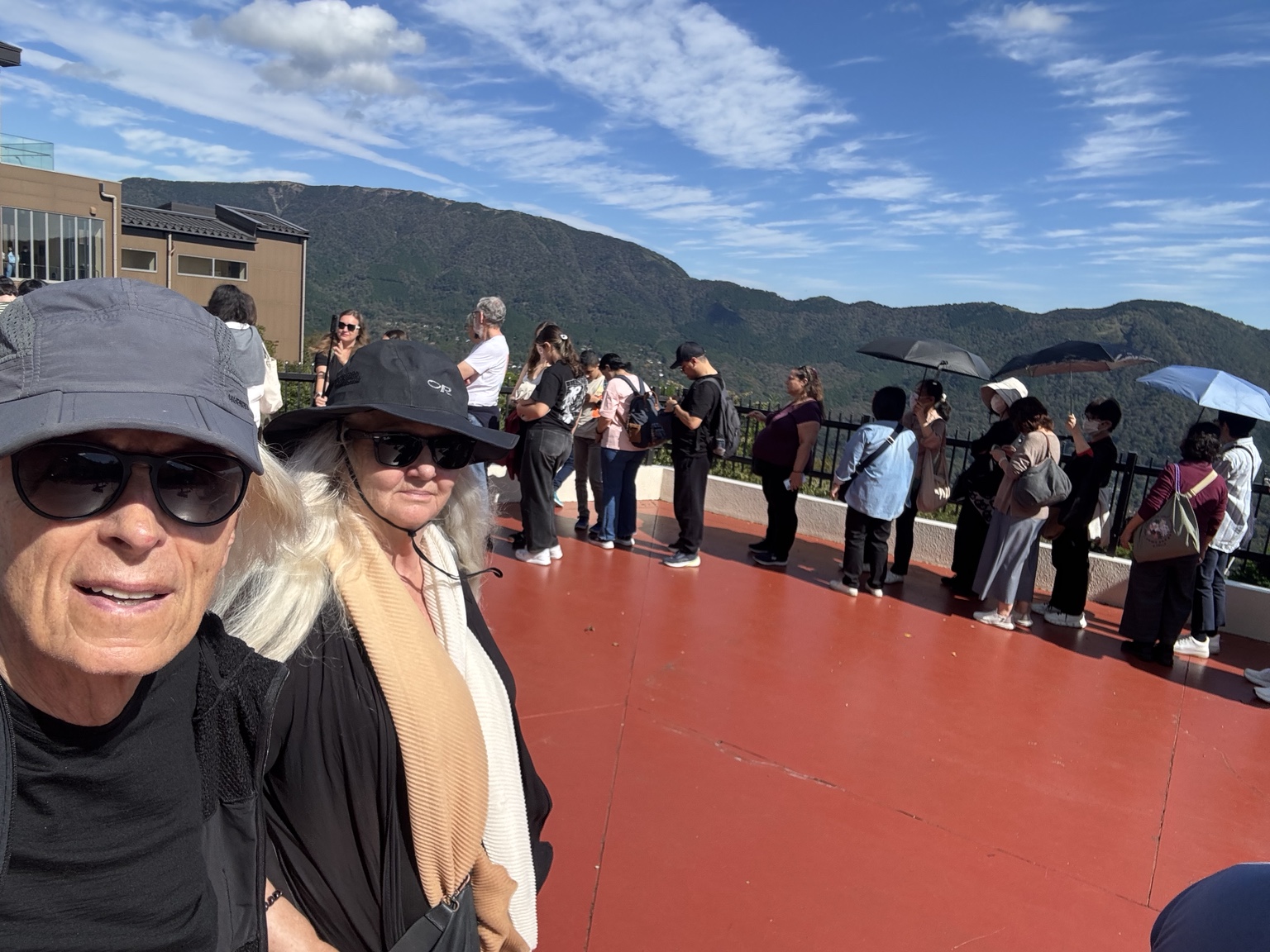
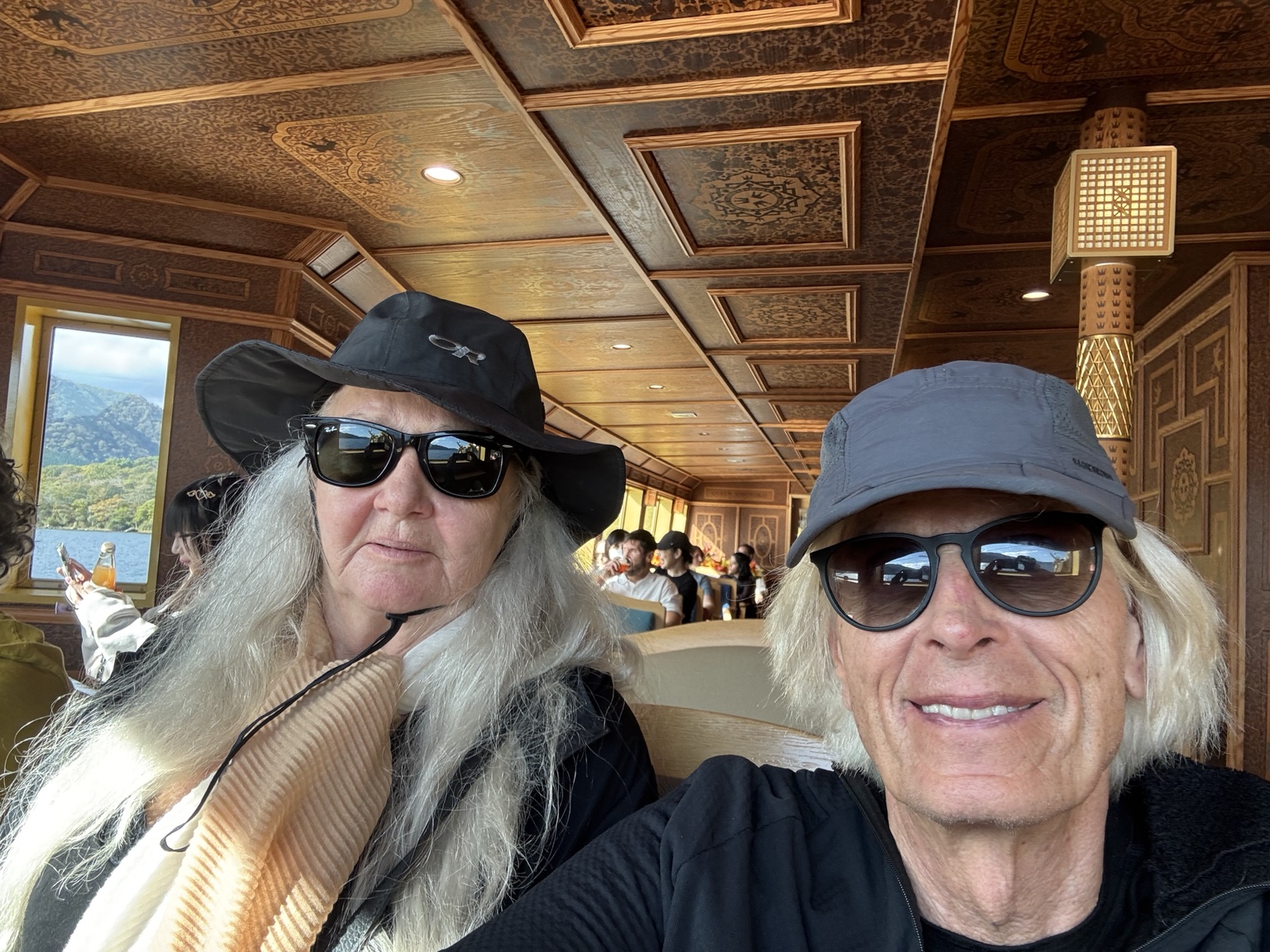
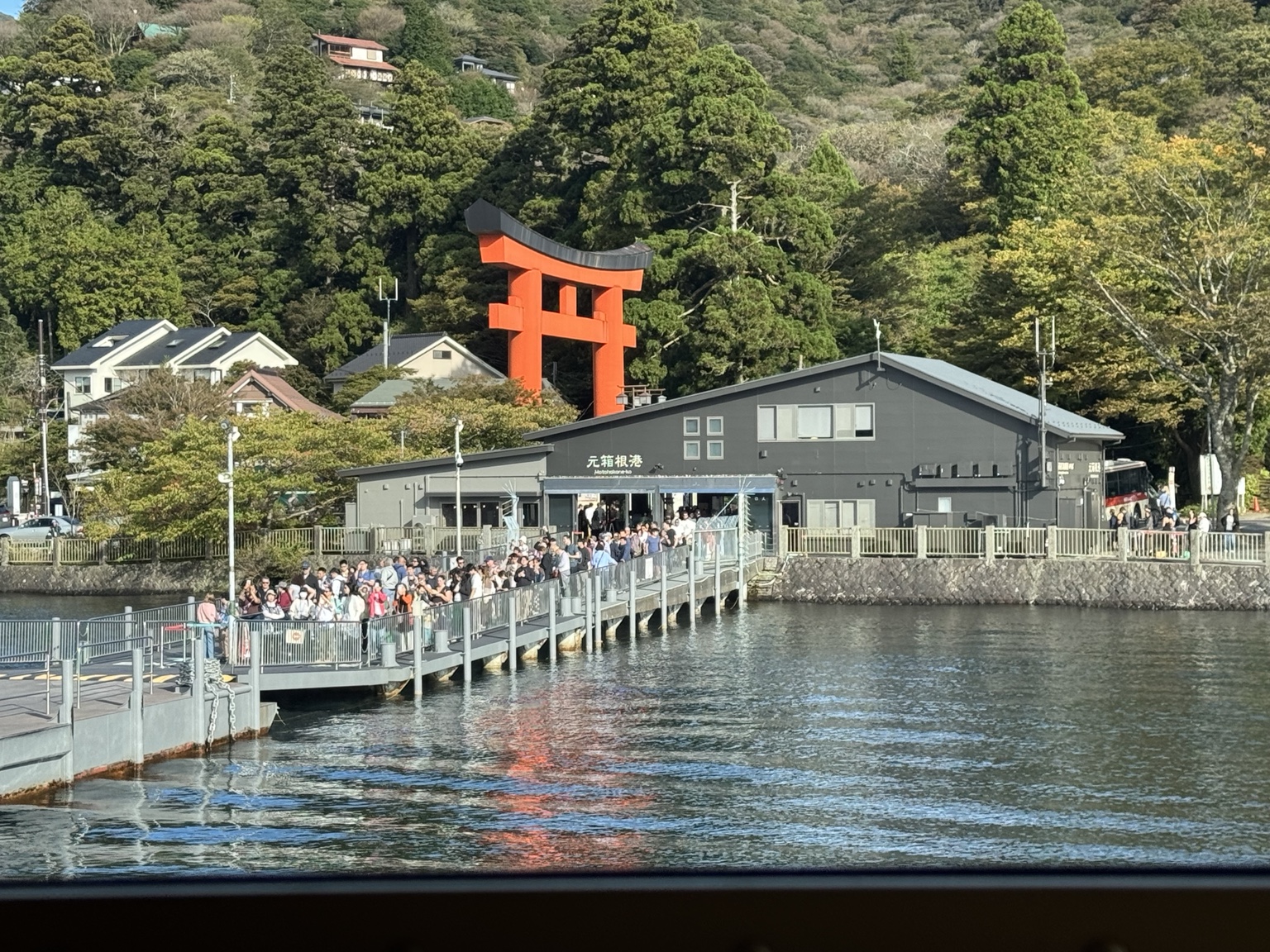
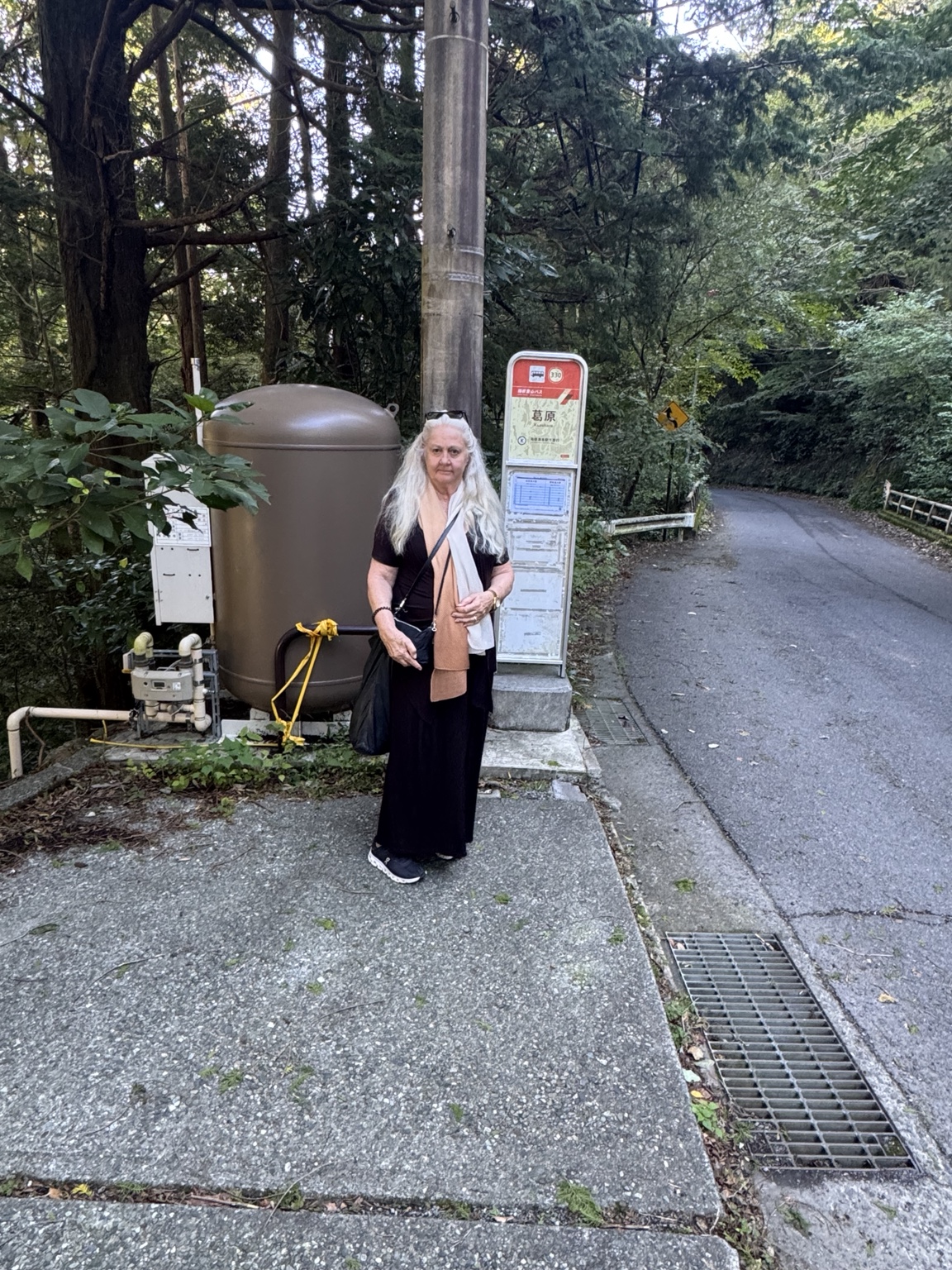
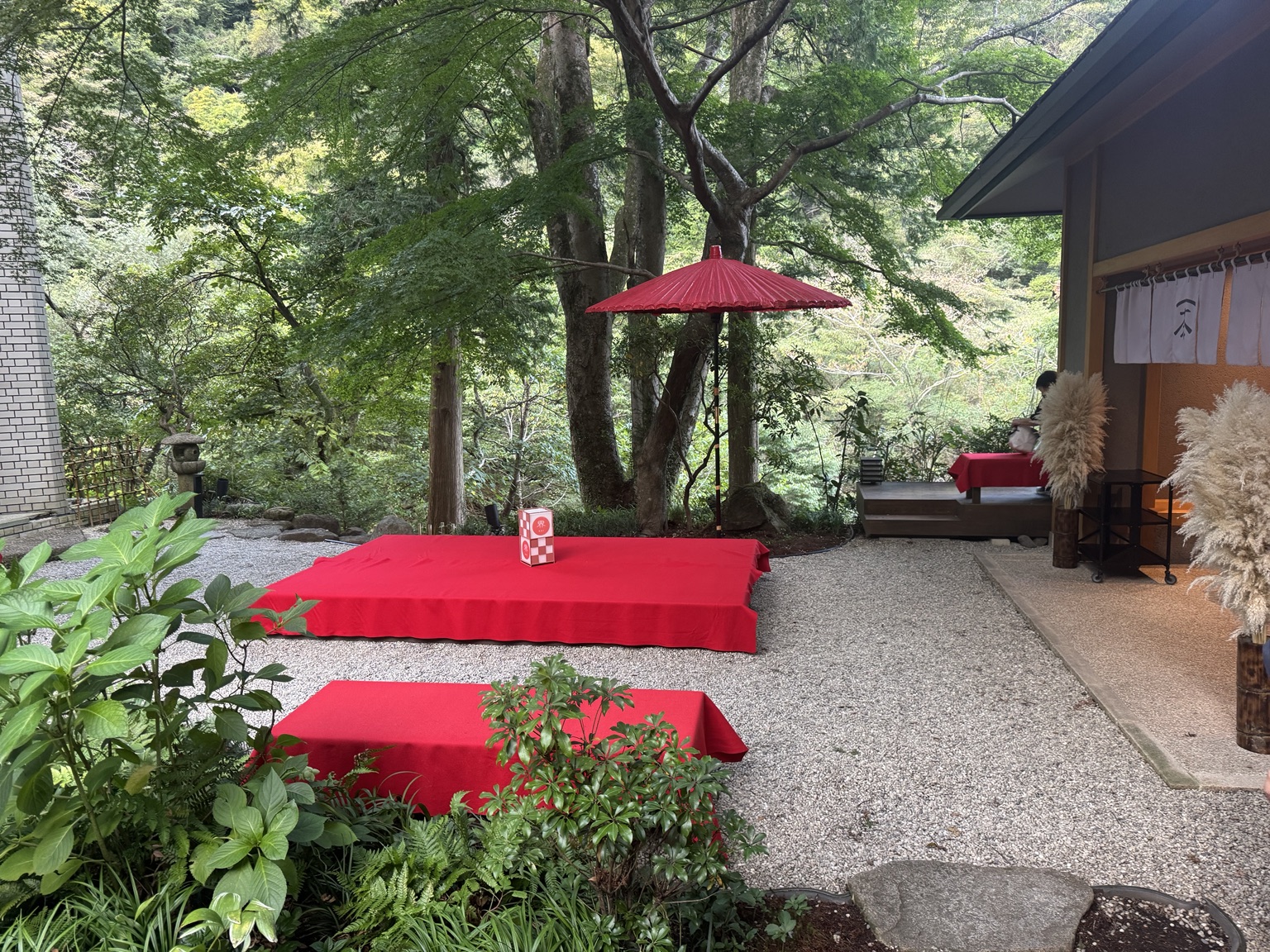
At Moto-Hakone, the journey was not quite won yet. Two buses eventually brought us back to KAI Hakone. Four-o’clock tea was waiting there – a remarkably civilised finale to a day that had taught us not only about fine views, but also about the Japanese art of queuing.
Not collecting sights, but experiencing them
This day made one thing especially clear to me: in all my travels, I have never encountered crowds like these at the sights – not even at Machu Picchu. Japan really can be extreme in that respect. But I am not a trophy hunter who needs to tick every attraction off a list. I want to experience places enjoyably and meaningfully. When an outing becomes little more than a race through crowds, it is perfectly all right to slow down, change the plan or leave something out. That day, the lake, the journey and the tea mattered more to me than another tick on a list.