STOP WAITING
  • Home
  • Journey
    • Destinations
    • Stories
    • Films
    • audio journey
    • Future journey
  • Insights
    • Stop Waiting Principles
    • Brand Auditor
    • Leadership
    • Creativity
    • Human Behaviour
    • Entrepreneurship
  • Mind • Body • Soul
    • Mind
    • Body
    • Soul
  • Books
  • Daily inspirations
  • About
  • Contact Us
Category:

Journals

Journals

Japan Diary 33: Five Floors of Art and Ice Cream with a Footbath

by KURT GASSNER October 23, 2026
written by KURT GASSNER

Deutsch | English

Hakone is wearing clouds today. We begin with a “Western breakfast”. The quotation marks are essential: this is the Japanese interpretation of a Western breakfast. Even the familiar can still offer a small surprise when you travel.
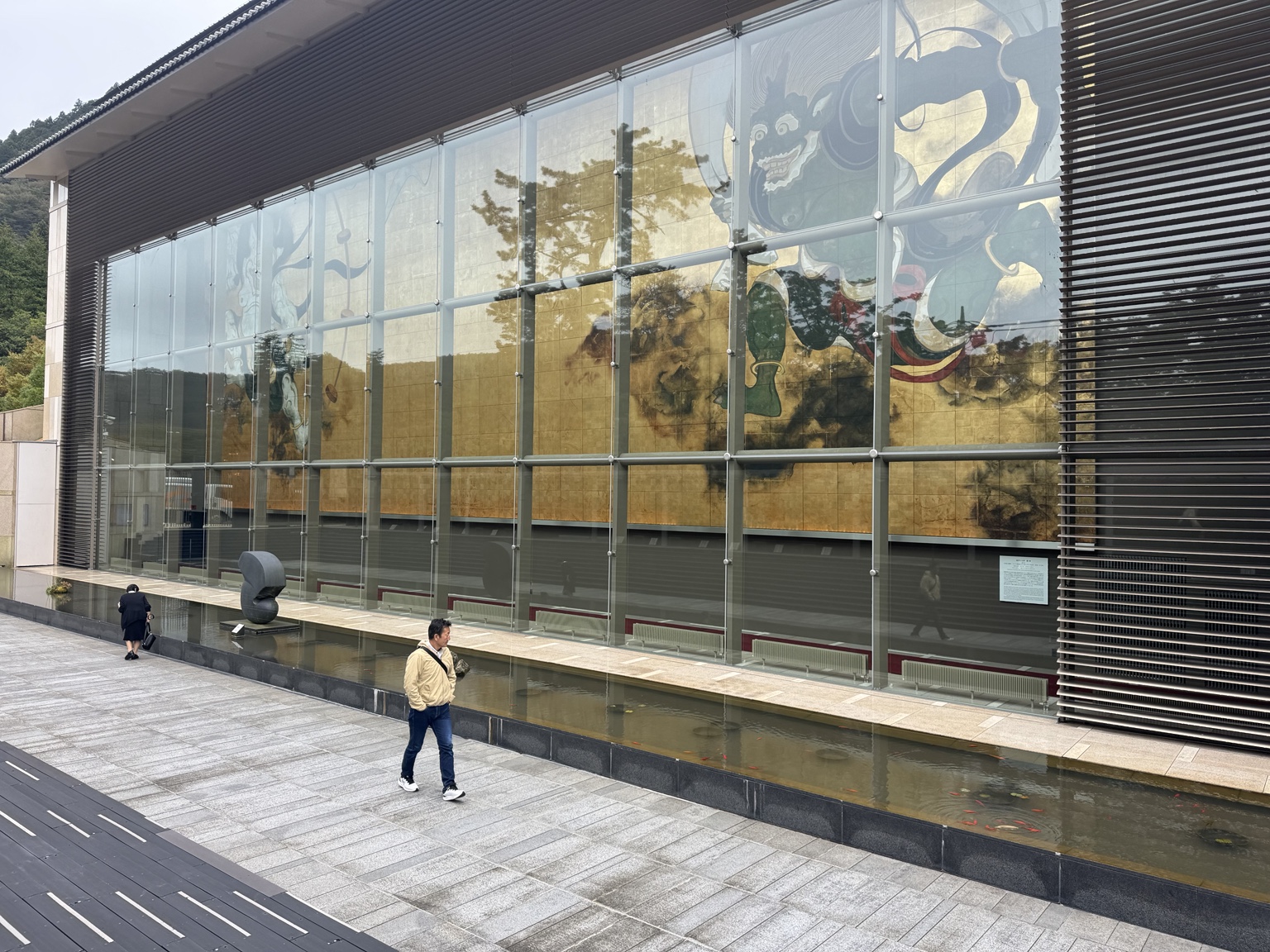
The Okada Museum of Art beneath a cloudy sky.

The Free Pass knows the way. I do not always.

Then we set off by bus again, armed with our Hakone Free Pass. A change of buses is involved, as seems almost customary by now. Except that, before the actual change, I get off at the wrong stop. My dear Anneliese protests vigorously. The mistake is mine, and her protest is entirely justified.

This gives us a short, unplanned waiting break. Fortunately, another bus arrives fairly soon and we carry on. A Free Pass is a useful ticket. Apparently it does not guarantee the quality of my choice of stop.
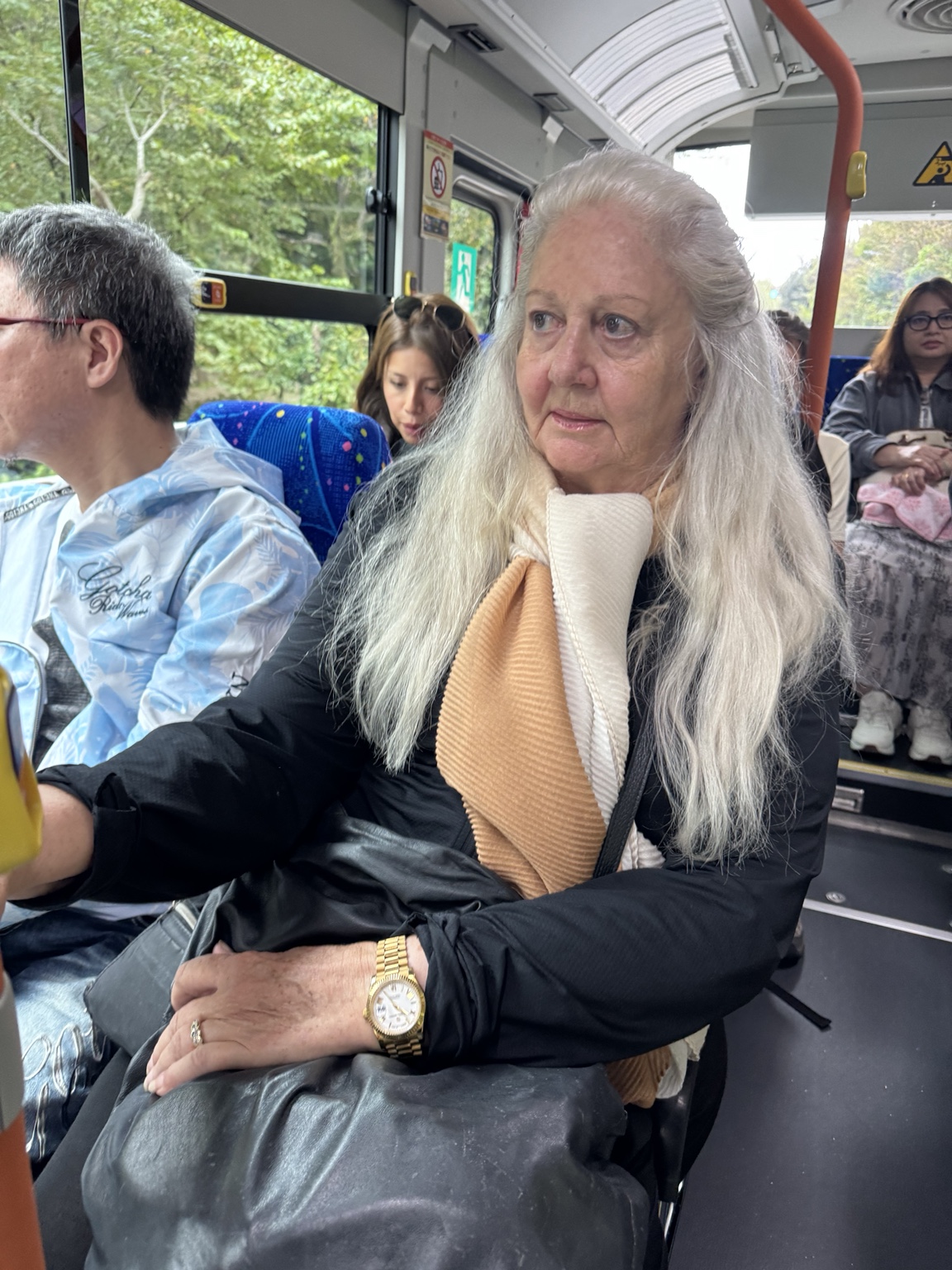
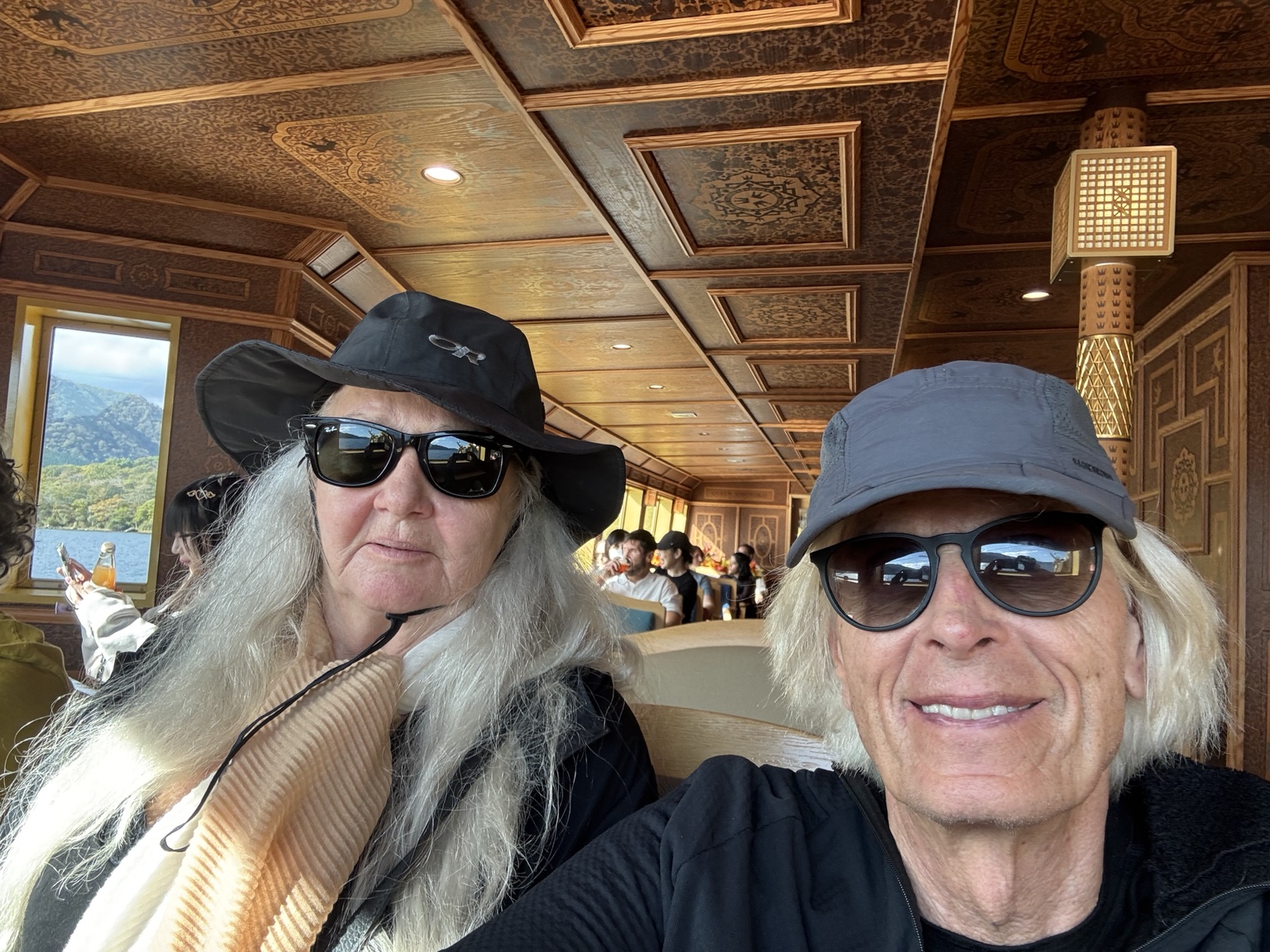
Anneliese on the bus.

Five floors of wonder

Our destination is the Okada Museum of Art. It really impresses us. Five floors of ceramics, vases, history and paintings: an extensive encounter with that distinctive Japanese aesthetic which keeps catching our attention on this journey.

This is a place that rewards looking closely. Shapes, surfaces, paintings – so much variety, yet such a strong overall impression of design and beauty. Anneliese and I enjoy the museum immensely. After my small contribution to the entertainment on the bus, it is a pleasure to let the art take over.
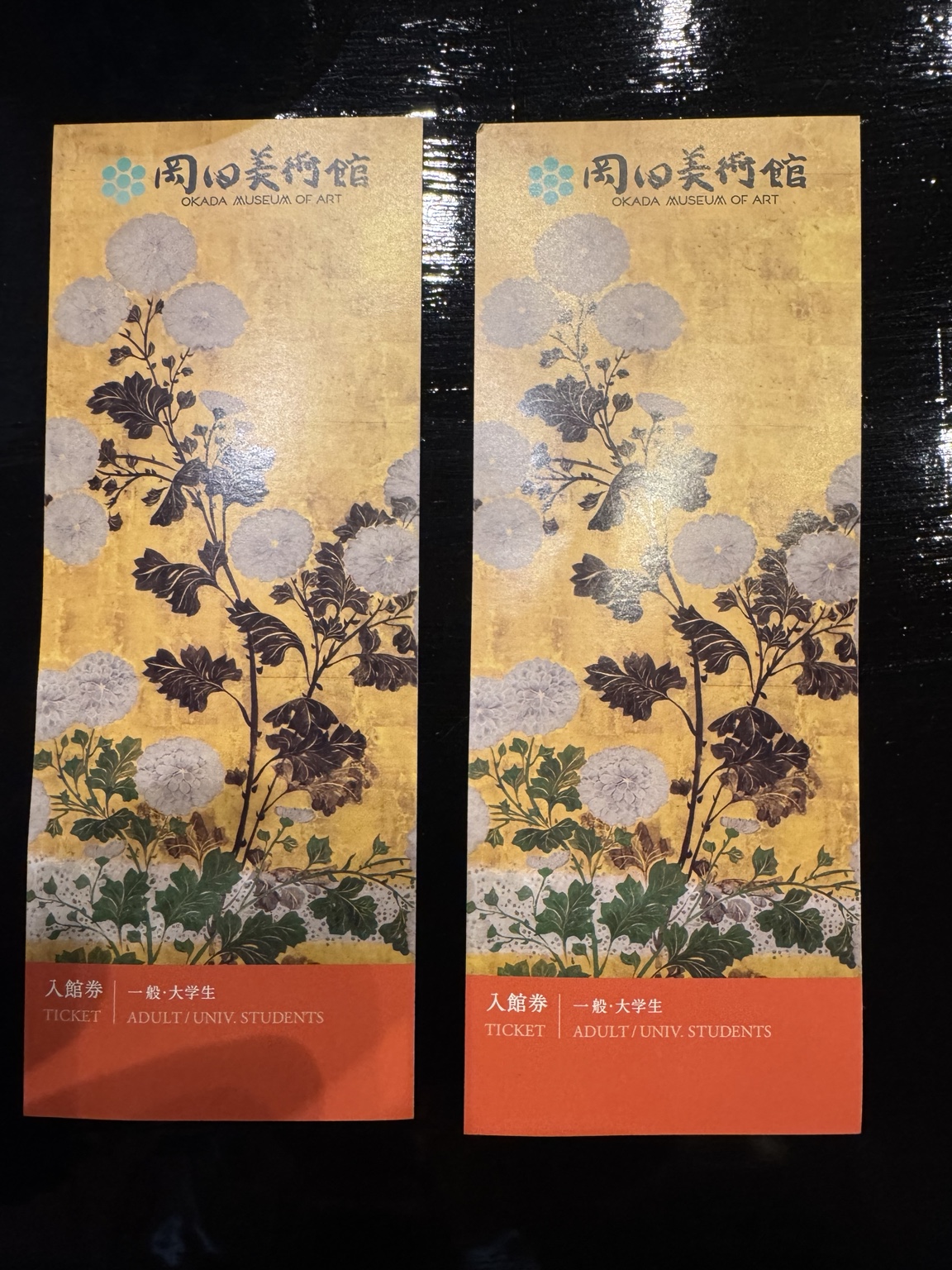
Our tickets to the Okada Museum of Art.
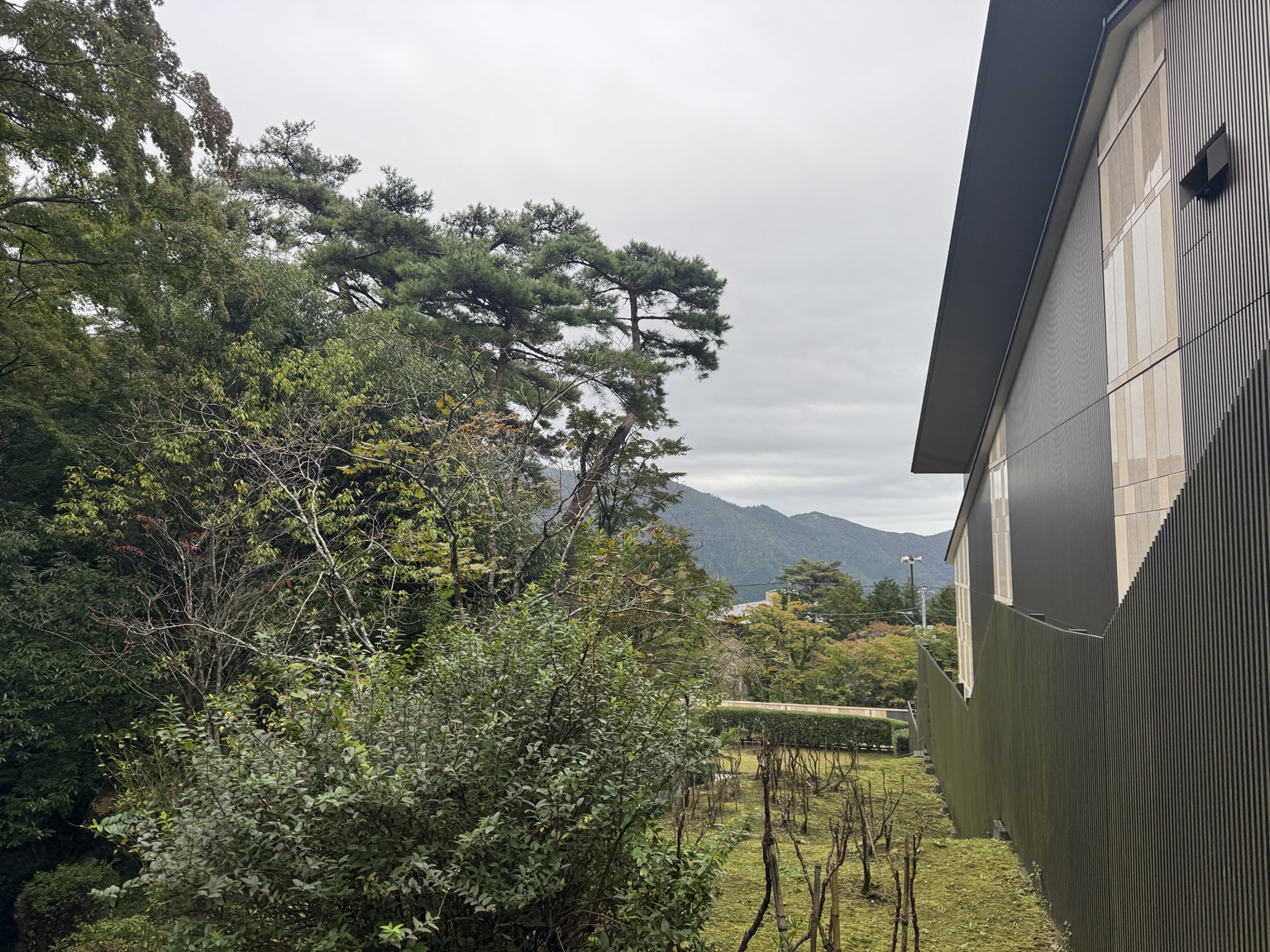
The museum, trees and green slopes of Hakone.

The shrimps passed us by

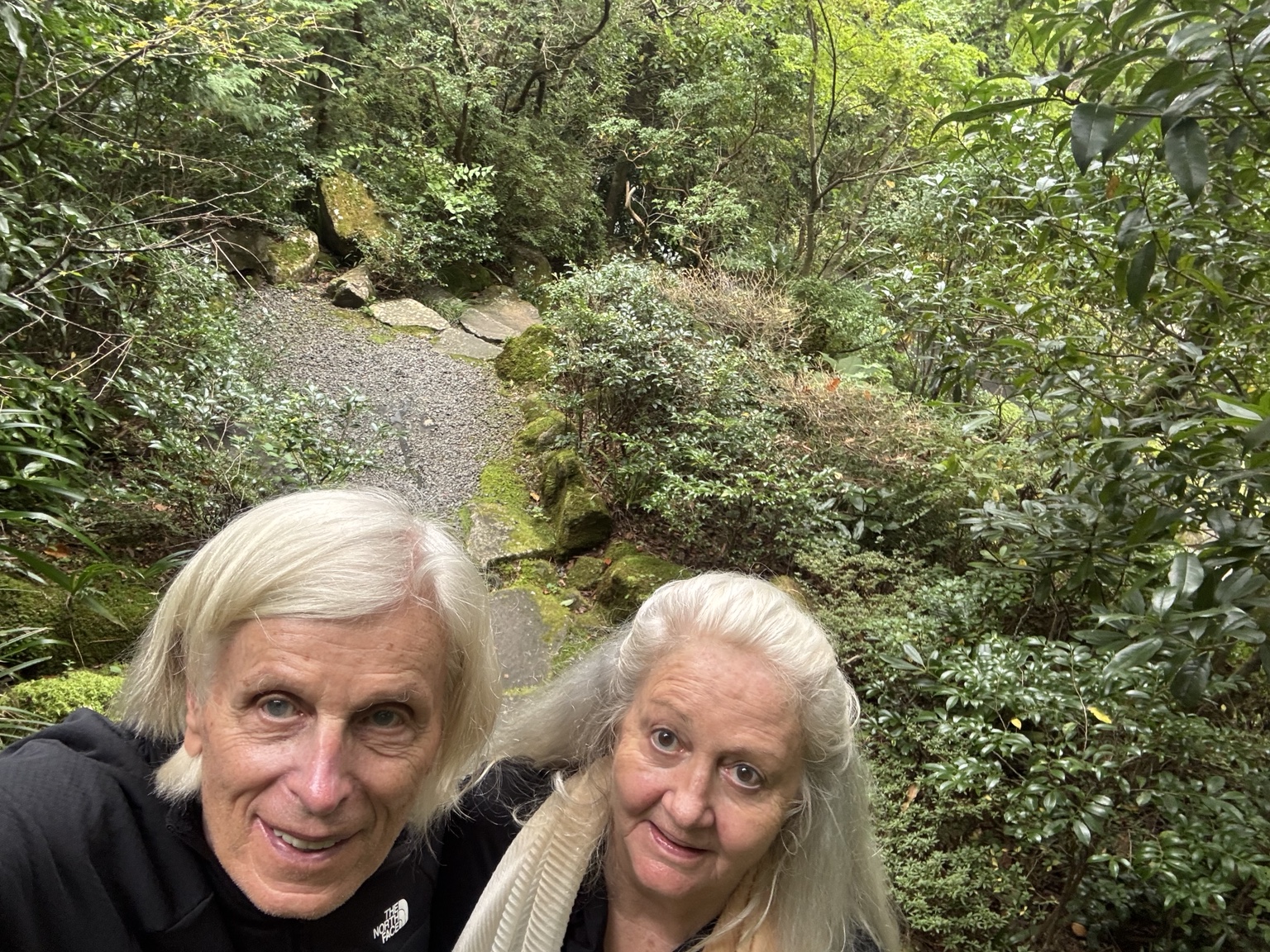
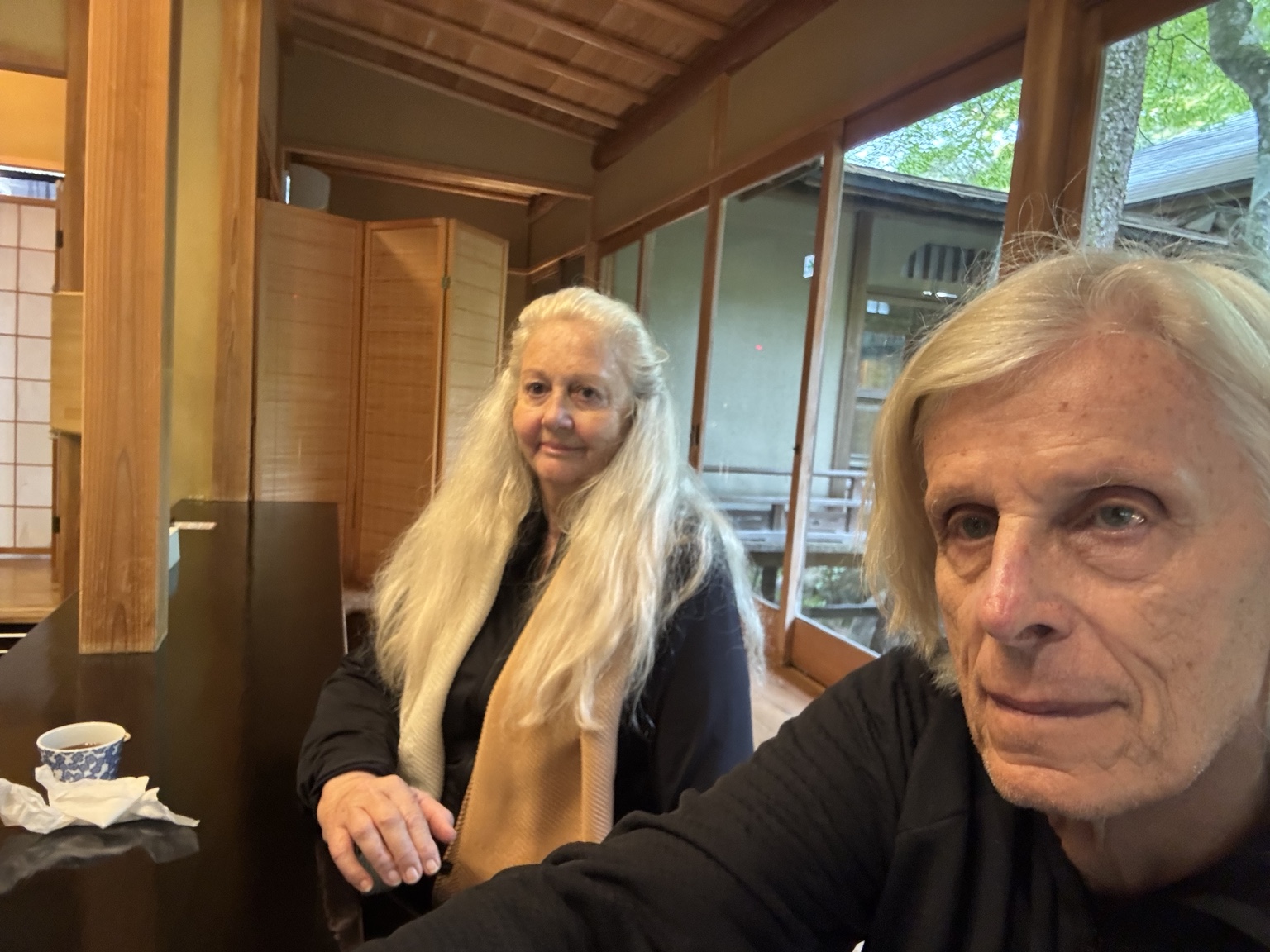
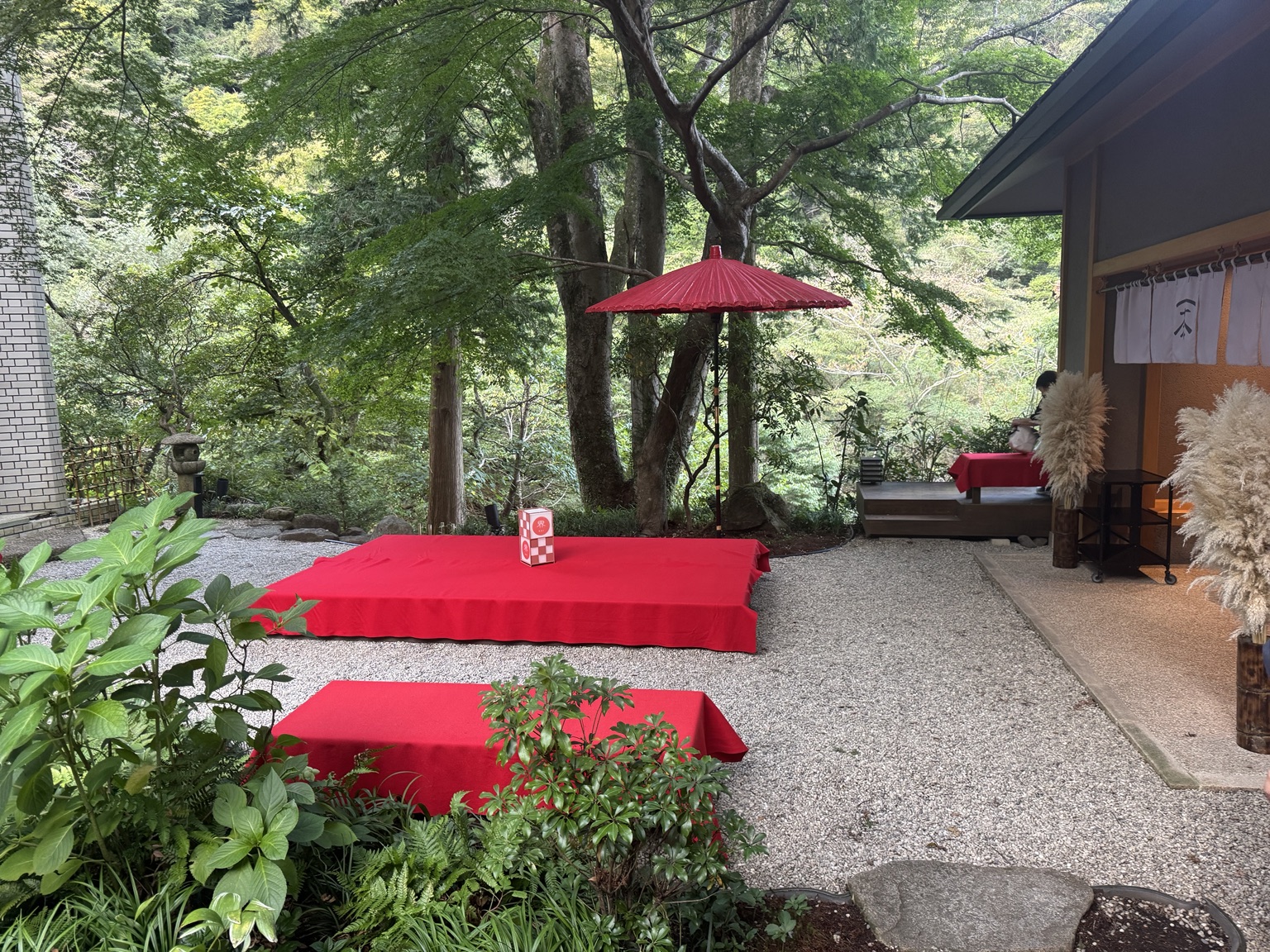
Afterwards we go to the tea house to round off our museum visit. Kaikatei sits among greenery; our photographs show paths and stone steps through the garden. A lovely setting for a break together.

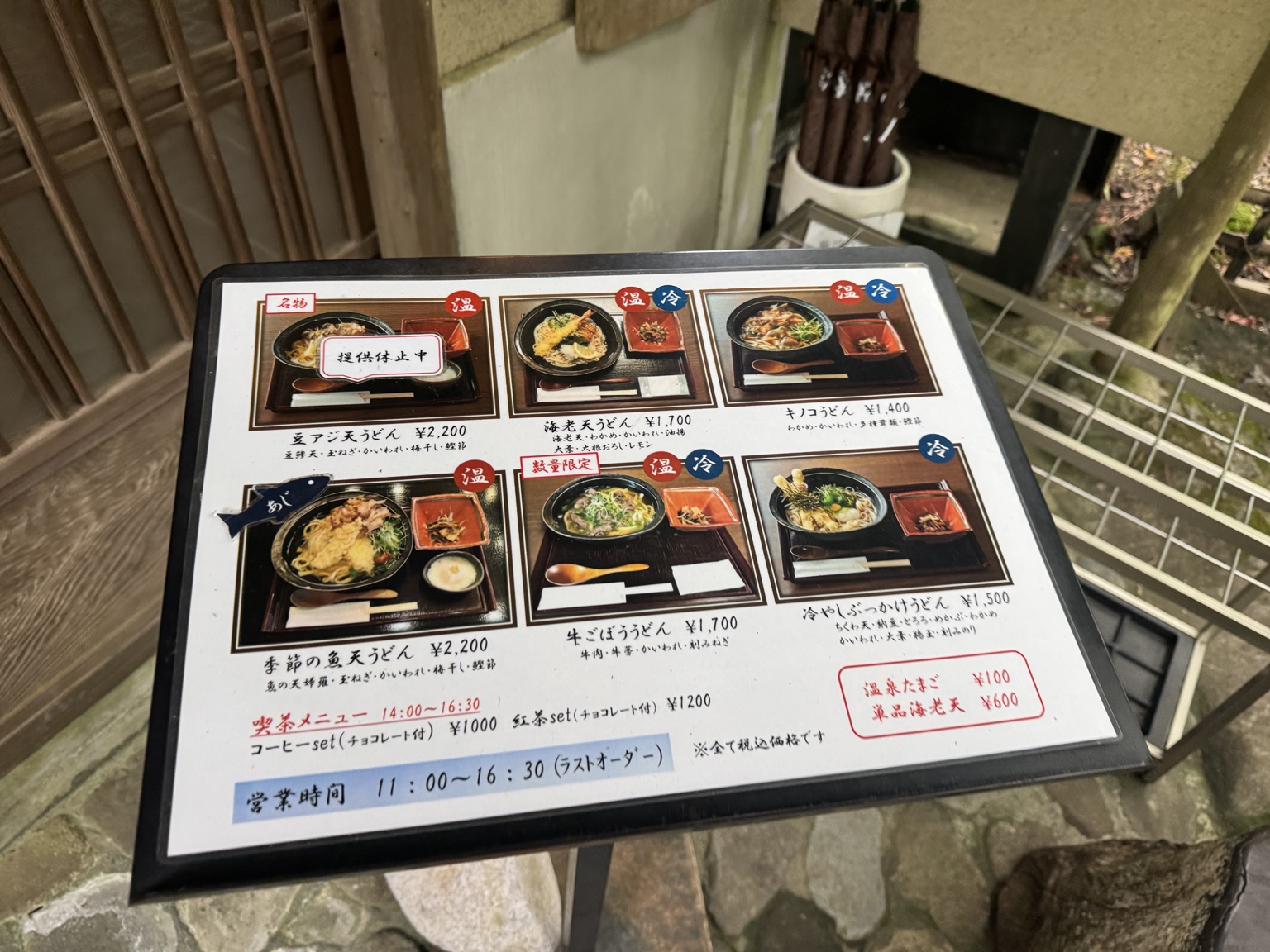
The food, however, is not quite what we had hoped for. We expect shrimps but receive tempura fish, which is not to our taste. Exactly how the shrimps passed us by remains unresolved here. My choice of bus stop is evidently not the only thing today that departs from the original idea.
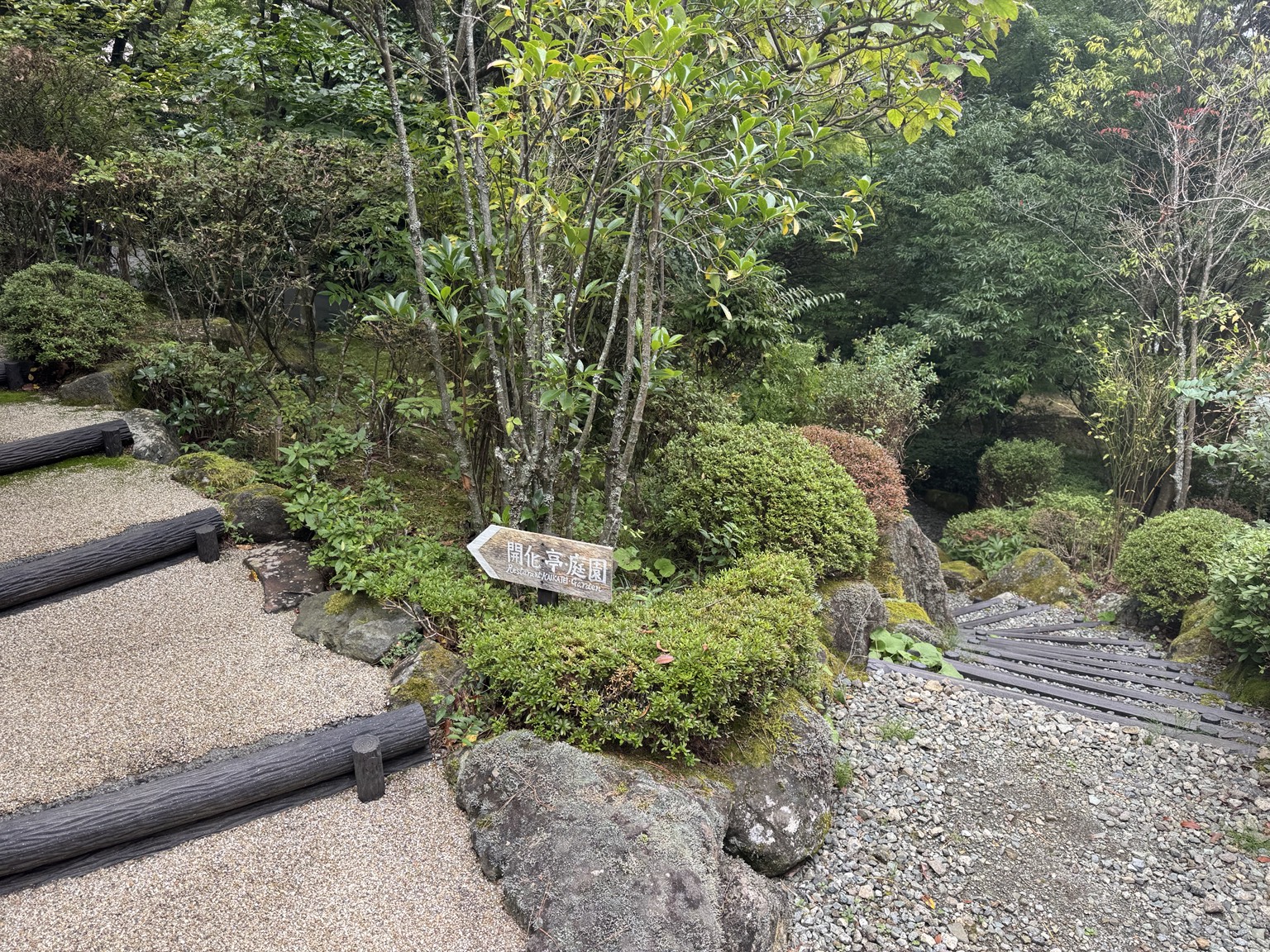
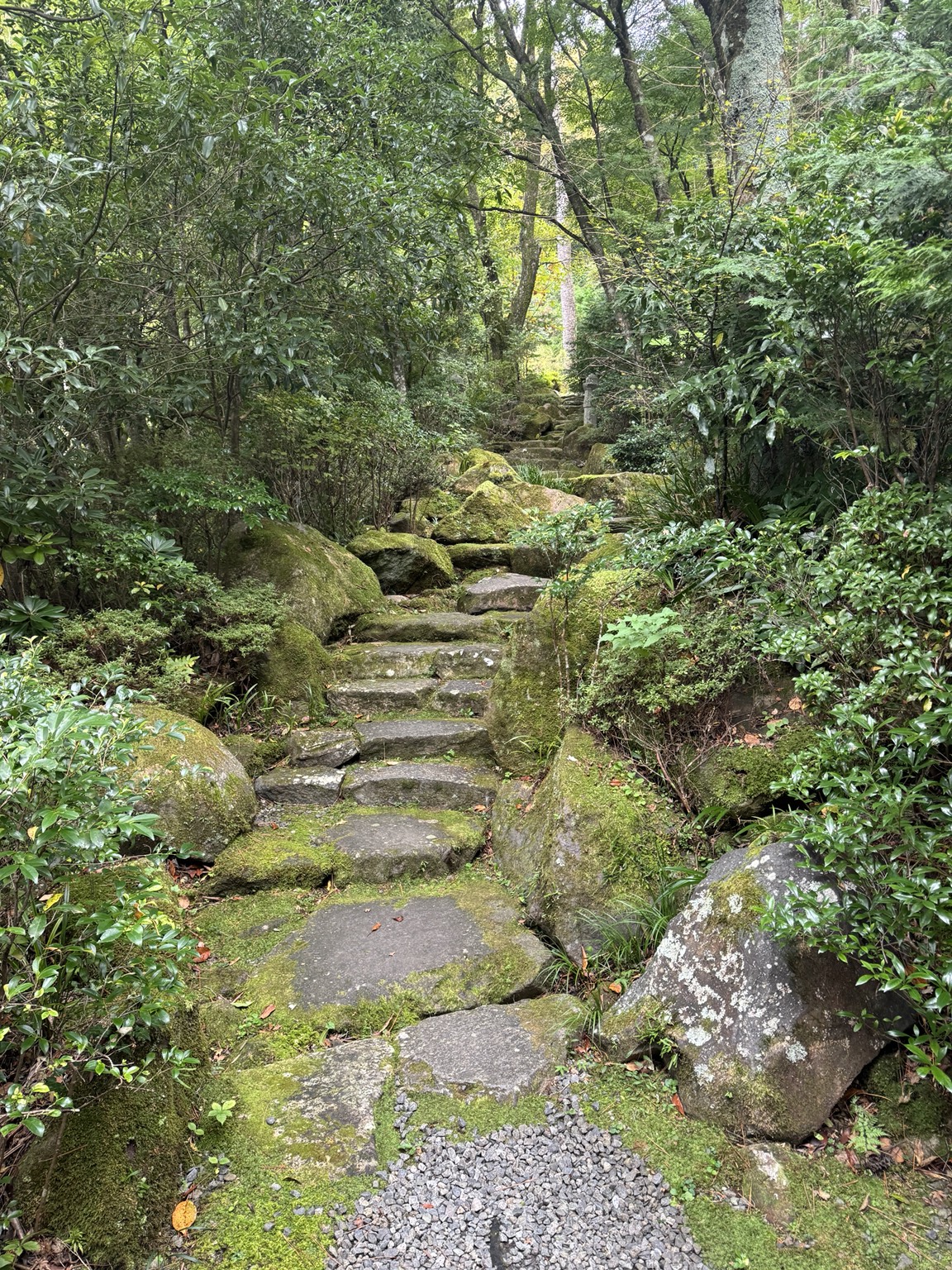
The path towards Kaikatei and the garden.
Stone steps among moss and dense greenery.
Anneliese and me in the garden.
Our pause in the tea house.
The menu, with several tempura options.

Cold on top, warm below

One more pause absolutely belongs in this diary: eating ice cream while soaking our feet in the warm footbath right outside the museum. Cool above, comfortably warm below. I find this combination fascinating – and it certainly does not require a blue sky.

After five floors of art, the other end of the body gets some attention too. The photograph captures both of us with our ice creams, while our feet enjoy their own little programme of relaxation.
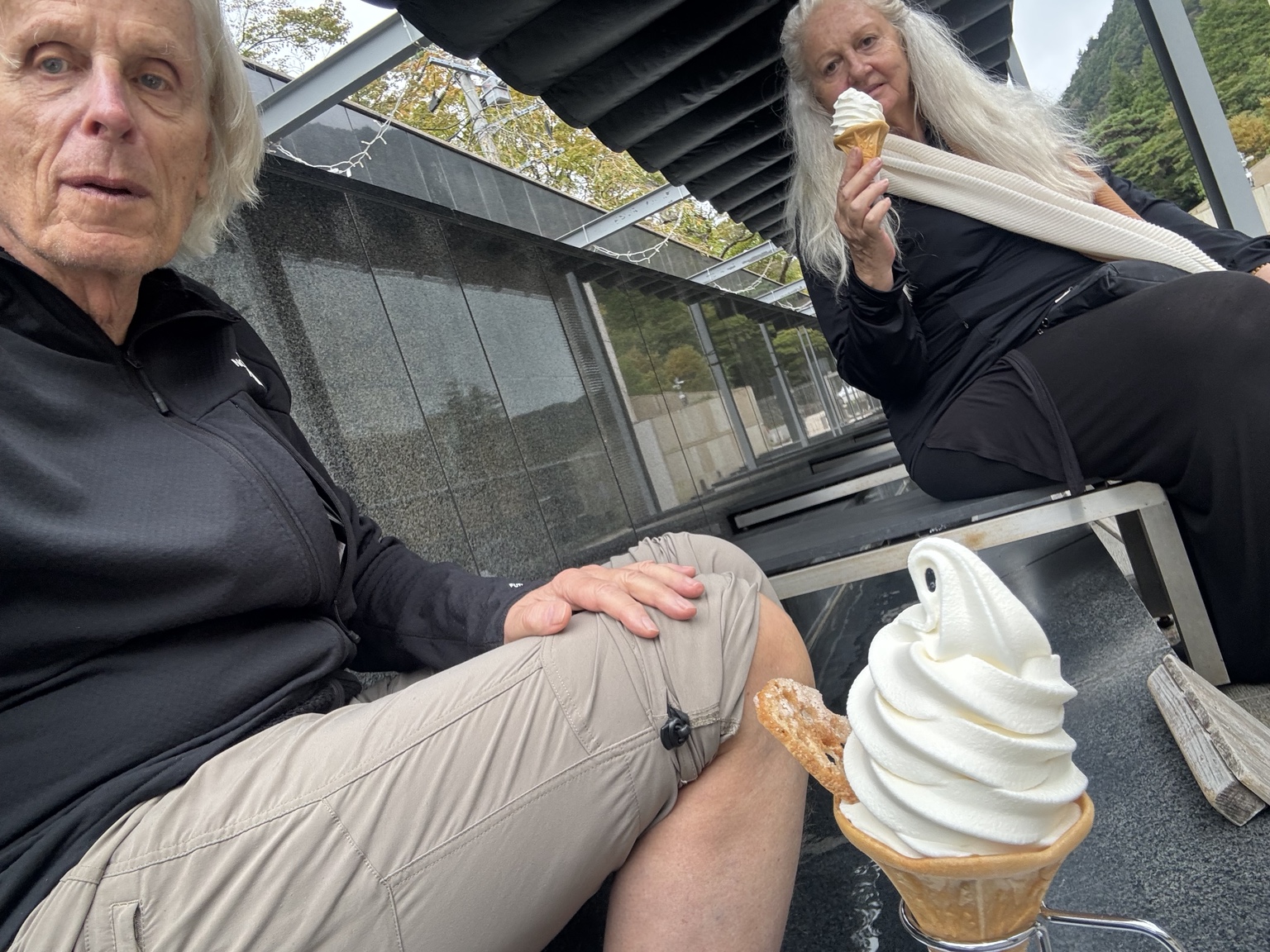
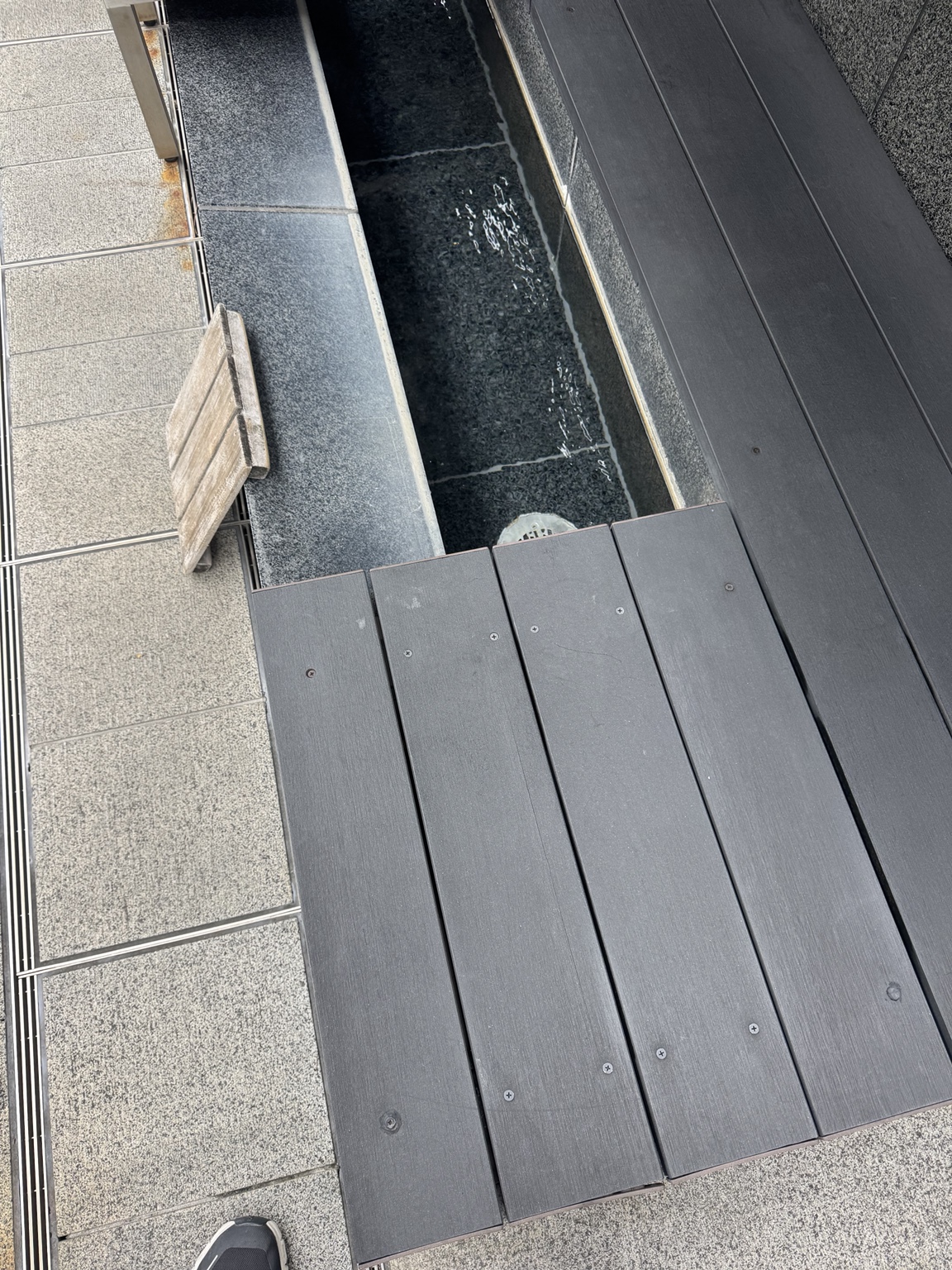
Ice cream in hand, feet in warm water.
The footbath right outside the museum.

Changing buses, then winding down

We return by bus, changing along the way. The bus is full. After the quiet pictures, the greenery and the warm water, ordinary travel life has its turn again.

Now we are letting this eventful day gently wind down. One wrong stop, a great deal of beautiful art, elusive shrimps and ice cream with a footbath: even under clouds, Hakone has given us plenty for the diary.
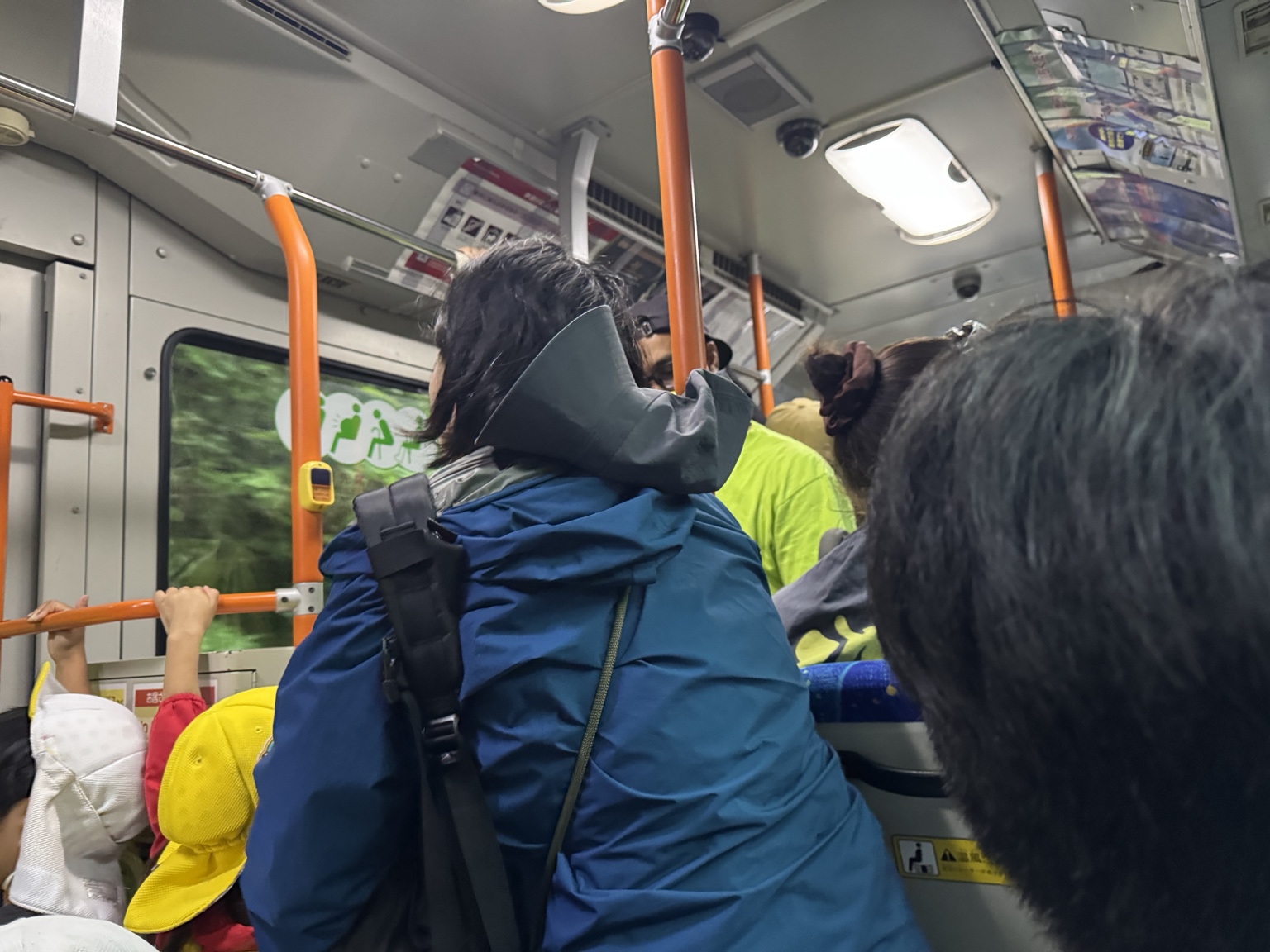
The bus was full on the way back.

← Chapter 32 · All chapters

October 23, 2026 0 comments
0 FacebookTwitterPinterestEmail
Journals

Japan-Tagebuch 33: Fünf Etagen Kunst und Eis mit Fußbad

by KURT GASSNER October 23, 2026
written by KURT GASSNER

Deutsch | English

Heute trägt Hakone Wolken. Wir beginnen mit einem „Western-Frühstück“. Die Anführungszeichen gehören unbedingt dazu: Es ist die japanische Interpretation eines westlichen Frühstücks. Auch Vertrautes kann auf Reisen also noch eine kleine Überraschung bereithalten.

Das Okada Museum of Art unter bewölktem Himmel.

Der Free Pass kennt den Weg. Ich nicht immer.

Dann geht es wieder mit dem Bus los, unseren Hakone Free Pass haben wir ja. Mit Umsteigen, wie es sich inzwischen fast schon gehört. Nur nehme ich vor dem eigentlichen Umsteigen den Ausstieg am falschen Ort. Meine liebe Anneliese protestiert kräftig. Der Fehler gehört mir; der Protest hat durchaus seine Berechtigung.

So kommen wir zu einer kleinen, ungeplanten Wartepause. Zum Glück lässt der nächste Bus nicht lange auf sich warten, und unsere Reise geht weiter. Ein Free Pass ist eben ein praktisches Ticket. Eine Garantie für meine Haltestellenwahl ist er offenbar nicht.

Anneliese unterwegs im Bus.

Fünf Etagen zum Staunen

Unser Ziel ist das Okada Museum of Art. Und das beeindruckt uns wirklich. Fünf Etagen mit Keramik, Vasen, Geschichte und Gemälden: eine umfassende Begegnung mit jener besonderen japanischen Ästhetik, die uns auf dieser Reise immer wieder beschäftigt.

Hier lohnt es sich, hinzusehen. Formen, Oberflächen, Malerei – so viel Unterschiedliches, und doch bleibt dieser starke Eindruck von Gestaltung und Schönheit. Anneliese und mir gefällt das Museum ausgesprochen gut. Nach meinem kleinen Beitrag zur Bus-Unterhaltung übernimmt nun erfreulicherweise die Kunst das Programm.

Unsere Eintrittskarten ins Okada Museum of Art.
Museum, Bäume und die grünen Hänge von Hakone.

Die Shrimps gingen an uns vorbei

Danach gehen wir ins Teehaus, um den Museumsbesuch ausklingen zu lassen. Das Kaikatei liegt im Grünen; auf unseren Bildern führen Wege und Steinstufen durch den Garten. Ein schöner Rahmen für eine Pause zu zweit.

Beim Essen läuft es allerdings anders als erhofft. Wir haben Shrimps erwartet, bekommen aber Tempura-Fisch. Den mögen wir nicht so gern. Wie die Shrimps an uns vorbeigegangen sind, bleibt hier ungeklärt. Jedenfalls landet an diesem Tag nicht nur mein Busausstieg neben der ursprünglichen Vorstellung.

Der Weg zum Kaikatei und zum Garten.
Steinstufen zwischen Moos und dichtem Grün.
Anneliese und ich im Garten.
Unsere Pause im Teehaus.
Die Speisekarte – mit mehreren Tempura-Varianten.

Oben Eis, unten warm

Unbedingt in dieses Tagebuch gehört noch unsere Pause direkt vor dem Museum: Eis essen und dabei die Füße ins warme Fußbad halten. Oben kühl, unten wohlig warm. Eine Kombination, die ich sehr spannend finde – und für die es nun wirklich keinen blauen Himmel braucht.

Nach fünf Etagen Kunst bekommt also auch das andere Ende des Körpers seine Aufmerksamkeit. Das Foto hält uns beide mit Eis fest; die Füße haben derweil ihr eigenes kleines Wohlfühlprogramm.

Eis in der Hand, die Füße im warmen Wasser.
Das Fußbad direkt vor dem Museum.

Mit Umsteigen zurück in die Gemütlichkeit

Zurück geht es wieder mit dem Bus und mit Umsteigen. Der Bus ist voll. Nach den stillen Bildern, dem Grün und dem warmen Wasser kommt damit noch einmal der ganz normale Reisealltag dazu.

Nun lassen wir diesen erlebnisreichen Tag gemütlich auspendeln. Ein falscher Ausstieg, viel schöne Kunst, verpasste Shrimps und Eis mit Fußbad: Hakone hat uns auch unter Wolken reichlich Stoff fürs Tagebuch geliefert.

Auf der Rückfahrt war der Bus voll.

← Kapitel 32 · Alle Kapitel

October 23, 2026 0 comments
0 FacebookTwitterPinterestEmail
Das Onsen-Becken im KAI Hakone mit Blick ins Grüne.
Journals

Japan Diary 32: Tokyo at Full Speed, Hakone at Our Own Pace

by KURT GASSNER October 21, 2026
written by KURT GASSNER

Deutsch | English

21 October 2026 · Kanazawa – Tokyo – Odawara – Hakone

Yesterday I wondered what would last longer during our change of trains in Tokyo: our time buffer or our nerves. Today we know the answer. We made the connection. But Tokyo Station made quite sure we earned the onsen retreat that followed.

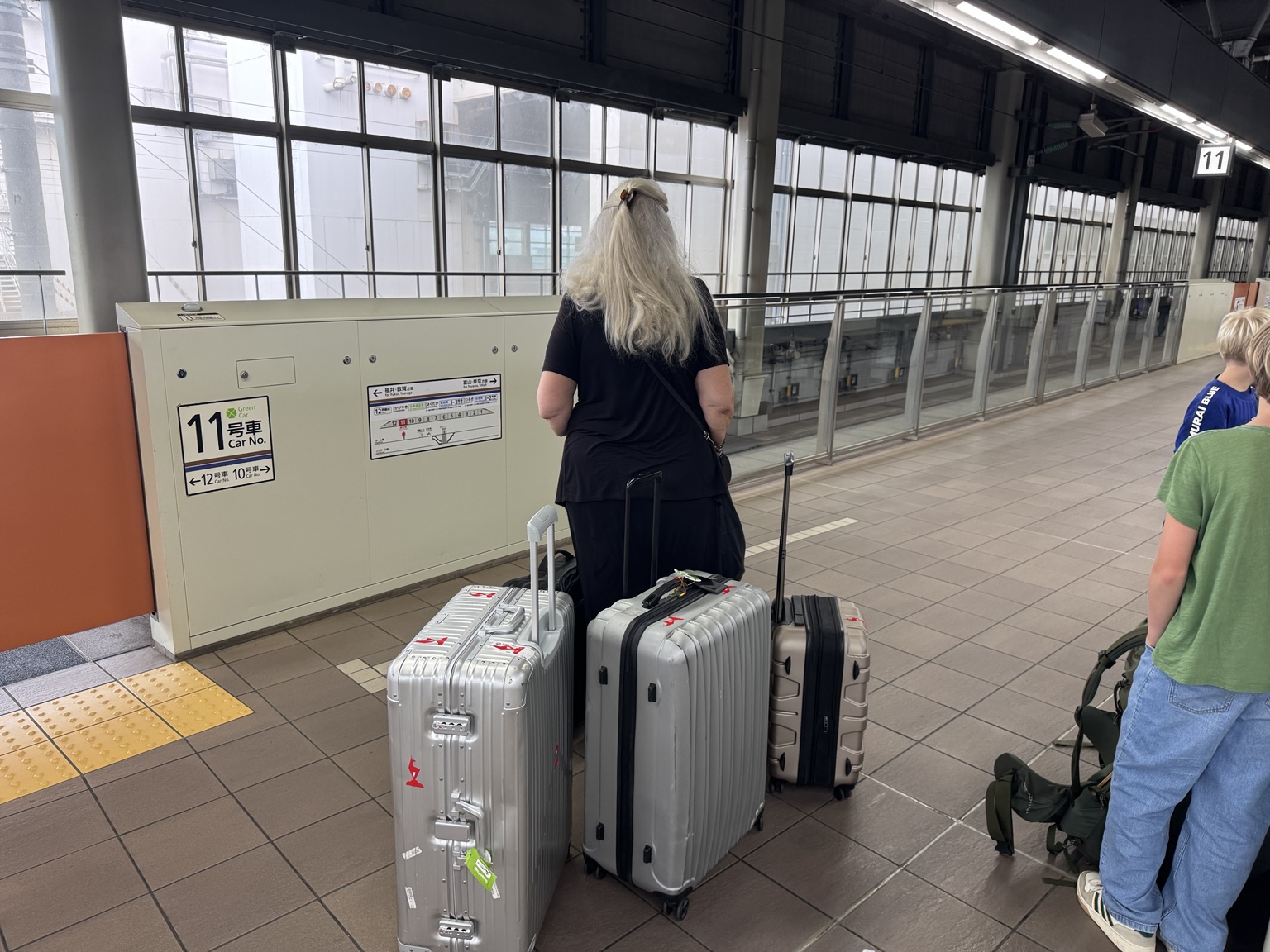
Anneliese and our luggage waiting for the train.
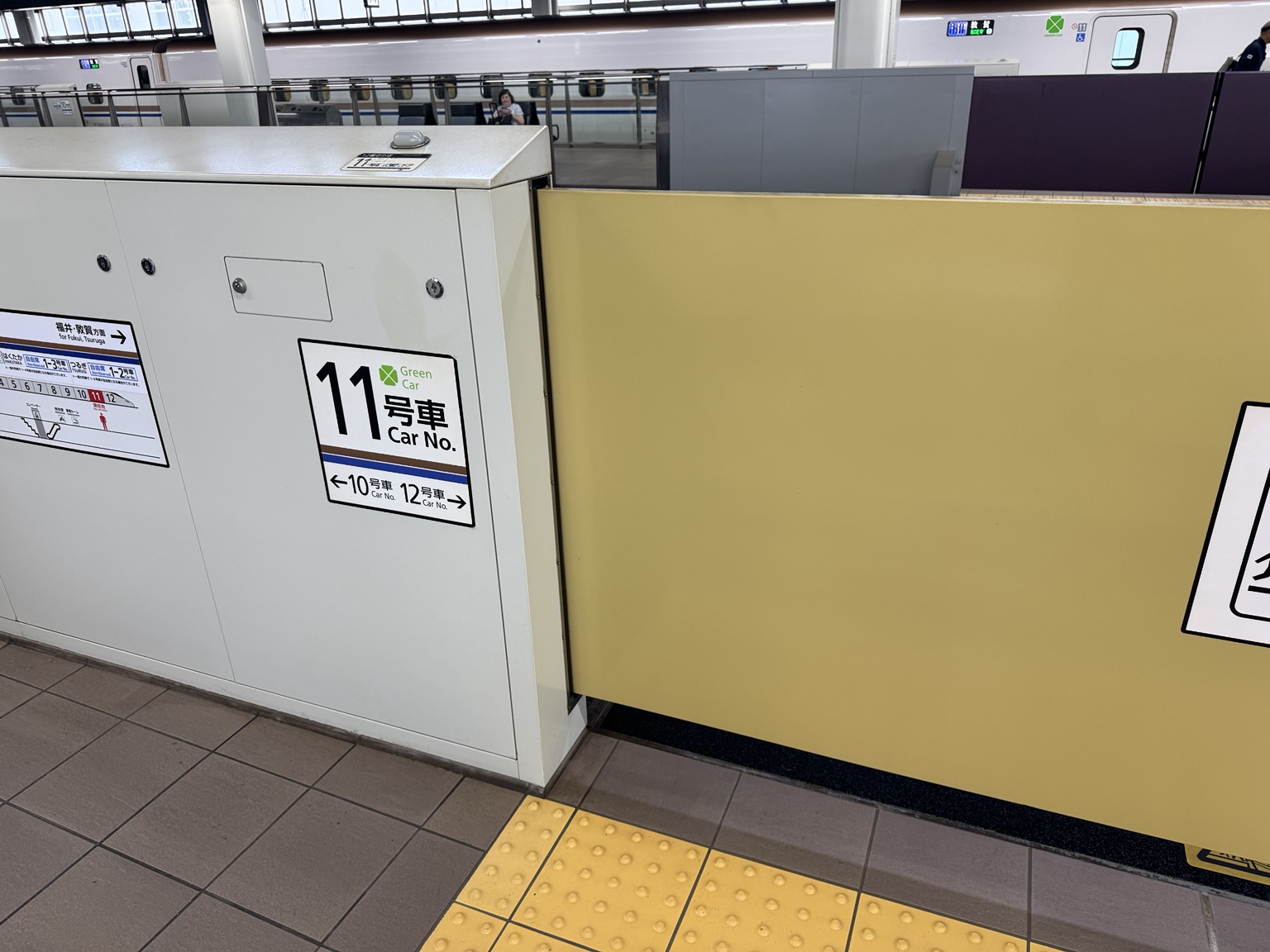
On the platform: the boarding marker for car 11.
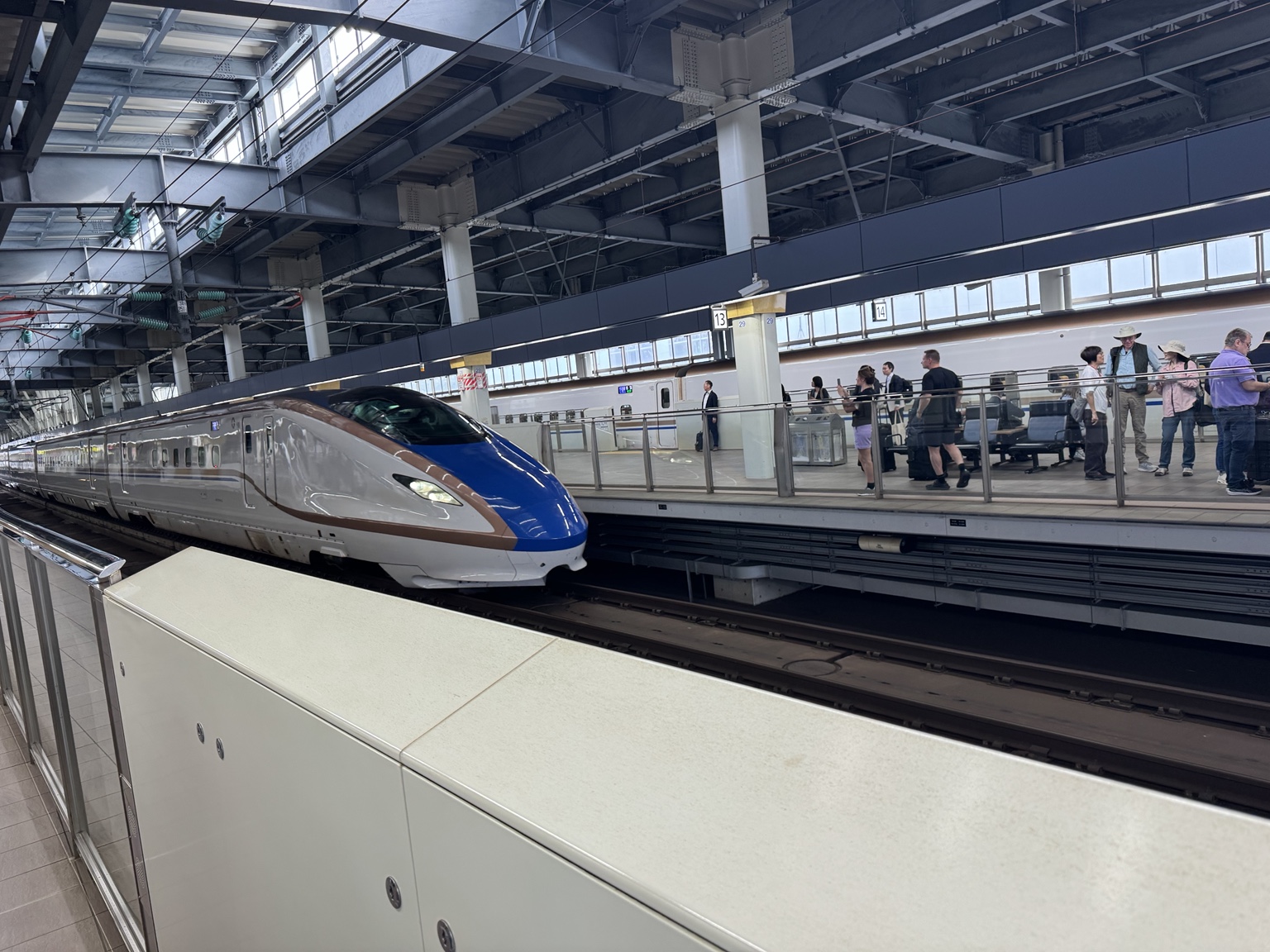
The Shinkansen arrives at the platform.

Upstairs, downstairs — with half the household

From Kanazawa, we travel via Tokyo to Odawara. On paper, it is a train connection. In practice, part of it turns into a small obstacle course: up the stairs, down the stairs, change trains, find our bearings, keep moving. The halls are packed with people, with queues and movement everywhere. And in the middle of it all are Anneliese and me, accompanied by our rather substantial collection of luggage.

Working our way through it is quite a travel experience in its own right. Tokyo Station certainly earns its own place in my diary. Probably not in the relaxation section.
The connection is tight. And Japanese trains have a quality you admire most wholeheartedly once you are already sitting inside: they leave precisely on time. On this journey, I have not experienced a delay of even a minute. Impressive. With several suitcases and a shrinking time buffer, though, that precision takes on a rather different significance.

Made it: Anneliese and me aboard the train.

From the station into the greenery

Eventually we are seated on the train, and around midday we arrive safely in Odawara. From there, a taxi takes us to Hakone. After the crowds in Tokyo, the journey to our retreat feels like someone gradually turning down the volume.

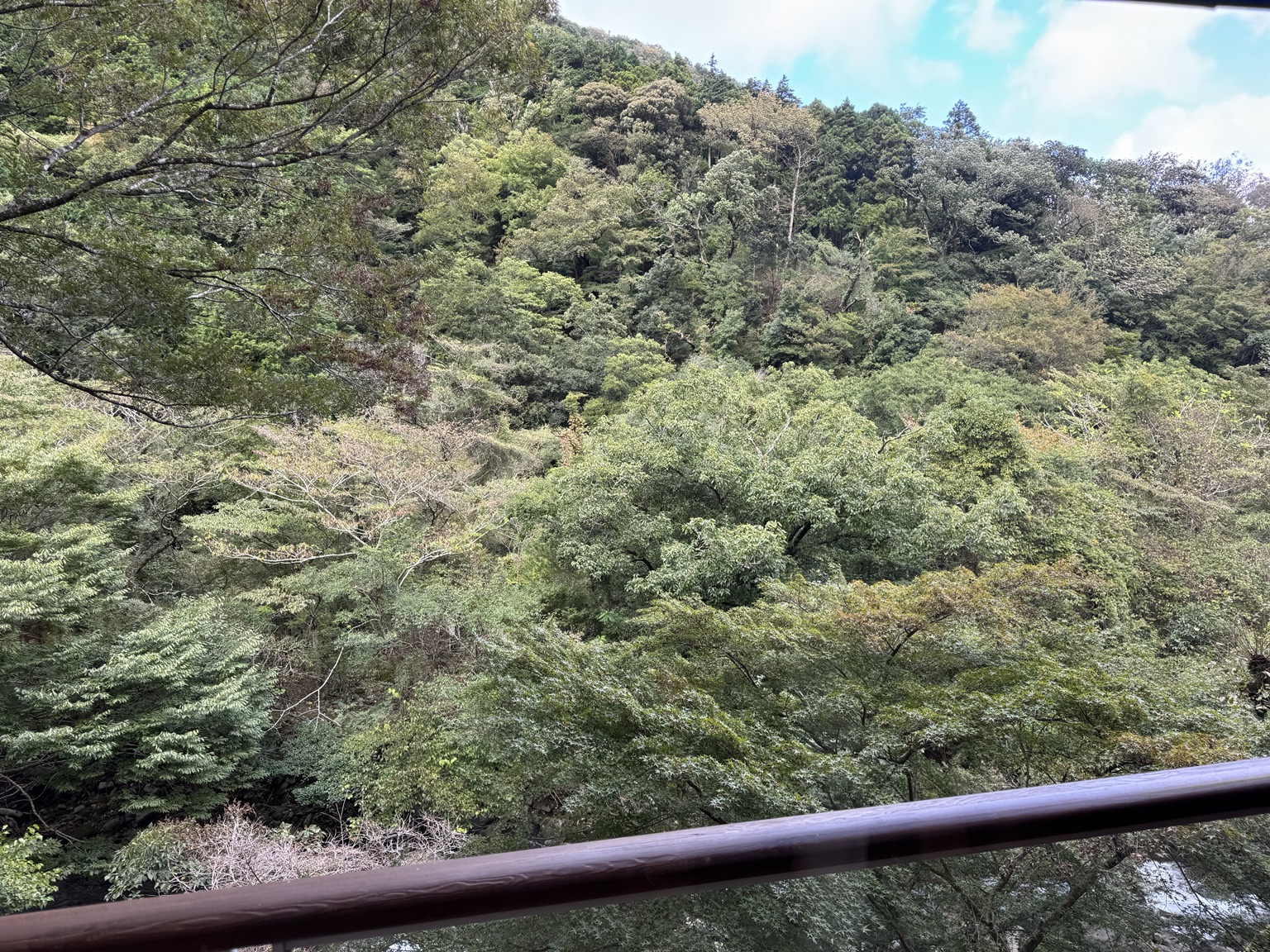
KAI Hakone sits beside the river, among wooded mountain slopes. Beautiful, and wonderfully close to nature. Here, the view is all greenery, trees and water. An extraordinary change of scenery in the space of just a few hours.

A very different view awaits in Hakone: wooded slopes and the river.
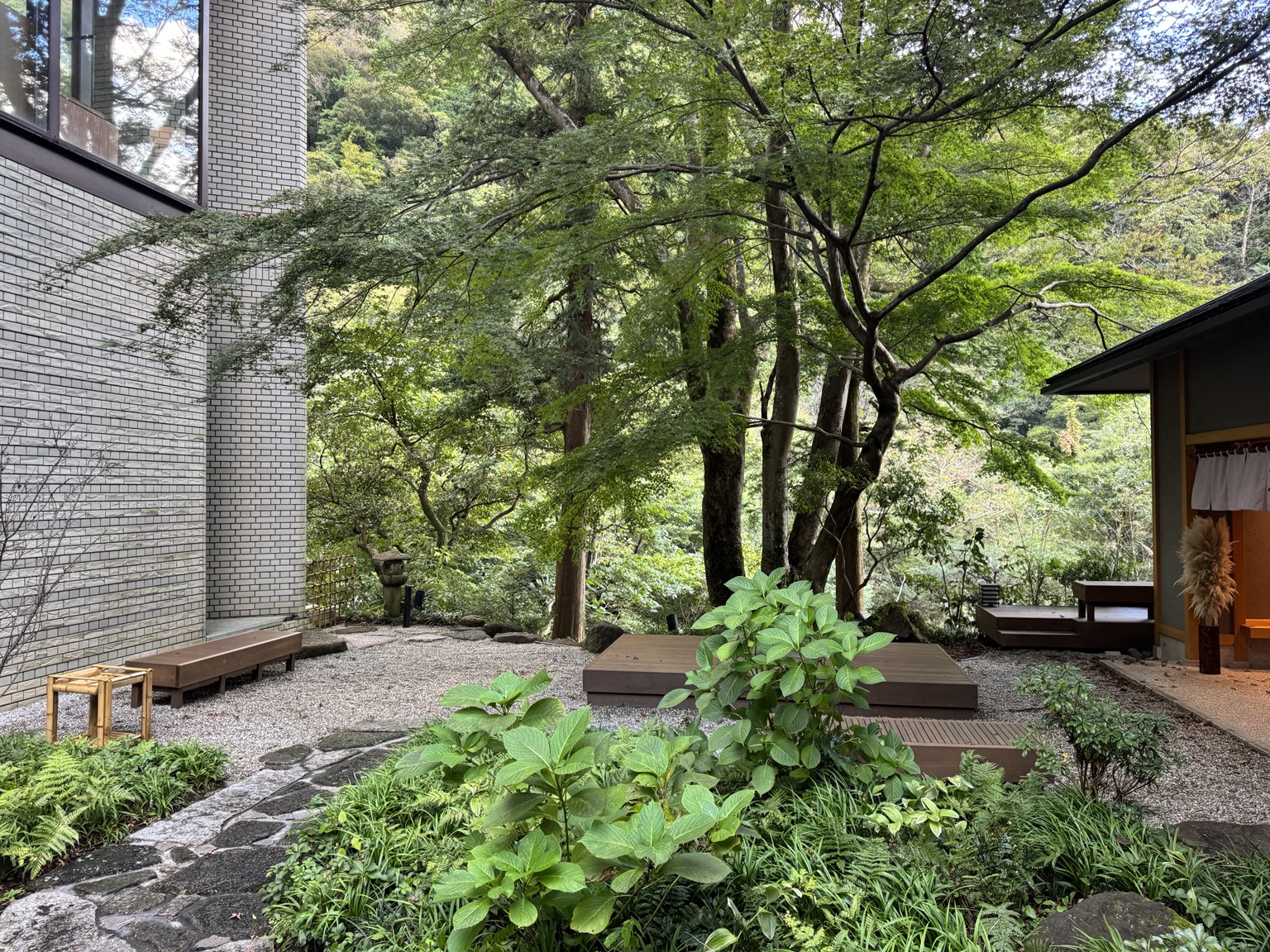
Stones, trees and quiet paths at KAI Hakone.

Plenty of space, very little distance from the floor

Our Japanese retreat is spacious, almost like a small apartment. A very tastefully arranged living area, plenty of room, and a calm style that feels especially welcome after a day of travelling like this one.

We will be sleeping almost at floor level. Not directly on the tatami mat, but on a very low mattress. Another change of perspective: this morning we were constantly going up and down inside the station. For the night, we are keeping closer to the ground.

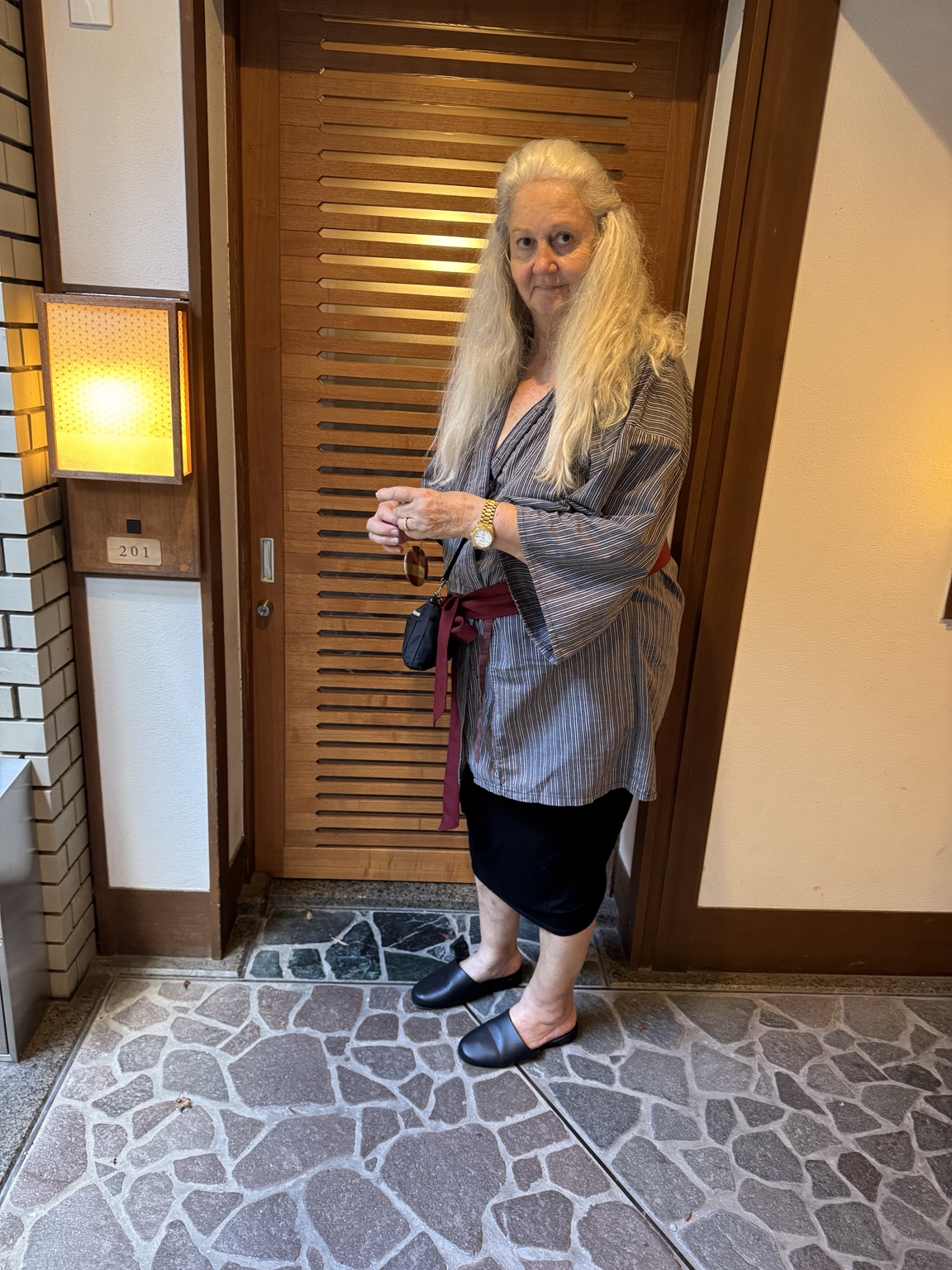
Anneliese in the entrance area of our Japanese retreat.
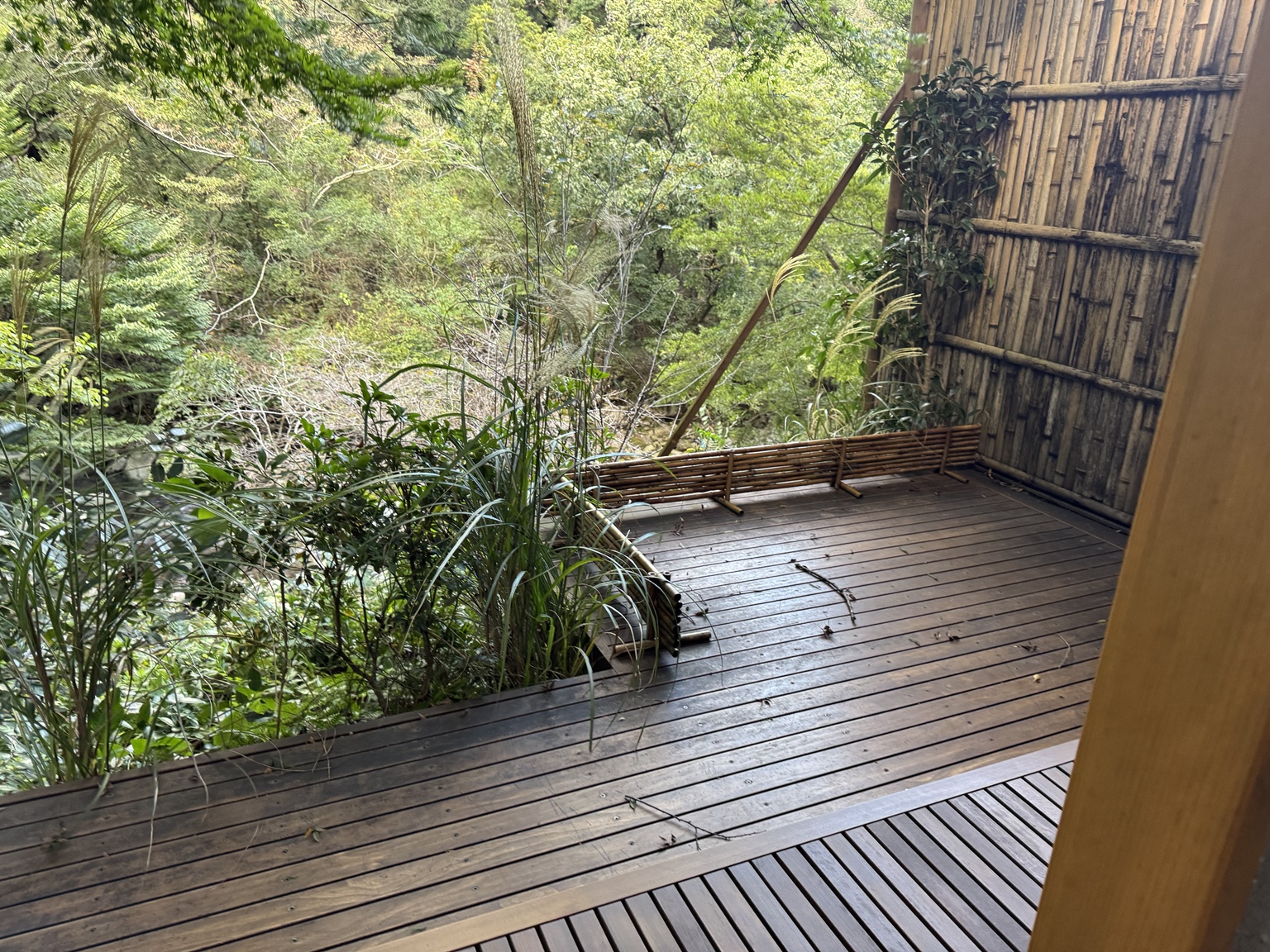
A small wooden terrace surrounded by greenery.
Now the day can slow down

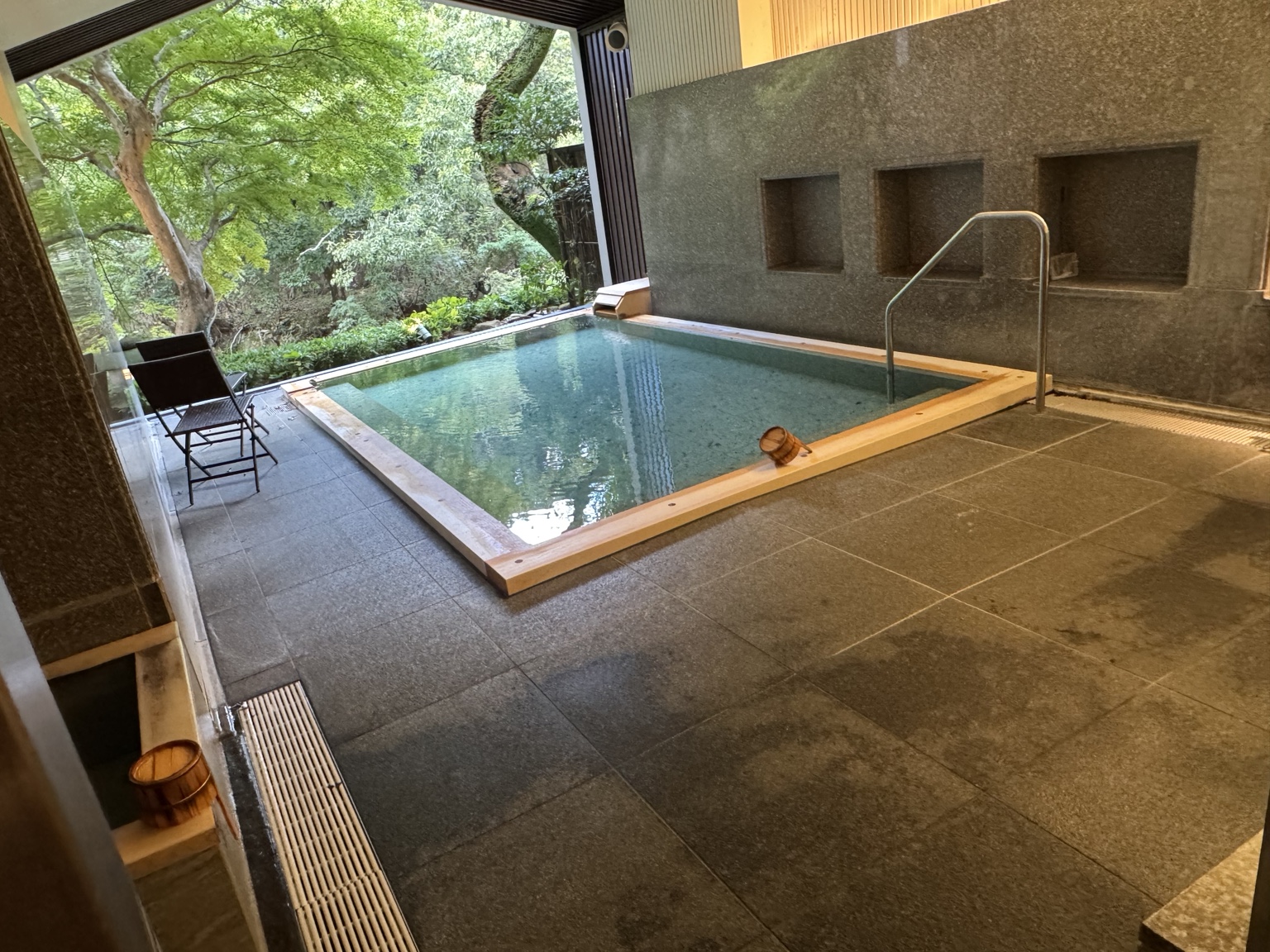
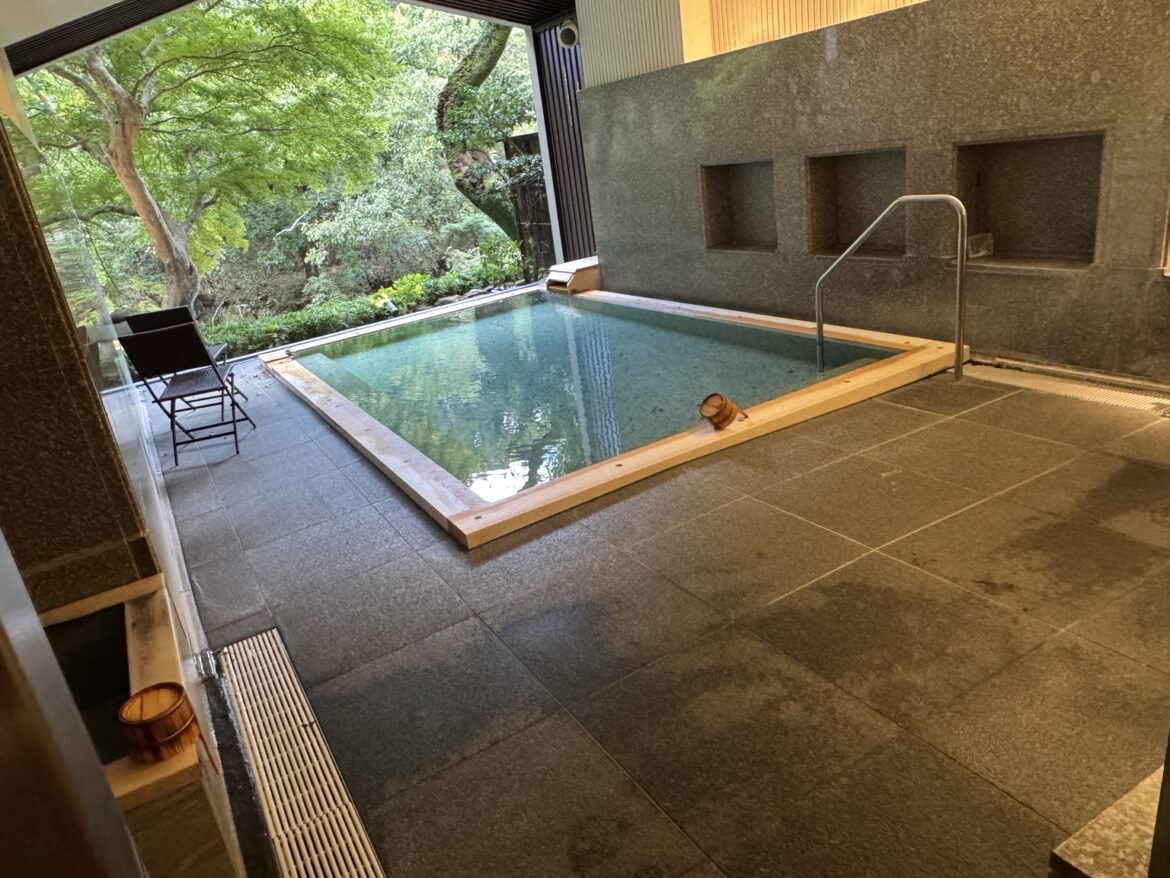
There is an onsen, too. A warm bath with a view of the greenery fits rather well with what we have in mind after today’s journey. The retreat also offers various cultural activities.
The onsen bath looking out onto the greenery.
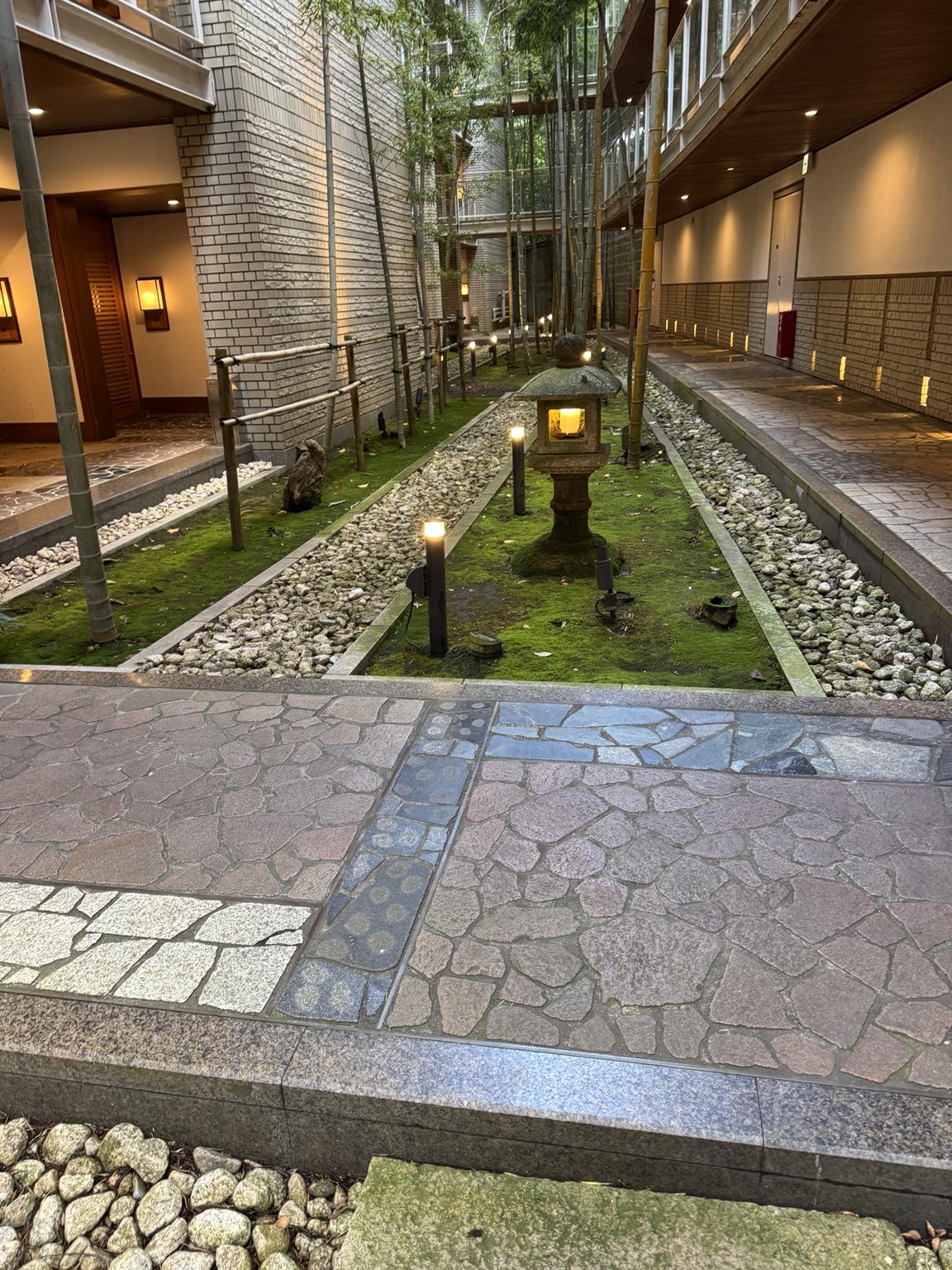
Bamboo and a stone lantern between the buildings.

For now, we are simply happy to have arrived. The suitcases can stay where they are. The river keeps flowing. And there are no more trains for us to catch today.

21 October 2026 · A Feast at KAI Hakone

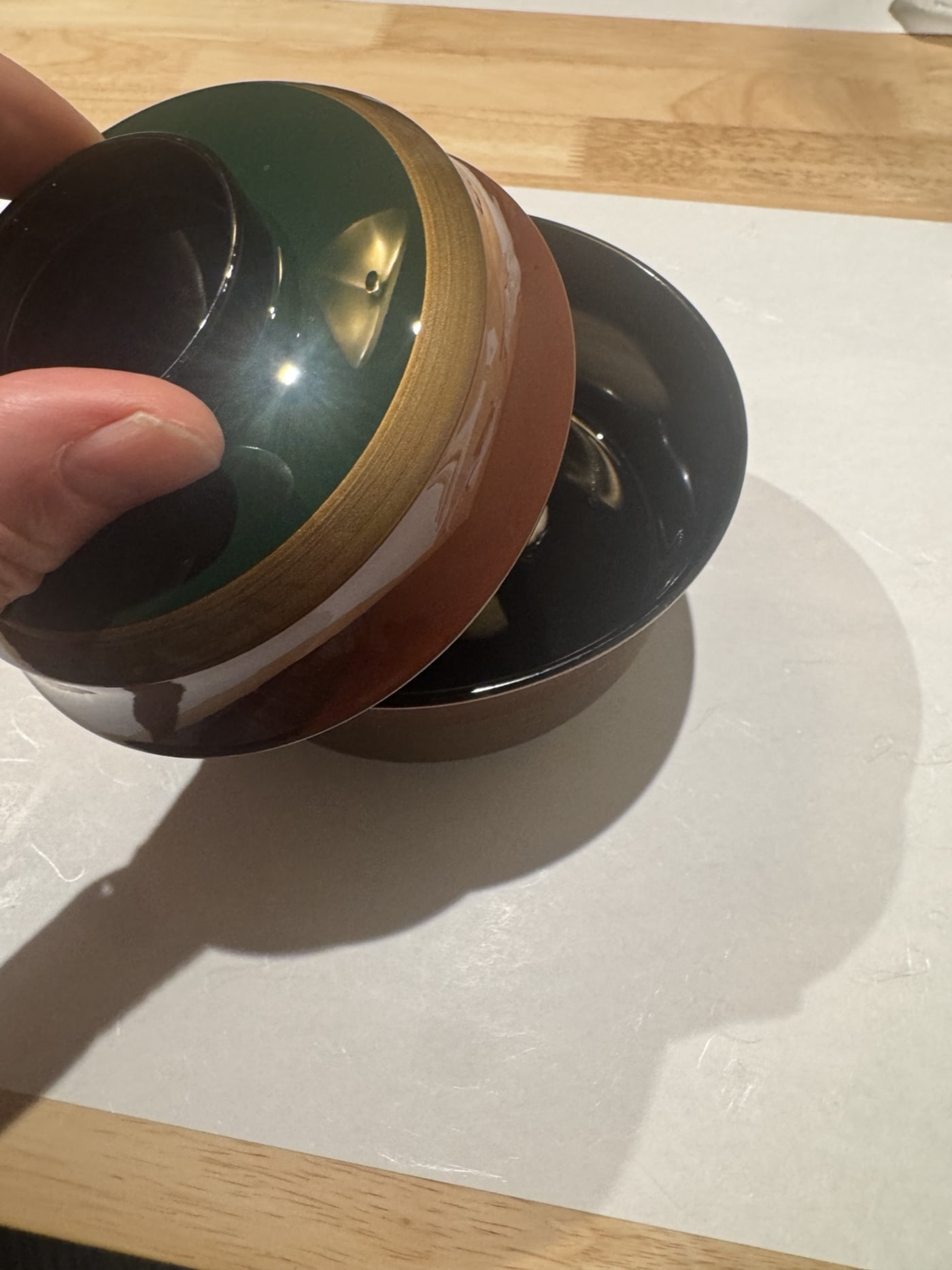
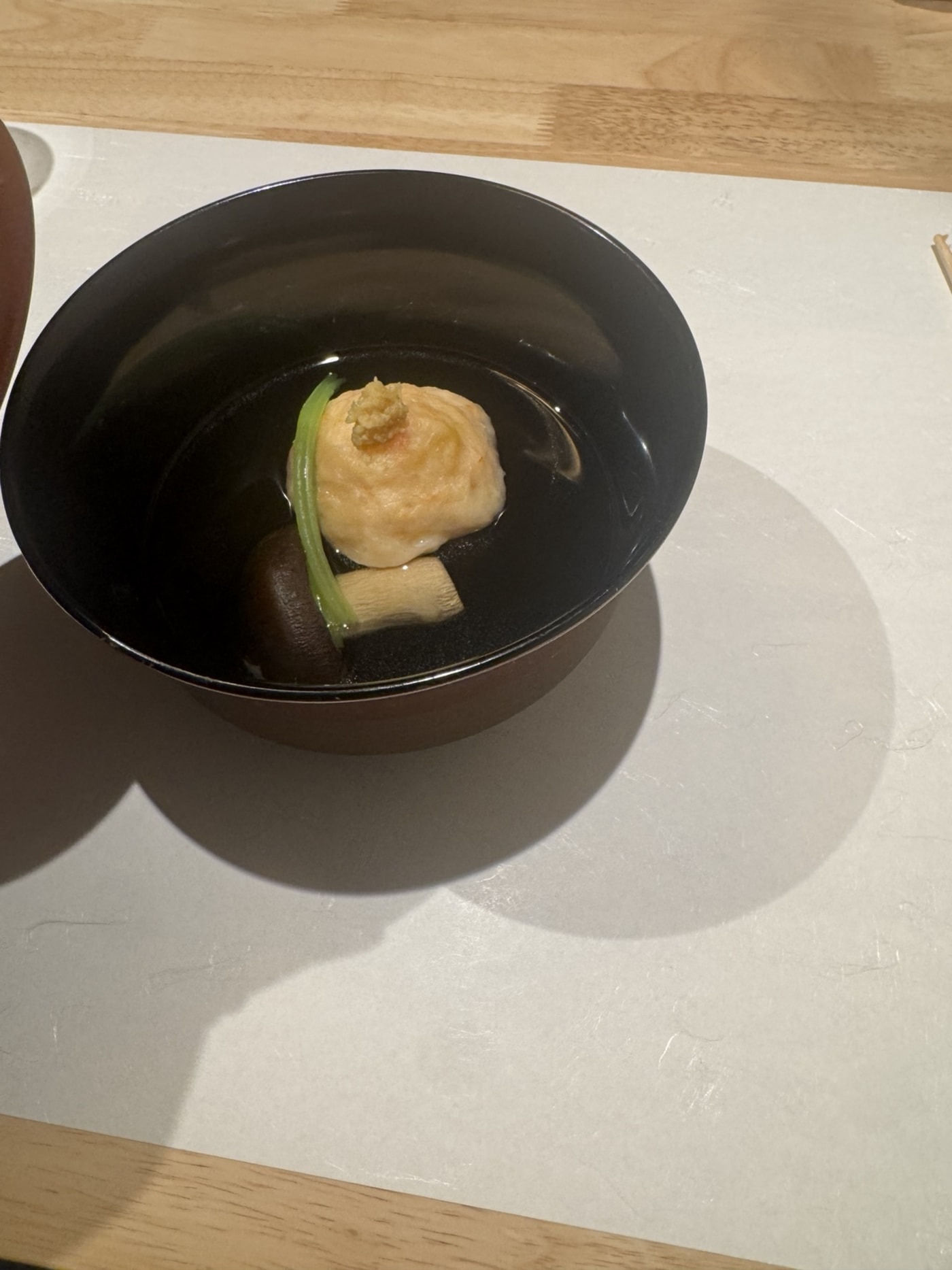
That evening, KAI Hakone raised the bar once again. What arrived at our table was no ordinary hotel dinner, but an opulent Japanese feast.

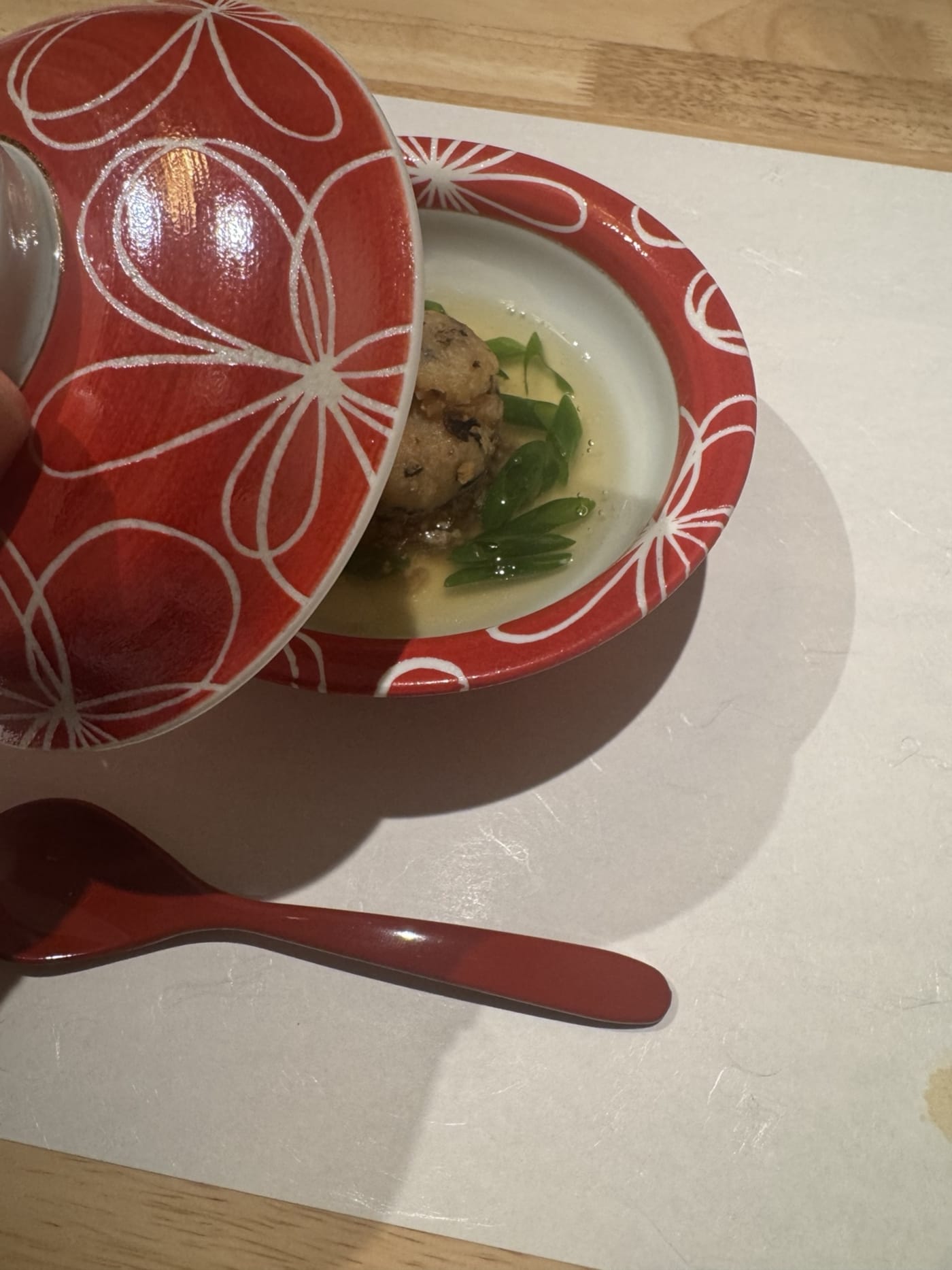
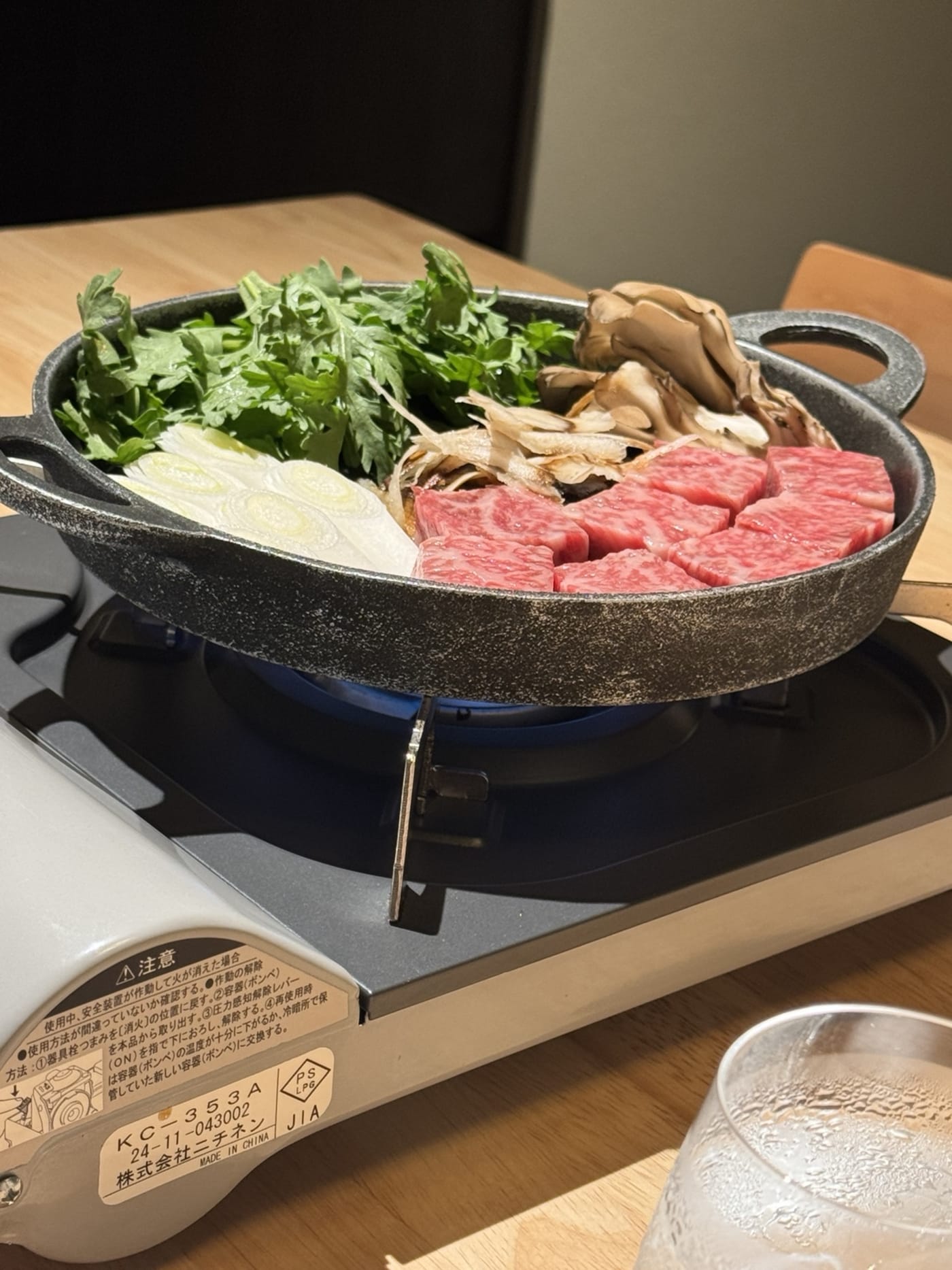
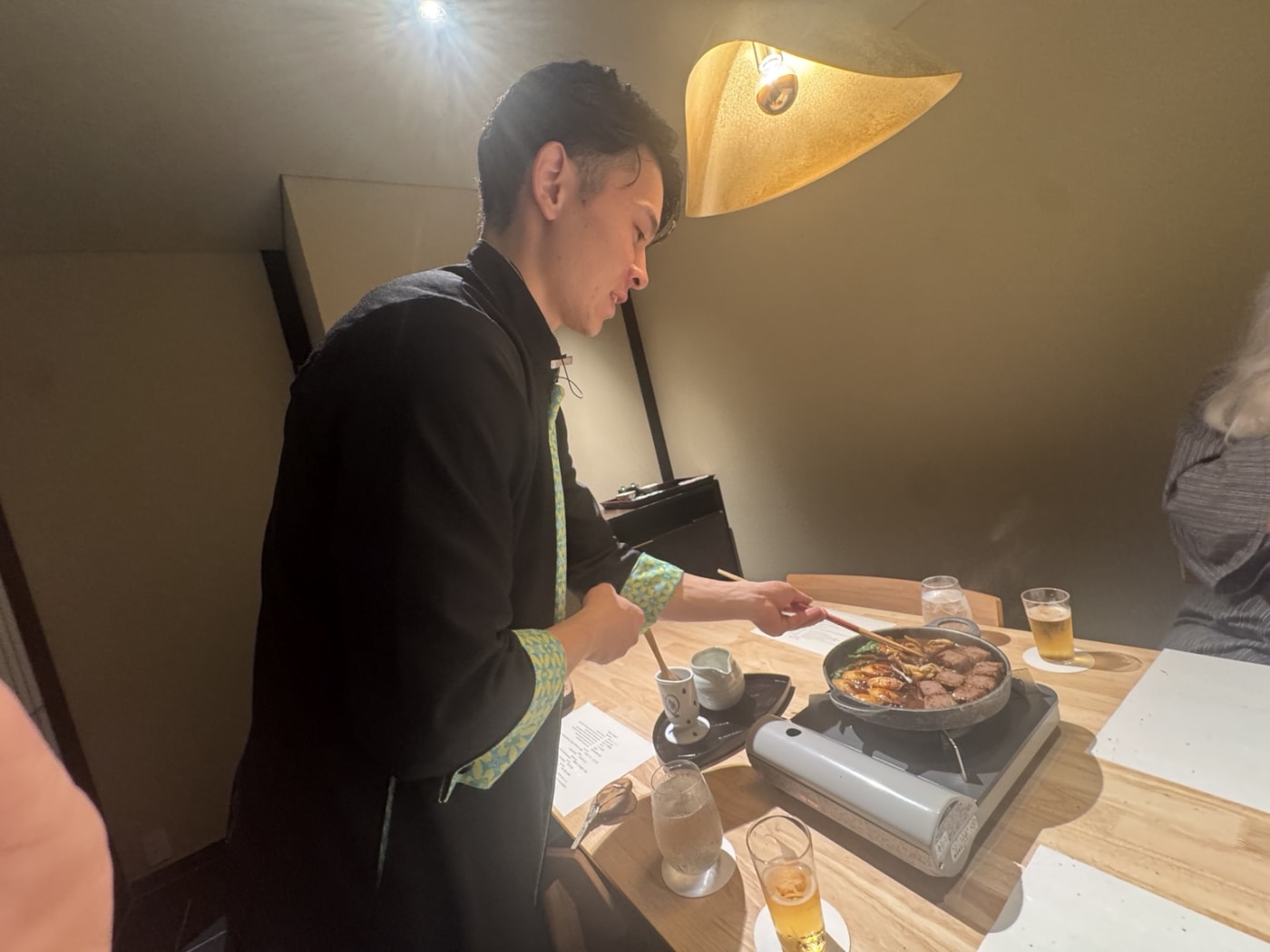
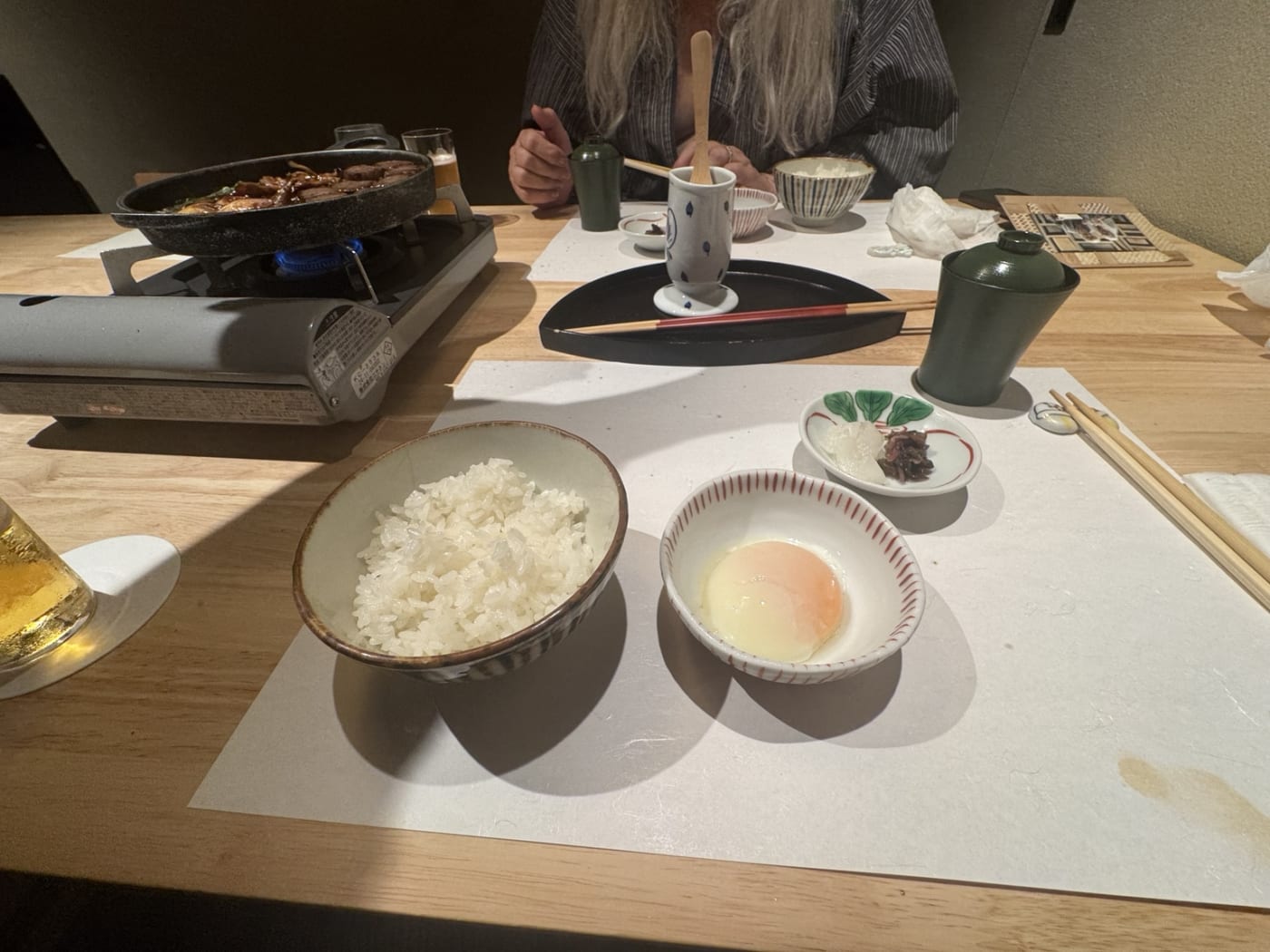
Course after course appeared, carefully arranged in beautiful bowls. Part of the meal was prepared right in front of us – calmly, attentively and with the kind of precision that can turn even dinner in Japan into a small ceremony.

Above all, it was delicious. The quality was exceptional, and we enjoyed the evening enormously. A big compliment to KAI Hakone: after the railway-station adventure, this was a rather elegant reminder that travel can also bring you back to calm through the stomach.

Opening the lacquer bowl – the first course.
A beautifully arranged beginning.
Another small bowl, another surprise.
The main course arrives right at our table.
Prepared at the table – calm, attentive and precise.
The table fills up, and we become quieter.
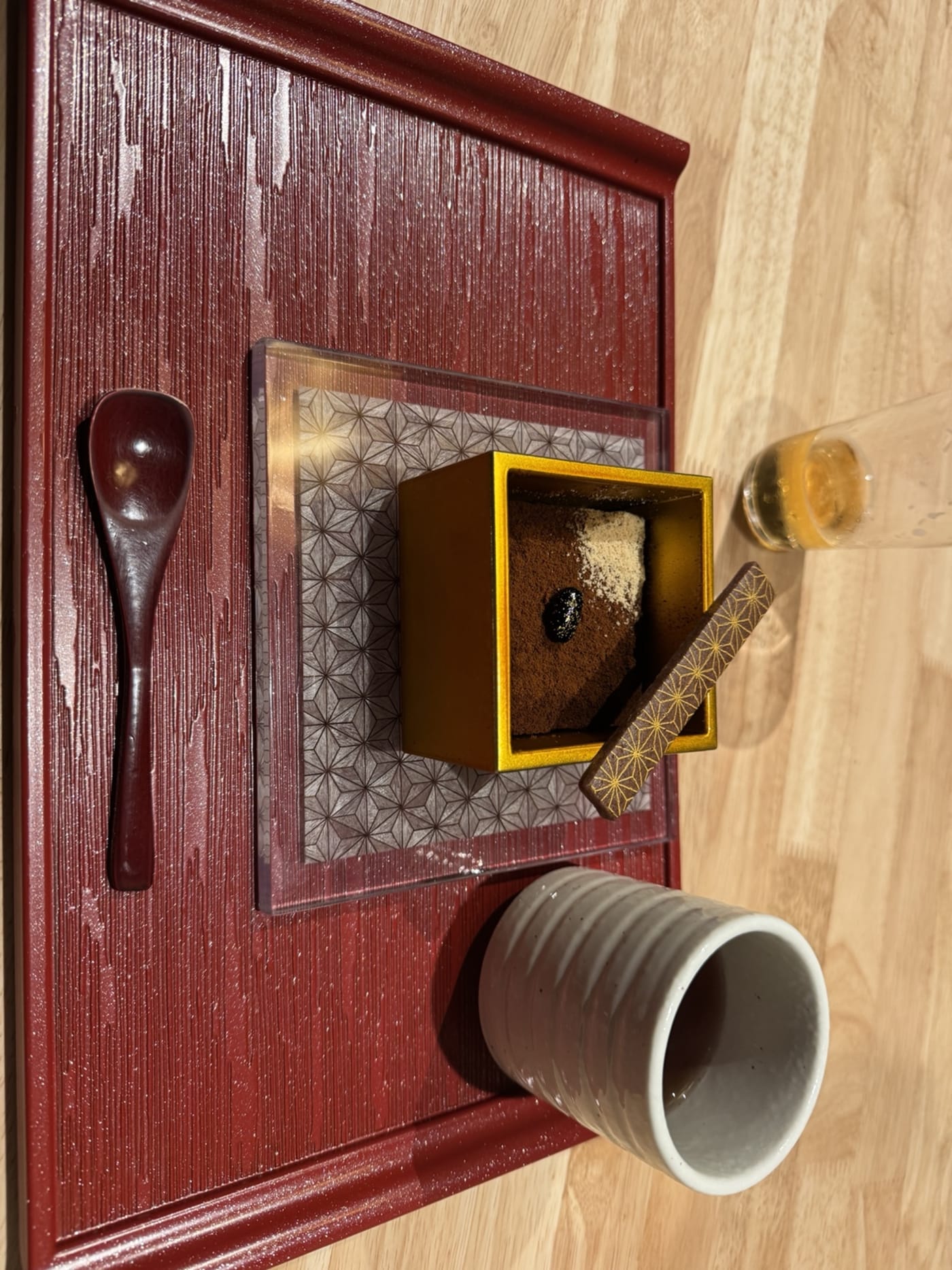
A sweet finish in a little box.

22 October 2026 · Hakone: The Road to Lake Ashi

Today we set out to take the ropeway towards Lake Ashi. It sounds elegant enough. Reality, however, had its own timetable: no taxi, so first a train, then a bus – plus a wait that I described quite unambiguously as a “nightmare.”

When I sent my update, we were still on the ropeway and had just begun the section down towards Lake Ashi. Hakone is teaching us not only about nature, but also the Far Eastern art of patience. Lunch, the boat trip and the return journey were still open at that point – so no premature success story.

By now I am sitting in a restaurant looking out at the boats. Outside, by my estimate, tens of thousands of visitors are pressing through Hakone, while taxis remain conspicuously absent. One thing is clear, though: I did not come all the way to the lake simply to return by bus. I want to cross the water. Whether and how we actually get aboard and make it back to the hotel is still unresolved at this moment.

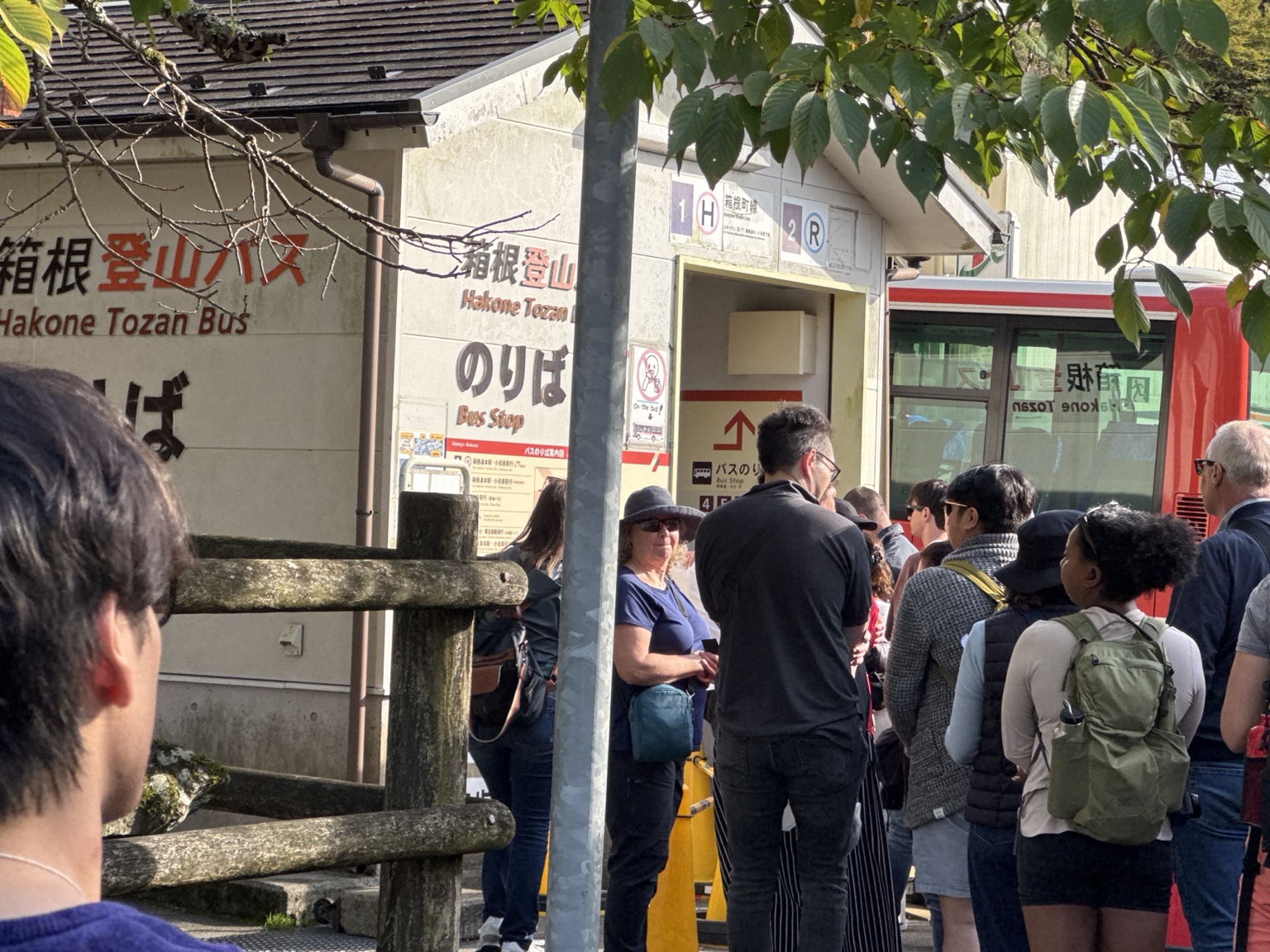
Long queue at the Hakone Tozan Bus stop in Hakone
The queue at the Hakone Tozan Bus stop: one of the day’s many tests of patience.

And then, at last: across the lake

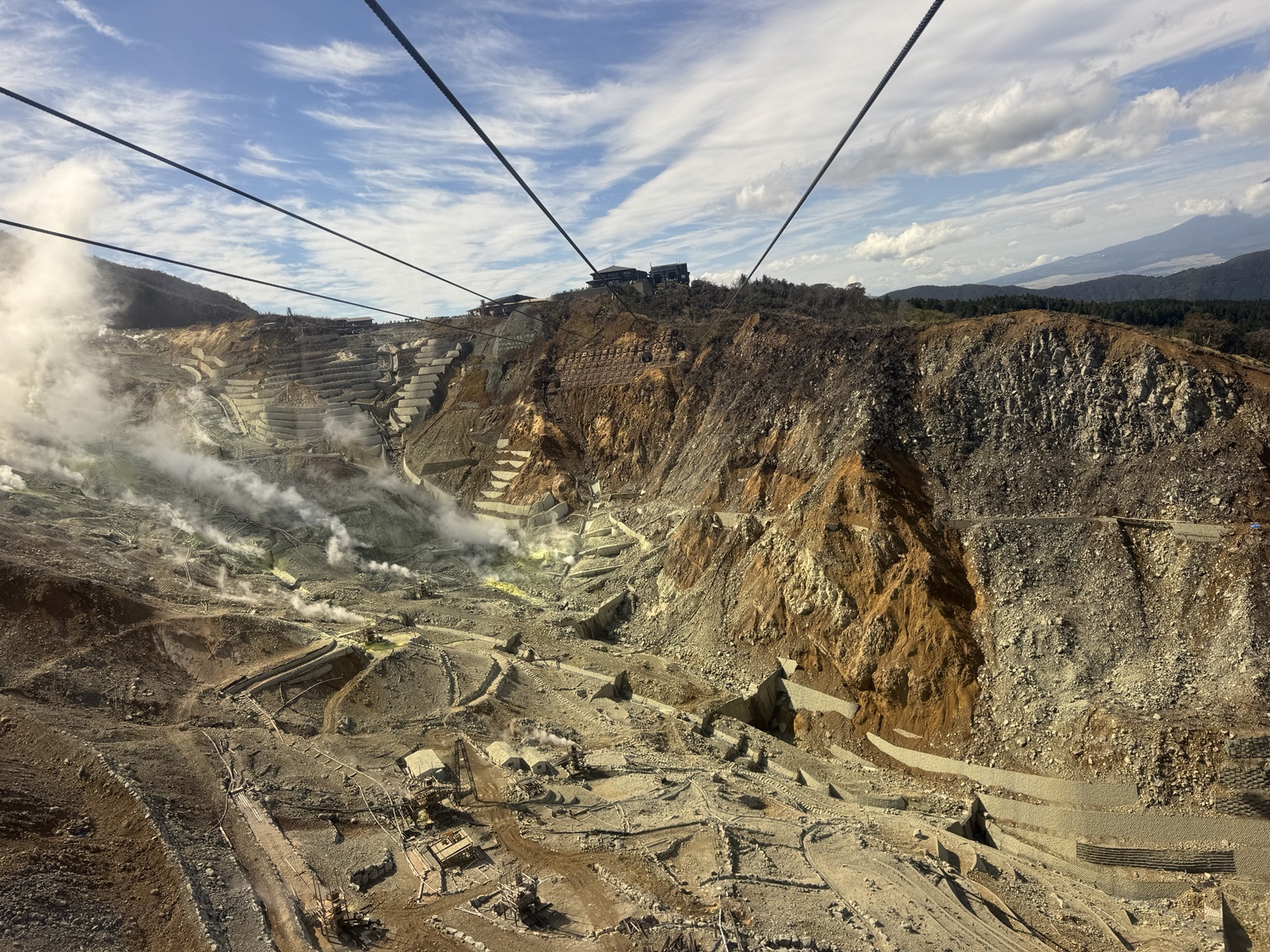
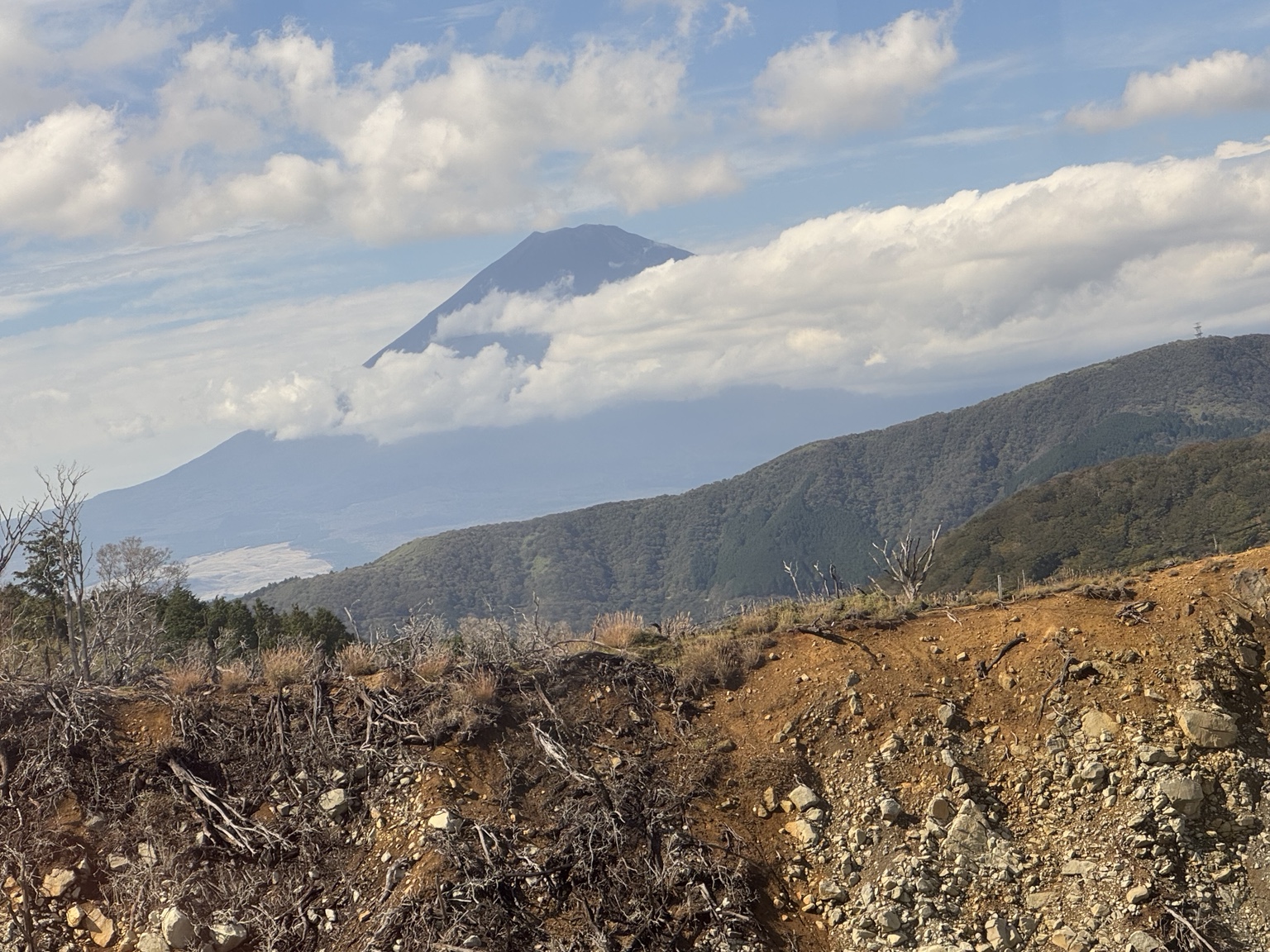
Hakone turned the outing into its own obstacle course. First came a bus and a train, then two mountain-railway and ropeway stretches. Between them came queues again and again: altogether we spent more than an hour and a half waiting. The reward was the steaming volcanic landscape high above Hakone – and even Mount Fuji appeared between the clouds.

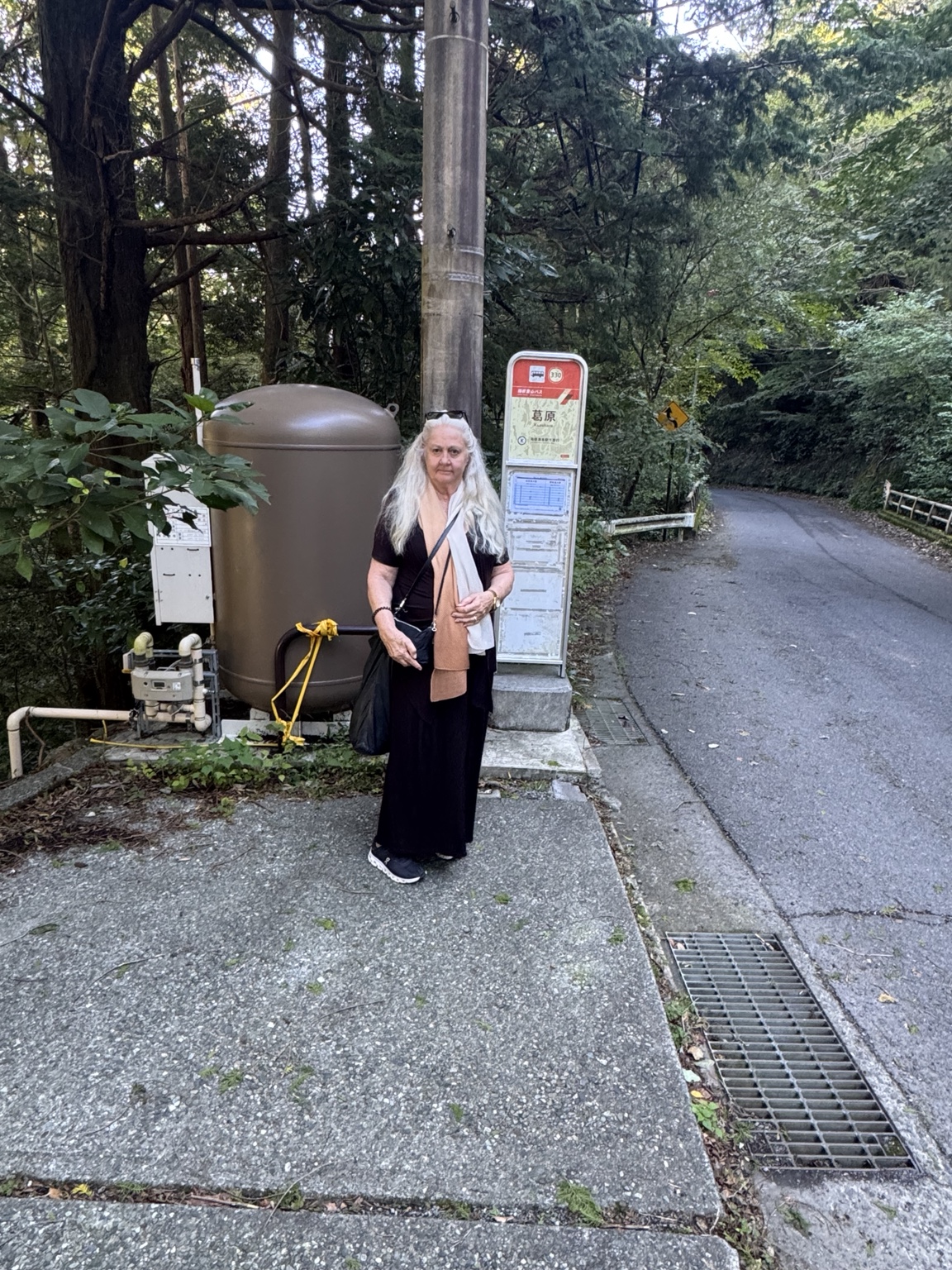
Anneliese at Kuzuhara bus stop in Hakone
Anneliese at Kuzuhara bus stop – the day begins at ground level.
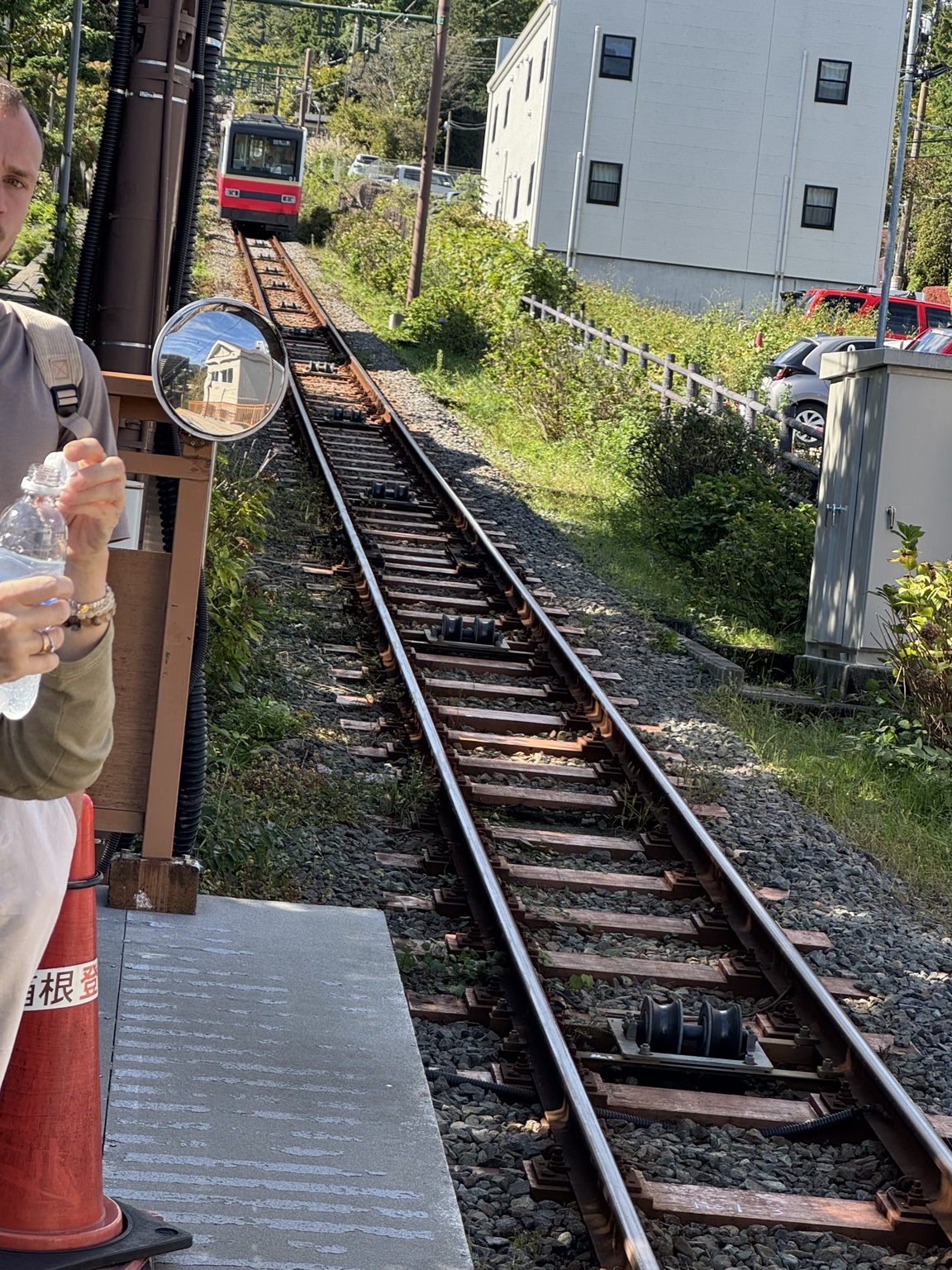
Red mountain railway in Hakone
The red mountain railway approaches.
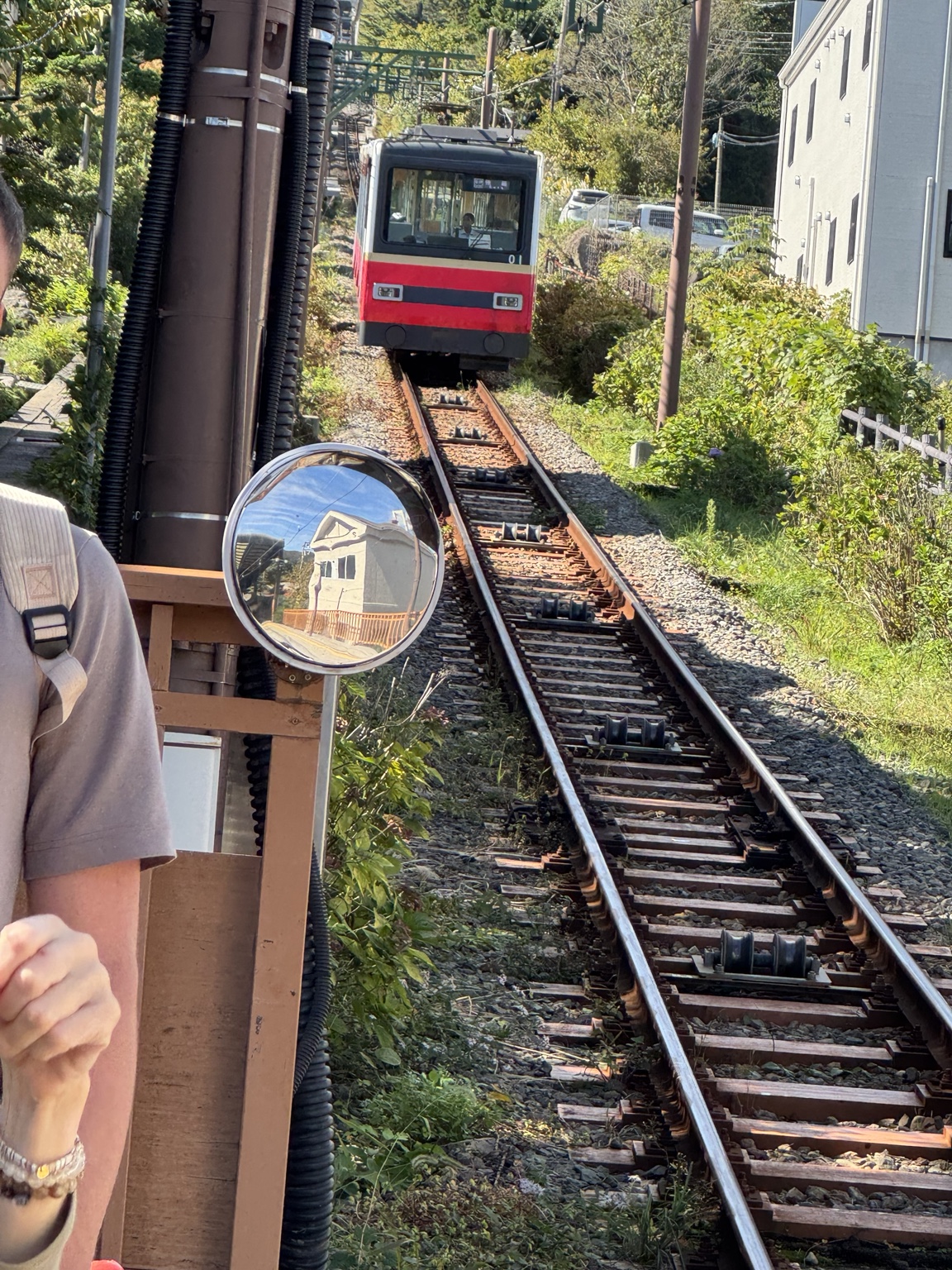
Red mountain railway on the Hakone route
More rails, gradient and patience.
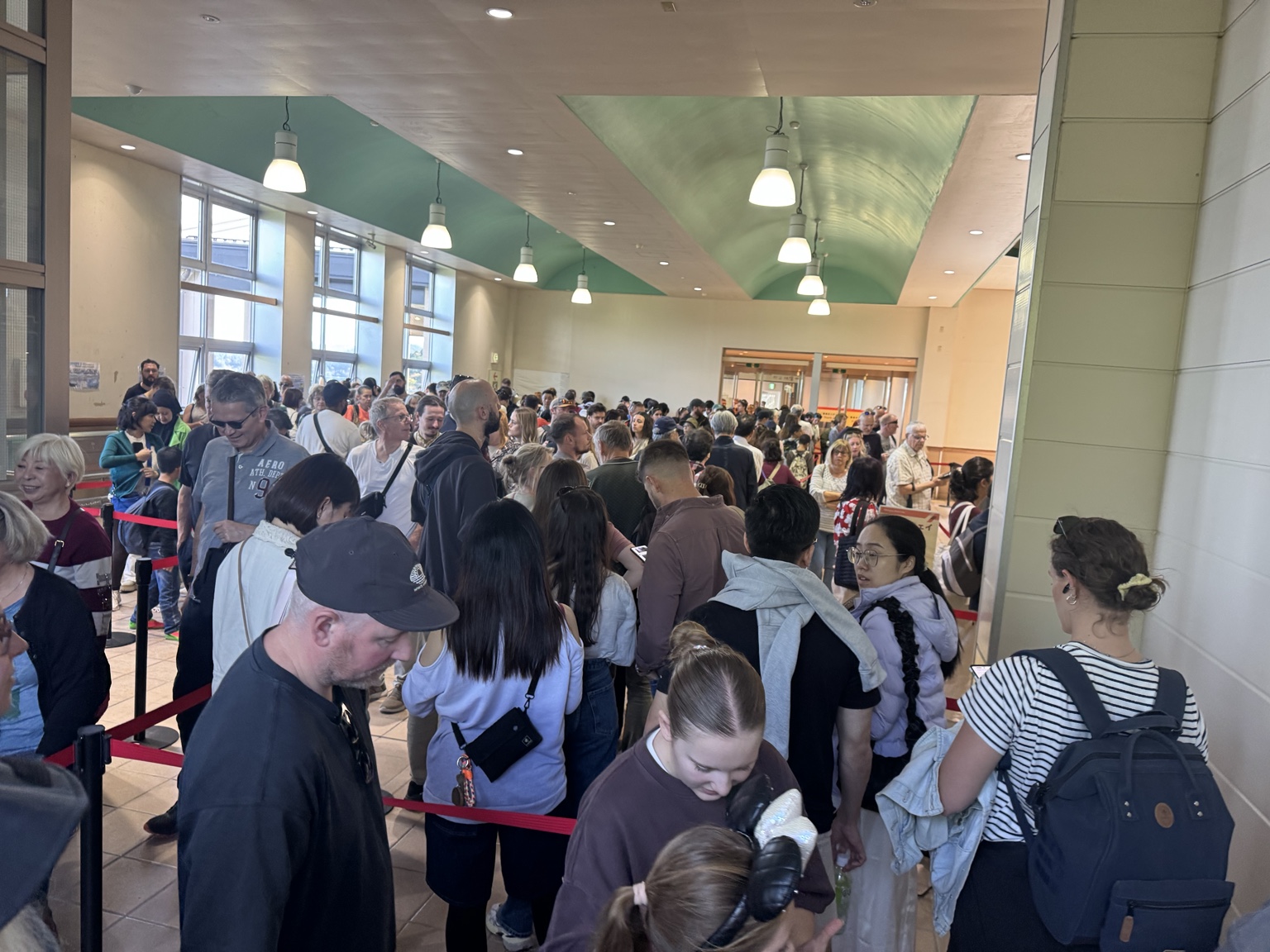
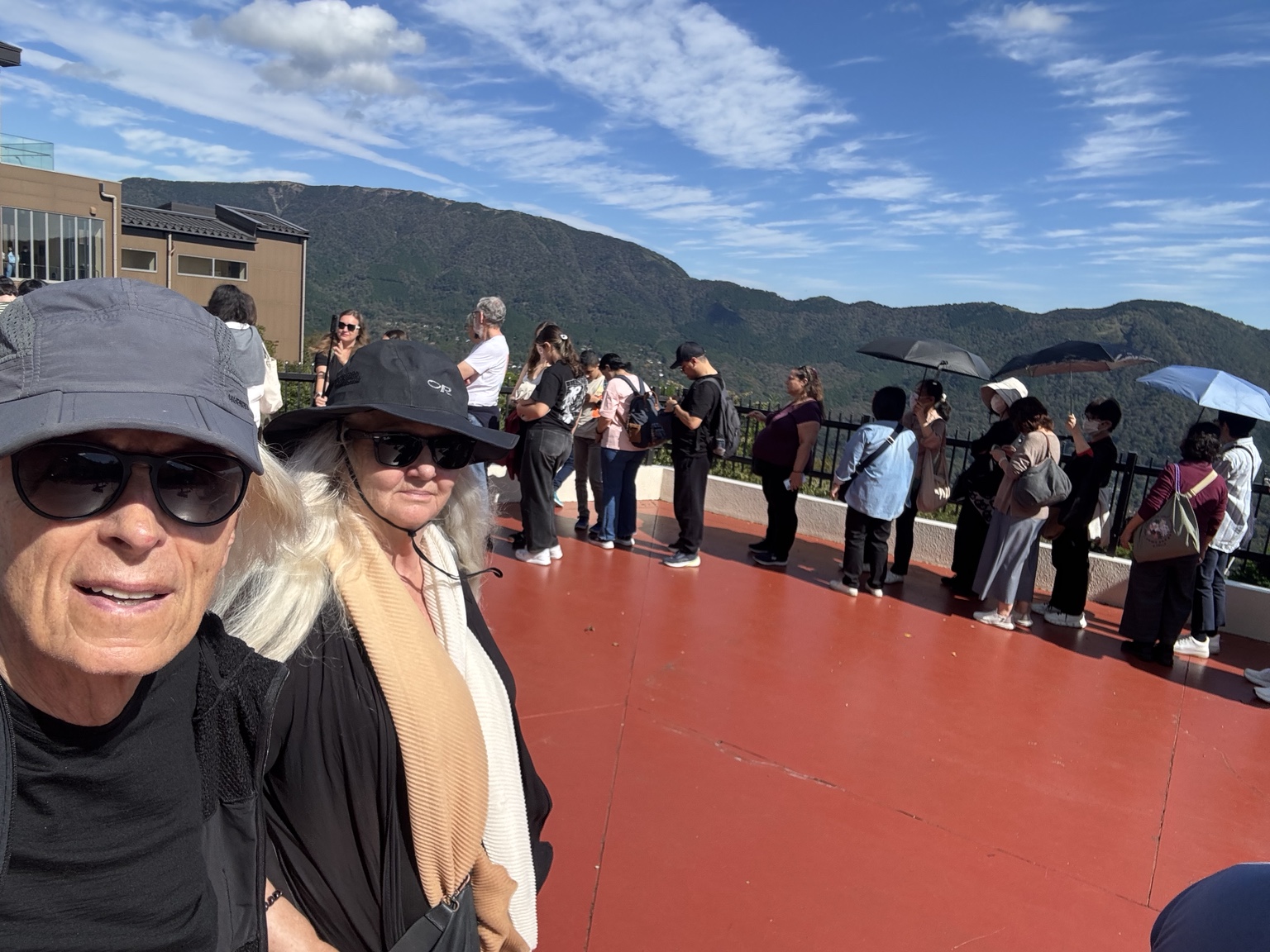
Large queue in Hakone
One of the queues: Hakone was very well attended that day.
Steaming volcanic landscape in Hakone
Steam and bare rock in the volcanic landscape.
Mount Fuji between clouds as seen from Hakone
Mount Fuji between the clouds – brief, but unmistakable.

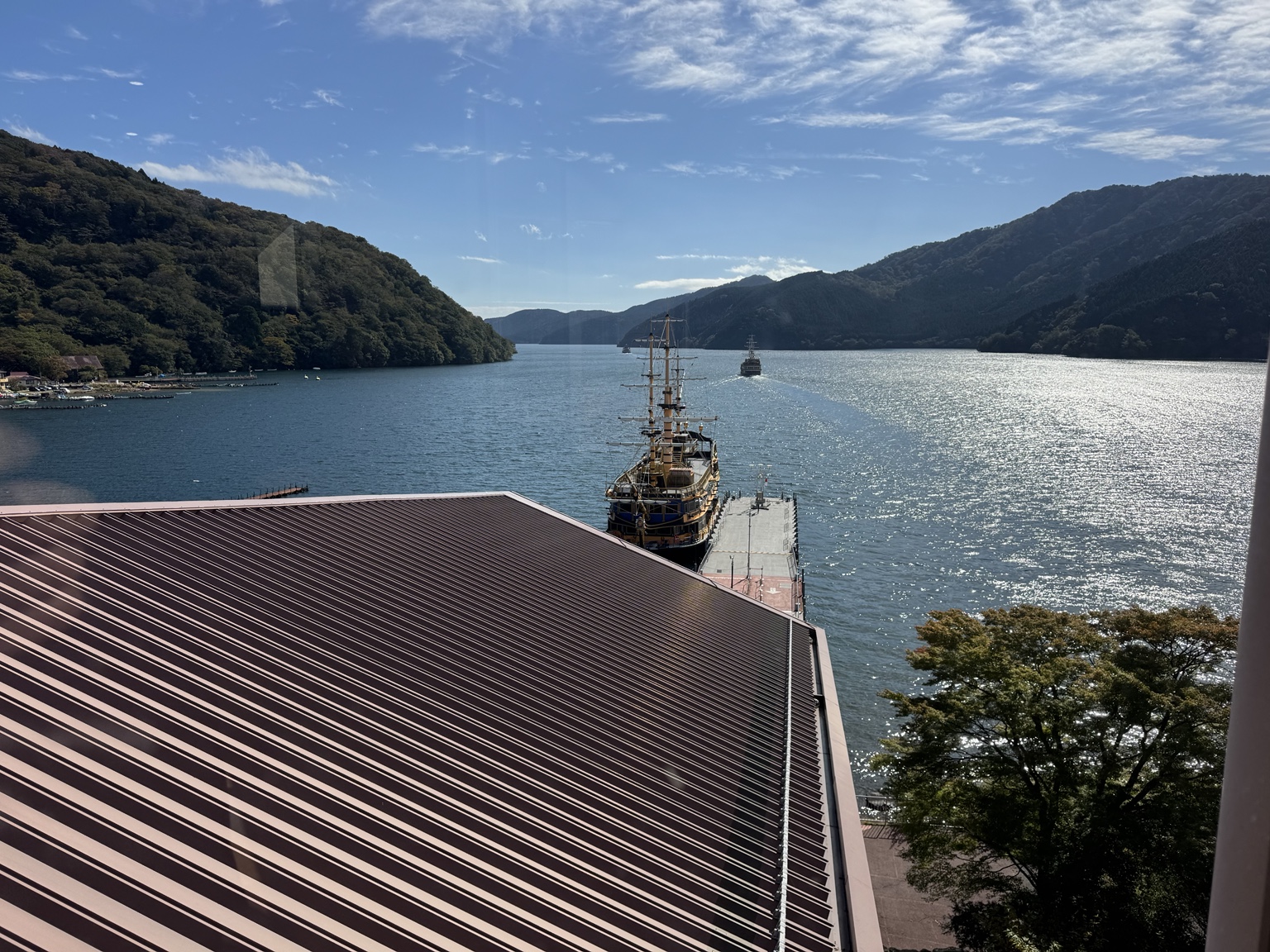
On the way down to Lake Ashi, the crowds did not exactly disappear. We ate first and then really did board one of the pirate sightseeing ships. After so much standing, a little comfort seemed justified, so we chose first class. Anneliese and I sat in the quieter forward section while lake, mountains and shoreline drifted past.

View of Lake Ashi in Hakone
Lake Ashi lies ahead.
Anneliese at the pier with a pirate ship on Lake Ashi
Anneliese at the pier with the pirate ship.
Kurt in front of the pirate ship on Lake Ashi
Actually aboard at last.
Kurt and Anneliese on the ship’s open deck on Lake Ashi
On the open deck: sunshine, mountains and plenty of fellow passengers.
Kurt and Anneliese in the ship’s first-class section
First class – thoroughly earned after more than an hour and a half of queues.
Twenty-four seconds of Lake Ashi in motion.
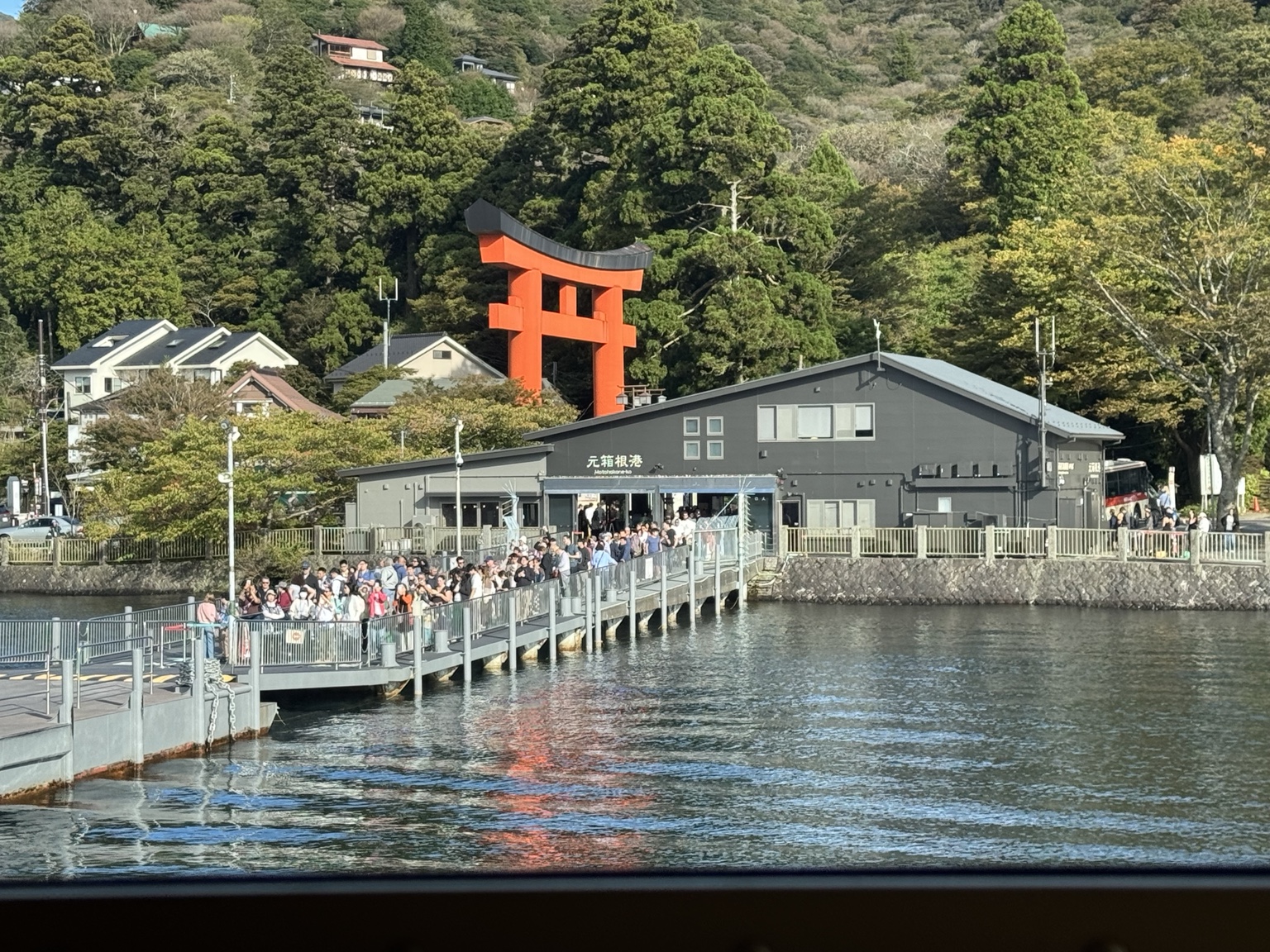
Moto-Hakone lakeshore and pier on Lake Ashi
Moto-Hakone on the lakeshore.
Scene while changing buses in Hakone
Even the bus change came with plenty to observe.

At Moto-Hakone, the journey was not quite won yet. Two buses eventually brought us back to KAI Hakone. Four-o’clock tea was waiting there – a remarkably civilised finale to a day that had taught us not only about fine views, but also about the Japanese art of queuing.

Garden and tea at KAI Hakone
Back at KAI Hakone: four-o’clock tea in the garden.

Not collecting sights, but experiencing them

This day made one thing especially clear to me: in all my travels, I have never encountered crowds like these at the sights – not even at Machu Picchu. Japan really can be extreme in that respect. But I am not a trophy hunter who needs to tick every attraction off a list. I want to experience places enjoyably and meaningfully. When an outing becomes little more than a race through crowds, it is perfectly all right to slow down, change the plan or leave something out. That day, the lake, the journey and the tea mattered more to me than another tick on a list.


← Chapter 31 · All chapters · Chapter 33 →

October 21, 2026 0 comments
0 FacebookTwitterPinterestEmail
Das Onsen-Becken im KAI Hakone mit Blick ins Grüne.
Journals

Japan-Tagebuch 32: Tokio im Eiltempo, Hakone zum Durchatmen

by KURT GASSNER October 21, 2026
written by KURT GASSNER

Deutsch | English

21. Oktober 2026 · Kanazawa – Tokio – Odawara – Hakone

Gestern habe ich mich noch gefragt, was beim Umsteigen in Tokio länger halten würde: unser Zeitpolster oder unsere Nerven. Heute kennen wir die Antwort. Wir haben den Anschluss geschafft. Aber der Bahnhof Tokio hat dafür gesorgt, dass wir uns das anschließende Onsen-Retreat redlich verdient haben.

Anneliese und unser Gepäck warten auf den Zug.
Am Bahnsteig: die Markierung für Wagen 11.
Der Shinkansen fährt ein.

Treppauf, treppab – mit dem halben Haushalt

Von Kanazawa geht es über Tokio nach Odawara. Auf dem Papier eine Zugverbindung. In der Praxis zwischendurch ein kleiner Hindernislauf: Treppen hinauf, Treppen hinunter, umsteigen, orientieren, weiter. Die Hallen sind vollgepackt mit Menschen, überall Schlangen und Bewegung. Und mittendrin Anneliese und ich mit unserem doch sehr umfangreichen Gepäck.

Sich da durchzuwühlen, ist schon ein besonderes Reiseerlebnis. Der Bahnhof Tokio bekommt von mir jedenfalls einen eigenen Platz im Tagebuch. Nicht unbedingt unter Entspannung.

Der Umstieg wird knapp. Und die japanischen Züge haben eine Eigenschaft, die man bewundert, solange man schon drinsitzt: Sie fahren auf die Sekunde genau. Auf unserer bisherigen Reise habe ich noch keine Verspätung erlebt, nicht einmal eine Minute. Beeindruckend. Mit mehreren Koffern und einem schrumpfenden Zeitpolster nimmt man diese Präzision allerdings noch einmal ganz anders wahr.

Geschafft: Anneliese und ich sitzen im Zug.

Vom Bahnhof mitten ins Grün

Schließlich sitzen wir im Zug, und um die Mittagszeit kommen wir gut in Odawara an. Von dort bringt uns ein Taxi nach Hakone. Nach dem Gedränge in Tokio wirkt die Fahrt zu unserem Retreat wie ein allmähliches Herunterdrehen der Lautstärke.

Das KAI Hakone liegt direkt am Fluss, zwischen bewaldeten Berghängen. Wunderschön und sehr naturnah. Hier schaut man ins Grün, auf Bäume und Wasser. Ein erstaunlicher Wechsel der Kulisse innerhalb weniger Stunden.

In Hakone erwartet uns ein ganz anderer Blick: bewaldete Hänge und der Fluss.
Steine, Bäume und ruhige Wege im KAI Hakone.

Viel Platz, wenig Abstand zum Boden

Unser japanisches Refugium ist groß, fast wie eine kleine Wohnung. Ein sehr geschmackvoller Wohnraum, viel Platz und diese ruhige Gestaltung, die gerade nach einem solchen Reisetag besonders wohltuend ist.

Geschlafen wird fast am Boden. Nicht direkt auf der Tatami-Matte, sondern auf einer sehr niedrigen Matratze. Auch das gehört zum Wechsel der Perspektive: Am Vormittag ging es im Bahnhof ständig auf und ab. Für die Nacht bleiben wir vorsichtshalber näher am Boden.

Anneliese im Eingangsbereich unseres japanischen Retreats.
Eine kleine Holzterrasse mitten im Grün.

Jetzt darf der Tag langsamer werden

Ein Onsen gehört ebenfalls dazu. Das warme Bad mit dem Blick ins Grüne passt ziemlich gut zu dem, was wir uns nach der heutigen Anreise wünschen. Dazu bietet das Haus verschiedene kulturelle Aktivitäten an.

Das Onsen-Becken mit Blick ins Grüne.
Bambus und eine Steinlaterne zwischen den Gebäudeteilen.

Für den Moment sind wir einfach froh, angekommen zu sein. Die Koffer dürfen stehen bleiben. Der Fluss fließt weiter. Und wir müssen heute keinem Zug mehr hinterher.

21. Oktober 2026 · Ein Festmahl im KAI Hakone

Am Abend setzte das KAI Hakone noch einen drauf. Was uns serviert wurde, war kein gewöhnliches Hotelessen, sondern ein opulentes japanisches Festmahl.

Gang für Gang kam auf den Tisch, sorgfältig angerichtet in wunderschönen Schalen. Ein Teil wurde direkt vor uns zubereitet – ruhig, aufmerksam und mit jener Präzision, die in Japan selbst das Essen fast zu einer kleinen Zeremonie macht.

Vor allem aber war es köstlich. Die Qualität war außergewöhnlich, und wir haben diesen Abend sehr genossen. Dafür ein großes Kompliment an das KAI Hakone: Nach dem Abenteuer Bahnhof war das ein ziemlich eleganter Beweis, dass Reisen auch durch den Magen wieder zur Ruhe kommen kann.

Lackschale wird geöffnet – der erste Gang.
Ein fein angerichteter Auftakt.
Noch eine kleine Schale, noch eine Überraschung.
Der Hauptgang kommt direkt auf den Tisch.
Zubereitung am Tisch – ruhig, aufmerksam, präzise.
Der Tisch füllt sich, wir werden stiller.
Ein süßer Abschluss in einer kleinen Schachtel.

22. Oktober 2026 · Hakone: der Weg zum Lake Ashi

Heute sollte es mit der Seilbahn Richtung Lake Ashi gehen. Das klingt zunächst elegant. Die Wirklichkeit hatte allerdings ihren eigenen Fahrplan: kein Taxi, deshalb erst Zug, dann Bus – und dazu eine Wartezeit, die ich unterwegs ziemlich eindeutig als „Nightmare“ bezeichnete.

Als ich mich meldete, saßen wir noch immer in der Seilbahn und begannen gerade den Abschnitt hinunter zum Lake Ashi. Hakone zeigt uns damit nicht nur Natur, sondern auch die fernöstliche Kunst der Geduld. Essen, Schiffsfahrt und Rückweg waren zu diesem Zeitpunkt noch offen – also keine voreiligen Erfolgsberichte.

Inzwischen sitze ich in einem Restaurant und schaue auf die Schiffe. Draußen drängen sich nach meiner Schätzung Zehntausende Touristen, Taxis sind weiterhin Fehlanzeige. Eines ist aber klar: Ich bin nicht bis an den See gekommen, um nun im Bus zurückzufahren. Über das Wasser soll es gehen. Ob und wie wir tatsächlich an Bord kommen und zurück ins Hotel gelangen, bleibt in diesem Augenblick noch offen.

Lange Warteschlange am Hakone-Tozan-Bus in Hakone
Die Warteschlange am Hakone-Tozan-Bus: eine von vielen Geduldsproben dieses Tages.

Und dann doch: über den See

Am Ende hat Hakone seinen eigenen Hindernislauf daraus gemacht. Zuerst Bus und Zug, dann zwei Bergbahn- beziehungsweise Seilbahnabschnitte. Dazwischen immer wieder Schlangen: zusammengerechnet standen wir mehr als eineinhalb Stunden an. Dafür öffnete sich oben der Blick auf die dampfende Vulkanlandschaft – und sogar der Fuji zeigte sich zwischen den Wolken.

Anneliese an der Bushaltestelle Kuzuhara in Hakone
Anneliese an der Haltestelle Kuzuhara – der Tag beginnt bodennah.
Rote Bergbahn in Hakone
Die rote Bergbahn kommt.
Rote Bergbahn auf der Strecke in Hakone
Noch einmal Schienen, Steigung und Geduld.
Große Warteschlange in Hakone
Eine der Warteschlangen: Hakone war an diesem Tag bestens besucht.
Dampfende Vulkanlandschaft in Hakone
Dampf und nacktes Gestein in der Vulkanlandschaft.
Berg Fuji zwischen Wolken von Hakone aus gesehen
Fuji zwischen den Wolken – kurz, aber unverkennbar.

Hinunter zum Lake Ashi wurde es nicht weniger voll. Wir aßen erst etwas und gingen dann tatsächlich an Bord eines der Piratenschiffe. Weil ein wenig Komfort nach so viel Stehen nicht schadet, leisteten wir uns die erste Klasse. Anneliese und ich saßen vorne im ruhigeren Bereich, während draußen See, Berge und Ufer vorbeizogen.

Blick auf Lake Ashi in Hakone
Lake Ashi liegt vor uns.
Anneliese am Anleger mit einem Piratenschiff auf Lake Ashi
Anneliese am Anleger mit dem Piratenschiff.
Kurt vor dem Piratenschiff auf Lake Ashi
Jetzt wirklich an Bord.
Kurt und Anneliese auf dem offenen Deck des Schiffes auf Lake Ashi
Auf dem offenen Deck: Sonne, Berge und sehr viele Mitreisende.
Kurt und Anneliese im Erste-Klasse-Bereich des Schiffes
Erste Klasse – nach anderthalb Stunden Anstehen durchaus verdient.
24 Sekunden Lake Ashi in Bewegung.
Ufer und Anleger von Moto-Hakone am Lake Ashi
Moto-Hakone am Ufer des Sees.
Szene beim Umsteigen an einer Bushaltestelle in Hakone
Auch beim Umsteigen gab es allerhand zu sehen.

In Moto-Hakone war die Reise noch nicht ganz gewonnen. Zwei Busse brachten uns schließlich zurück zum KAI Hakone. Als wir dort ankamen, wartete der Tee um vier – ein erstaunlich ziviler Schlusspunkt nach einem Tag, der uns neben wunderbaren Aussichten vor allem die japanische Kunst des Anstehens beigebracht hatte.

Garten und Tee im KAI Hakone
Zurück im KAI Hakone: Tee um vier im Garten.

Nicht sammeln, sondern erleben

Was mir dieser Tag noch einmal sehr deutlich gemacht hat: Einen solchen Andrang habe ich bei Sehenswürdigkeiten auf meinen Reisen noch nirgends erlebt – nicht einmal in Machu Picchu. Japan kann in dieser Hinsicht wirklich extrem sein. Ich bin allerdings kein Trophäenjäger, der jede Sehenswürdigkeit von einer Liste streichen muss. Mir geht es darum, Orte genussvoll und sinnvoll zu erleben. Wenn aus einem Ausflug nur noch ein Wettlauf durch Menschenmassen wird, darf man deshalb ruhig langsamer werden, umplanen oder auch einmal etwas auslassen. Der See, die Fahrt und der Tee waren mir an diesem Tag wichtiger als ein weiterer Haken auf einer Liste.


← Kapitel 31 · Alle Kapitel · Kapitel 33 →

October 21, 2026 0 comments
0 FacebookTwitterPinterestEmail
Our host at the samurai residence in Kanazawa.
Journals

Japan Diary 31: Kanazawa – Samurai, Sweets and a Moment of Stillness

by KURT GASSNER October 20, 2026
written by KURT GASSNER

Deutsch | English

20 October 2026 · Kanazawa

After yesterday’s long excursion, Anneliese and I wanted to take things a little more slowly in Kanazawa today. And it turned into a wonderful last day in this beautiful city.

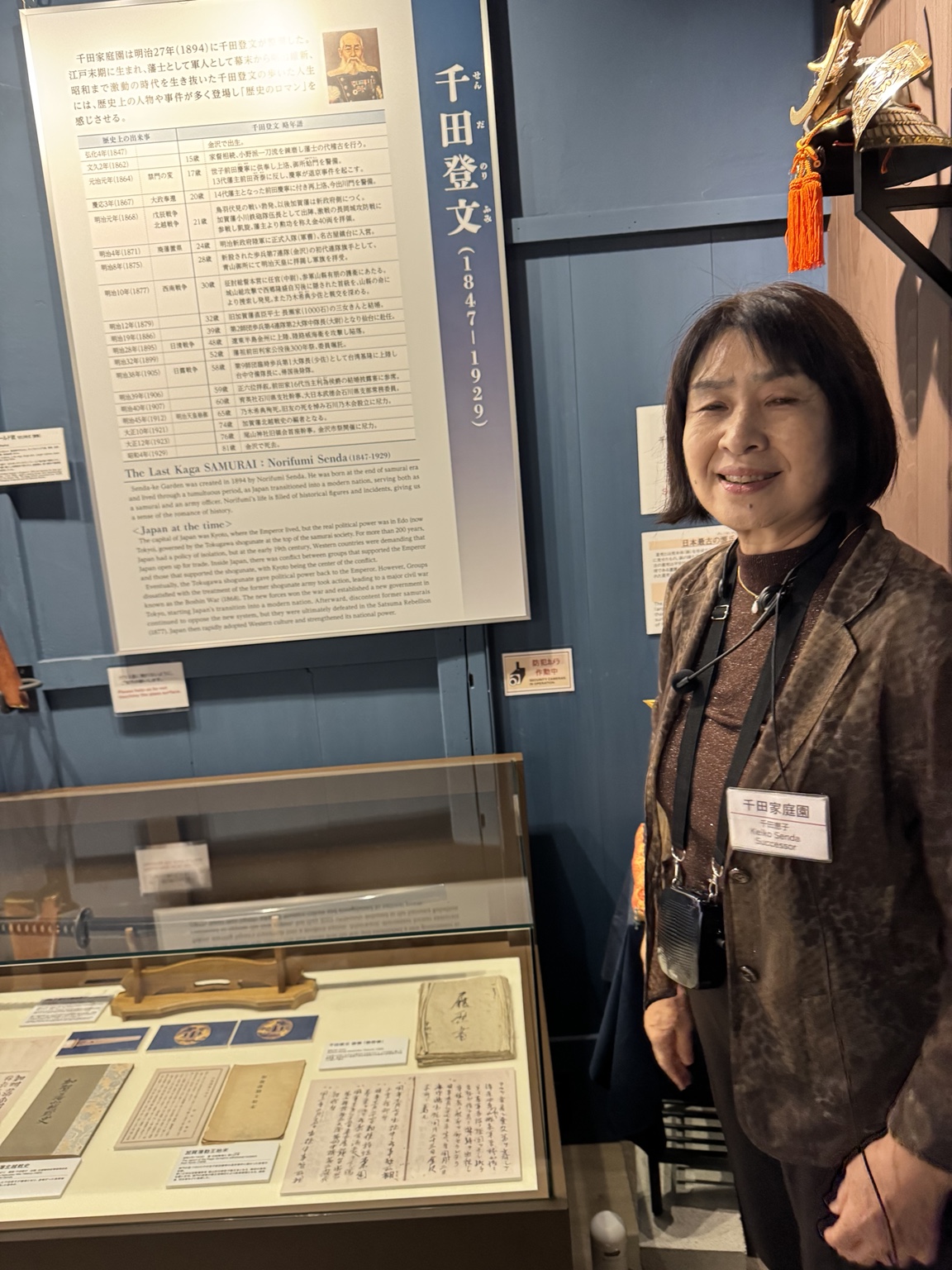
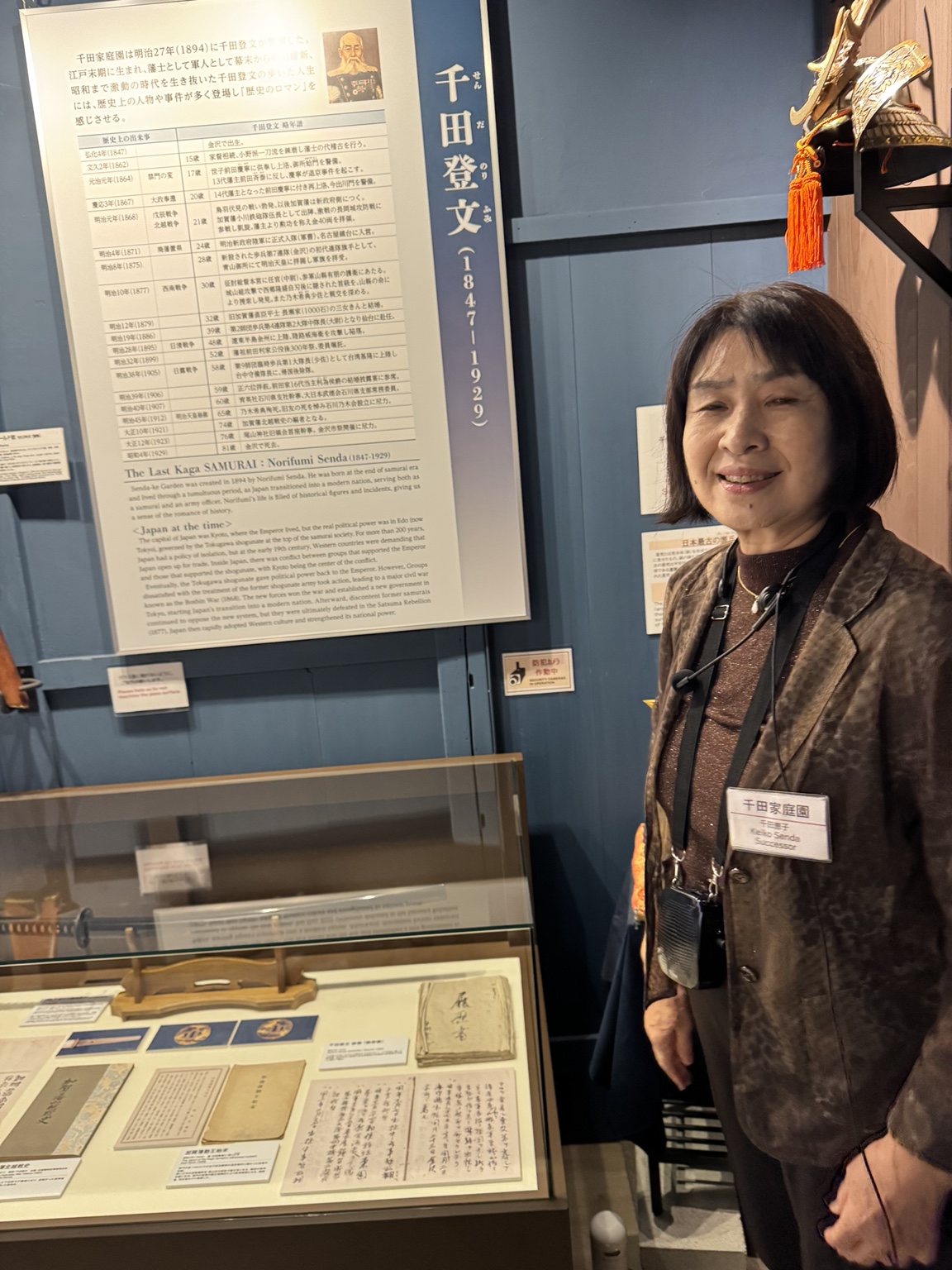
In the historic samurai district, we visited a former samurai residence. What made it particularly special was meeting a lady who welcomed us as a descendant of the family. Suddenly, history has a face. You look at the old keepsakes and hear about people whose story lives on here to this day.

Our host at the samurai residence.
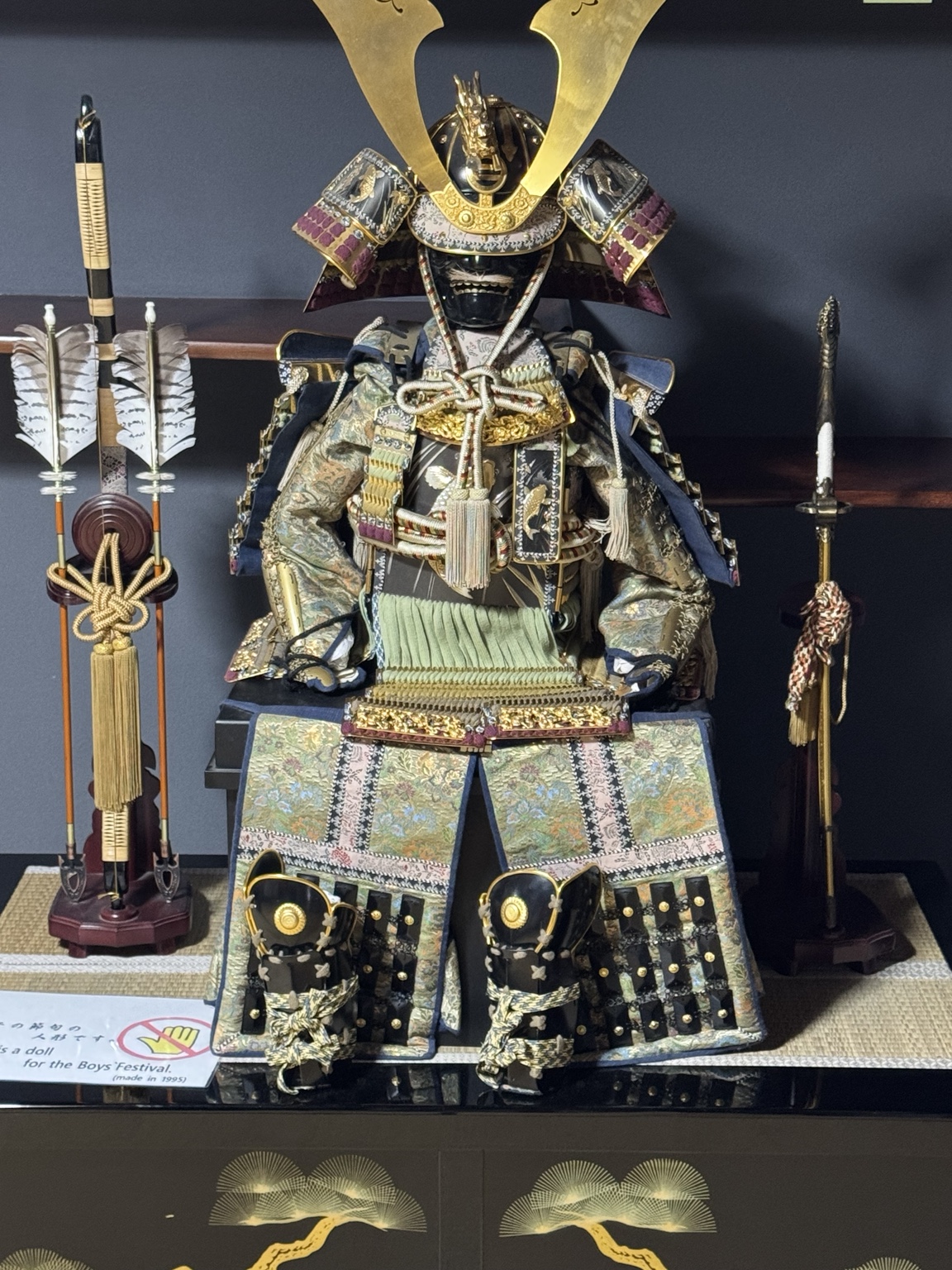
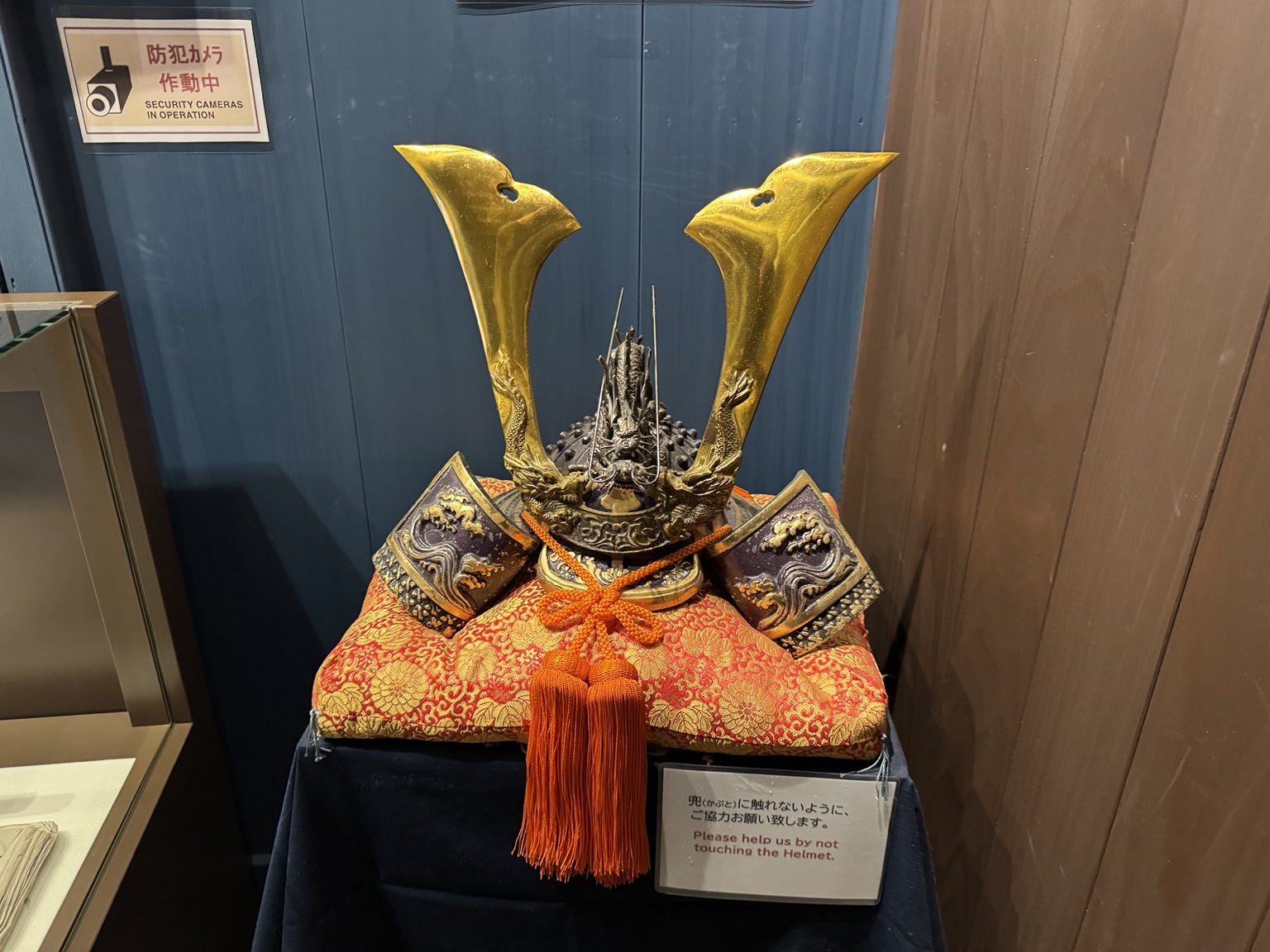
A magnificent samurai helmet.
An insight into the family’s history.
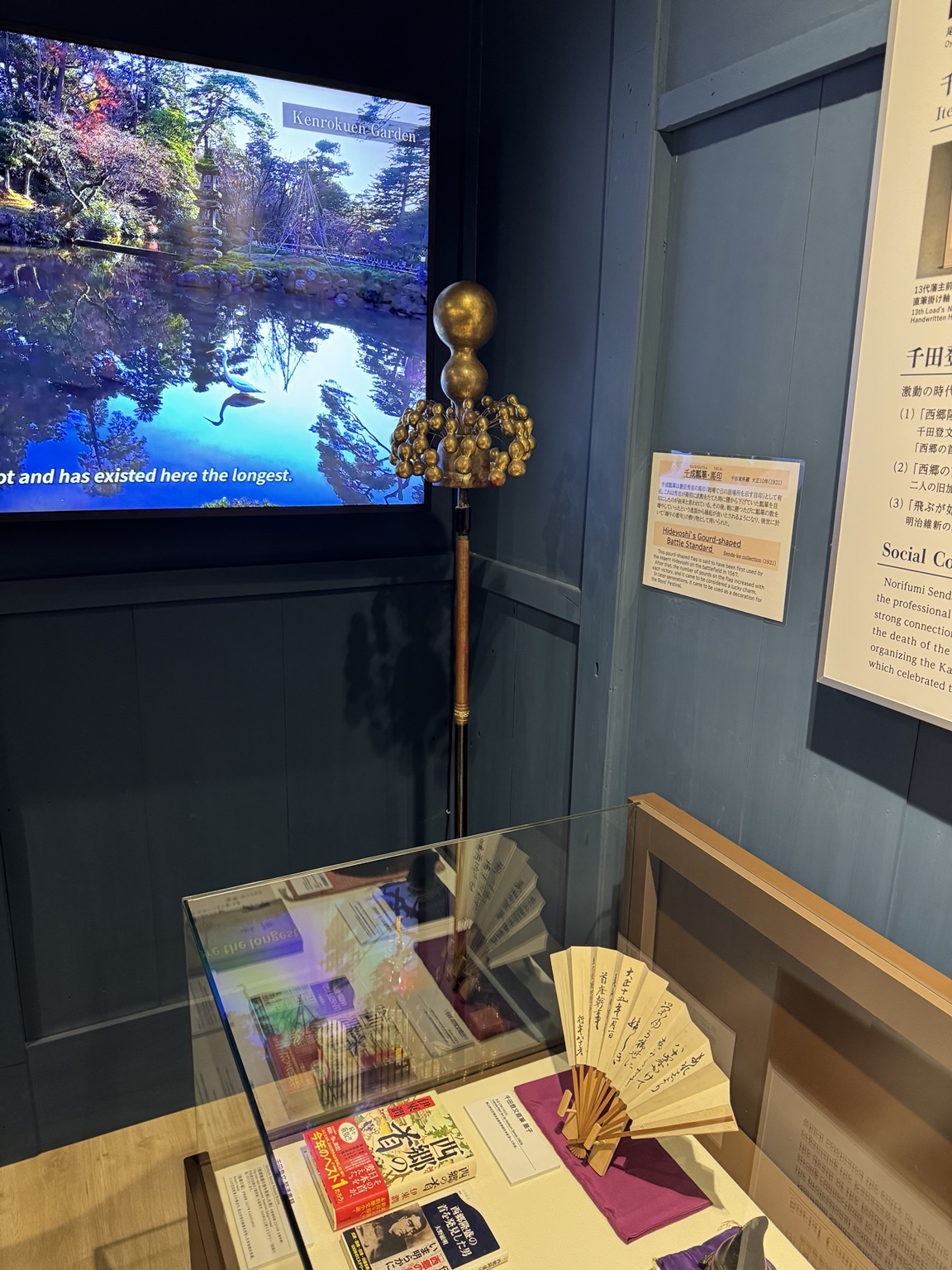
Keepsakes on display.
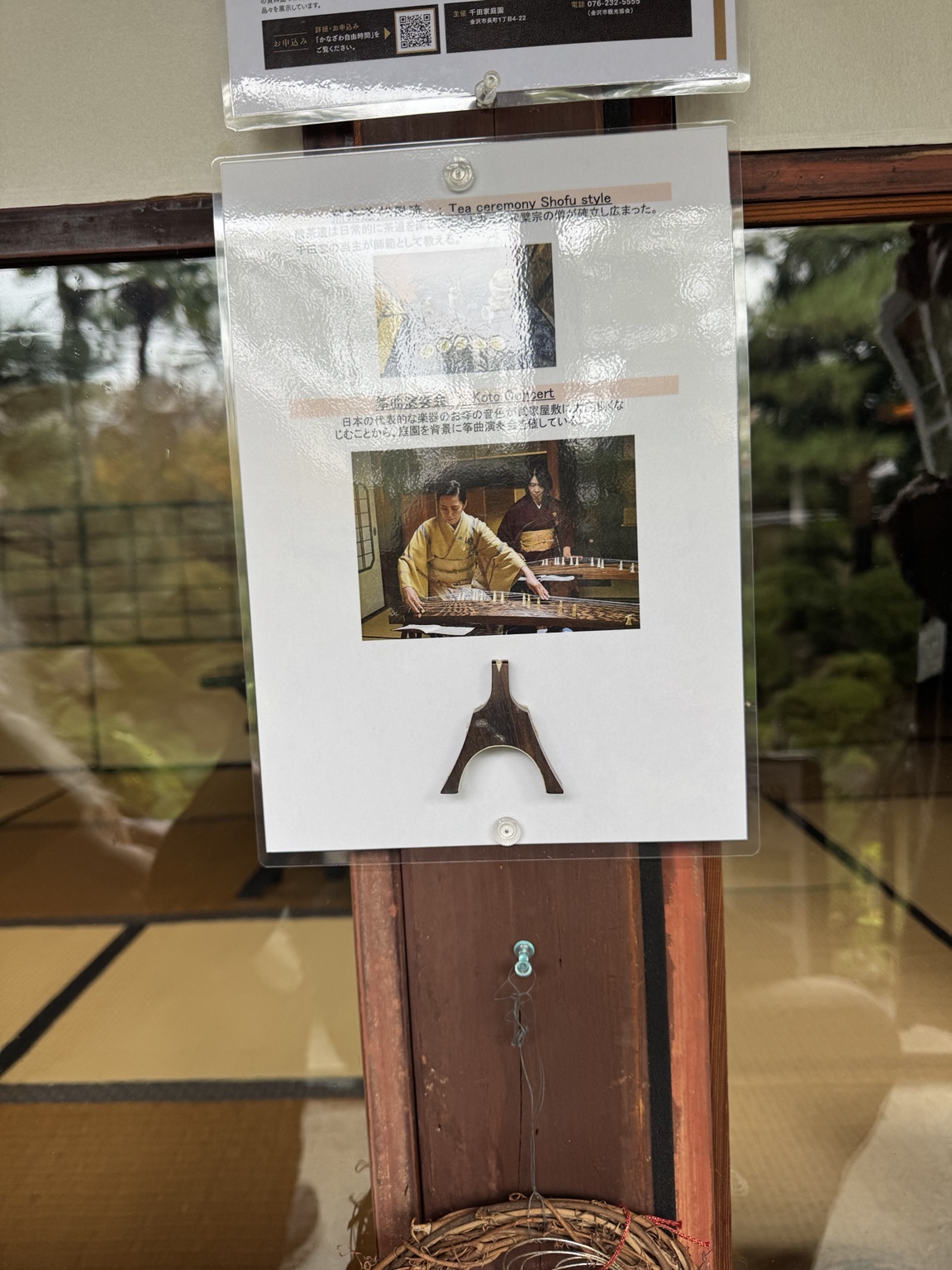
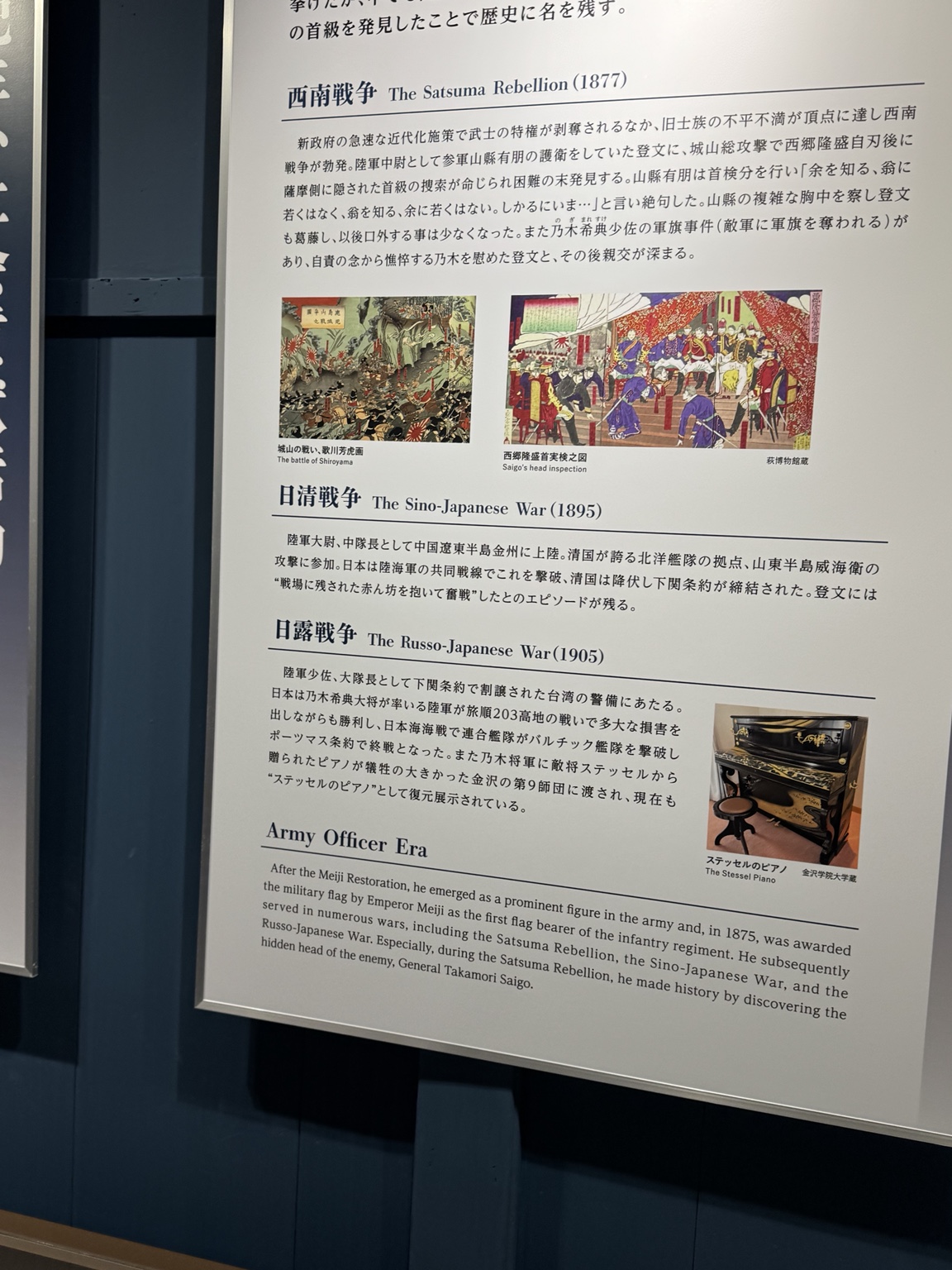
Historical pictures and information inside the house.

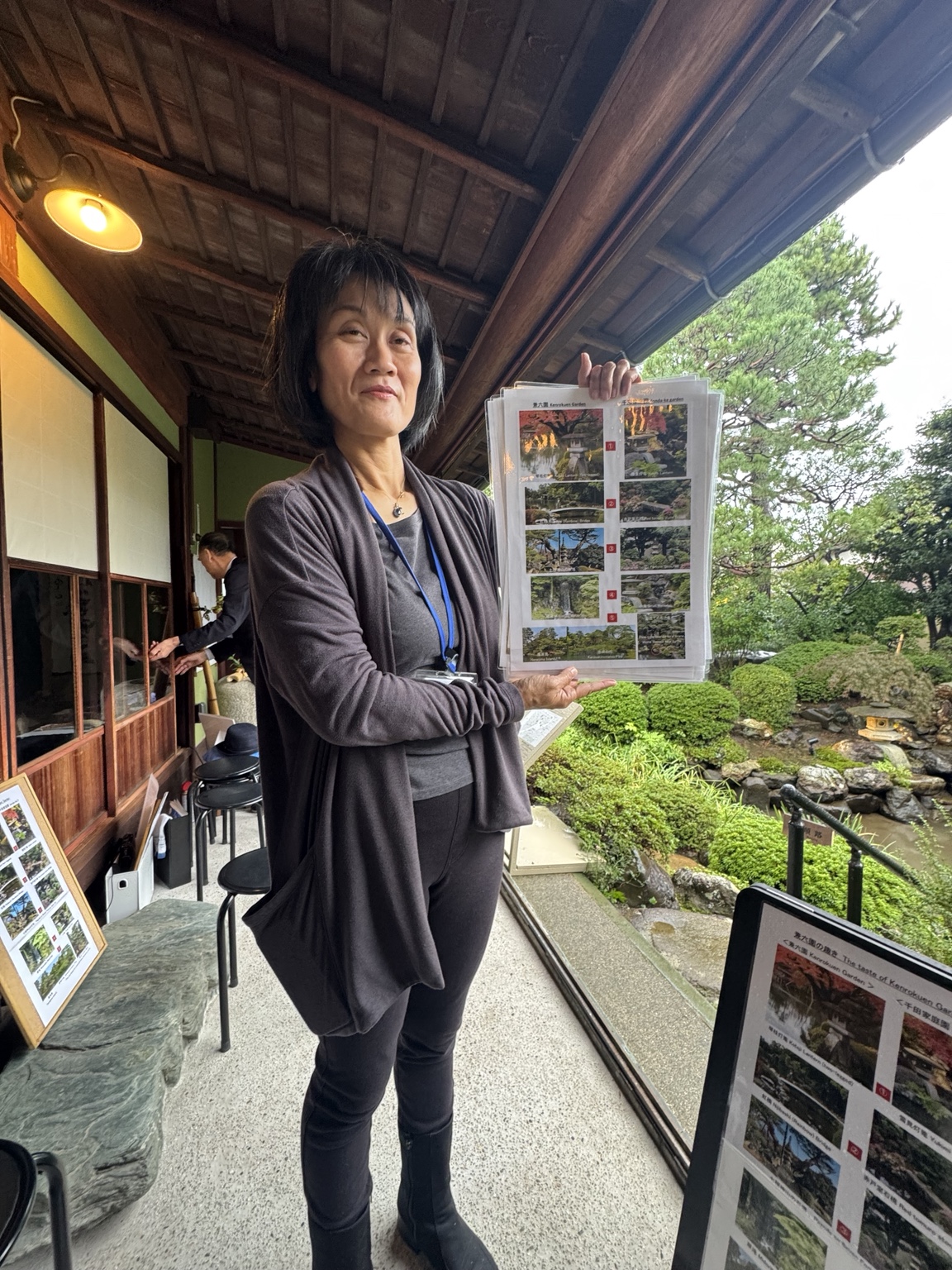
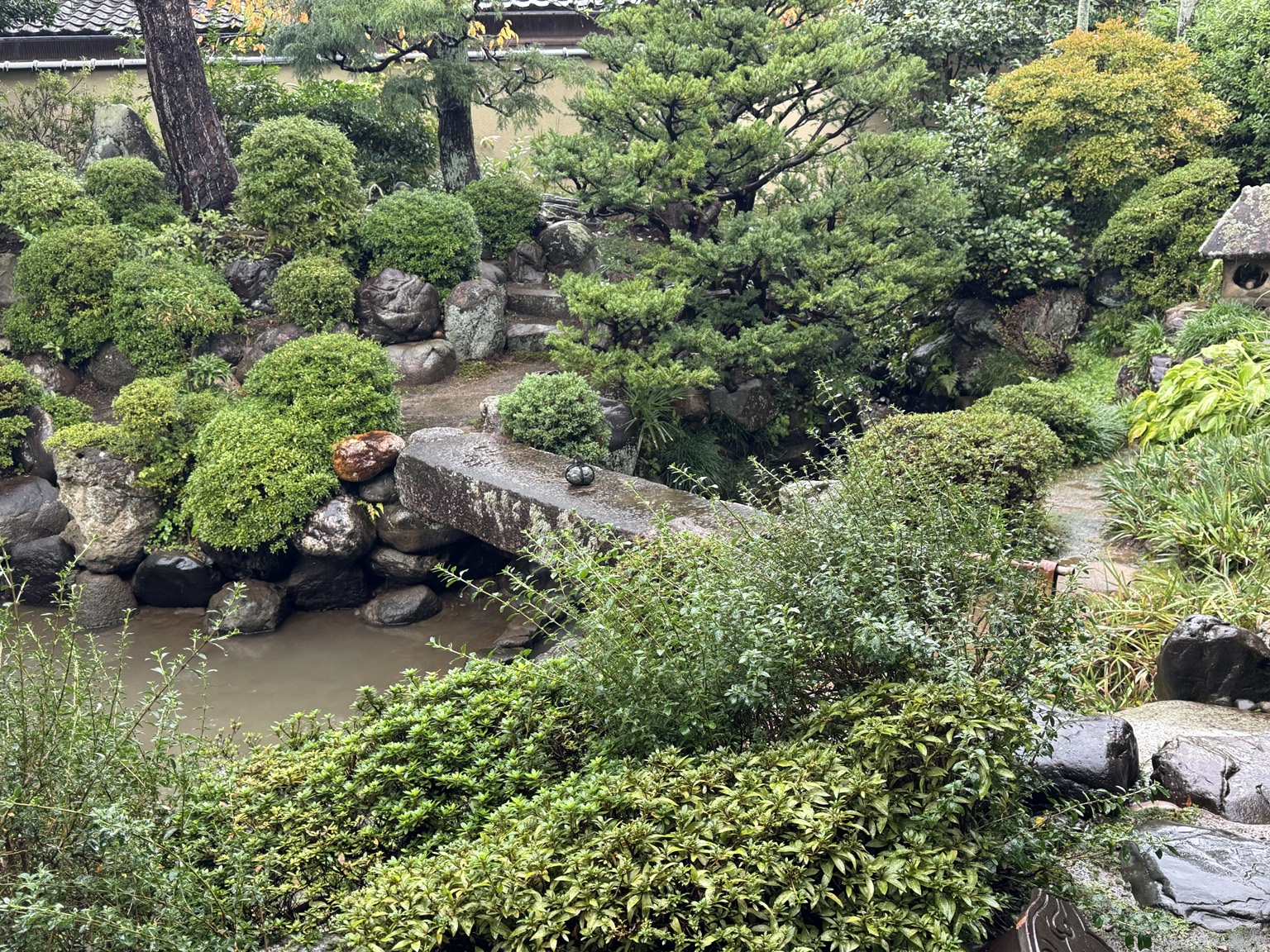
A magnificent samurai helmet recalled the martial past. Outside lay a garden of lush greenery, stones and water. We stopped, looked around and took our time.

Beside the garden.
Beside the garden.
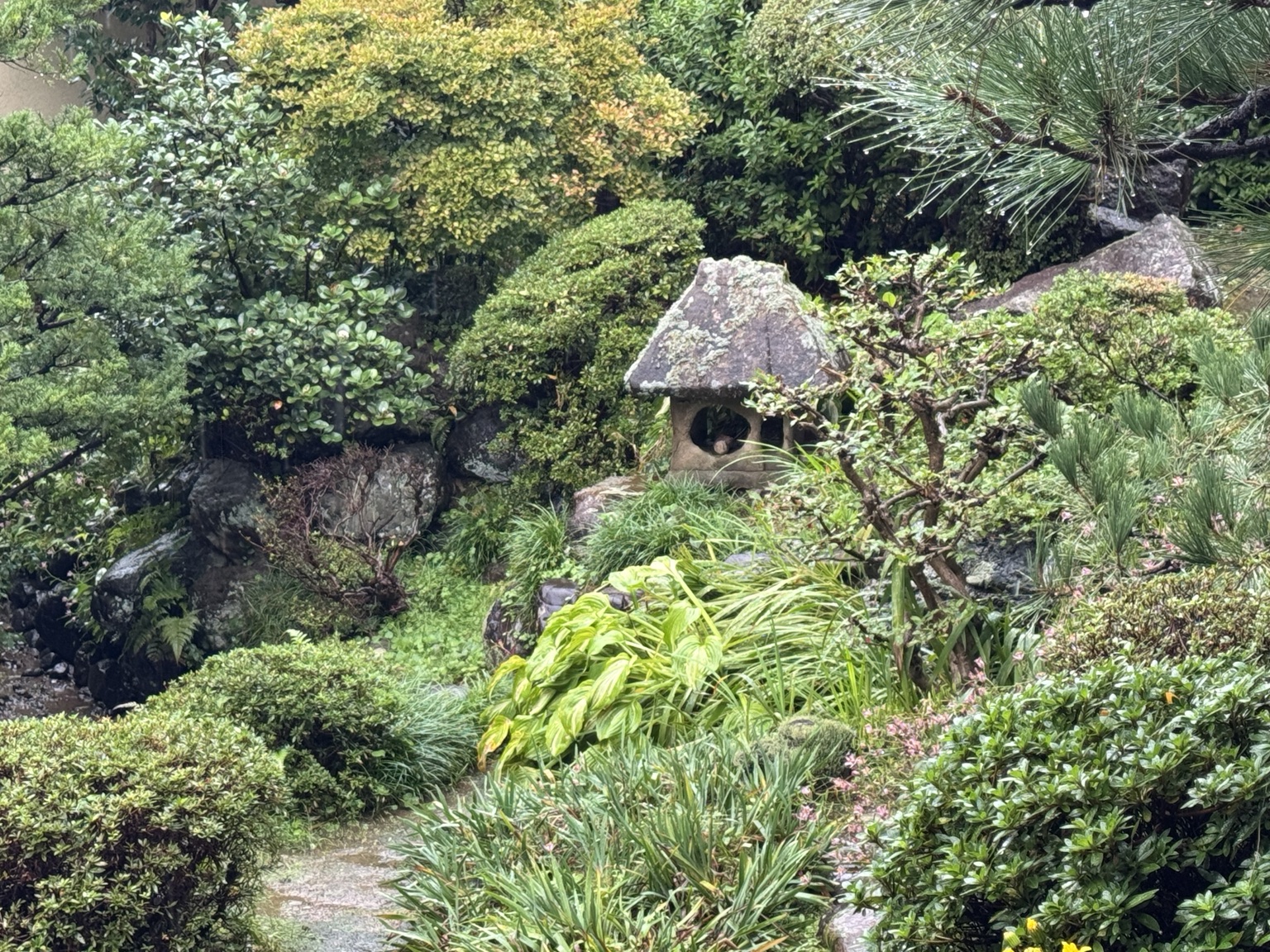
Greenery, stones and water in the garden.
A garden full of small details.
A moment in the garden.
Water and stone lanterns in the garden.

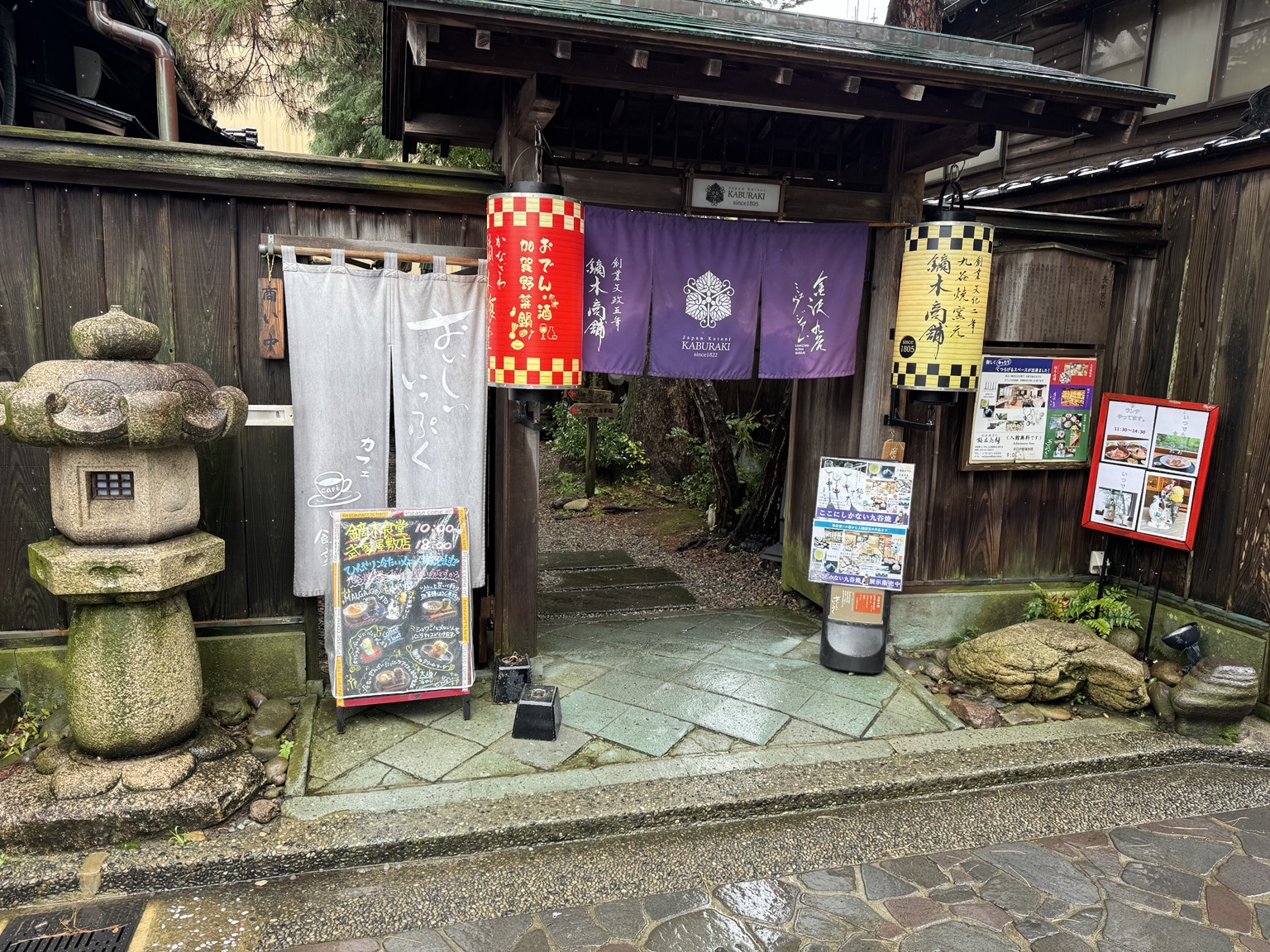
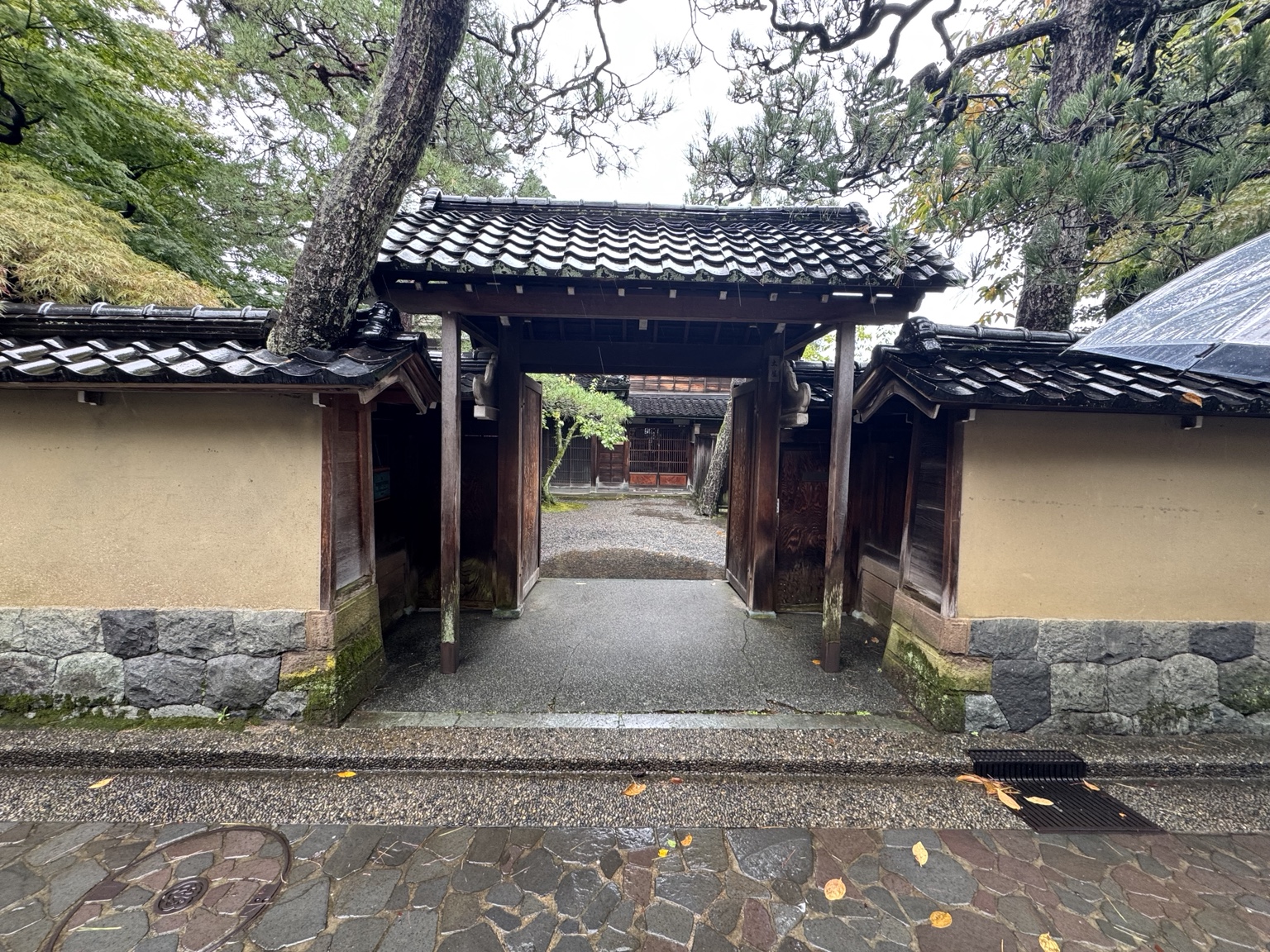
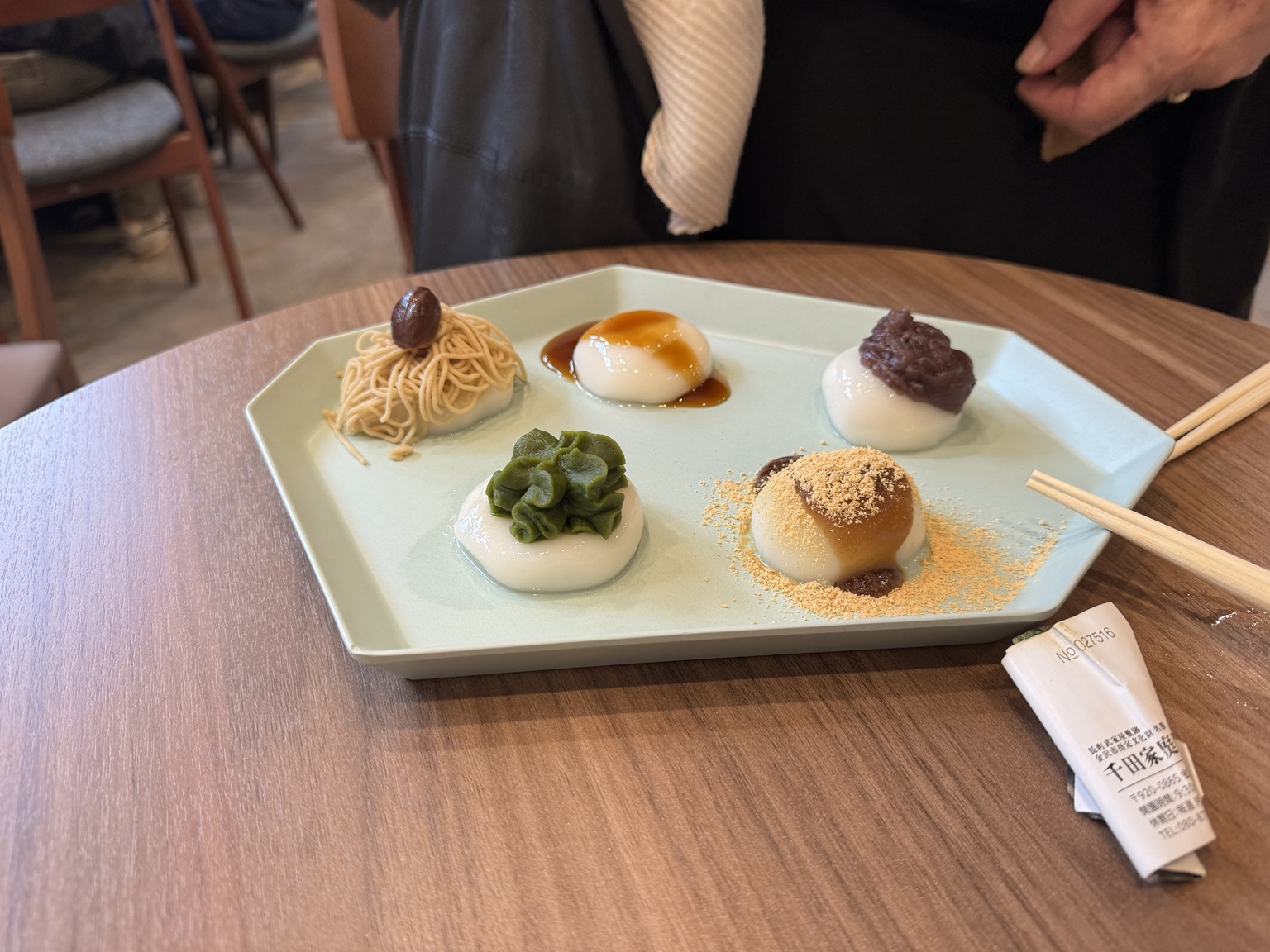
Afterwards, we wandered through the neighbourhood. Old walls, wooden gates and, every so often, a glimpse into a garden. Along the way, we tried some Japanese sweets: small, carefully arranged bites with different toppings. It is often these unassuming little breaks that make a day of travelling especially lovely.

An entrance in the historic neighbourhood.
An old gate along our walk.
Japanese sweets with a variety of toppings.

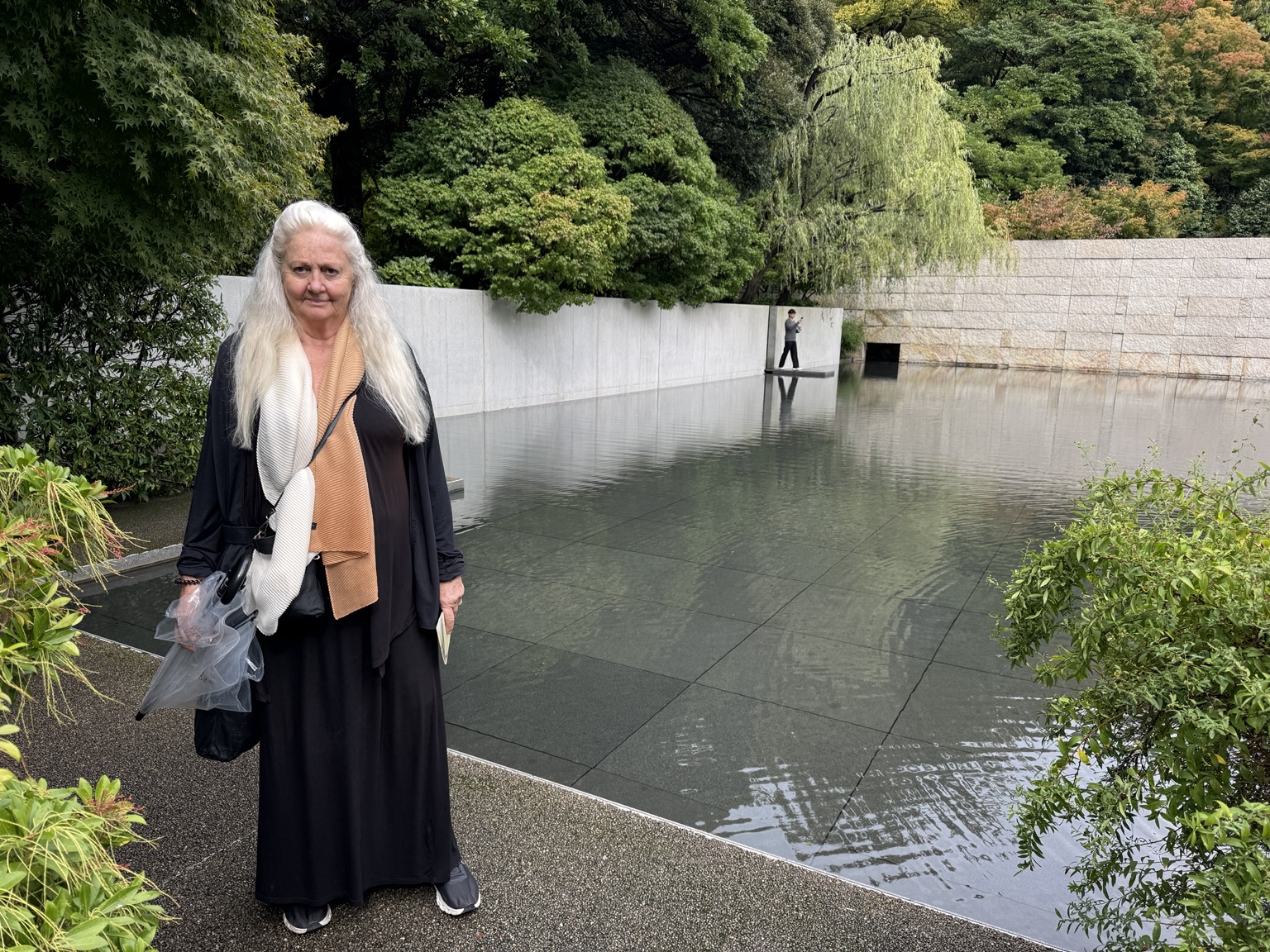
Then we went to the D. T. Suzuki Museum. Suzuki—the name first brings cars to mind. Here, though, it is about a philosopher and Zen.

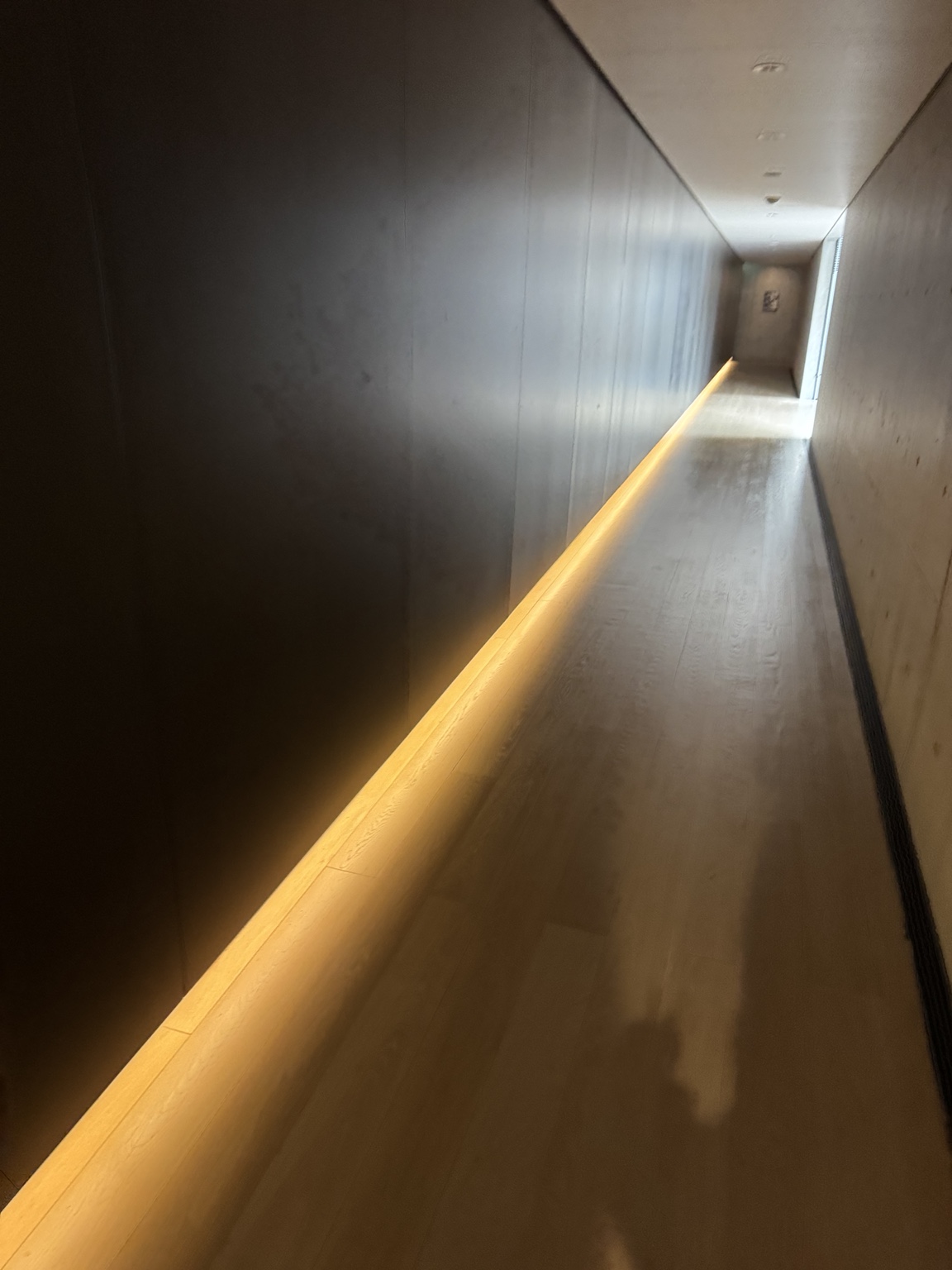
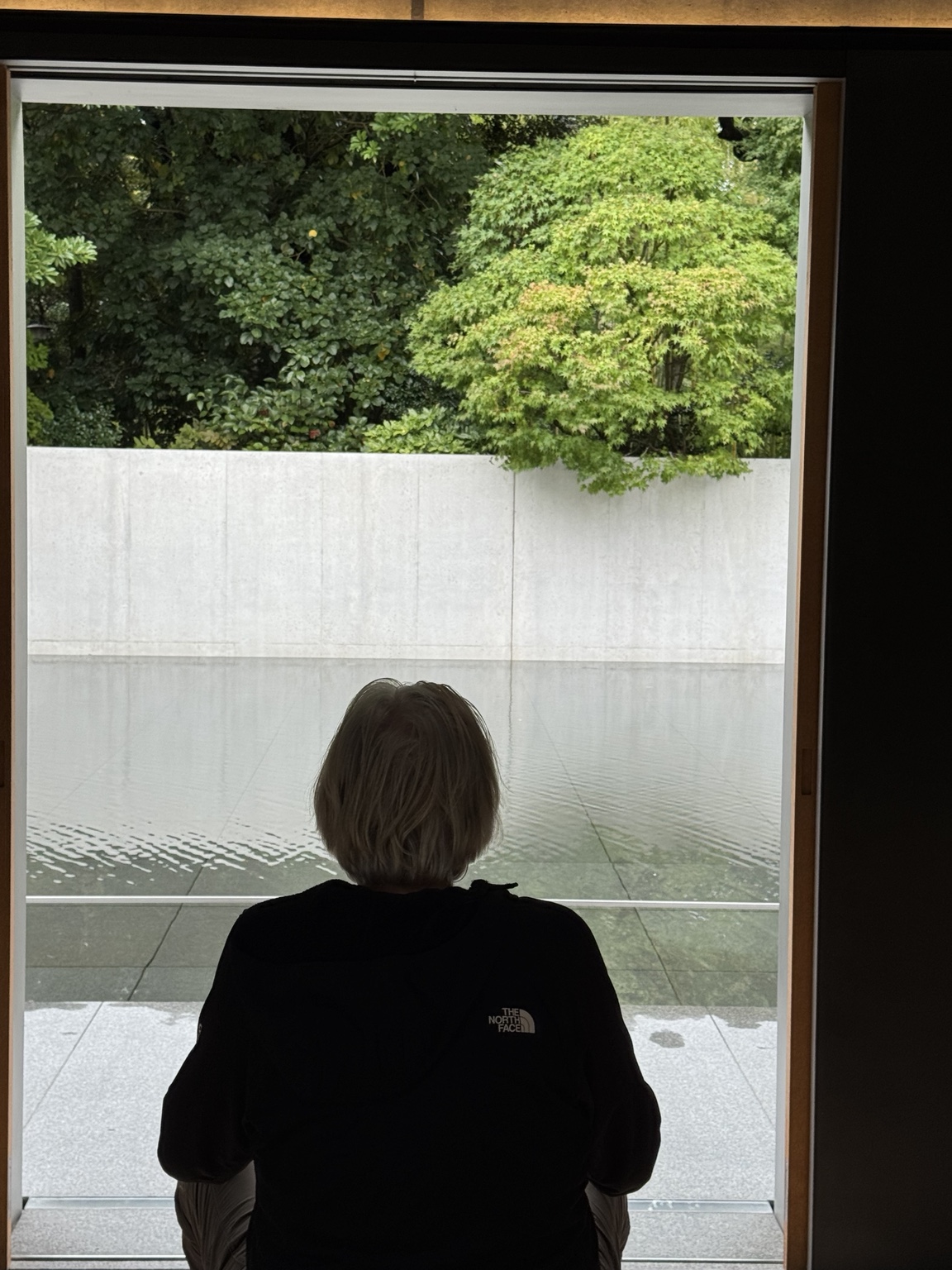
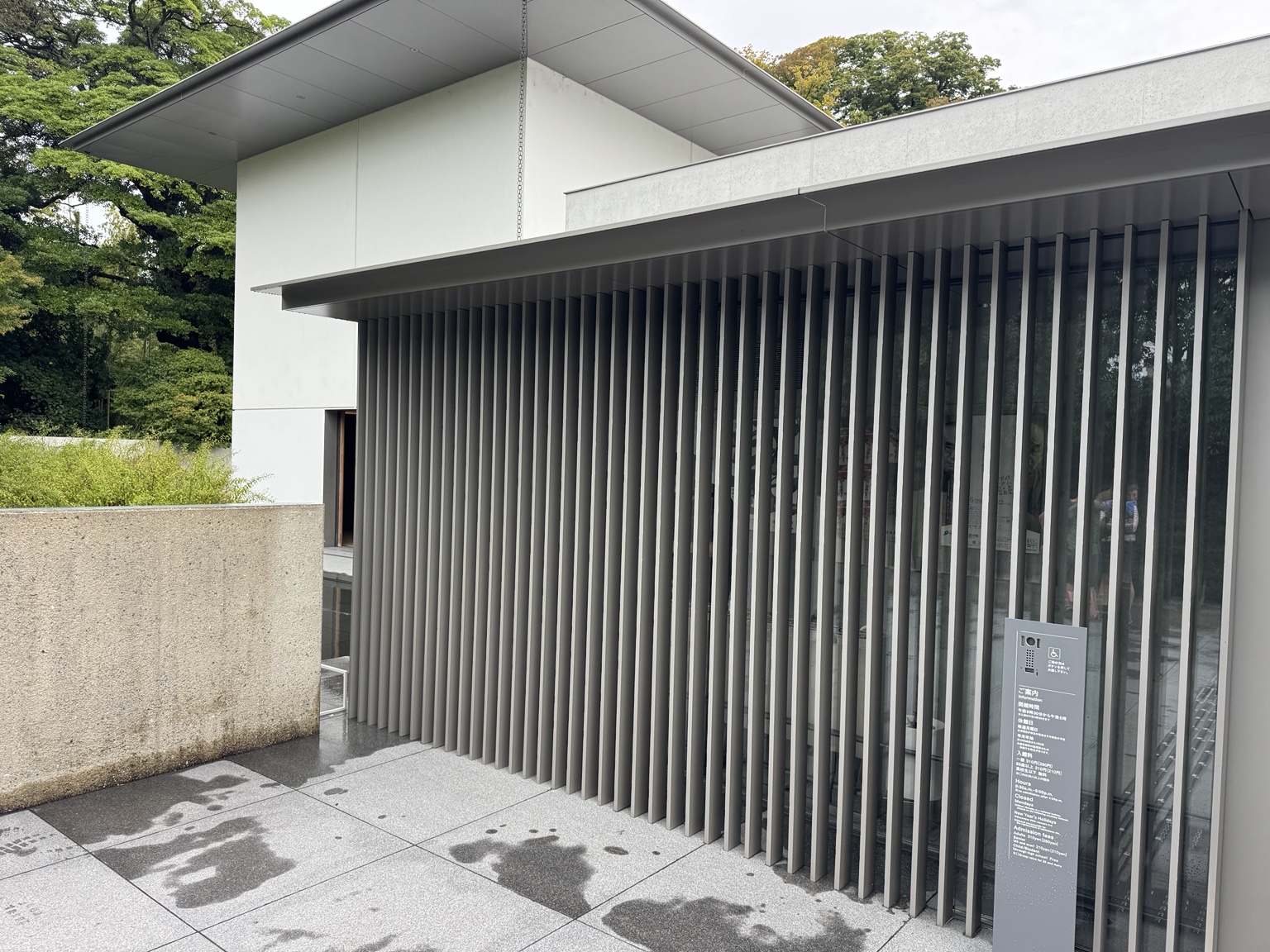
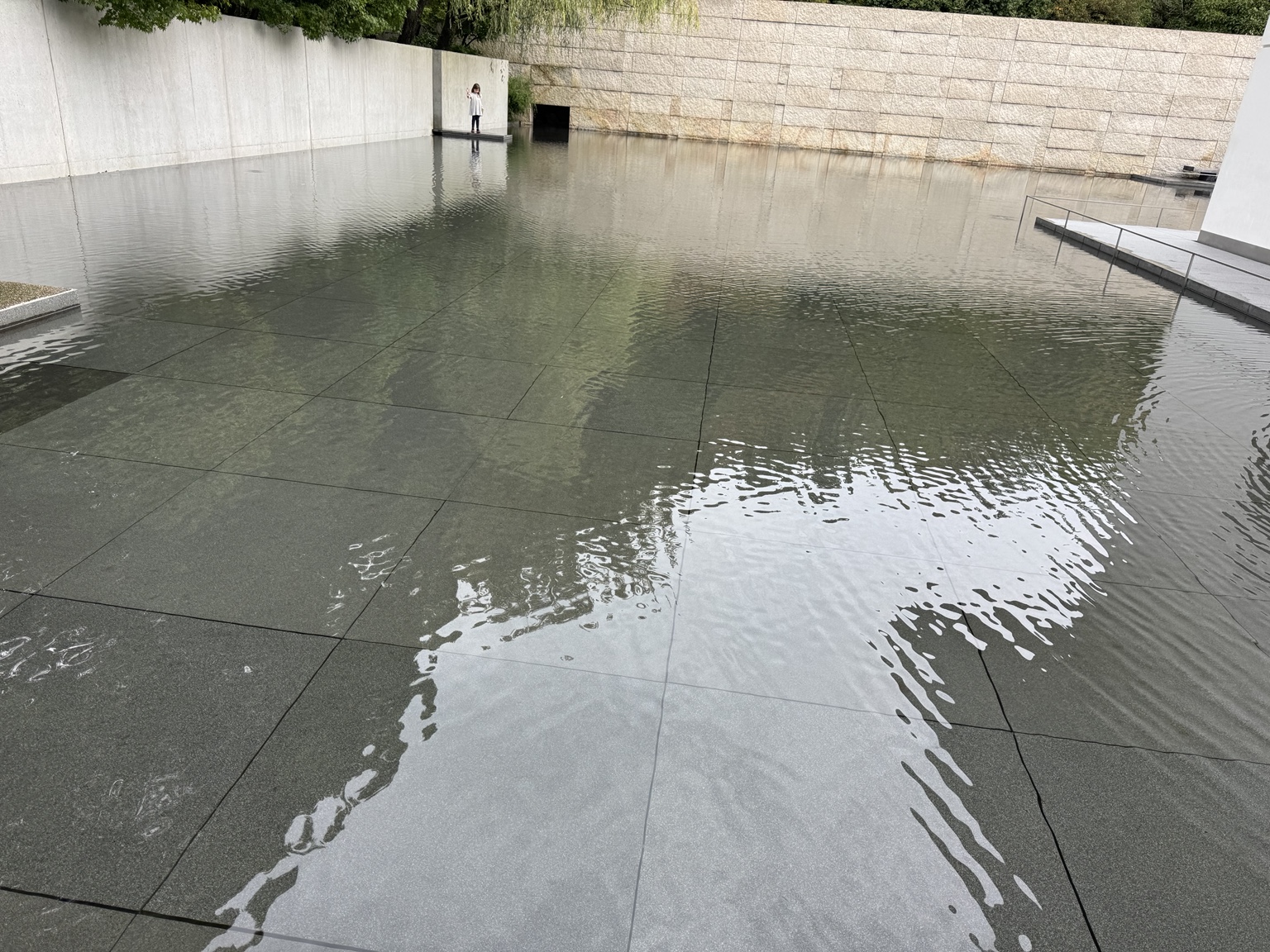
The architecture alone changes your pace. Clean lines, understated spaces, light and water. Small circles appeared on the surface of the water. We sat down, meditated and enjoyed the quiet. After all the impressions of the past few weeks, it felt good simply to stay seated for a while, without already thinking about the next stop.

Light and clean lines at the D. T. Suzuki Museum.
A quiet moment looking out over the water.
Understated architecture at the museum.
Small circles on the surface of the water.
Anneliese beside the water at the Suzuki Museum.

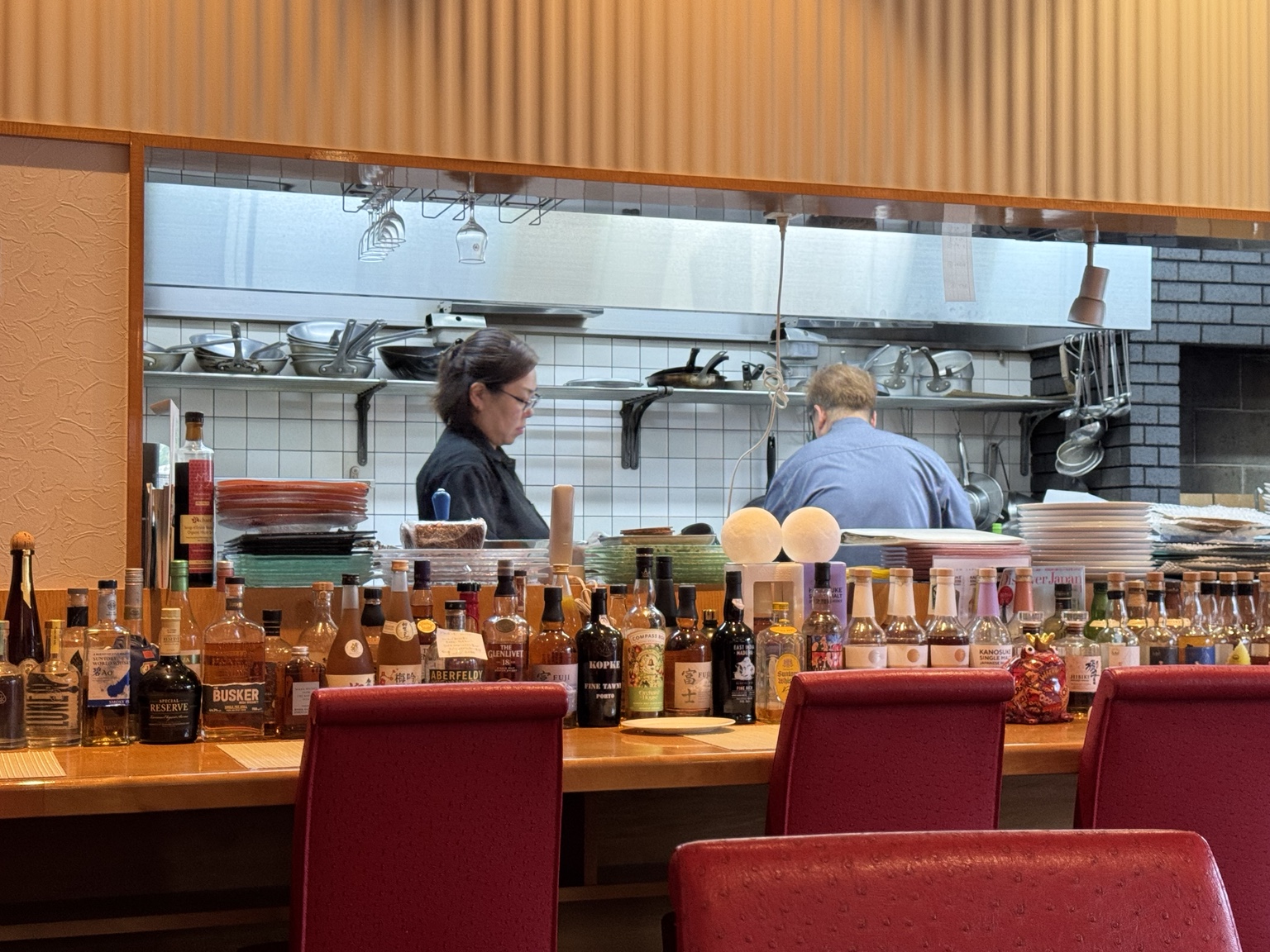
The subsequent outing to an Italian restaurant was less successful. A much too lengthy taxi ride took us through grey suburbs. The journey had not been worth it for the lovely meal in a special setting we had hoped for. Such detours are apparently part of travelling, too—although we could happily have done without this one.

A glimpse inside the restaurant.

With the rain, the afternoon became a quiet one. Back at the Hyatt Centric, we read and let the day wind down.

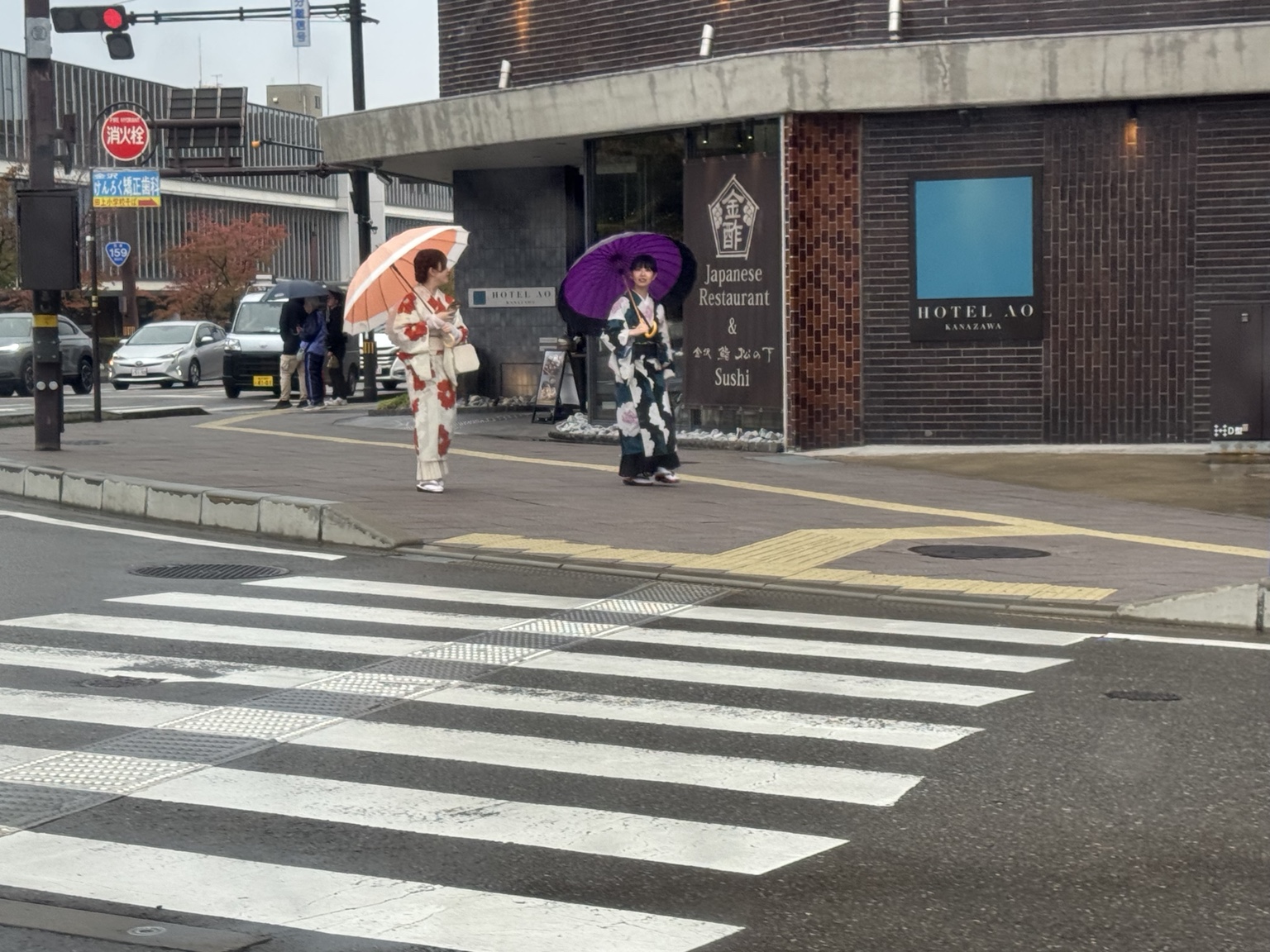
Out and about in rainy Kanazawa.

Now, one last beer to say goodbye. Tomorrow, we move on.

I will remember Kanazawa for its gardens, its old houses and that special encounter in the samurai district. And for a quiet moment by the water that, fortunately, we made time for today.

Tomorrow: Tokyo. Hauling suitcases, changing levels, finding the right train to Hakone. The two of us in the middle of the crowds—and Anneliese, who would happily skip this particular adventure. Which will last longer: our time buffer or our nerves? Tomorrow, we’ll find out.


← Chapter 30 · All chapters · Next chapter: Hakone →

October 20, 2026 0 comments
0 FacebookTwitterPinterestEmail
Journals

Japan-Tagebuch 31: Kanazawa – Samurai, Süßigkeiten und ein Moment der Stille

by KURT GASSNER October 20, 2026
written by KURT GASSNER

Deutsch | English

20. Oktober 2026 · Kanazawa

Nach dem langen Ausflug gestern wollten Anneliese und ich Kanazawa heute etwas ruhiger erleben. Und es wurde ein wunderbarer letzter Tag in dieser schönen Stadt.

Im historischen Samurai-Viertel besuchten wir ein ehemaliges Samurai-Haus. Besonders war die Begegnung mit einer Dame, die uns als Nachfahrin der Familie empfing. So bekommt Geschichte plötzlich ein Gesicht. Man betrachtet die alten Erinnerungsstücke und hört von Menschen, deren Geschichte hier bis heute weiterlebt.

Unsere Gastgeberin im Samurai-Haus.
Ein prächtiger Samurai-Helm.
Einblicke in die Geschichte der Familie.
Erinnerungsstücke in der Ausstellung.
Historische Bilder und Hinweise im Haus.

Ein prächtiger Samurai-Helm erinnerte an die kriegerische Vergangenheit. Draußen lag ein Garten mit dichtem Grün, Steinen und Wasser. Wir blieben stehen, schauten und ließen uns Zeit.

Am Rand des Gartens.
Grün, Steine und Wasser im Garten.
Ein Garten voller kleiner Details.
Ein Moment im Garten.
Wasser und Steinlaternen im Garten.

Anschließend schlenderten wir durch das Viertel. Alte Mauern, hölzerne Tore, immer wieder ein Blick in einen Garten. Zwischendurch probierten wir japanische Süßigkeiten: kleine, sorgfältig angerichtete Häppchen mit unterschiedlichen Auflagen. Gerade diese unscheinbaren Pausen machen einen Reisetag oft besonders schön.

Ein Eingang im historischen Viertel.
Ein altes Tor auf unserem Spaziergang.
Japanische Süßigkeiten mit verschiedenen Auflagen.

Danach fuhren wir zum D. T. Suzuki Museum. Suzuki – bei dem Namen denkt man zunächst an Autos. Hier aber geht es um einen Philosophen und um Zen.

Schon die Architektur verändert das Tempo. Klare Linien, zurückhaltende Räume, Licht und Wasser. Auf der Wasserfläche zeichneten sich kleine Kreise ab. Wir setzten uns hin, meditierten und genossen die Ruhe. Nach all den Eindrücken der vergangenen Wochen tat das gut: einmal sitzen bleiben, ohne schon an die nächste Station zu denken.

Licht und klare Linien im D. T. Suzuki Museum.
Ein stiller Blick auf das Wasser.
Zurückhaltende Architektur am Museum.
Kleine Kreise auf der Wasserfläche.
Anneliese am Wasser des Suzuki-Museums.

Der anschließende Ausflug zu einem italienischen Restaurant war weniger gelungen. Eine viel zu lange Taxifahrt führte uns durch graue Vorstädte. Für das erhoffte schöne Essen in besonderem Ambiente hatte sich dieser Weg nicht gelohnt. Auch solche Umwege gehören offenbar zum Reisen – gebraucht hätten wir diesen allerdings nicht.

Ein Blick ins Restaurant.

Mit dem Regen wurde es dann ein ruhiger Nachmittag. Zurück im Hyatt Centric lasen wir und ließen den Tag ausklingen.

Unterwegs im regnerischen Kanazawa.

Jetzt noch ein letztes Bier zum Abschied. Morgen geht es weiter.

Kanazawa bleibt mir mit seinen Gärten, den alten Häusern und dieser besonderen Begegnung im Samurai-Viertel in Erinnerung. Und mit einem stillen Moment am Wasser, für den wir heute zum Glück Zeit hatten.

Morgen: Tokio. Koffer schleppen, Stockwerke wechseln, den richtigen Zug nach Hakone erwischen. Mitten im Menschengewusel wir zwei – und Anneliese, die auf dieses Abenteuer gern verzichten würde. Was hält länger: unser Zeitpolster oder unsere Nerven? Morgen wissen wir mehr.


← Kapitel 30 · Alle Kapitel · Nächstes Kapitel: Hakone →

October 20, 2026 0 comments
0 FacebookTwitterPinterestEmail
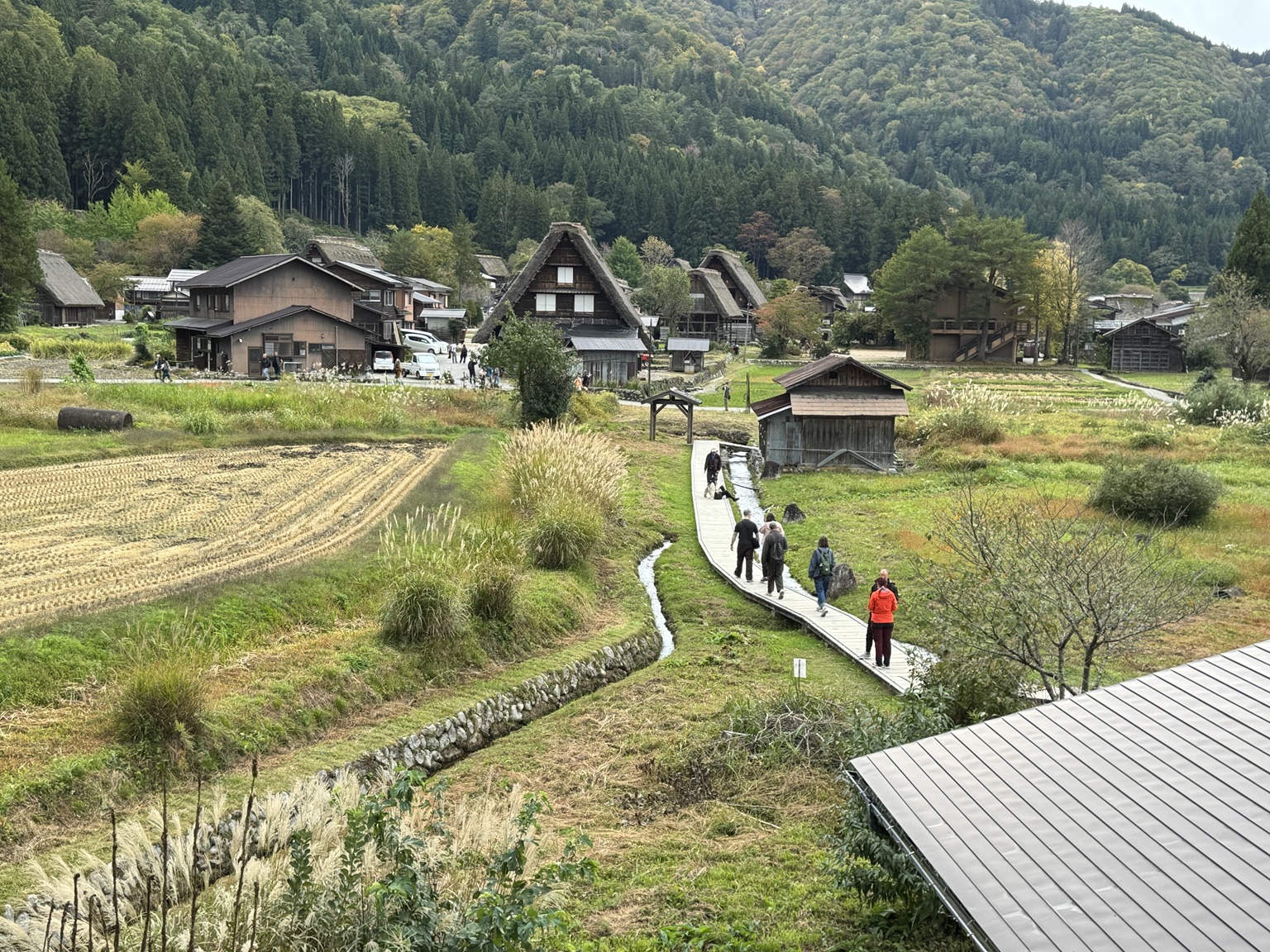
Historic thatched houses, rice fields and forested hills in Shirakawa-go.
Journals

Japan Diary 30: World Heritage, Garden Beauty and a Little Roly-Poly Doll

by KURT GASSNER October 19, 2026
written by KURT GASSNER

Deutsch | English

19 October 2026 · Shirakawa-go and Kanazawa

Well rested, we set off from the Hyatt Centric in Kanazawa for our big day out. Nine hours of exploring lie ahead. A day that takes us from historic Japan in the mountains to the little golden treasures of Kanazawa.

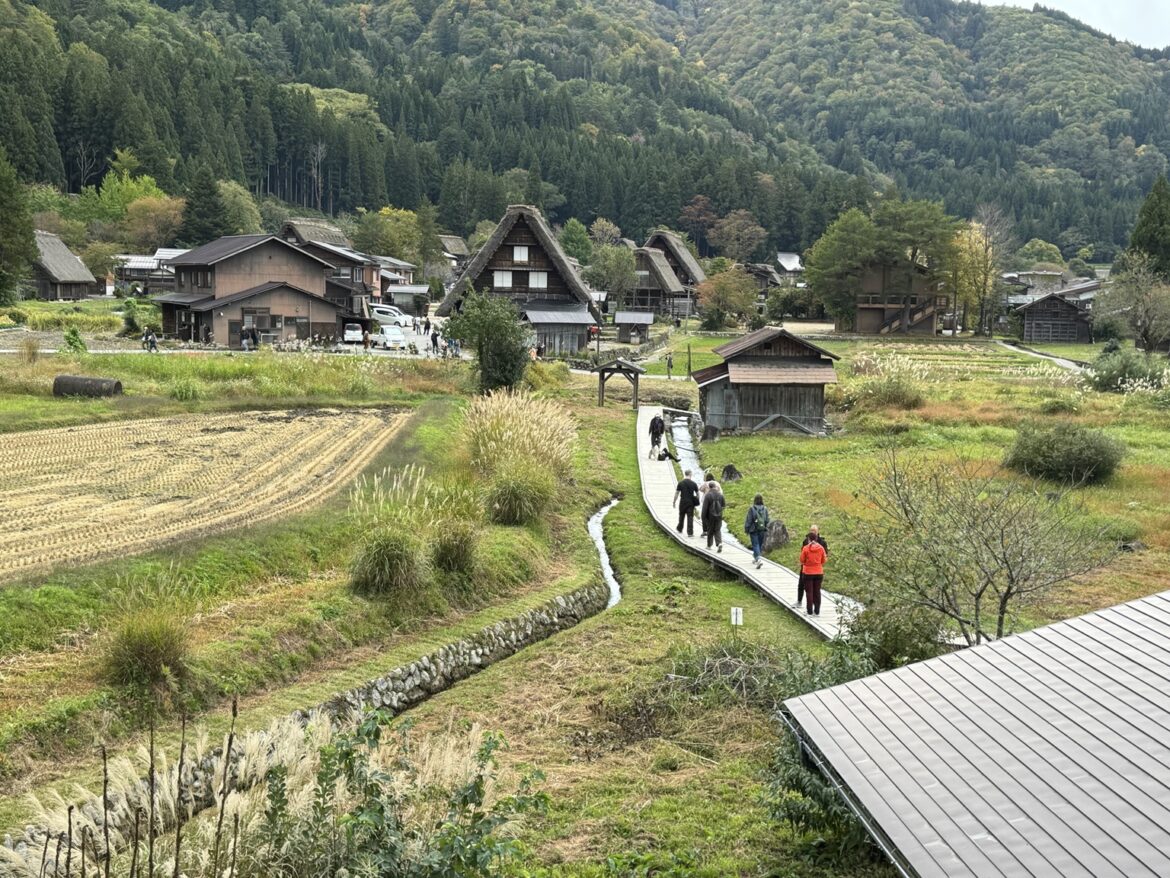
Houses, fields and water channels beneath forested slopes.

Shirakawa-go – built for winter

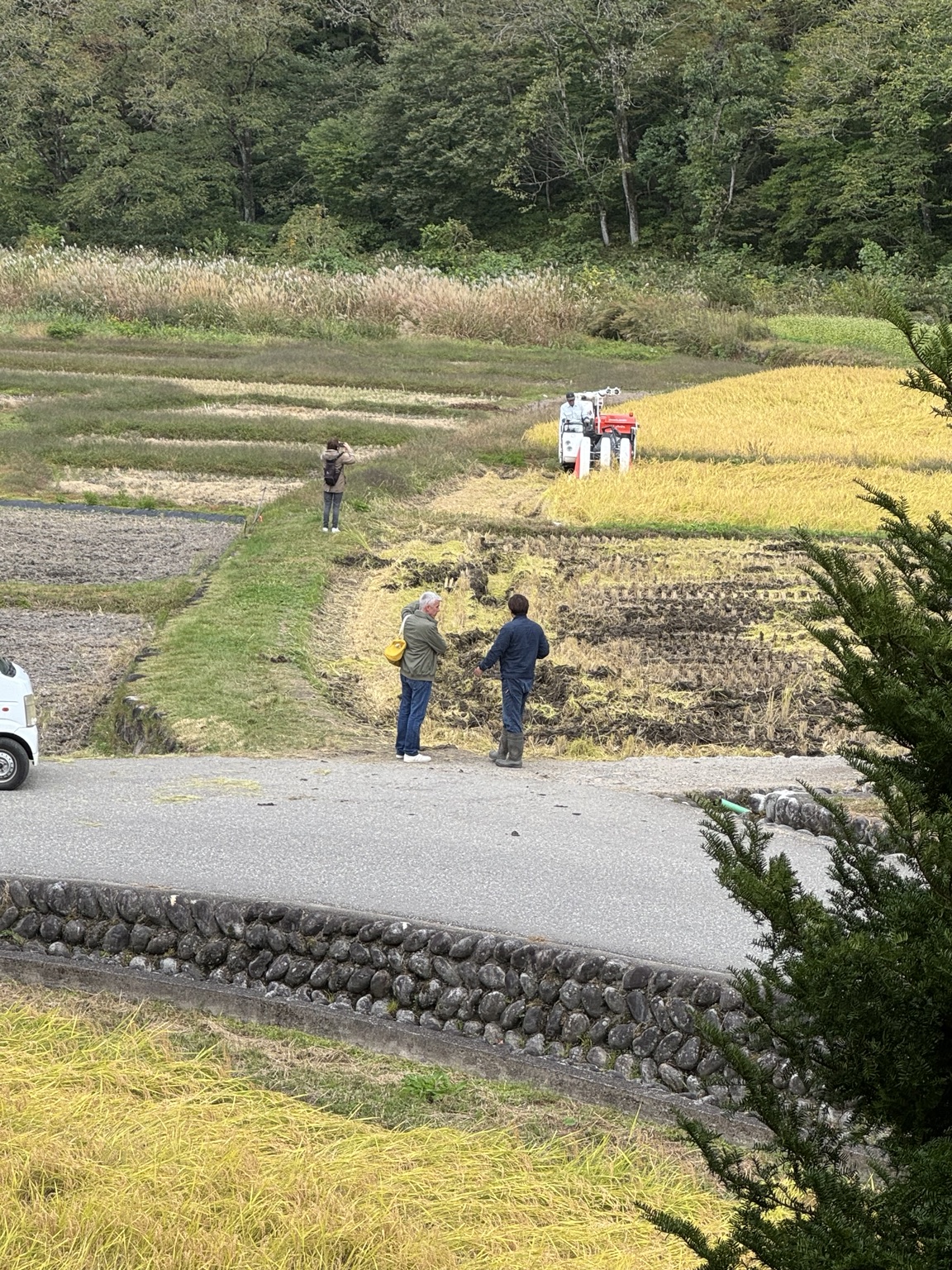
Our first major destination is the historic village of Shirakawa-go, part of a UNESCO World Heritage site. Huge, steeply thatched roofs rise above dark wooden houses, with forested mountainsides behind them. Narrow paths, water channels and rice fields run between the buildings. The rice harvest is under way. A beautiful glimpse of rural Japan.

Here is something I had not known: in winter, the snow can stand two metres deep, sometimes even higher. Suddenly, the design of these houses makes perfect sense. The steep roofs help snow slide off, while the sturdy timber structure is built to cope with the enormous demands of winter. What looks so picturesque to us is also an ingenious response to life in these snowy mountains.

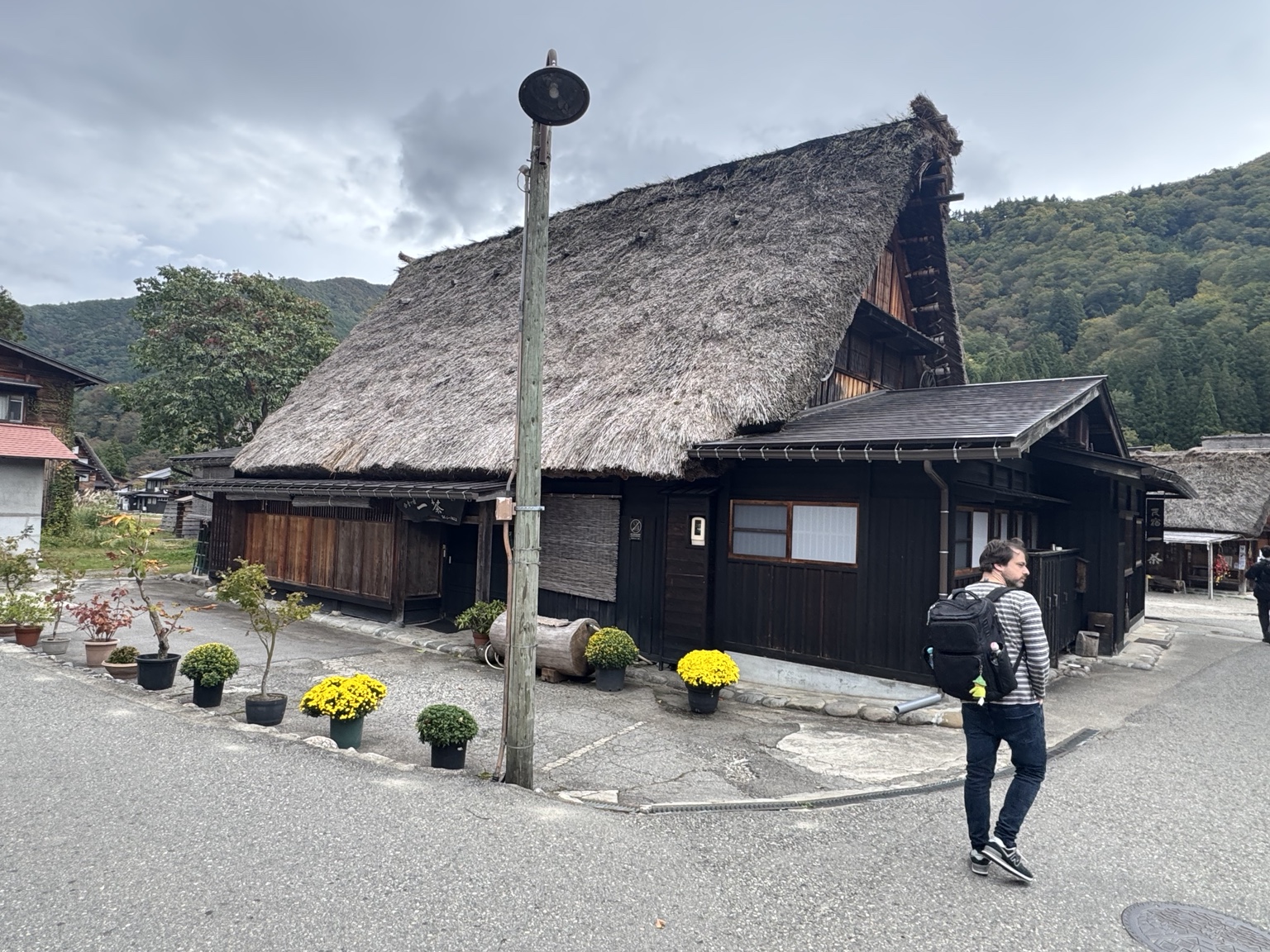
A traditional house with a massive thatched roof in Shirakawa-go.
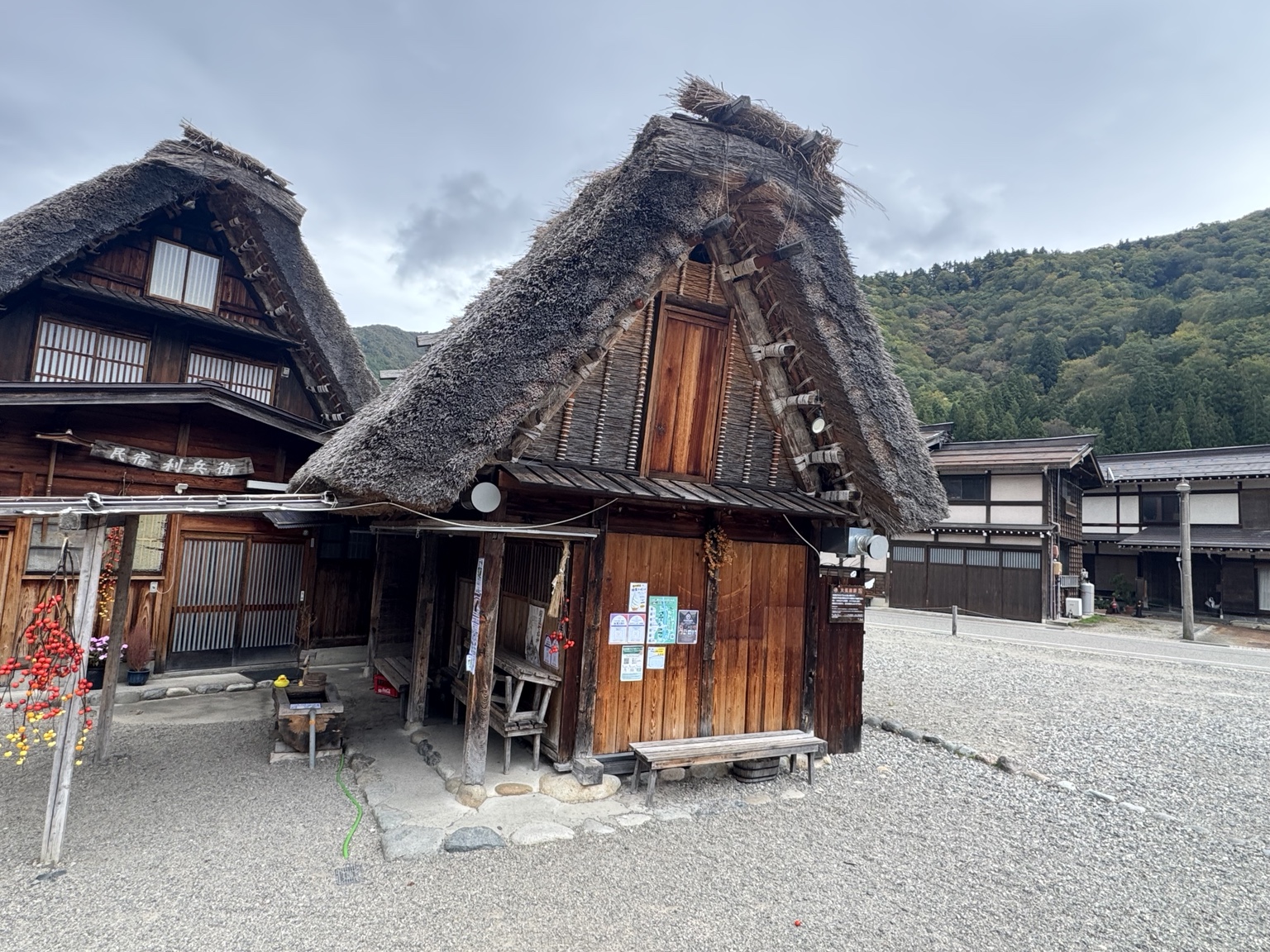
Steep gables define the historic village streetscape.
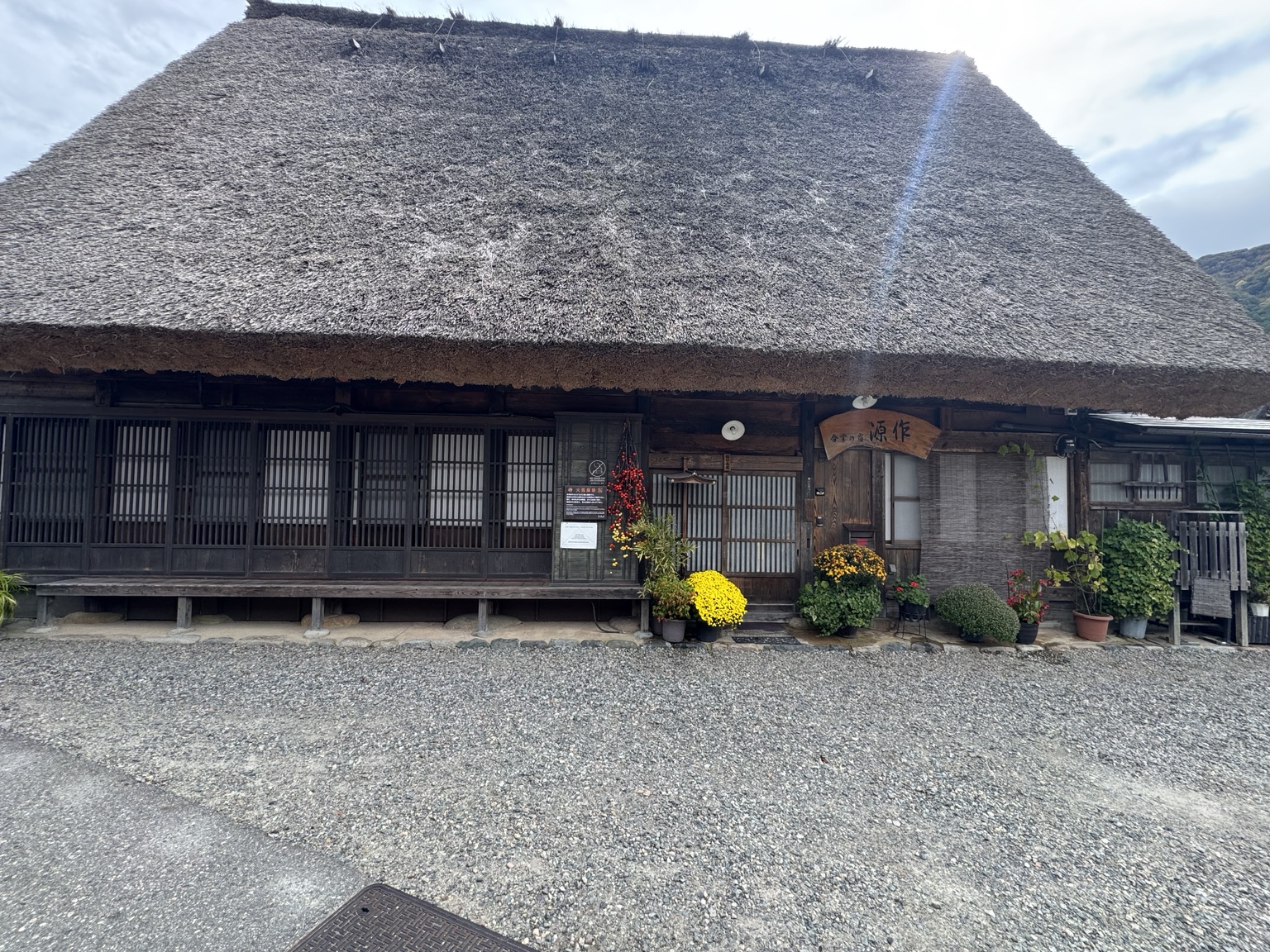
The Gensaku guesthouse beneath its broad thatched roof.
The rice harvest, between golden crops and already harvested fields.

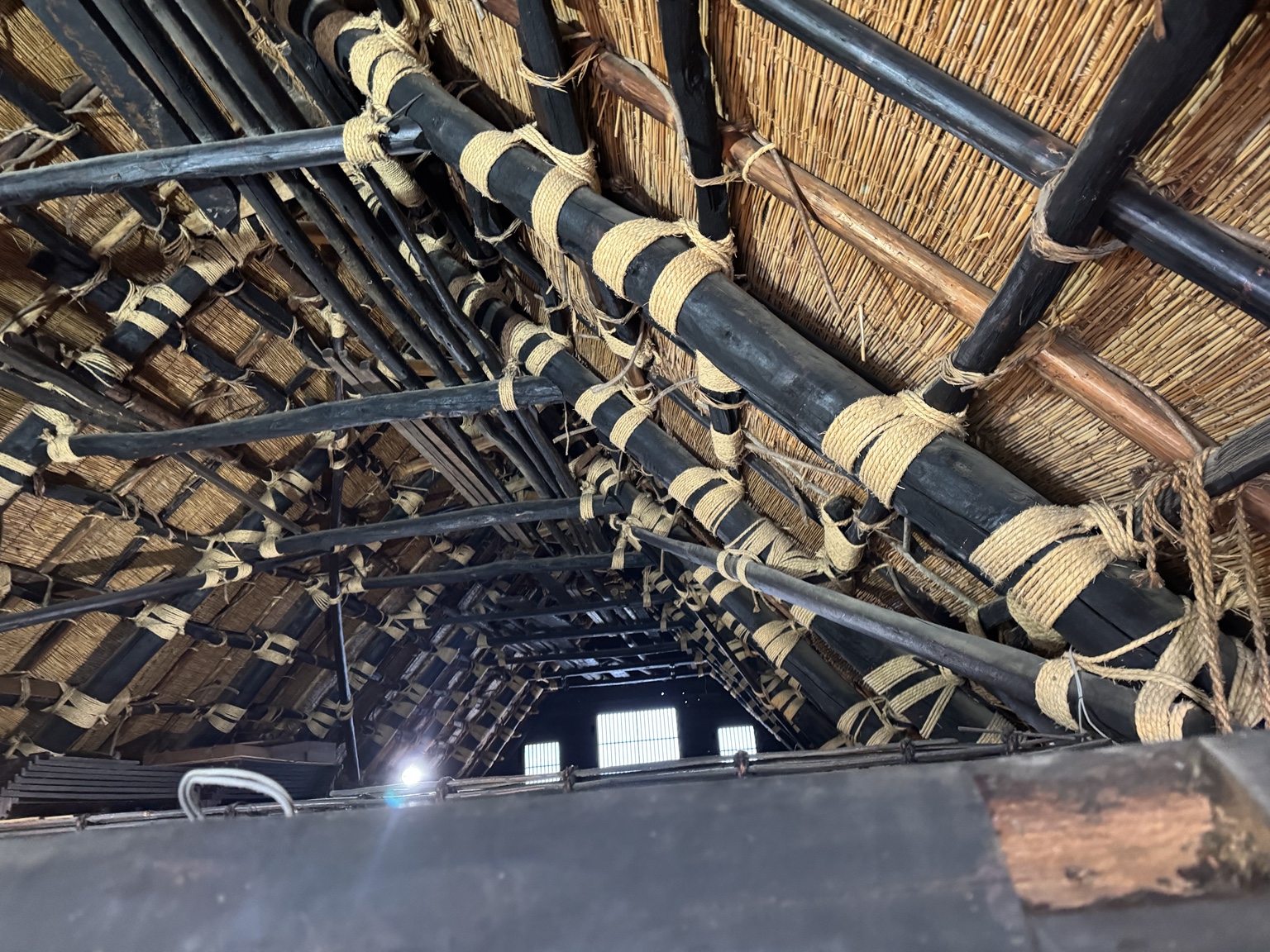
Looking up beneath one of those roofs is particularly impressive: massive dark beams, lashed together with thick ropes. You begin to appreciate just how much knowledge and craftsmanship went into these old houses.

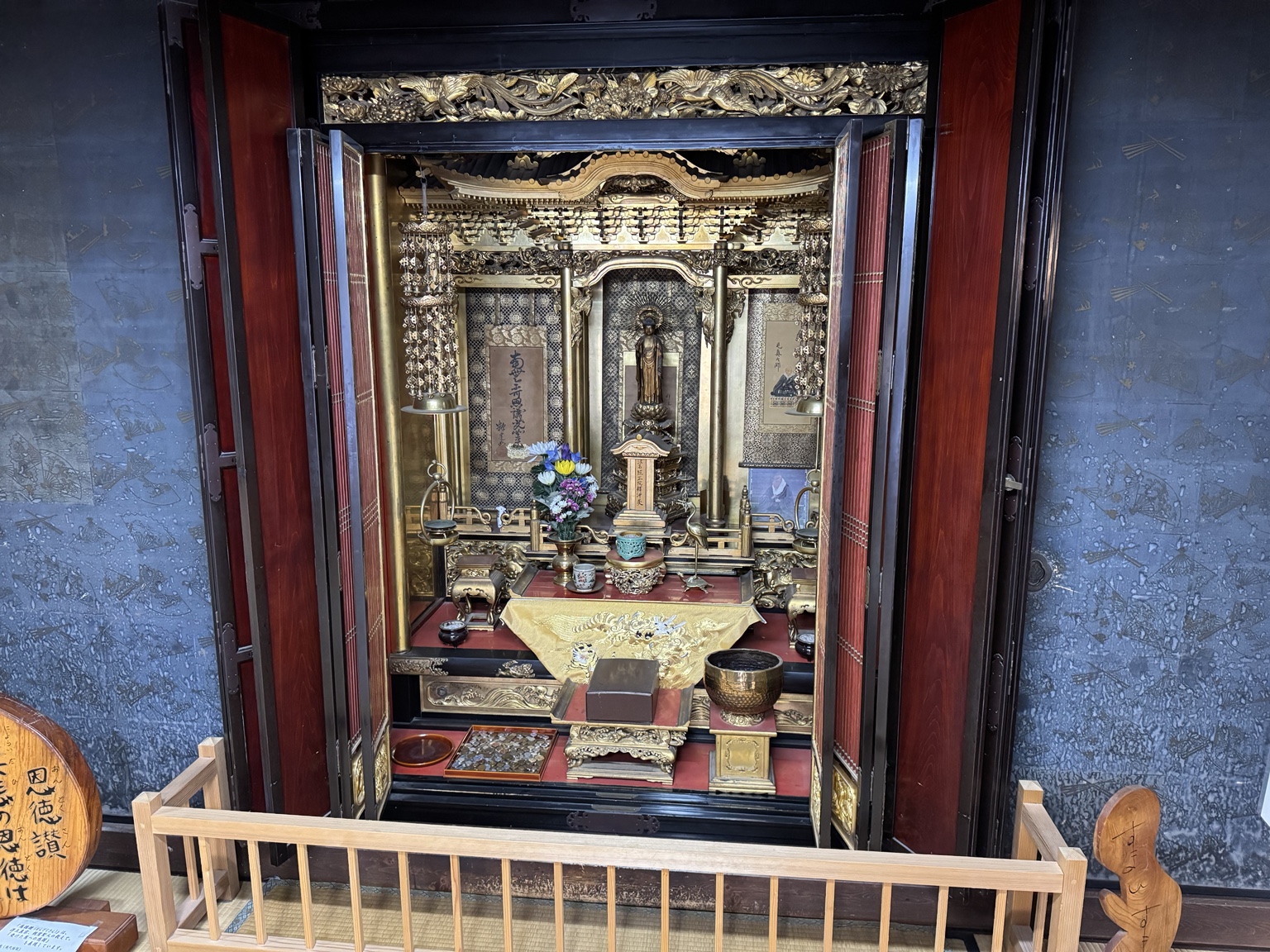
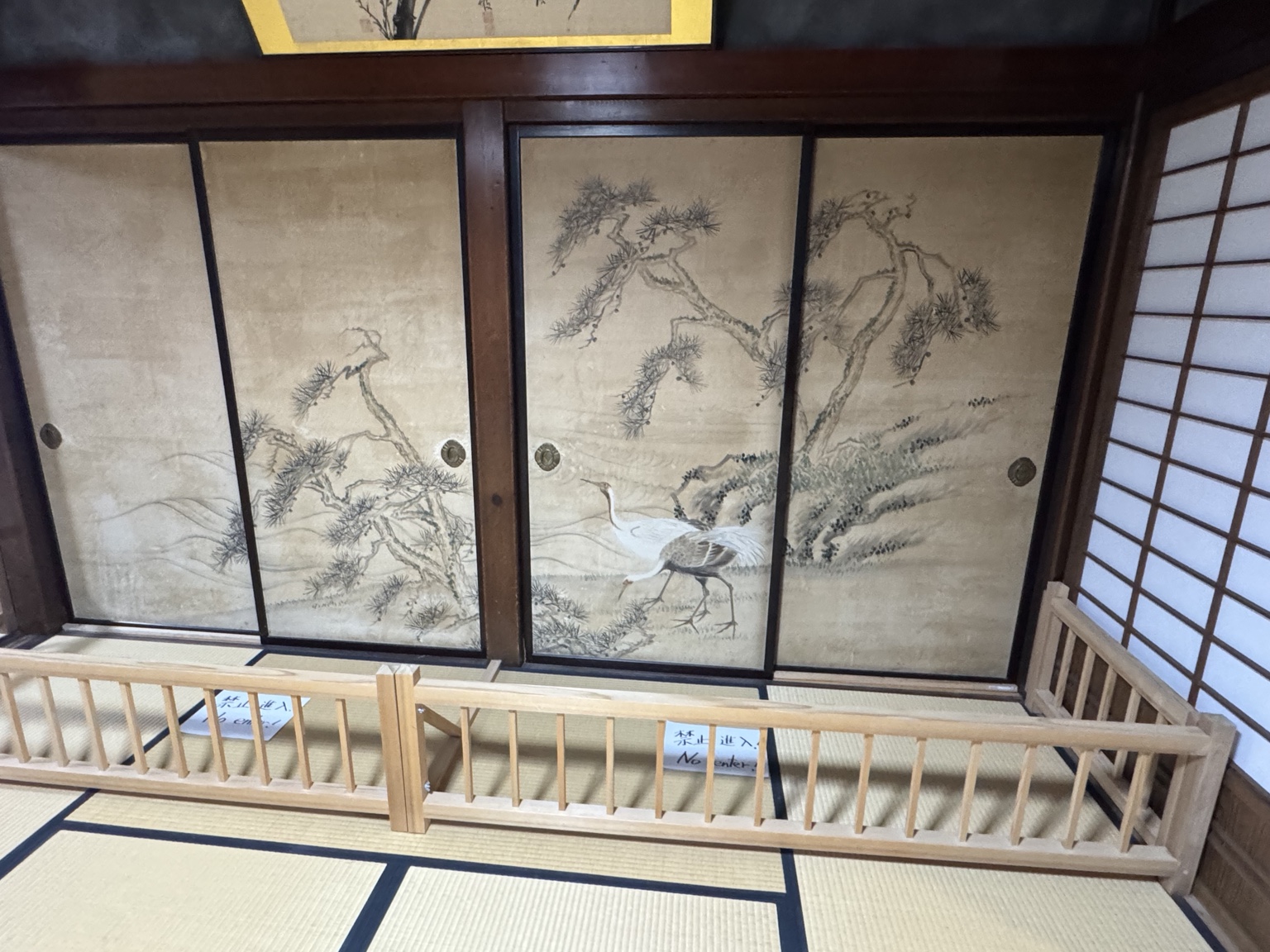
The living rooms reveal another world: tatami mats, painted sliding doors with cranes and pine trees, and an intricately decorated household altar. So rustic outside, so full of delicate details within. There is also an elaborately dressed samurai doll on display.

Beneath the roof: sturdy timber beams and rope lashings.
An intricately decorated Buddhist household altar.
Cranes and pine trees on painted sliding doors.
A samurai doll with an elaborate helmet and costume.
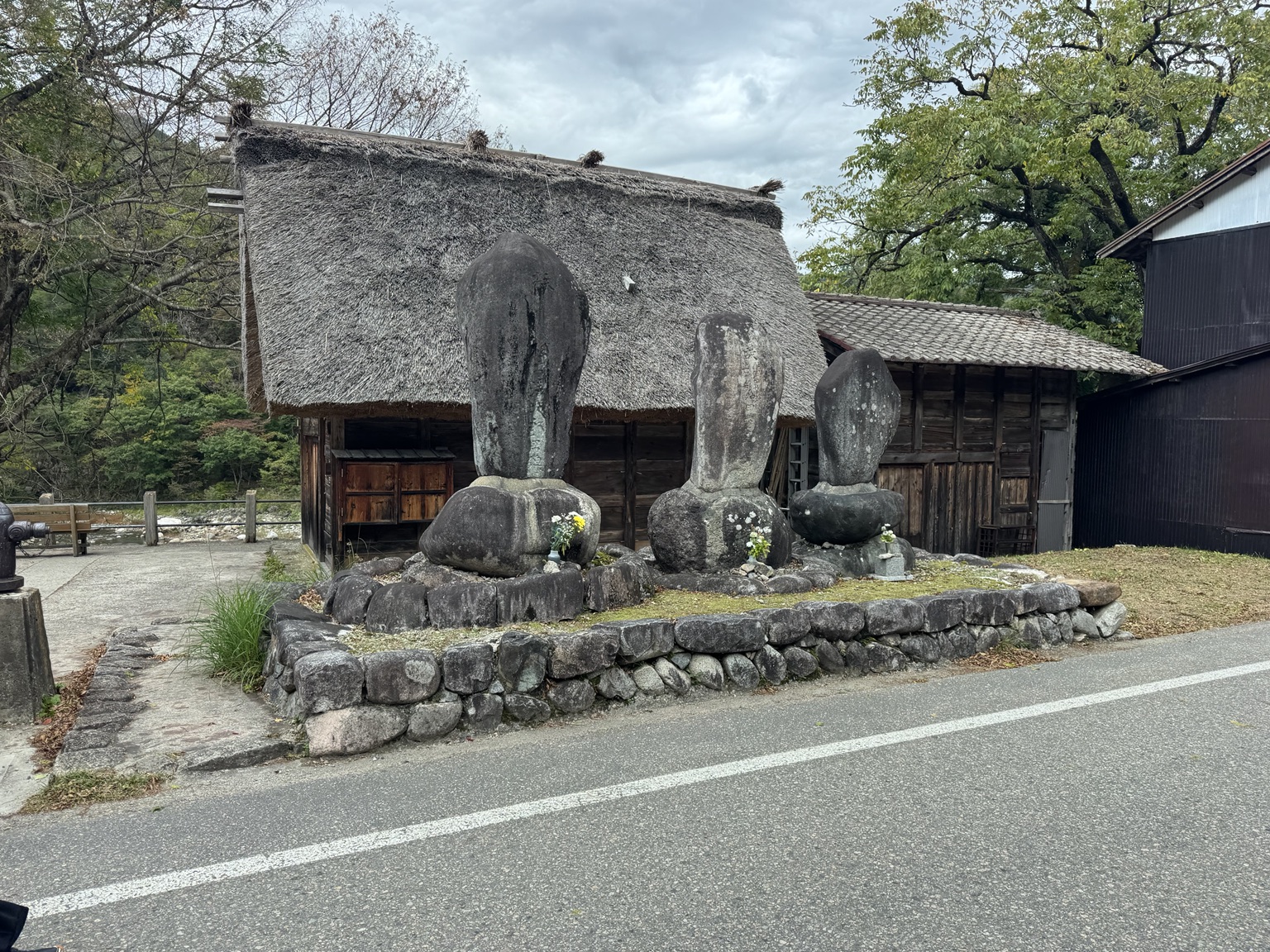
Stone monuments among the old houses.

Kenroku-en – a garden that makes you pause

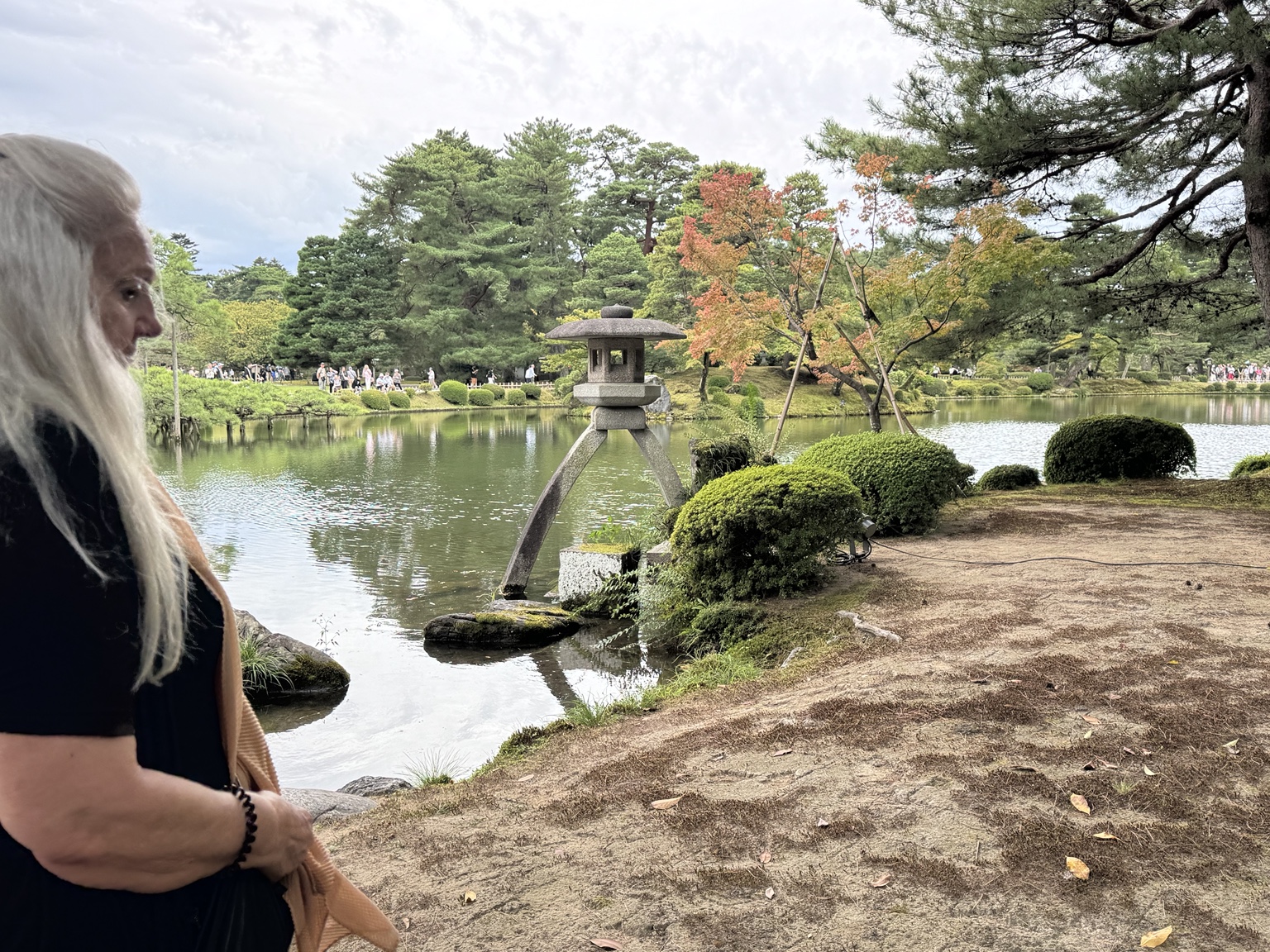
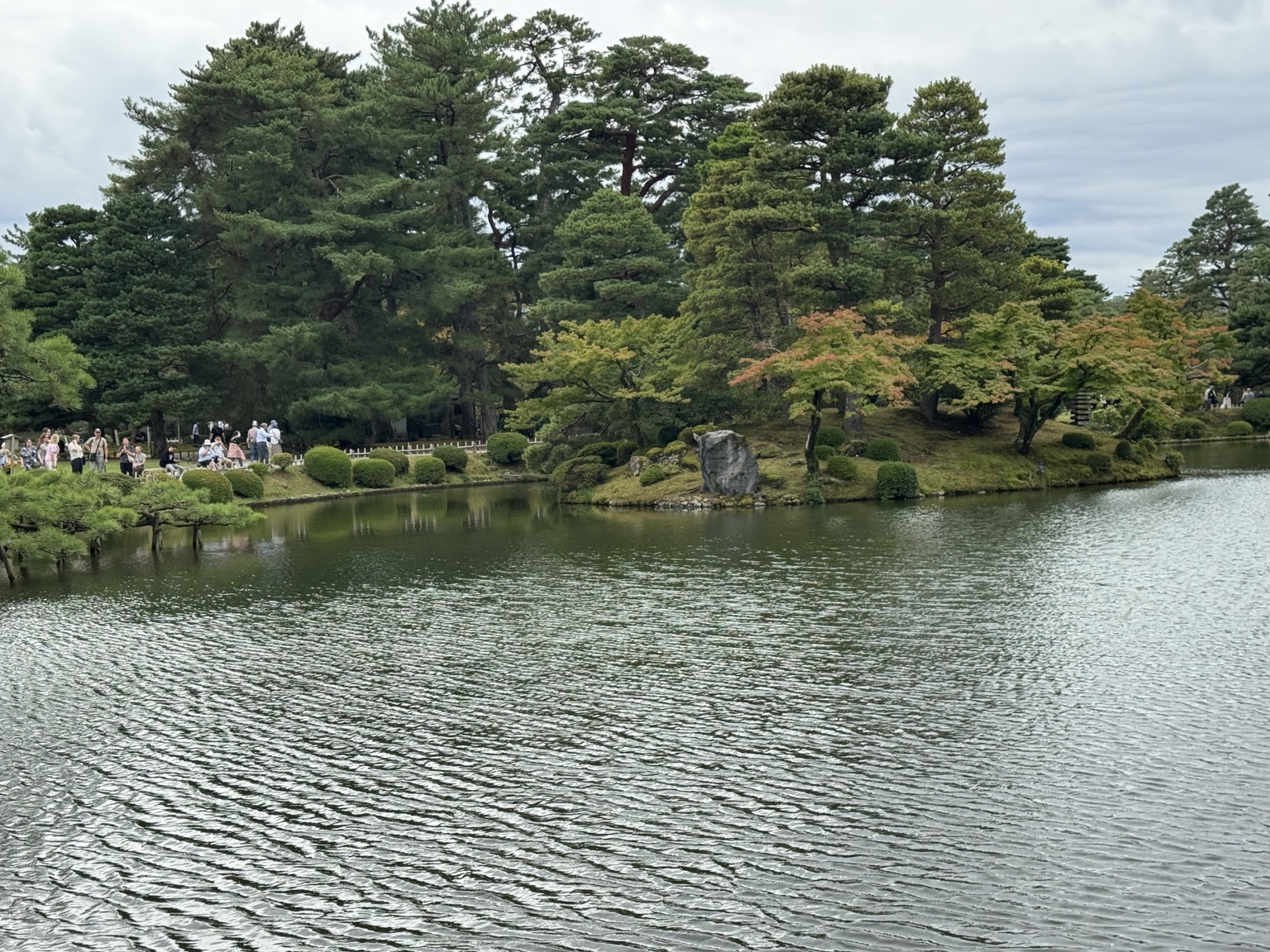
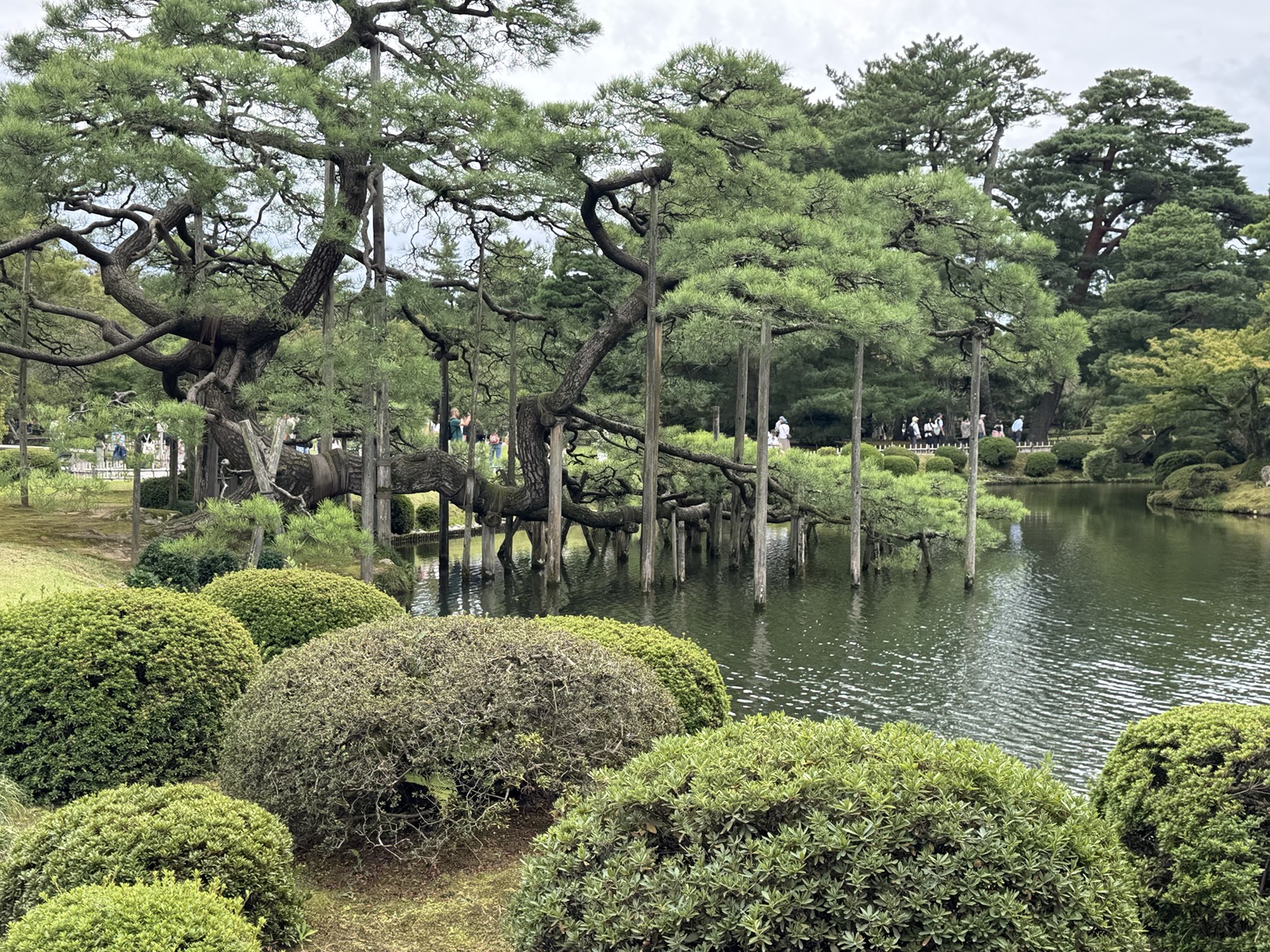
Back in Kanazawa, Kenroku-en awaits us, one of Japan’s three most celebrated landscape gardens. A wonderful Japanese garden. Old pine trees stretch their branches far out over the water, carefully supported by wooden props. Between them are moss, stones, rounded shrubs and the first colours of autumn. The famous two-legged stone lantern stands beside the pond as if it could never have belonged anywhere else.

We are lucky with the weather, too, and can enjoy the garden. Again and again, we want to stop. Another look across the water, another tree, another perspective.

Anneliese beside the pond and the famous stone lantern at Kenroku-en.
Water, pine trees and the first autumn colours at Kenroku-en.
Wooden props support pine branches reaching far across the water.

A little doll that gets back up

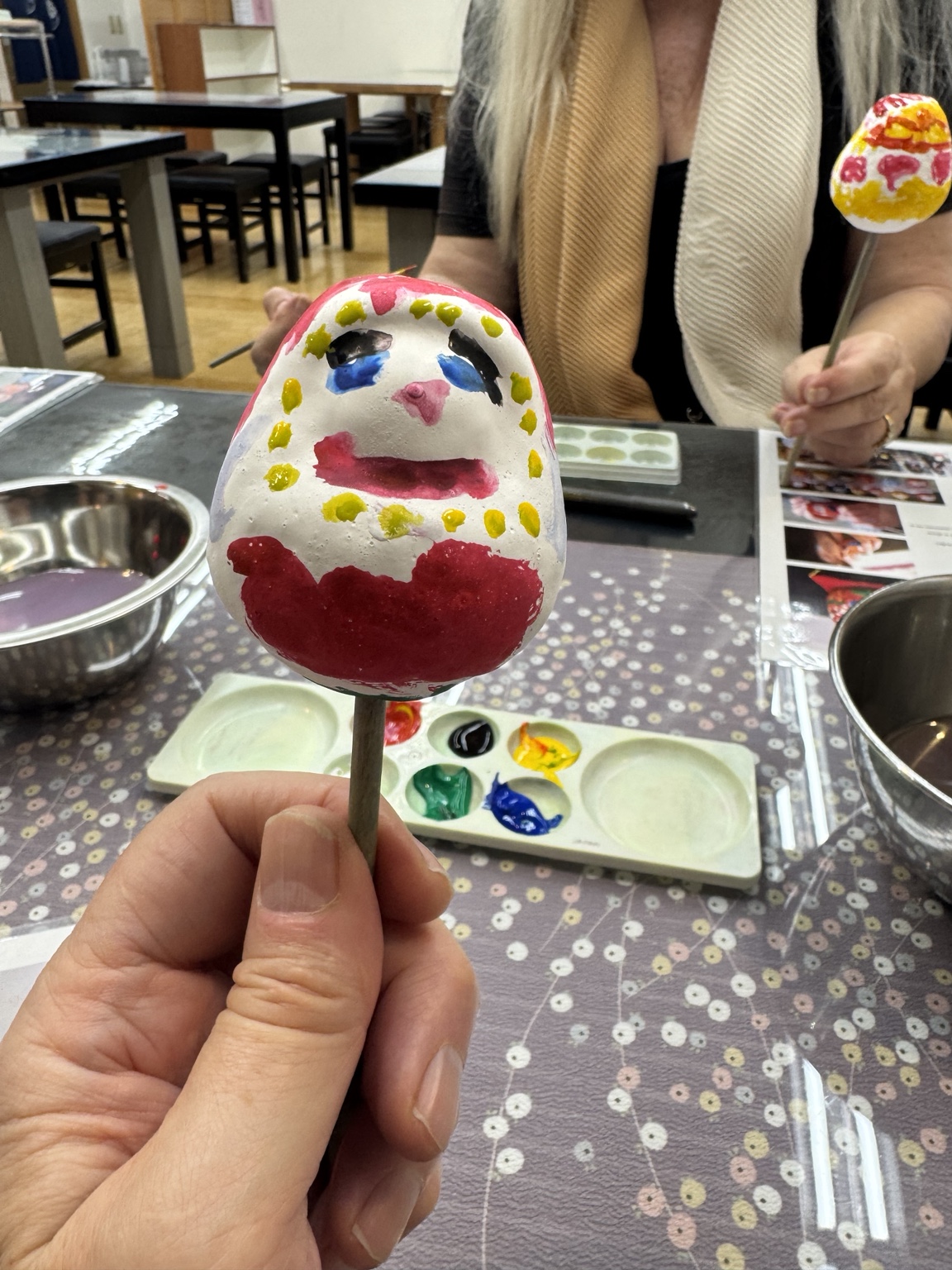
Later, we try our own hands at something creative. Anneliese and I paint little roly-poly dolls, known as Hachiman-Okiagari. Ours acquire plenty of colour and rather individual faces. Little personalities in their own right.

I particularly like the idea behind them: you can nudge these figures and knock them off balance, but they stand back up. Resilience made visible. A small reminder that we, too, can get back on our feet when something knocks us over.

Our hand-painted roly-poly dolls: little personalities of their own.

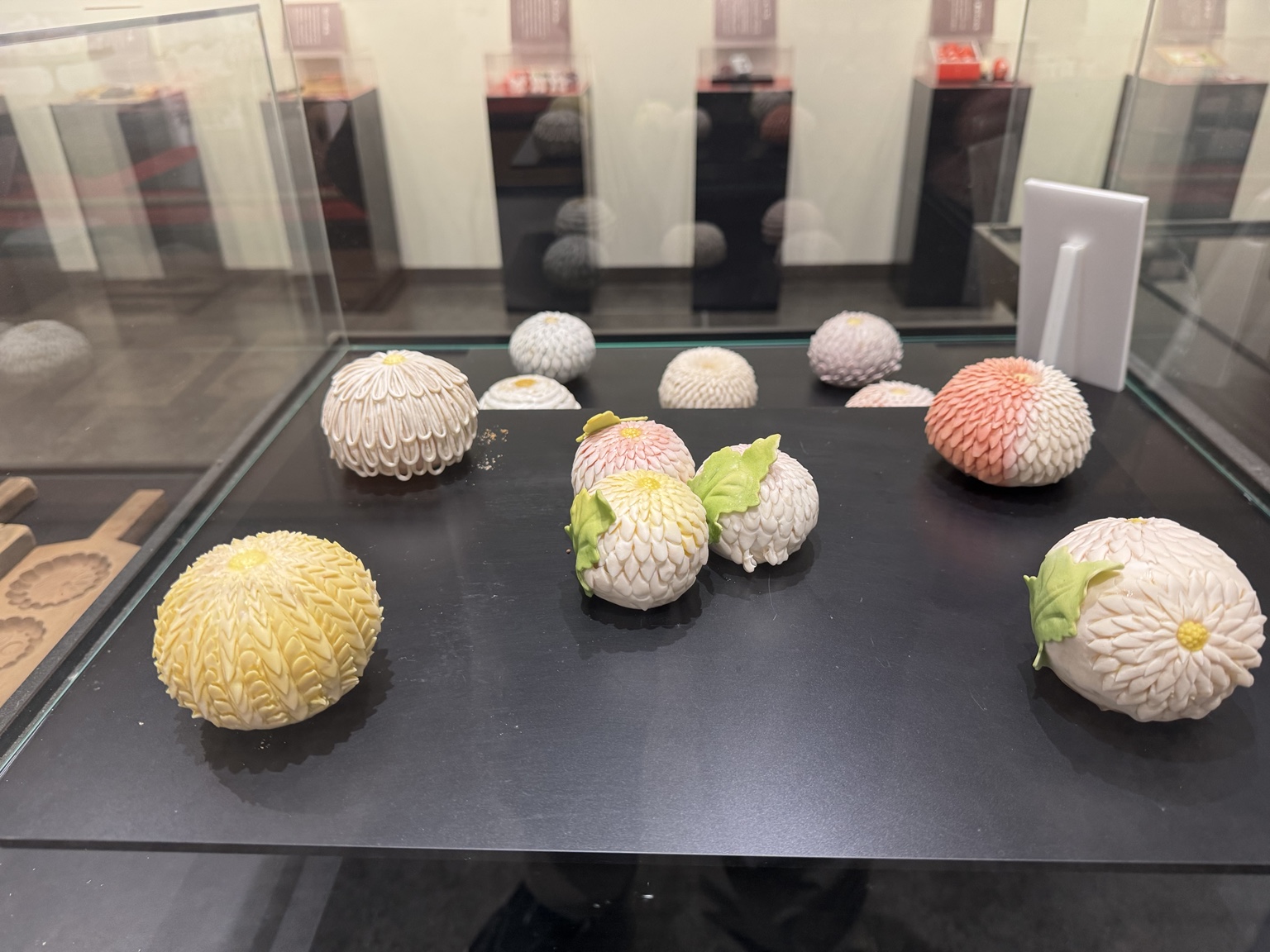
We also stop to admire the exquisitely detailed flower shapes on display. So much patience and care goes into their design.

Exquisitely detailed flower shapes on display.

Gold on paper – and on ice cream

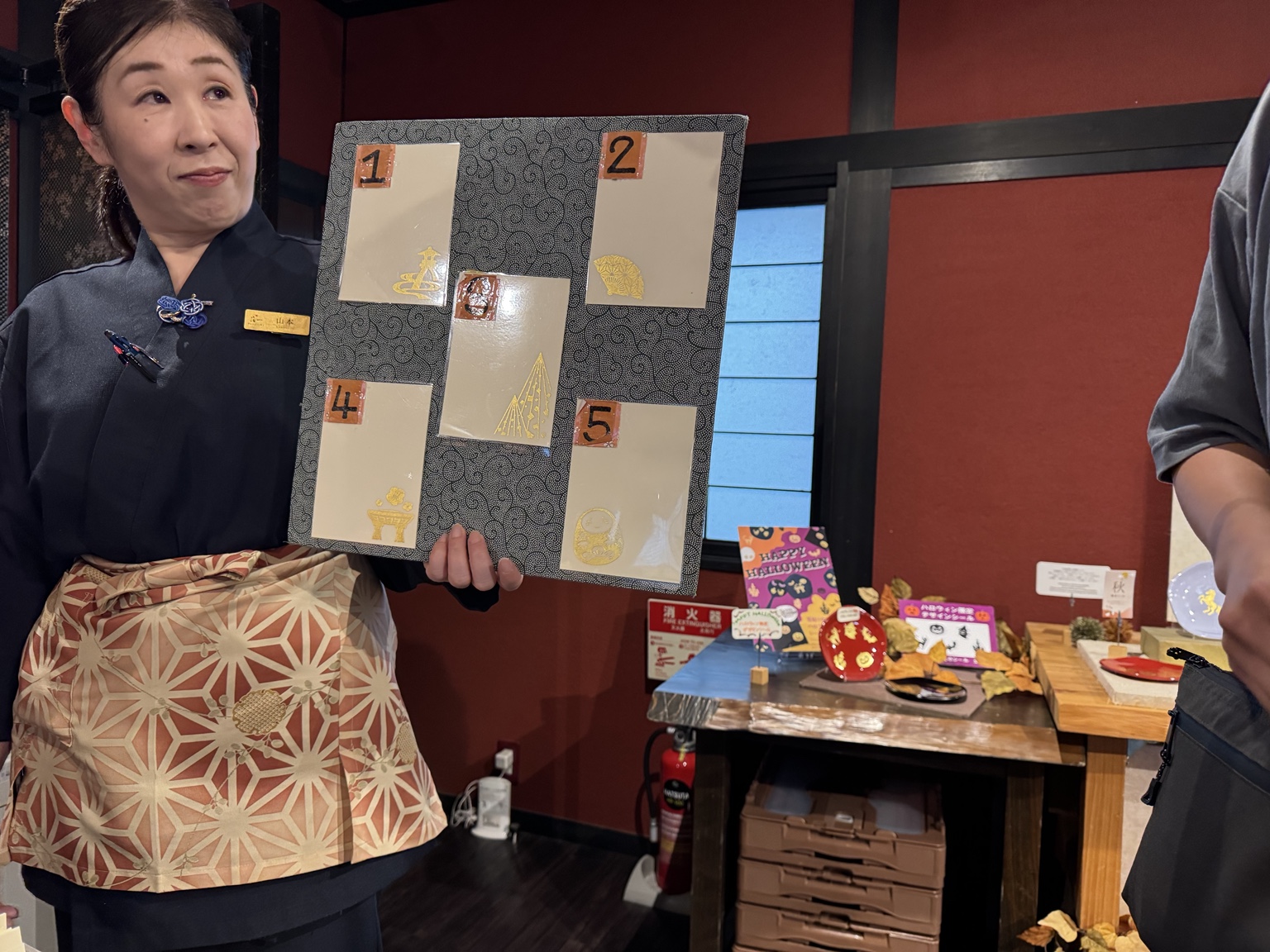
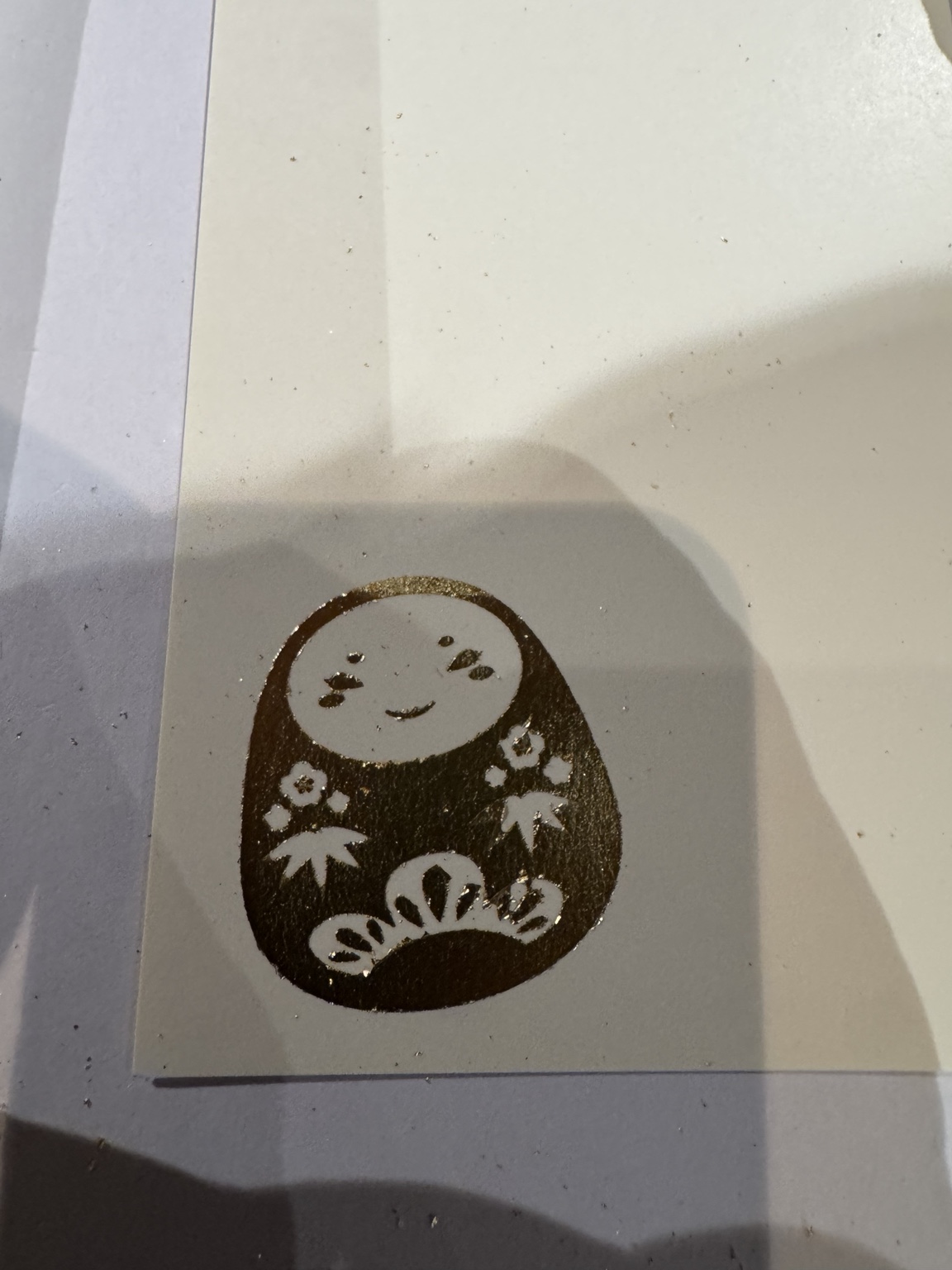
We also decorate a postcard with a golden motif, making our own keepsake of the day. On our card, another little round figure smiles back at us.

Choosing golden motifs for our postcards.
Our golden postcard, a keepsake we decorated ourselves.

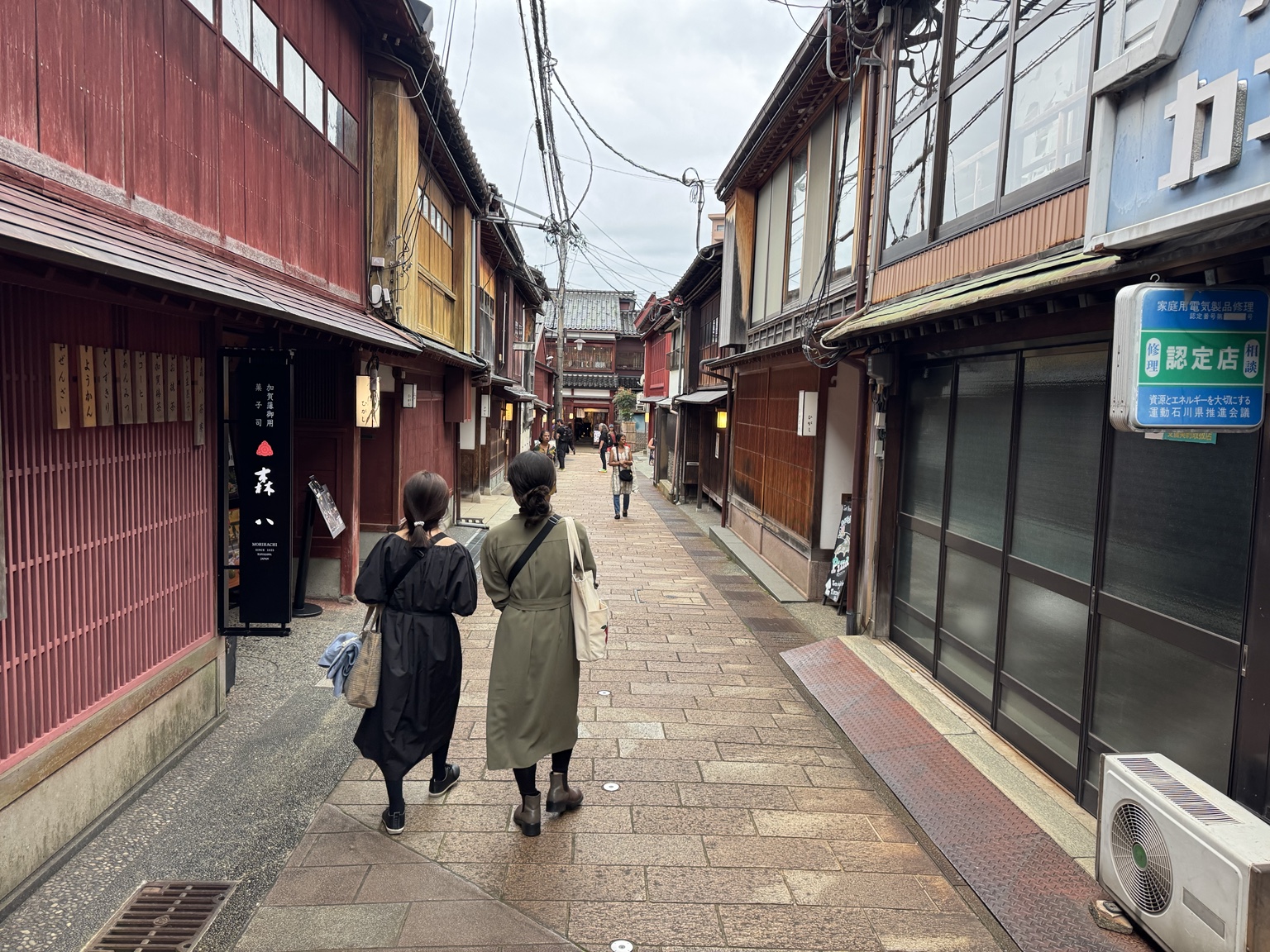
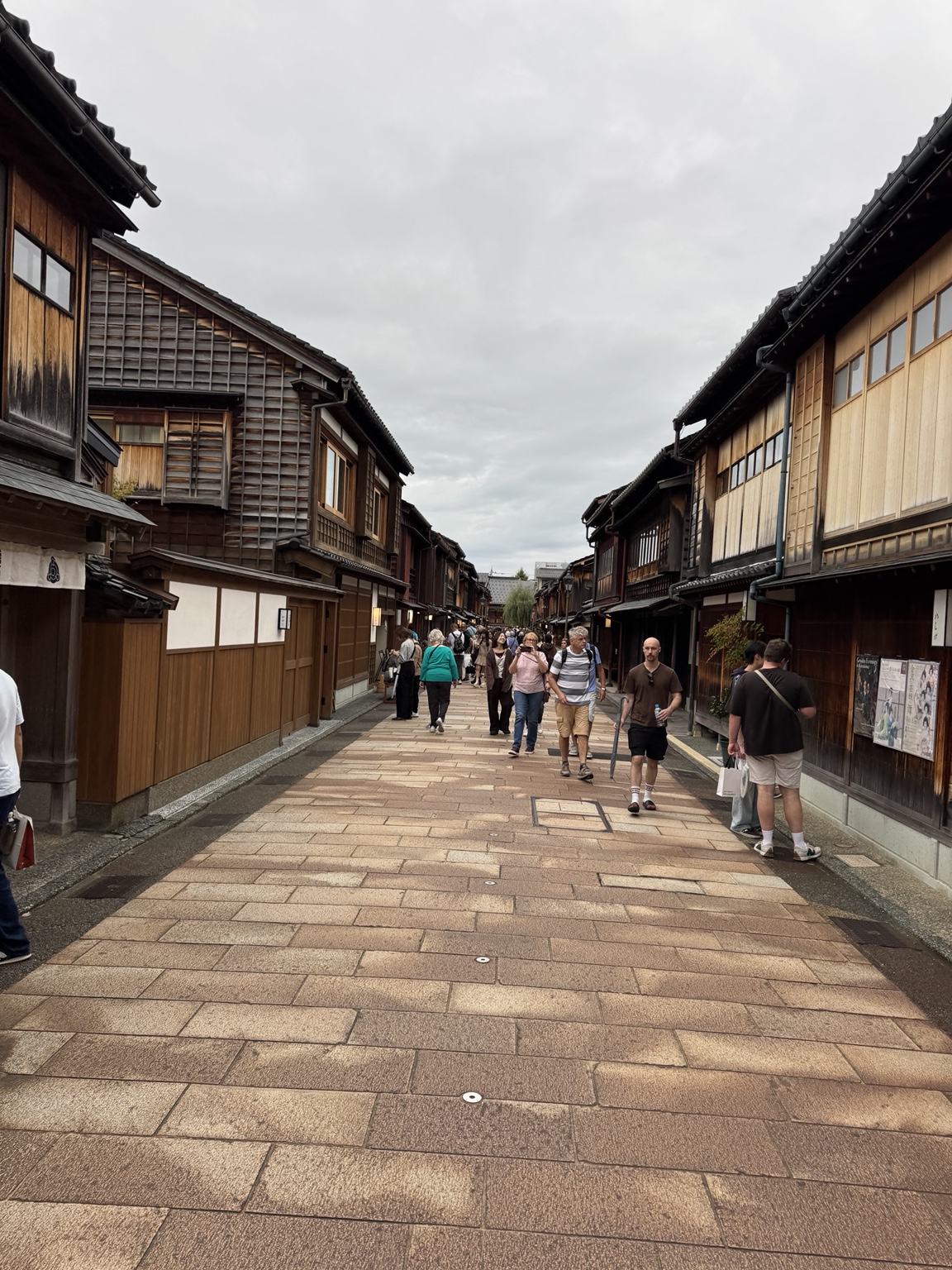
In between, we stroll through Kanazawa’s old streets, past wooden façades and small shops. Yet another side of this wonderfully varied city.

A stroll through Kanazawa’s old streets.
Wooden façades lining a historic street.

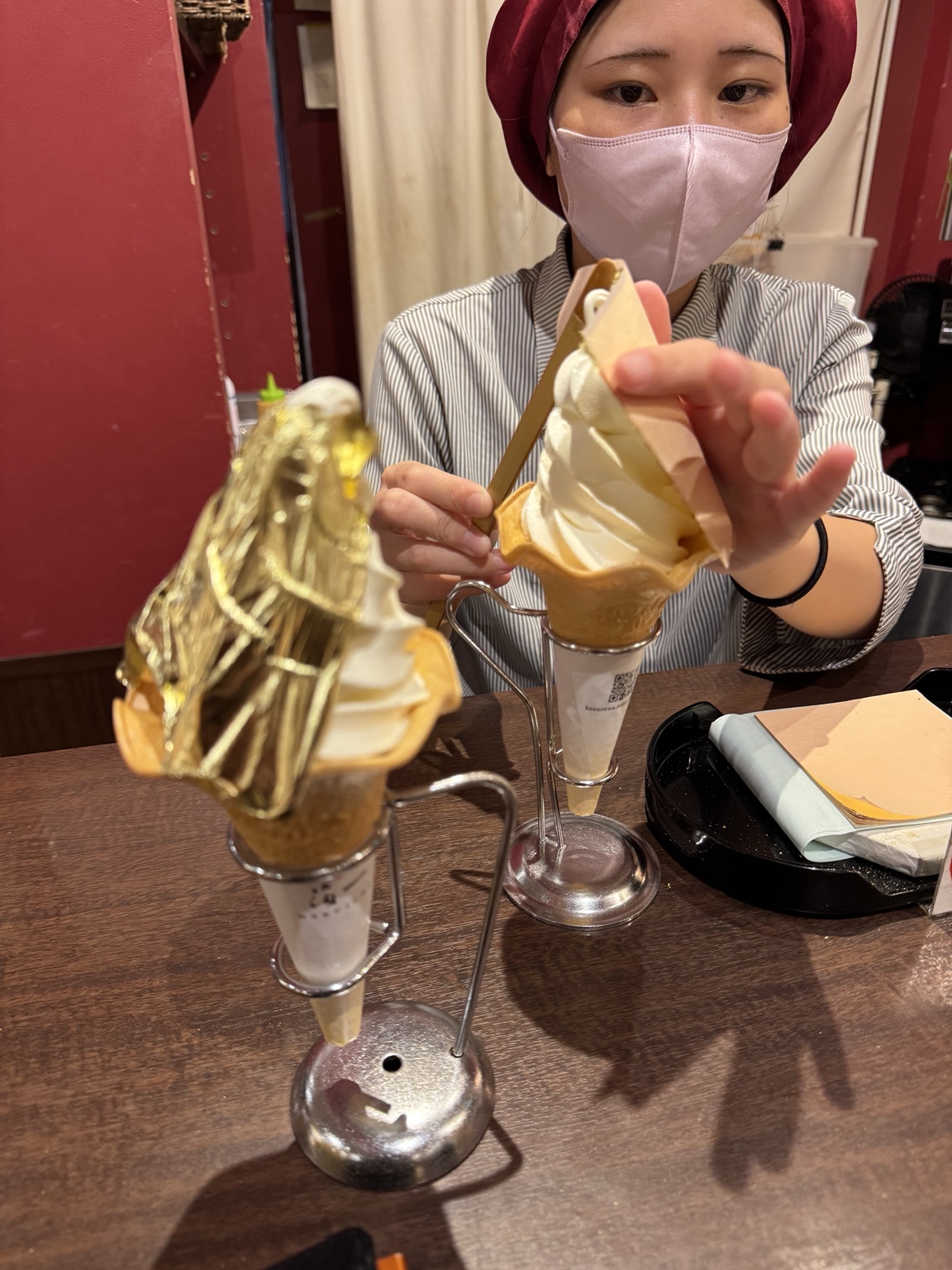
And finally, even the gold becomes edible: we treat ourselves to soft-serve ice cream covered with a wafer-thin sheet of gold leaf. Watching it being laid over the ice cream is a small spectacle in itself. Today calls for a little luxury in a cone.

A wafer-thin sheet of gold leaf is laid over our soft-serve ice cream.

So many different impressions in a single day: village life, architecture, gardens and the pleasure of making something ourselves. A beautiful, richly rewarding day. And a little roly-poly doll to accompany us on our travels.


← Chapter 29: Our Morning in Kanazawa · All chapters · Chapter 31: Kanazawa – Samurai, Sweets and Stillness →

October 19, 2026 0 comments
0 FacebookTwitterPinterestEmail
Historic thatched houses, rice fields and forested hills in Shirakawa-go.
Journals

Japan-Tagebuch 30: Welterbe, Gartenglück und ein kleines Stehaufmännchen

by KURT GASSNER October 19, 2026
written by KURT GASSNER

Deutsch | English

19. Oktober 2026 · Shirakawa-go und Kanazawa

Gut ausgeschlafen starten wir vom Hyatt Centric in Kanazawa zu unserem großen Ausflugstag. Neun Stunden Programm liegen vor uns. Ein Tag, der uns vom historischen Japan in den Bergen bis zu den kleinen, goldenen Kostbarkeiten Kanazawas führt.

Blick über Häuser, Felder und Wasserläufe zu den bewaldeten Hängen.

Shirakawa-go – gebaut für den Winter

Unser erstes großes Ziel ist das historische Dorf Shirakawa-go, das zum UNESCO-Weltkulturerbe gehört. Mächtige, steile Grasdächer über dunklen Holzhäusern, dahinter bewaldete Berghänge. Dazwischen schmale Wege, Wasserläufe und Reisfelder, auf denen gerade geerntet wird. Ein wunderschönes Bild vom ländlichen Japan.

Was ich bisher nicht wusste: Im Winter kann der Schnee hier zwei Meter hoch liegen – manchmal sogar noch höher. Plötzlich versteht man, warum diese Häuser so gebaut sind. Die steilen Dächer lassen den Schnee leichter abrutschen; die kräftige Holzkonstruktion ist auf die gewaltigen Belastungen des Winters ausgelegt. Was für uns so malerisch aussieht, ist zugleich eine ausgeklügelte Antwort auf das Leben in dieser schneereichen Bergregion.

Ein traditionelles Haus mit mächtigem Grasdach in Shirakawa-go.
Die steilen Giebel prägen das historische Dorfbild.
Das Gästehaus Gensaku unter seinem ausladenden Grasdach.
Reisernte zwischen goldgelben und bereits abgeernteten Feldern.

Besonders beeindruckend ist deshalb der Blick unter eines dieser Dächer: mächtige dunkle Balken, mit kräftigen Seilen verbunden. Da bekommt man eine Vorstellung davon, wie viel Wissen und handwerkliches Können in diesen alten Häusern steckt.

In den Wohnräumen dann eine andere Welt: Tatamimatten, bemalte Schiebetüren mit Kranichen und Kiefern und ein reich verzierter Hausaltar. Außen so rustikal, innen voller feiner Details. Auch eine kunstvoll ausgestattete Samurai-Figur ist zu sehen.

Unter dem Dach: kräftige Holzbalken und Seilverbindungen.
Ein reich verzierter buddhistischer Hausaltar.
Kraniche und Kiefern auf den bemalten Schiebetüren.
Eine Samurai-Figur mit aufwendig gestaltetem Helm und Gewand.
Steinerne Gedenksteine zwischen den alten Häusern.

Kenroku-en – ein Garten zum Stehenbleiben

Zurück in Kanazawa erwartet uns der Kenroku-en, einer der drei berühmtesten Landschaftsgärten Japans. Ein herrlicher japanischer Garten. Alte Kiefern breiten ihre Äste weit über das Wasser aus, sorgsam von Holzstützen getragen. Dazwischen Moos, Steine, gerundete Büsche und erste herbstliche Farben. Die berühmte zweibeinige Steinlaterne steht am Teich, als gehörte sie seit jeher genau dorthin.

Wir haben auch mit dem Wetter Glück und können diesen Garten genießen. Man möchte immer wieder stehen bleiben. Noch ein Blick über das Wasser, noch ein Baum, noch eine Perspektive.

Anneliese am Teich mit der berühmten Steinlaterne im Kenroku-en.
Wasser, Kiefern und erste Herbstfarben im Kenroku-en.
Holzstützen tragen die weit über das Wasser reichenden Kiefernäste.

Ein kleines Stehaufmännchen

Später werden wir selbst kreativ. Anneliese und ich bemalen kleine Stehauffiguren, sogenannte Hachiman-Okiagari. Unsere Exemplare bekommen reichlich Farbe und durchaus eigenwillige Gesichter. Kleine Persönlichkeiten eben.

Die Idee dahinter gefällt mir besonders: Man kann diese Figuren anstoßen und aus dem Gleichgewicht bringen – sie richten sich wieder auf. Widerstandsfähigkeit, ganz anschaulich. Eine kleine Erinnerung daran, dass man auch selbst wieder aufstehen kann, wenn einen etwas umwirft.

Unsere selbst bemalten Stehauffiguren: kleine Persönlichkeiten.

Auch bei den ausgestellten, fein ausgearbeiteten Blütenformen bleiben wir stehen. Wie viel Geduld und Liebe zum Detail hier in die Gestaltung fließt.

Fein ausgearbeitete Blütenformen in der Ausstellung.

Gold auf Papier – und auf dem Eis

Dazu gestalten wir eine Postkarte mit einem goldenen Motiv. Ein selbst gemachtes Andenken an diesen Tag. Auf unserer Karte lächelt uns wieder eine kleine runde Figur entgegen.

Die Auswahl der goldenen Motive für unsere Postkarten.
Unsere goldene Postkarte als selbst gestaltetes Andenken.

Dazwischen schlendern wir durch die alten Gassen Kanazawas, vorbei an hölzernen Fassaden und kleinen Geschäften. Wieder eine andere Seite dieser vielseitigen Stadt.

Ein Spaziergang durch die alten Gassen Kanazawas.
Holzfassaden und weite Blicke entlang der historischen Straße.

Und schließlich wird das Gold sogar essbar: Wir gönnen uns ein Softeis, über das hauchdünnes Blattgold gelegt wird. Schon das Auflegen ist sehenswert. Ein wenig Luxus in der Eistüte muss heute sein.

Hauchdünnes Blattgold wird auf unser Softeis gelegt.

So viele unterschiedliche Eindrücke an einem einzigen Tag: Dorfleben, Baukunst, Gartenkunst und eigenes Ausprobieren. Ein wunderschöner, reicher Tag. Und ein kleines Stehaufmännchen als Reisebegleiter.


← Kapitel 29: Unser Morgen in Kanazawa · Alle Kapitel · Kapitel 31: Kanazawa – Samurai, Süßigkeiten und Stille →

October 19, 2026 0 comments
0 FacebookTwitterPinterestEmail
Journals

Japan Diary 29: Kanazawa – Well Rested and Ready to Explore

by KURT GASSNER October 18, 2026
written by KURT GASSNER

Deutsch | English

19 October 2026 · Kanazawa · Morning diary

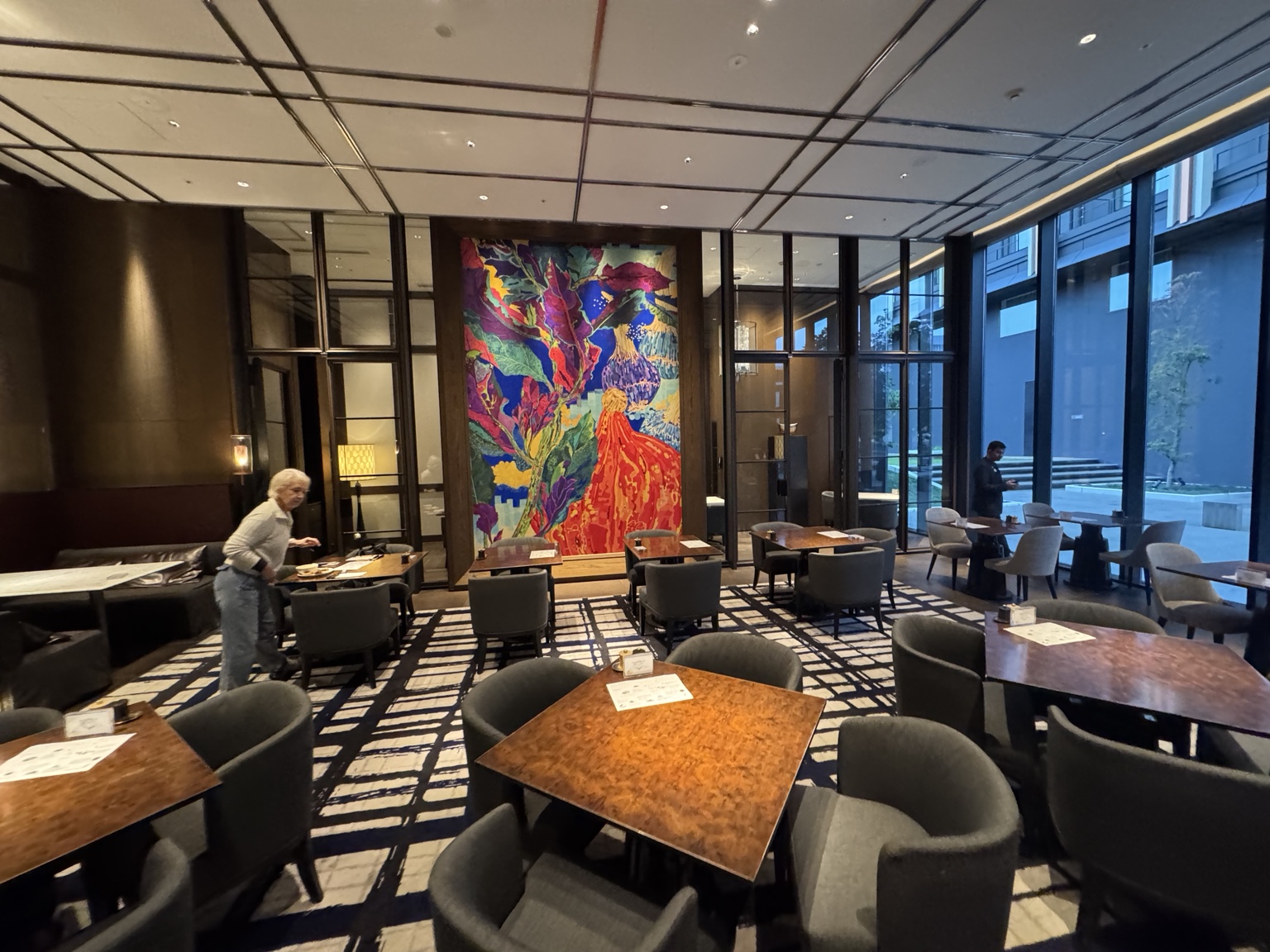
The breakfast room with colourful art at the Hyatt Centric Kanazawa.

Monday morning in Kanazawa. For the first time in a month, the sky is a little overcast. It does nothing to dampen our anticipation.

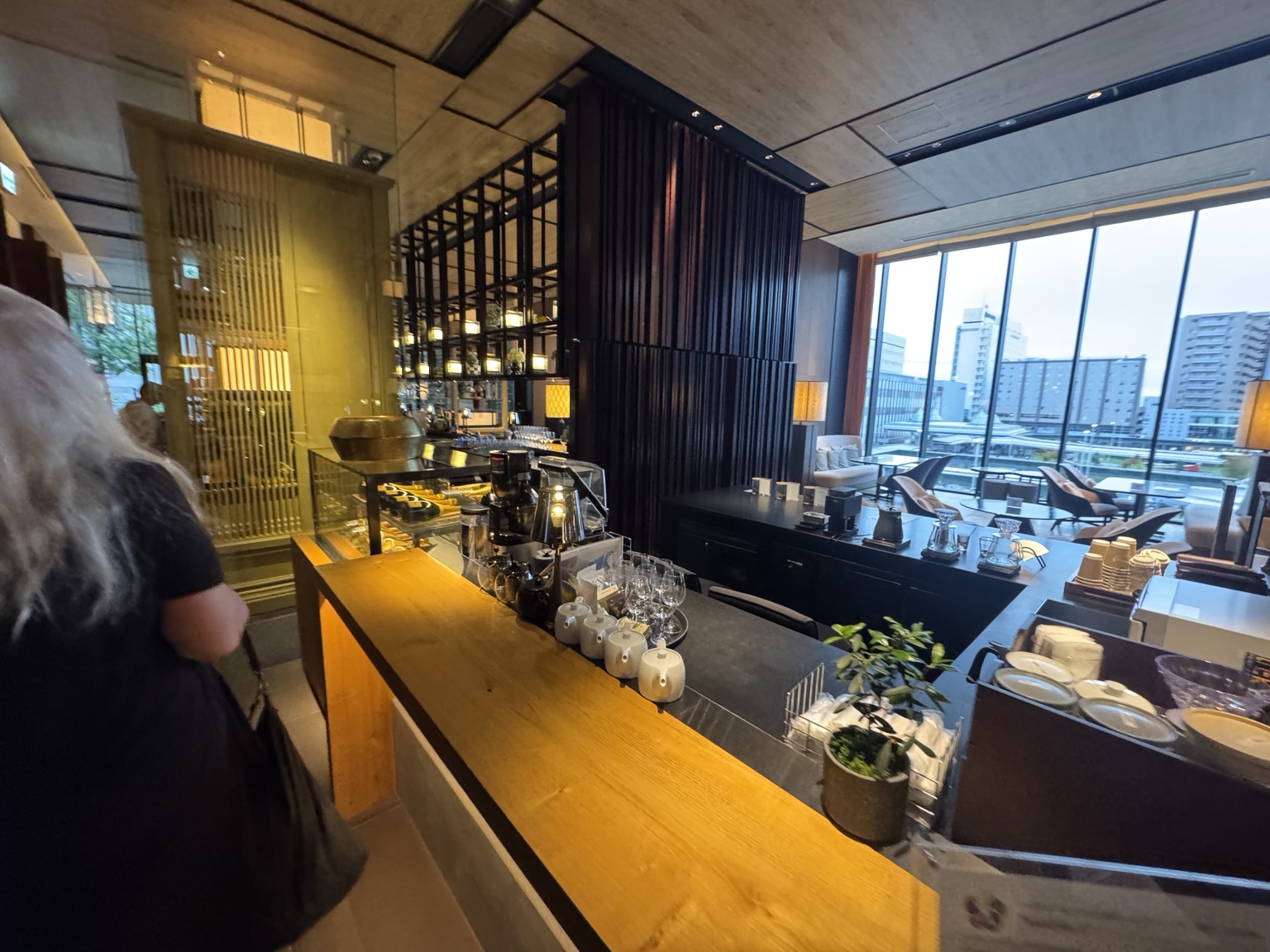
After a good night at the Hyatt Centric, we feel properly rested again. A beautiful design hotel: warm wood tones, large windows, colourful art and thoughtful details throughout. The breakfast setting is lovely, too—a pleasant start to a long day of exploring.

We set off at 7:50 a.m. A nine-hour tour awaits, with visits to World Heritage sites. Today, someone else will do the driving while we look forward to discovering another side of Japan.

Well rested, well fed—and ready to go.

Our morning at the Hyatt Centric

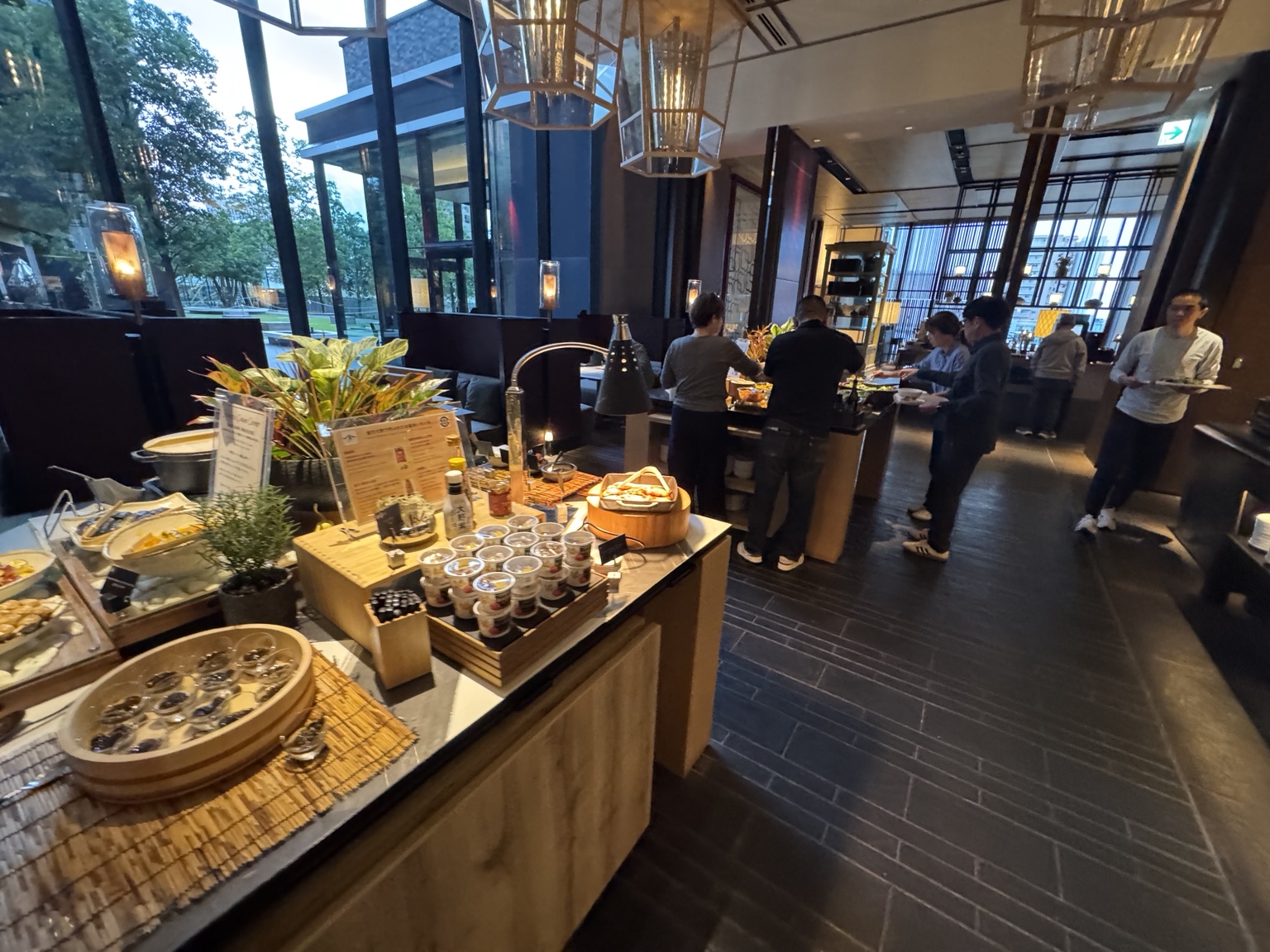
At the breakfast buffet.
Warm wood tones and large windows in the breakfast area.
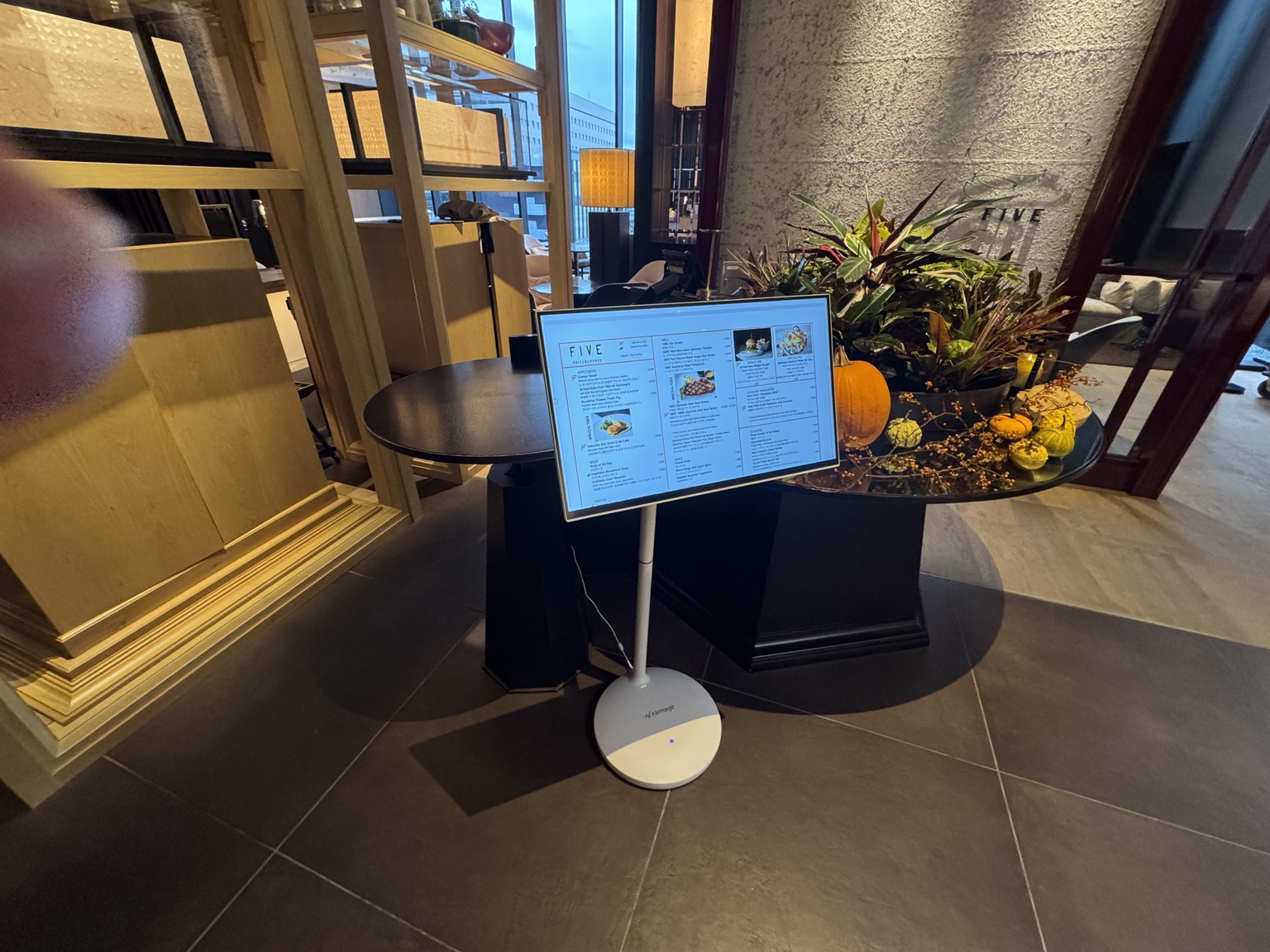
Autumn decorations at the FIVE restaurant.
Anneliese at the hotel—ready for a new day.

← Chapter 28: Eight Minutes and Four Tickets · All chapters · Chapter 30: World Heritage, Garden Beauty and a Little Roly-Poly Doll →

October 18, 2026 0 comments
0 FacebookTwitterPinterestEmail
Journals

Japan-Tagebuch 29: Kanazawa – Gut ausgeschlafen ins nächste Abenteuer

by KURT GASSNER October 18, 2026
written by KURT GASSNER

Deutsch | English

19. Oktober 2026 · Kanazawa · Morgenauftakt

Frühstücksraum mit farbenfroher Kunst im Hyatt Centric Kanazawa.

Montagmorgen in Kanazawa. Zum ersten Mal seit einem Monat zeigt sich der Himmel etwas bedeckt. Unserer Vorfreude tut das keinen Abbruch.

Nach einer guten Nacht im Hyatt Centric sind wir wieder richtig ausgeruht. Ein wunderschönes Designhotel: warme Holztöne, große Fenster, farbenfrohe Kunst und viele liebevoll gestaltete Details. Auch beim Frühstück sitzt man ausgesprochen angenehm – ein schöner Anfang für einen langen Ausflugstag.

Um 7:50 Uhr geht es los. Neun Stunden werden wir unterwegs sein und Welterbestätten besuchen. Heute lassen wir uns fahren und freuen uns darauf, wieder eine andere Seite Japans kennenzulernen.

Gut geschlafen, gut gefrühstückt – wir sind bereit.

Unser Morgen im Hyatt Centric

Am Frühstücksbuffet.
Warme Holztöne und große Fenster im Frühstücksbereich.
Herbstliche Dekoration am Restaurant FIVE.
Anneliese im Hotel – bereit für den neuen Tag.

← Kapitel 28: Acht Minuten und vier Fahrkarten · Alle Kapitel · Kapitel 30: Welterbe, Gartenglück und ein kleines Stehaufmännchen →

October 18, 2026 0 comments
0 FacebookTwitterPinterestEmail
Newer Posts
Older Posts

Recent Posts

  • Japan Diary 33: Five Floors of Art and Ice Cream with a Footbath
  • Japan-Tagebuch 33: Fünf Etagen Kunst und Eis mit Fußbad
  • Japan Diary 32: Tokyo at Full Speed, Hakone at Our Own Pace
  • Japan-Tagebuch 32: Tokio im Eiltempo, Hakone zum Durchatmen
  • Japan Diary 31: Kanazawa – Samurai, Sweets and a Moment of Stillness

Recent Comments

No comments to show.

Archives

  • October 2026
  • August 2026

Categories

  • Books
  • Country club
  • english
  • English
  • English films
  • Entrepreneurship & Brands
  • Films
  • French
  • German
  • German
  • German-films
  • Journals
  • Journeys & Stories
  • Mind & Soul
  • Our Stories
  • Reflections
  • Spanish
  • Travel stories
  • Unkategorisiert

Keep in touch

Facebook Twitter Instagram Pinterest Youtube Email

Search

Recent Posts

  • Japan Diary 33: Five Floors of Art and Ice Cream with a Footbath

  • Japan-Tagebuch 33: Fünf Etagen Kunst und Eis mit Fußbad

  • Japan Diary 32: Tokyo at Full Speed, Hakone at Our Own Pace

  • Japan-Tagebuch 32: Tokio im Eiltempo, Hakone zum Durchatmen

  • Japan Diary 31: Kanazawa – Samurai, Sweets and a Moment of Stillness

Newsletter

Categories

  • Books (20)
    • English (11)
    • Entrepreneurship & Brands (7)
    • French (1)
    • German (7)
    • Journeys & Stories (9)
    • Mind & Soul (4)
    • Spanish (1)
  • Country club (2)
    • english (1)
    • German (1)
  • Films (20)
    • English films (14)
    • German-films (6)
  • Journals (64)
  • Our Stories (12)
    • Travel stories (12)
  • Reflections (2)
  • Unkategorisiert (2)

JOIN THE JOURNEY

New journeys, honest reflections and short audio inspirations—sent occasionally, never excessively.

Subscribe to the newsletter

EXPLORE

  • Home
  • Journey
    • Destinations
    • Stories
    • Films
    • audio journey
    • Future journey
  • Insights
    • Stop Waiting Principles
    • Brand Auditor
    • Leadership
    • Creativity
    • Human Behaviour
    • Entrepreneurship
  • Mind • Body • Soul
    • Mind
    • Body
    • Soul
  • Books
  • Daily inspirations
  • About
  • Contact Us

QUICK LINKS

  • News
  • Privacy Policy
  • Terms & Conditions
  • Imprint / Legal Notice
  • Cookie Policy
  • News
  • Privacy Policy
  • Terms & Conditions
  • Imprint / Legal Notice
  • Cookie Policy

STAY CONNECTED

Follow the daily inspirations, behind-the-scenes stories, and updates

SOCIAL

Facebook X-twitter Youtube Linkedin Tiktok

© 2026 STOP WAITING Operated by: Trendguide KG All rights reserved.

STOP WAITING
  • Home
  • Journey
    • Destinations
    • Stories
    • Films
    • audio journey
    • Future journey
  • Insights
    • Stop Waiting Principles
    • Brand Auditor
    • Leadership
    • Creativity
    • Human Behaviour
    • Entrepreneurship
  • Mind • Body • Soul
    • Mind
    • Body
    • Soul
  • Books
  • Daily inspirations
  • About
  • Contact Us