STOP WAITING
  • Home
  • Journey
    • Destinations
    • Stories
    • Films
    • audio journey
    • Future journey
  • Insights
    • Stop Waiting Principles
    • Brand Auditor
    • Leadership
    • Creativity
    • Human Behaviour
    • Entrepreneurship
  • Mind • Body • Soul
    • Mind
    • Body
    • Soul
  • Books
  • Daily inspirations
  • About
  • Contact Us
Category:

Journals

Journals

Japan Diary 28: Eight Minutes and Four Tickets

by KURT GASSNER October 18, 2026
written by KURT GASSNER

Deutsch | English

18 October 2026 · Kyoto – Tsuruga – Kanazawa
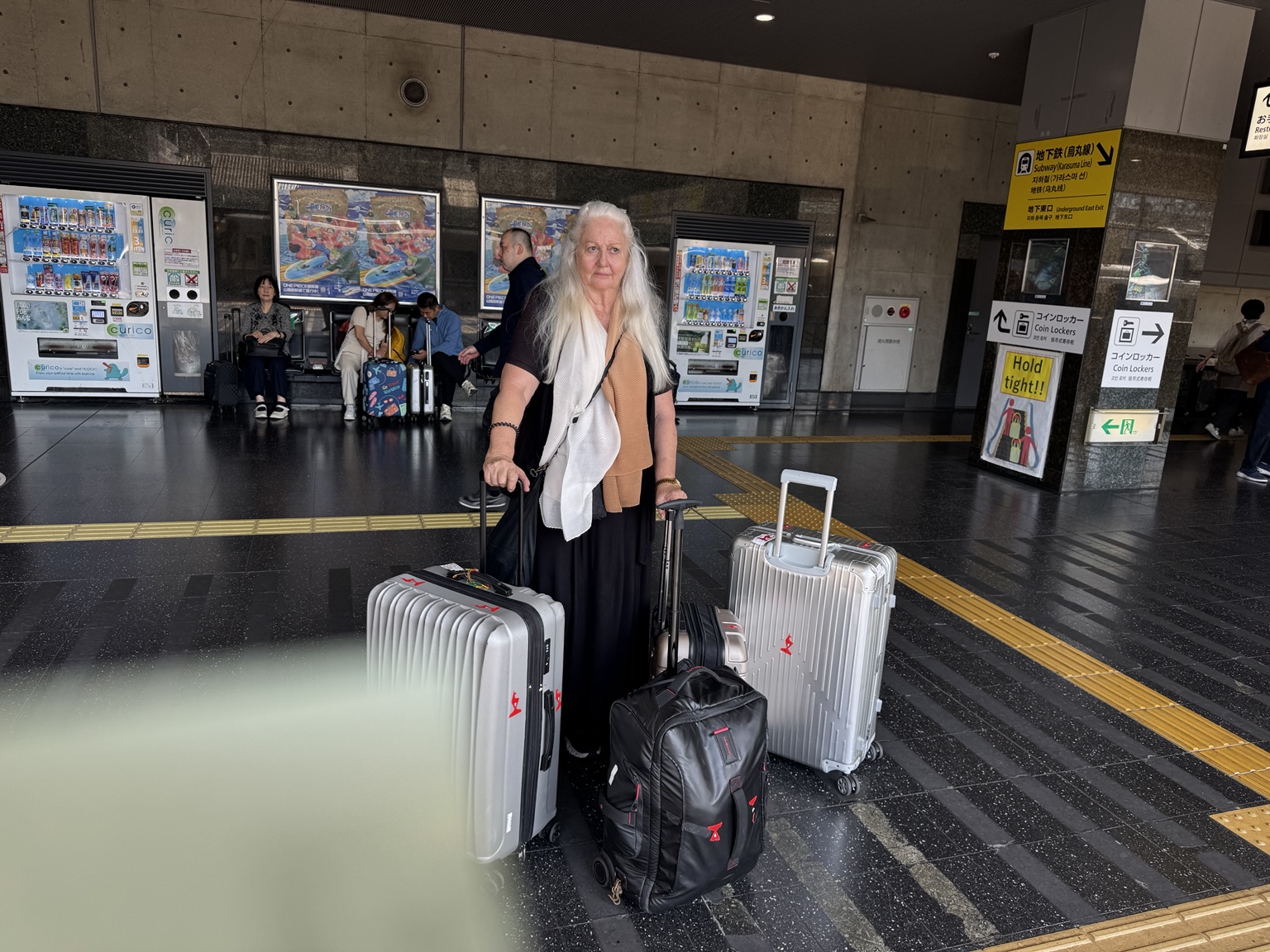
Anneliese and our luggage in the station hall.

Today we said goodbye to the Hyatt Regency in Kyoto. One last leisurely breakfast, then off to the station with all our luggage. A lovely, relaxed beginning. What followed was our first Japanese train adventure.

Even getting started was a challenge. Dropped off at the wrong station entrance, we first had to ask our way around and drag our suitcases through the station. Fortunately, people here are incredibly helpful. Again and again, someone helped us with our tickets and pointed us in the right direction.

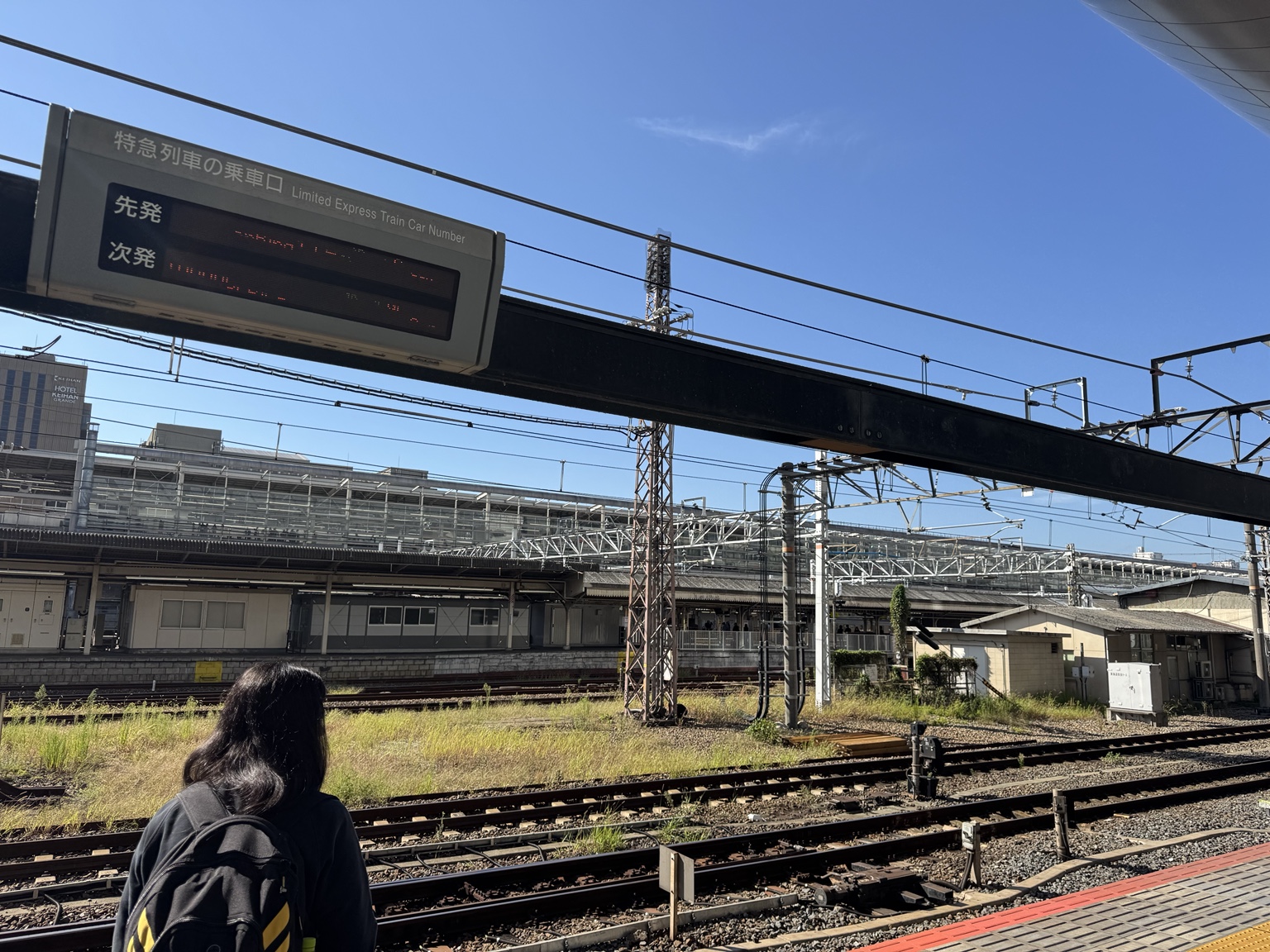
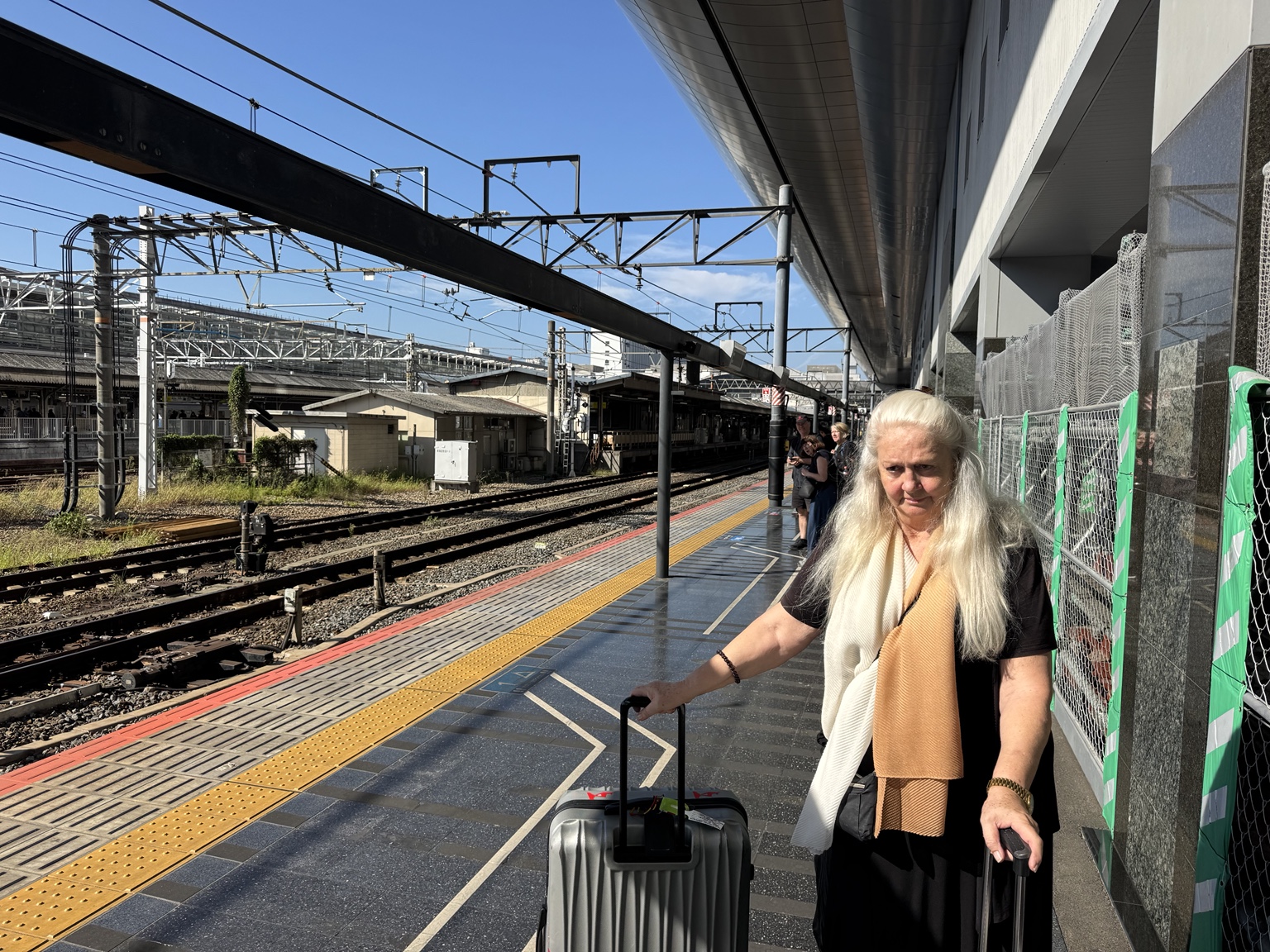
On the platform came the next challenge: where would our carriage stop? Markings on the ground, different information on the display boards—it was a puzzle to us at first. So we walked forwards, then back again, with the luggage following along. Eventually, we actually found ourselves on the right train.

Made it. Or so we thought.

Our train did not go all the way to Kanazawa. We had to change in Tsuruga. Somehow, that had not featured in my personal travel plan. And we had just eight minutes to do it.

Out we got with the suitcases, up two escalators, and then: a ticket gate. Four tickets in hand, but how were we supposed to open the barrier? As someone explained, the tickets belonging together had to go through the machine together. Easy when you know how. More questions, more help, and onwards to the platform.

Just in time to watch our train leave.

Anneliese was despairing on the platform, and I had the luggage. So down we went again to ask for help. The good news: the next train would leave in fifteen minutes, directly from the opposite platform.

This time we got on. No longer in first class, but in second. By now, what mattered most was simply being on a train to Kanazawa. About an hour later, we finally arrived.

Another large station, another crowd. We joined the taxi queue, and the next driver took us practically around the corner to the Hyatt Centric.

A very lovely hotel, attractive design—and after a good lunch, the world looked quite different again.

Japan by train: fast and beautifully organised. We simply had to learn how the system worked. Today, we certainly learned a thing or two. Above all, how short eight minutes can be when you have lots of suitcases and four tickets.

Photographs from our onward journey
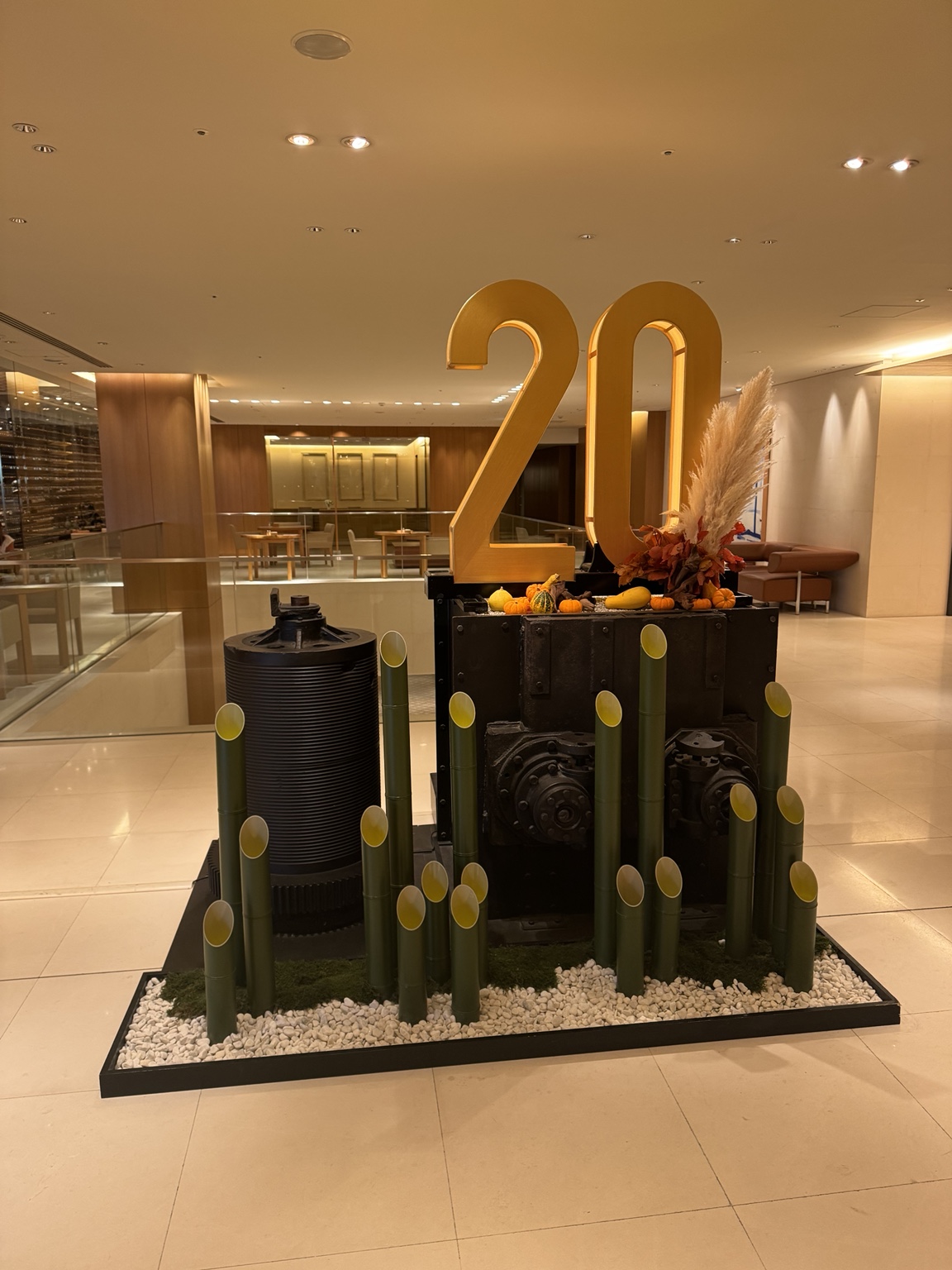
A final look at the hotel decorations in Kyoto.
Tracks and platforms on our onward journey.
Anneliese with a suitcase on the platform.
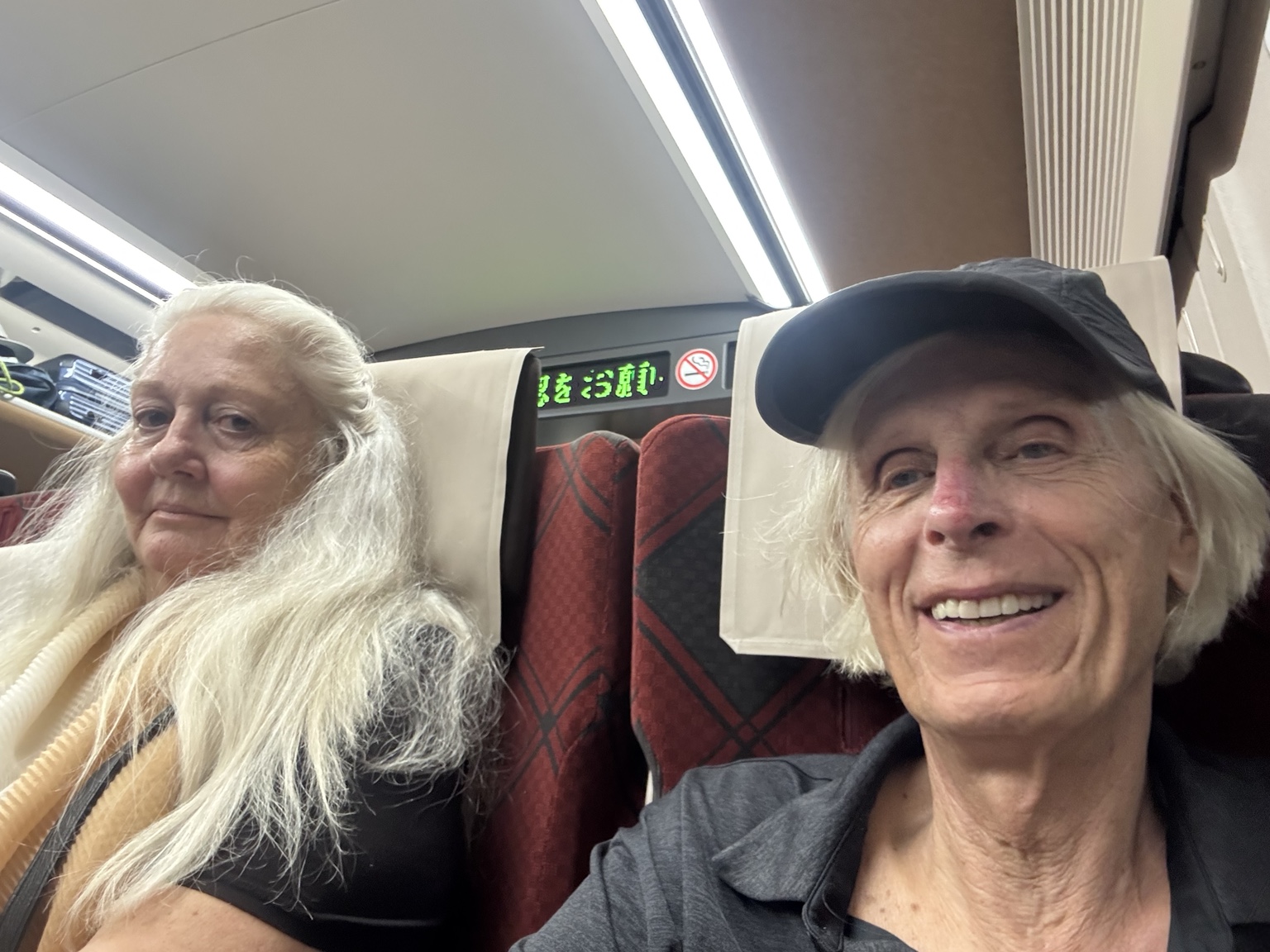
Anneliese and me aboard the train.
Another photograph together during our train journey.
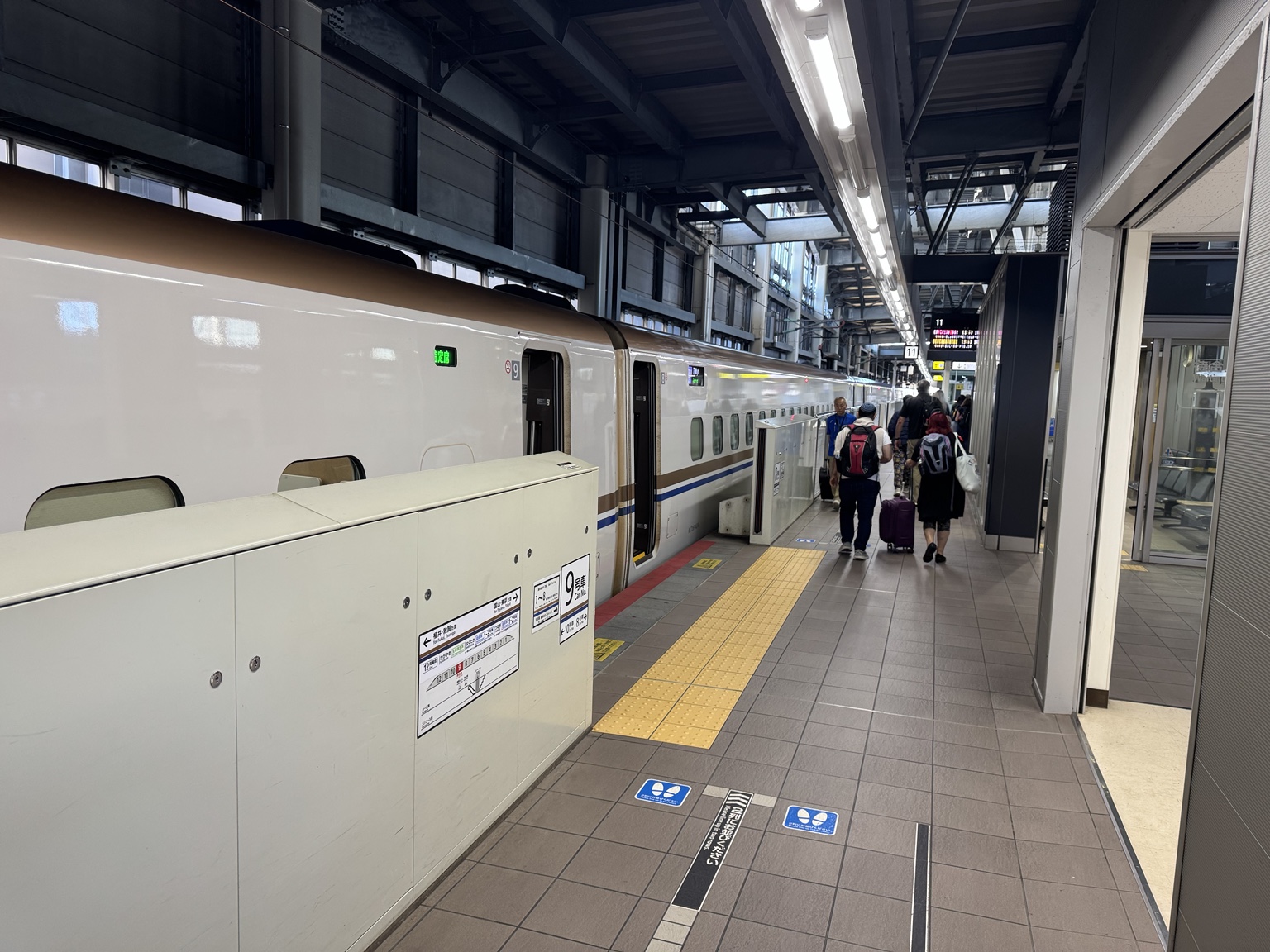
A high-speed train at the platform.
Our room at the Hyatt Centric in Kanazawa.

← Chapter 27: Farewell to Kyoto · All chapters · Next: Chapter 29, Kanazawa in the Morning →
October 18, 2026 0 comments
0 FacebookTwitterPinterestEmail
Journals

Japan-Tagebuch 28: Acht Minuten und vier Fahrkarten

by KURT GASSNER October 18, 2026
written by KURT GASSNER

Deutsch | English

18. Oktober 2026 · Kyoto – Tsuruga – Kanazawa

Anneliese und unser Gepäck in der Bahnhofshalle.

Heute Abschied vom Hyatt Regency in Kyoto. Noch einmal in Ruhe frühstücken, dann mit unserem vielen Gepäck zum Bahnhof. Ein schöner, entspannter Anfang. Was danach kam, war unser erstes japanisches Zugabenteuer.

Schon der Einstieg hatte es in sich. Am falschen Bahnhofseingang abgesetzt, mussten wir uns erst einmal durchfragen und mit unseren Koffern durch den Bahnhof ziehen. Zum Glück sind die Menschen hier unglaublich hilfsbereit. Immer wieder fand sich jemand, der uns mit den Fahrkarten und dem richtigen Weg weiterhalf.

Am Bahnsteig die nächste Herausforderung: Wo hält unser Wagen? Markierungen am Boden, andere Angaben auf den Tafeln – für uns zunächst ein Rätsel. Also vorlaufen, wieder zurücklaufen, Gepäck hinterher. Schließlich saßen wir tatsächlich im richtigen Zug.

Geschafft. Dachten wir.

Denn unser Zug fuhr gar nicht bis Kanazawa. In Tsuruga mussten wir umsteigen. Das hatte ich in meinem persönlichen Reiseplan irgendwie nicht vorgesehen. Und dafür waren gerade einmal acht Minuten eingeplant.

Also raus mit den Koffern, zwei Rolltreppen hinauf und dann: eine Ticketsperre. Vier Fahrkarten in der Hand, aber wie bekommt man damit die Schranke auf? Wie uns erklärt wurde, mussten die zusammengehörigen Karten gemeinsam durch den Automaten. Gewusst wie. Wieder fragen, wieder Hilfe bekommen, weiter zum Bahnsteig.

Gerade rechtzeitig, um unserem Zug beim Abfahren zuzusehen.

Anneliese verzweifelt am Bahnsteig, ich mit dem Gepäck. Also noch einmal hinunter und nachfragen. Die Erlösung: In einer Viertelstunde würde der nächste Zug fahren, direkt vom gegenüberliegenden Gleis.

Diesmal kamen wir hinein. Nicht mehr in die erste Klasse, sondern in die zweite. Inzwischen war uns vor allem wichtig, überhaupt im Zug nach Kanazawa zu sitzen. Etwa eine Stunde später waren wir endlich da.

Wieder ein großer Bahnhof, wieder viele Menschen. Wir stellten uns in die Taxischlange, und der nächste Fahrer brachte uns praktisch um die Ecke zum Hyatt Centric.

Ein sehr schönes Hotel, gelungenes Design – und nach einem guten Mittagessen sah die Welt schon wieder ganz anders aus.

Japan mit dem Zug: schnell und bestens organisiert. Nur wir mussten das System erst kennenlernen. Heute jedenfalls haben wir einiges gelernt. Vor allem, wie kurz acht Minuten sein können, wenn man viele Koffer und vier Fahrkarten hat.

Bilder unserer Weiterreise

Ein letzter Blick auf die Dekoration im Hotel in Kyoto.
Gleise und Bahnsteige auf unserer Weiterreise.
Anneliese mit dem Koffer am Bahnsteig.
Anneliese und ich unterwegs im Zug.
Noch ein gemeinsames Bild während unserer Zugreise.
Ein Hochgeschwindigkeitszug am Bahnsteig.
Unser Zimmer im Hyatt Centric in Kanazawa.

← Kapitel 27: Abschied von Kyoto · Alle Kapitel · Weiter zu Kapitel 29: Kanazawa am Morgen →

October 18, 2026 0 comments
0 FacebookTwitterPinterestEmail
Journals

Japan Diary 27: Zen, a Little Italy and Farewell to Kyoto

by KURT GASSNER October 17, 2026
written by KURT GASSNER

Deutsch | English

Kyoto · Sunday, 18 October 2026 · Before travelling on

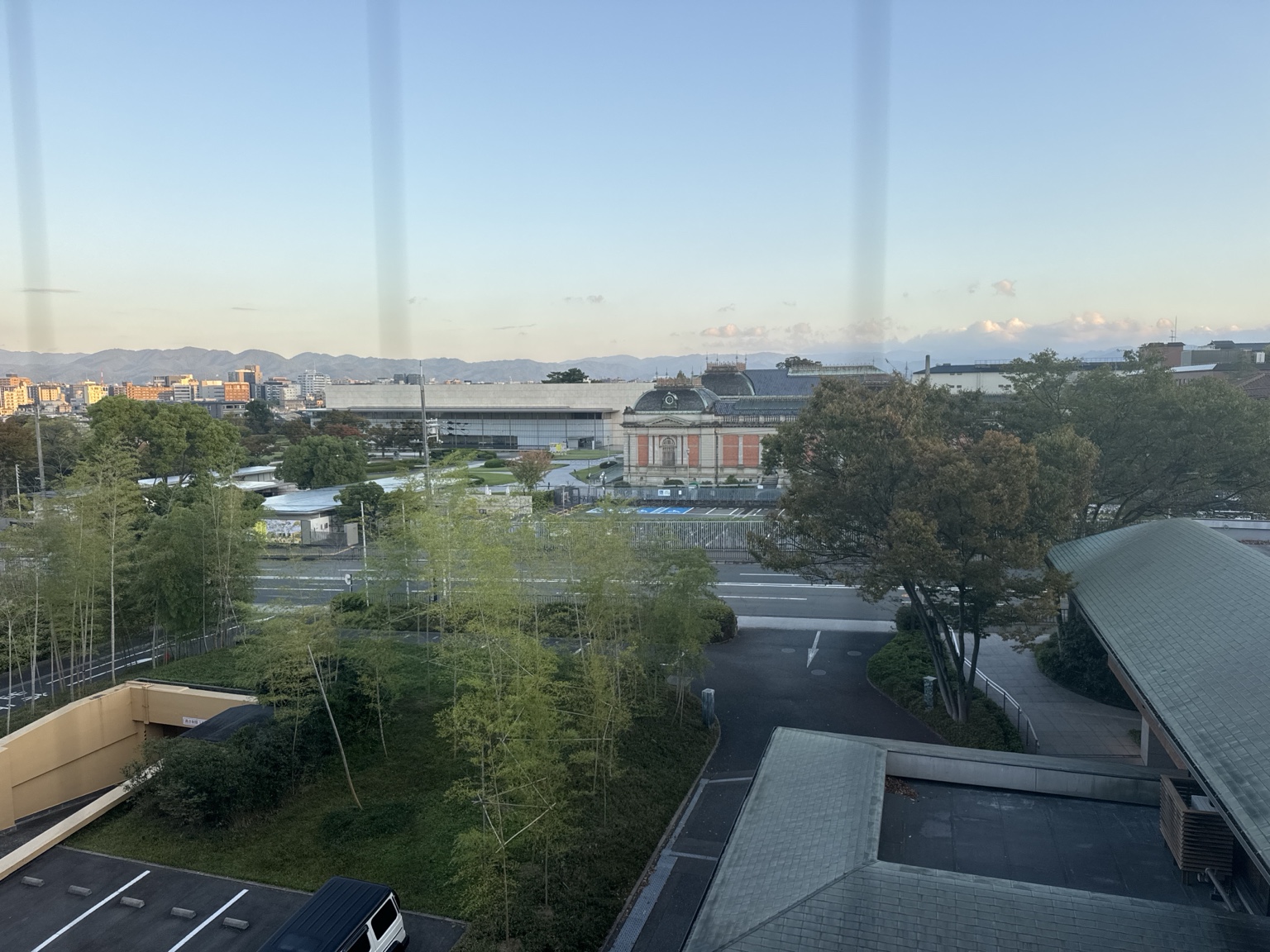
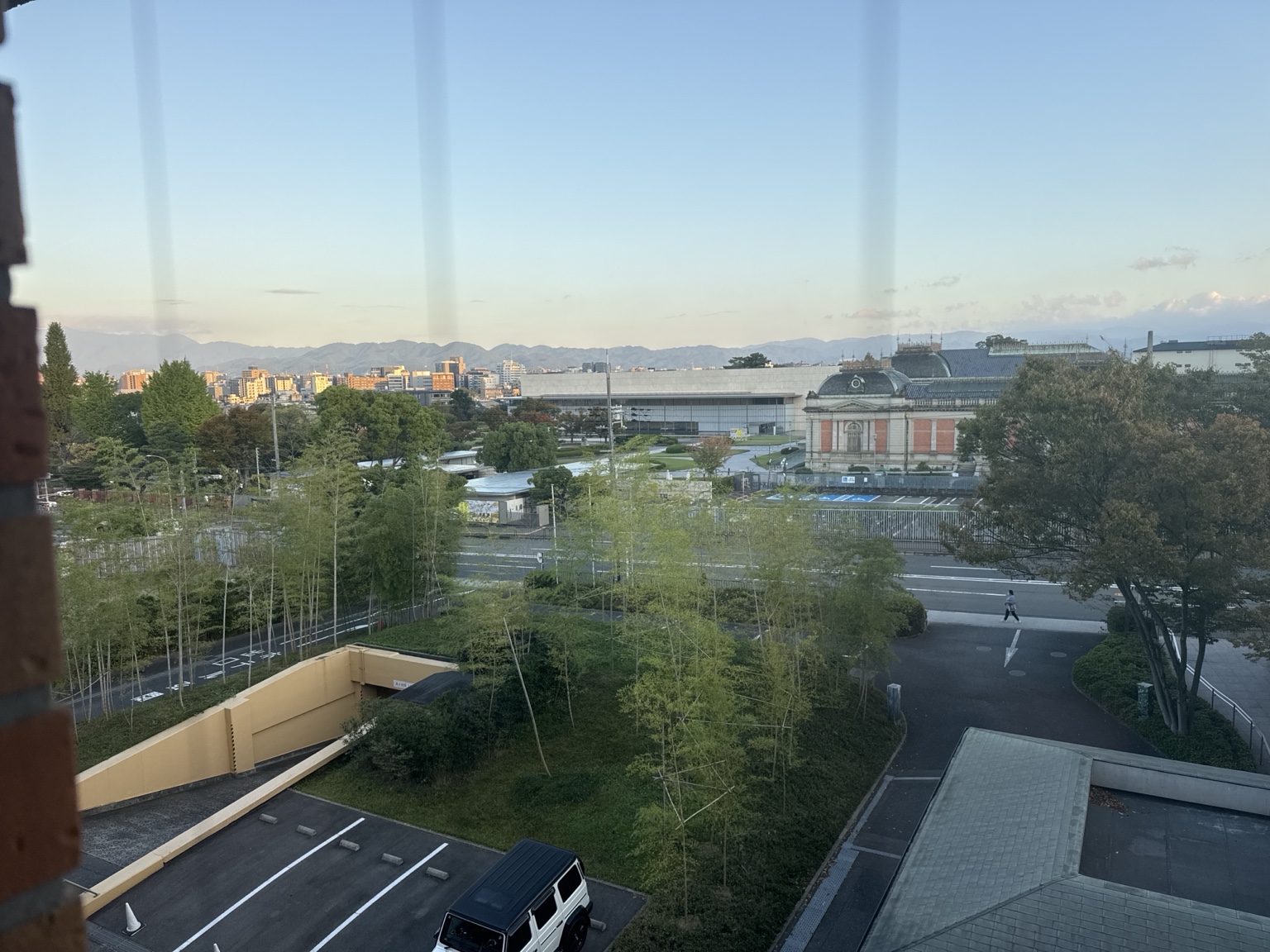
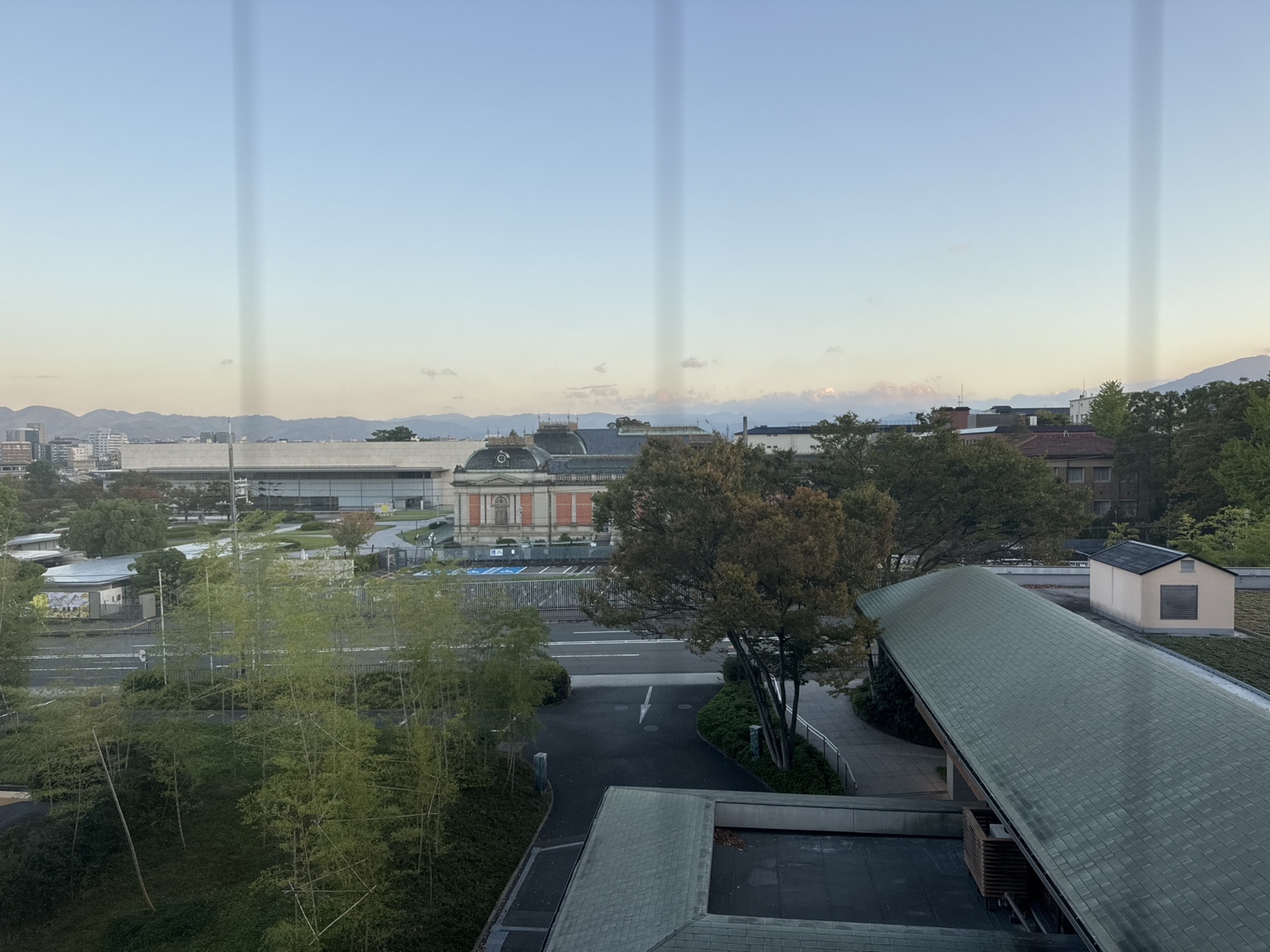
Sunday. Almost cloudless again, a pleasant 25 degrees—Kyoto is not making it easy to leave. From our room we look across at the National Museum, with the mountains beyond. The sort of view that makes you linger by the window a little longer.

The view from our hotel room across to Kyoto National Museum, trees and the mountains beneath an almost cloudless sky.
Our view from the Hyatt Regency: the National Museum opposite, with the mountains beyond.

Zen for the eyes, a feast for breakfast

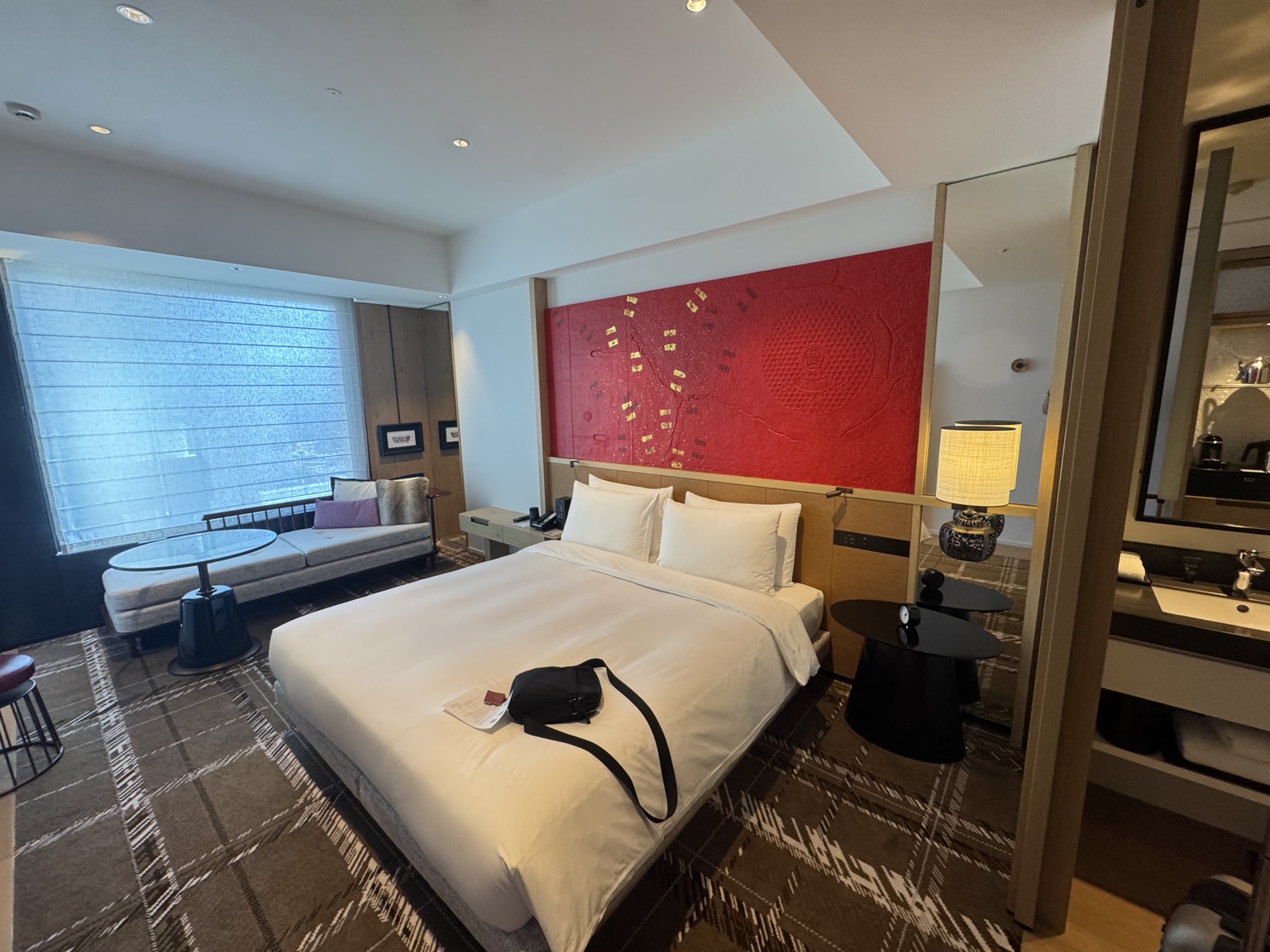
The Hyatt Regency has a simple Zen elegance that makes its impression quietly. To me, our room is a small work of art. Naturally, it comes with one of those wonderfully comfortable Japanese toilets. Even the smallest room understands hospitality here.

At breakfast, restraint takes a generous turn: an abundant Japanese spread, several buffets and attentive service. Anneliese and I have found a very pleasant setting for our final days in Kyoto.

The view from our room towards the National Museum and the mountains.
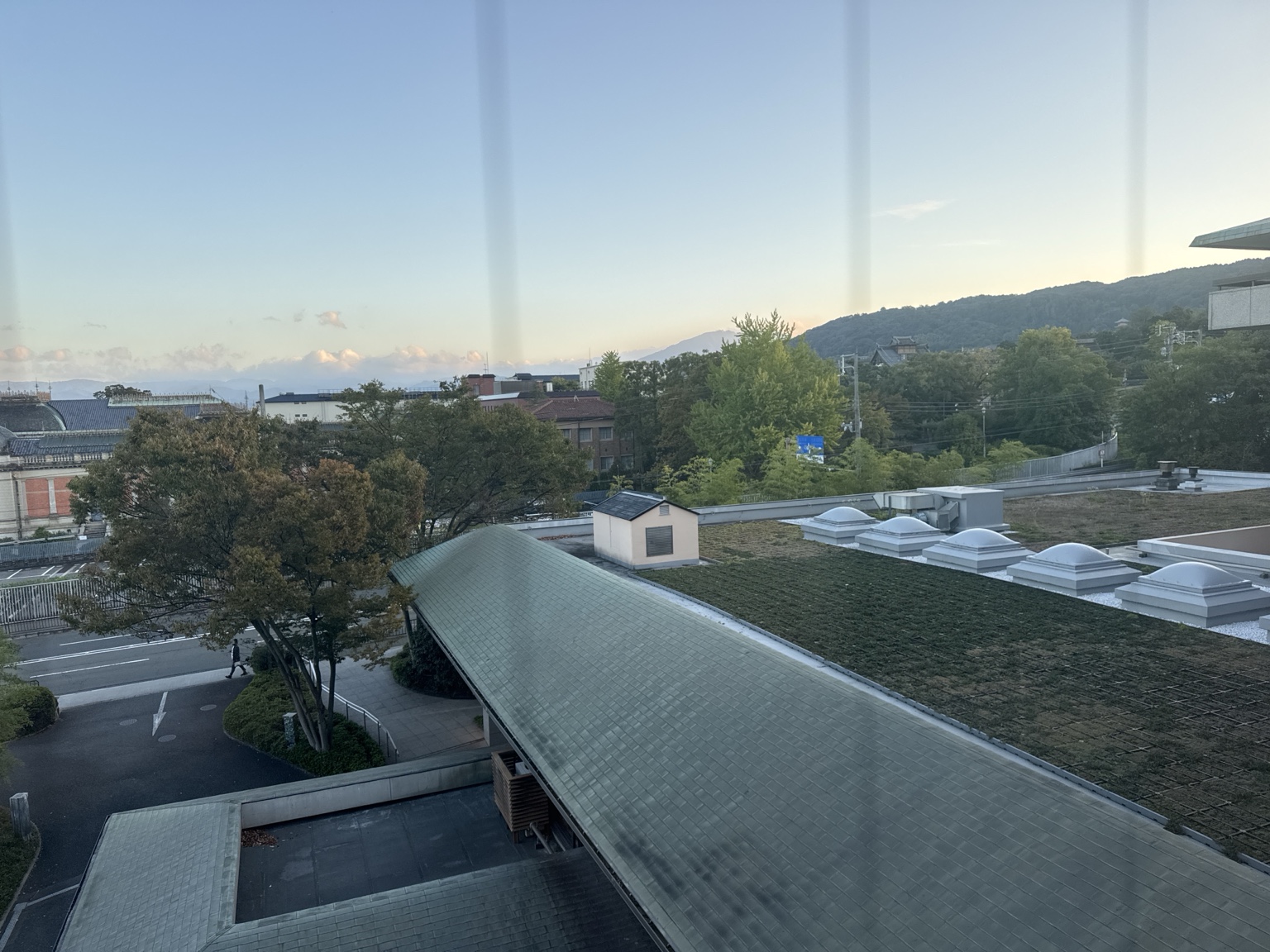
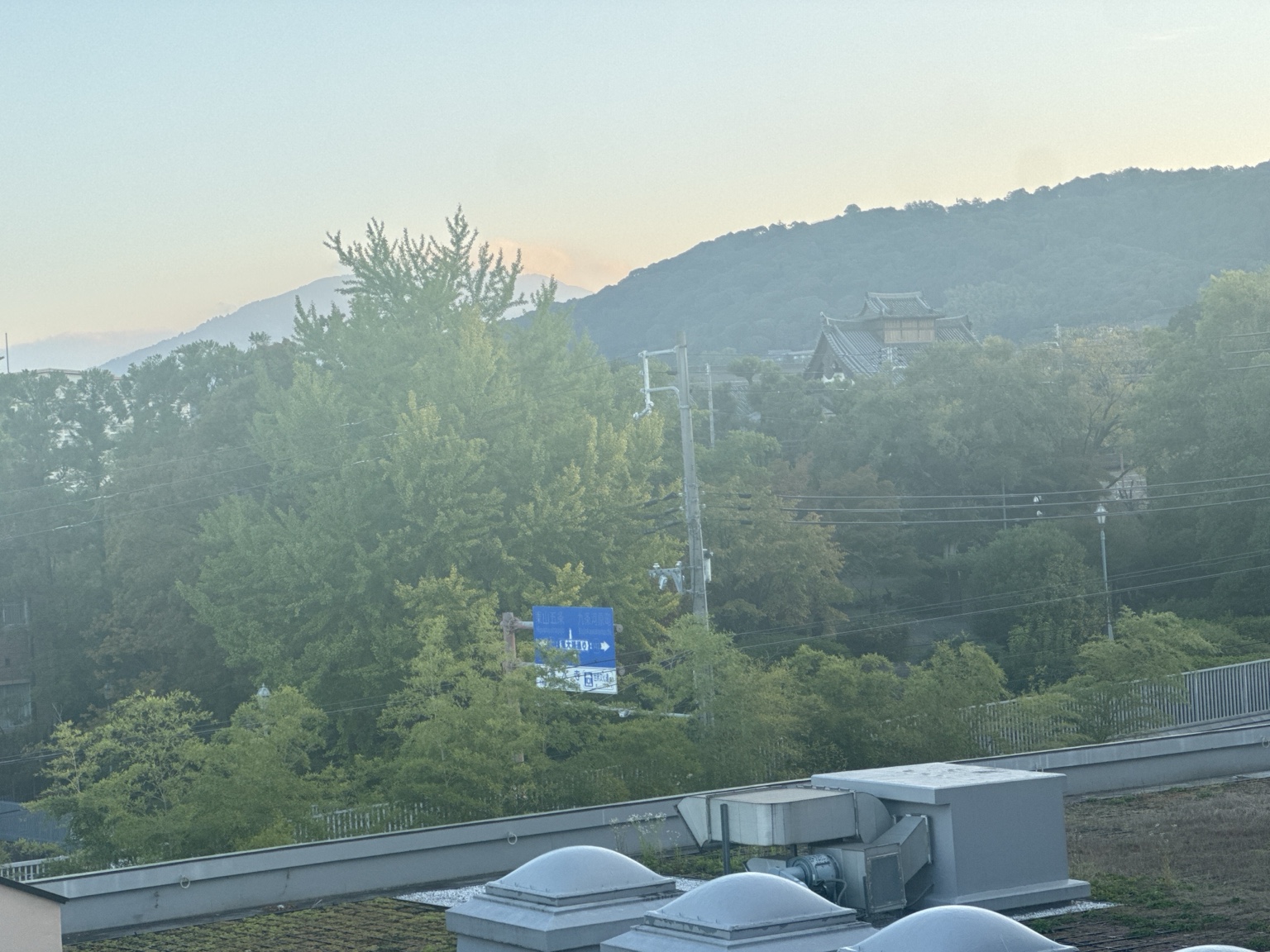
Hotel rooftops, trees and mountains outside our window.
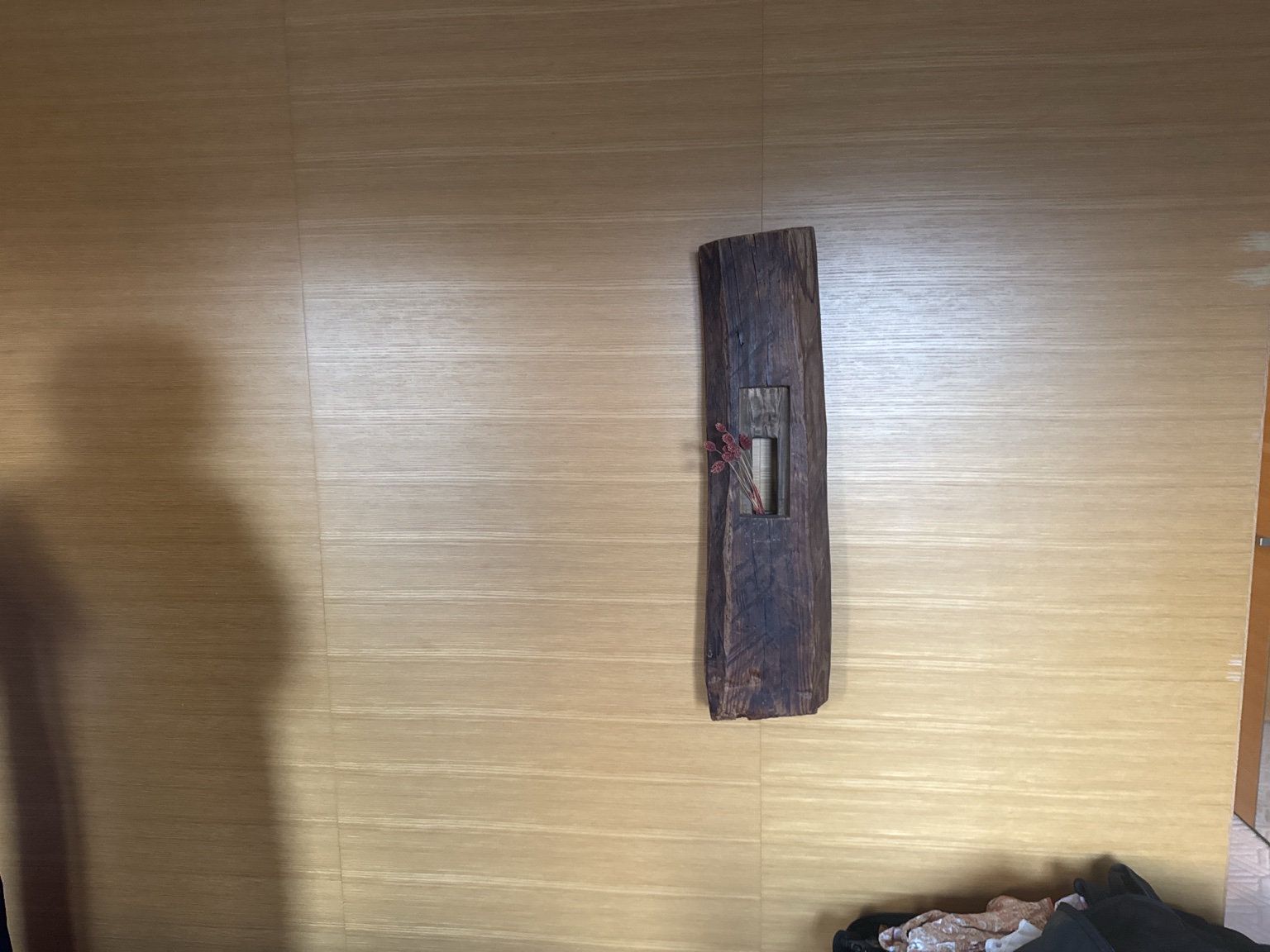
A slender wooden vase decorating the wall.
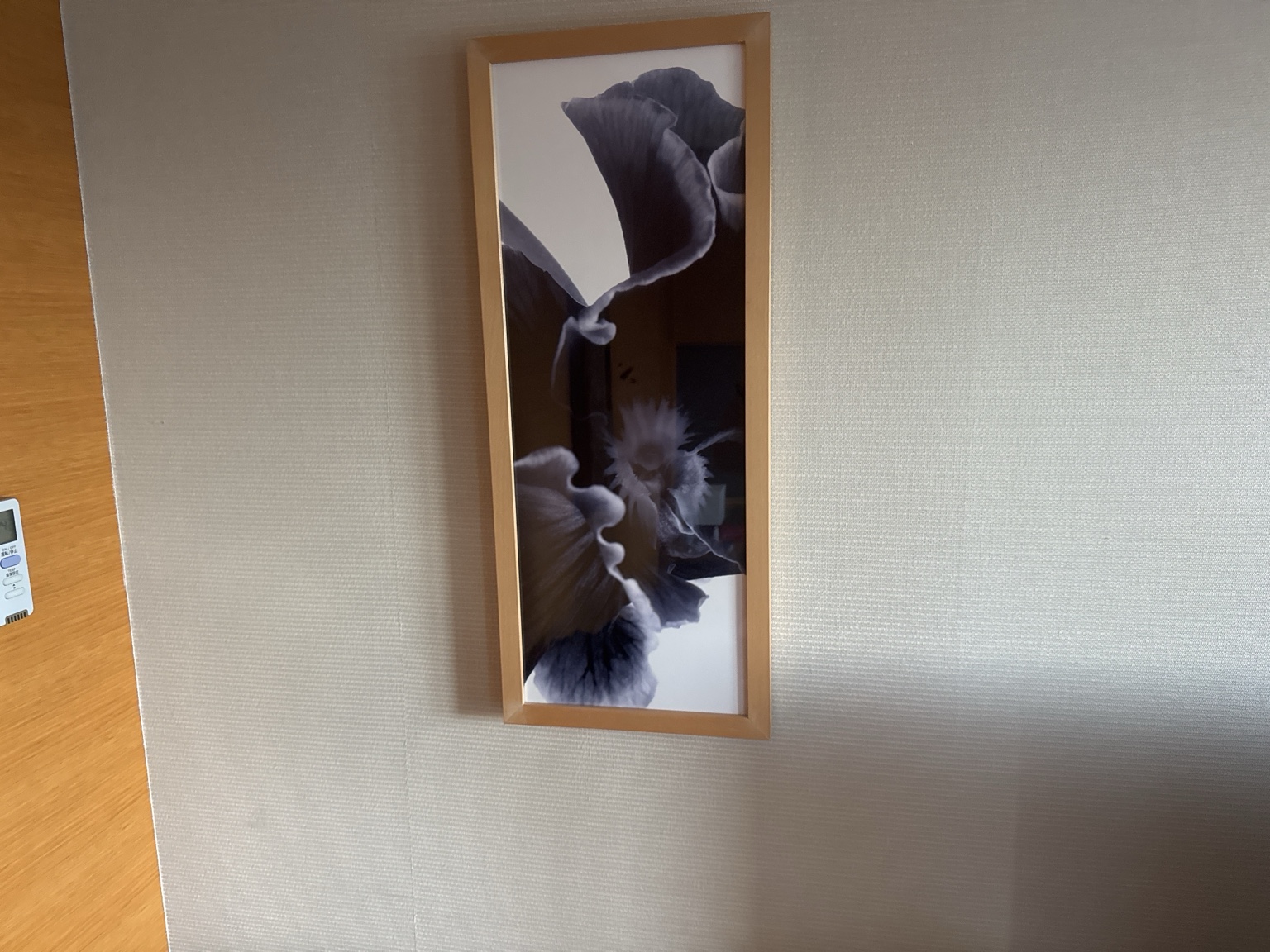
Framed floral artwork in the room.
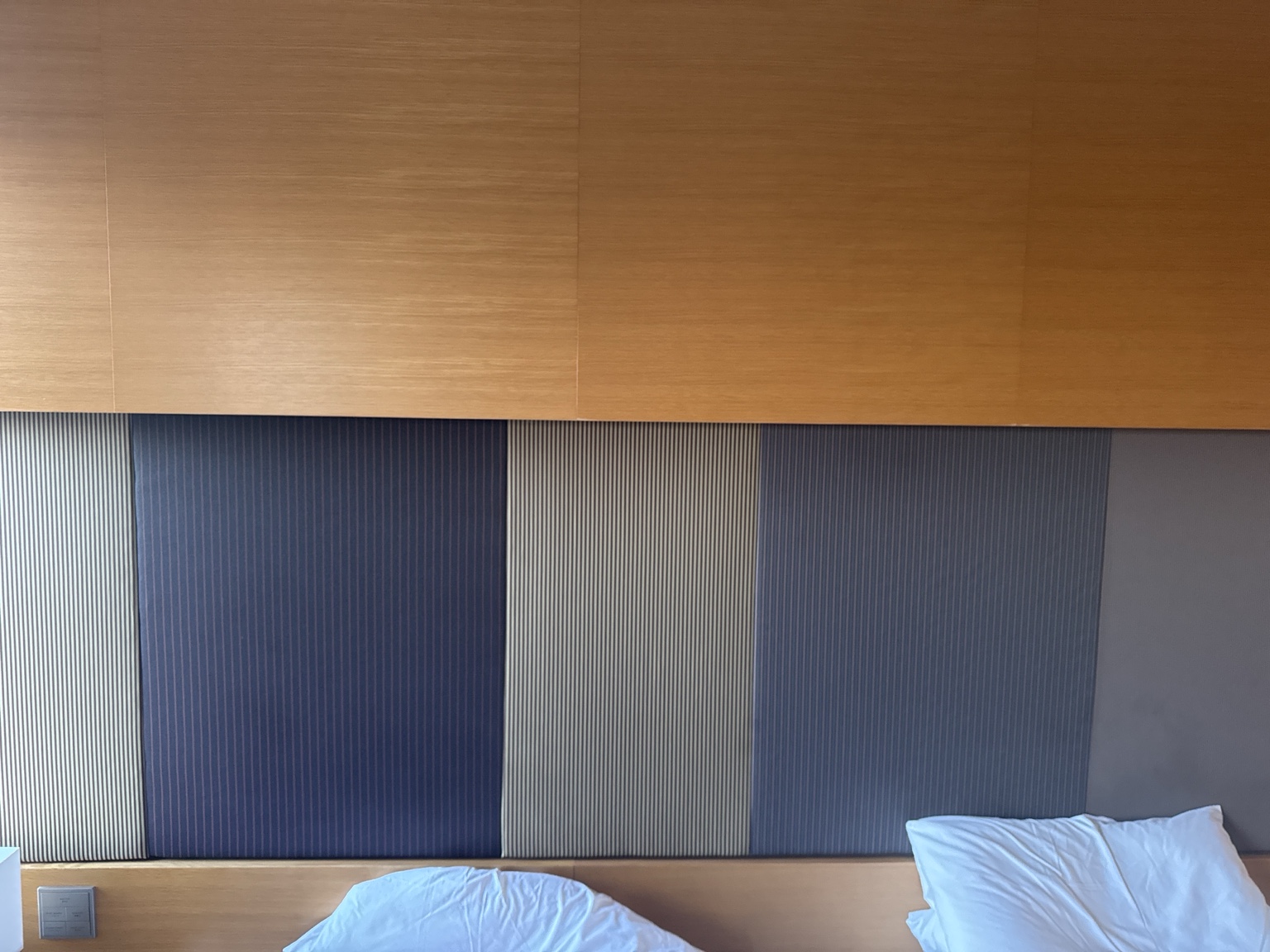
Wood and striped fabric at the head of the bed.
Another view of the museum grounds.
A traditional roof among the trees, with mountains beyond.

A little Italy, one floor up

The excellent Italian restaurant on the first floor deserves a mention. “Like Naples or Rome,” said our Italian friend Felice. Coming from an Italian, that verdict carries some weight.

Much as we enjoy Japanese food, eating it all the time eventually brings a longing for variety. A little Italy in the middle of Kyoto is very welcome.

9:43 a.m.—the journey continues

Today we are due to travel on by train, with departure planned for 9:43 a.m. We are already looking forward to very fresh seafood and visits to World Heritage sites.

Tomorrow, Monday, the programme has a full-day excursion in store for us. Starting time: 7:40 a.m.! The exclamation mark is essential. The motorcycle tour may be over, but the early starts seem to be staying with us.

For now, it is all anticipation. Today we first say goodbye to Kyoto—with a lovely view from the window and a little Italian flavour lingering in the memory.


← Chapter 26: Matcha and Kimonos · All chapters · Chapter 28: Eight Minutes and Four Tickets →

October 17, 2026 0 comments
0 FacebookTwitterPinterestEmail
Journals

Japan-Tagebuch 27: Zen, ein Stück Italien und Abschied von Kyoto

by KURT GASSNER October 17, 2026
written by KURT GASSNER

Deutsch | English

Kyoto · Sonntag, 18. Oktober 2026 · Vor der Weiterreise

Sonntag. Wieder fast wolkenlos, angenehme 25 Grad – Kyoto macht uns den Abschied nicht gerade leichter. Vom Zimmer aus blicken wir auf das Nationalmuseum gegenüber und auf die Berge dahinter. Ein Panorama, bei dem man gern noch ein wenig am Fenster stehen bleibt.

Blick aus unserem Hotelzimmer auf das Nationalmuseum Kyoto, Bäume und die Berge unter fast wolkenlosem Himmel.
Unser Blick aus dem Hyatt Regency: das Nationalmuseum gegenüber, dahinter die Berge.

Zen fürs Auge, ein Fest fürs Frühstück

Das Hyatt Regency strahlt diese schlichte Zen-Eleganz aus, die ohne großes Aufheben wirkt. Unser Zimmer ist für mich ein kleines Kunstwerk. Selbstverständlich gehört auch eine japanische Wohlfühltoilette dazu. Selbst das stille Örtchen versteht hier etwas von Gastfreundschaft.

Beim Frühstück wird die Zurückhaltung dann sehr großzügig ausgelegt: japanisch üppig, mehrere Buffets und eine aufmerksame Bedienung. Anneliese und ich haben hier einen ausgesprochen angenehmen Rahmen für unsere letzten Kyoto-Tage gefunden.

Blick aus unserem Zimmer auf das Nationalmuseum und die Berge.
Hoteldächer, Bäume und Berge vor unserem Fenster.
Eine schmale Holzvase als Wanddekoration.
Ein gerahmtes Blumenmotiv im Zimmer.
Holz und gestreifter Stoff am Kopfende des Bettes.
Noch ein Blick auf das Museumsgelände.
Ein traditionelles Dach zwischen Bäumen vor den Bergen.

Ein Stockwerk höher liegt ein Stück Italien

Bemerkenswert ist das exzellente italienische Restaurant im ersten Obergeschoss. „Wie in Neapel oder Rom“, sagte unser italienischer Freund Felice. Ein solches Urteil aus italienischem Mund hat schließlich Gewicht.

So sehr wir die japanische Küche mögen: Wer immer japanisch isst, bekommt irgendwann Lust auf Abwechslung. Ein bisschen Italien mitten in Kyoto kommt da gerade recht.

9:43 Uhr – die Reise geht weiter

Für heute steht die Weiterfahrt mit dem Zug an; die Abfahrt ist für 9:43 Uhr geplant. Wir freuen uns schon auf ganz frische Meeresdelikatessen und auf den Besuch von Weltkulturerbeorten.

Morgen, am Montag, wartet laut Programm ein Ganztagesausflug auf uns. Beginn: 7:40 Uhr! Das Ausrufezeichen gehört unbedingt dazu. Die Motorradreise ist vorbei, aber der frühe Start bleibt uns offenbar erhalten.

Noch ist das alles Vorfreude. Heute verabschieden wir uns erst einmal von Kyoto – mit einem schönen Blick aus dem Fenster und einem kleinen italienischen Nachklang.


← Kapitel 26: Matcha und Kimonos · Alle Kapitel · Kapitel 28: Acht Minuten und vier Fahrkarten →

October 17, 2026 0 comments
0 FacebookTwitterPinterestEmail
Journals

Japan Diary 26: Matcha, Kimonos and Five Stars?

by KURT GASSNER October 17, 2026
written by KURT GASSNER

Deutsch | English

Kyoto · 17 October 2026 · Evening

Sometimes expectation travels ahead and reserves the best seat for itself. This evening, mine certainly did.

I had booked a private tea ceremony with kimono and calligraphy through GetYourGuide. In my imagination: Anneliese and me, a private setting, a geisha and a graceful encounter with Japanese tradition. That was the picture in my head—not a claim that the booking had promised a geisha.

A class instead of the scene in my head

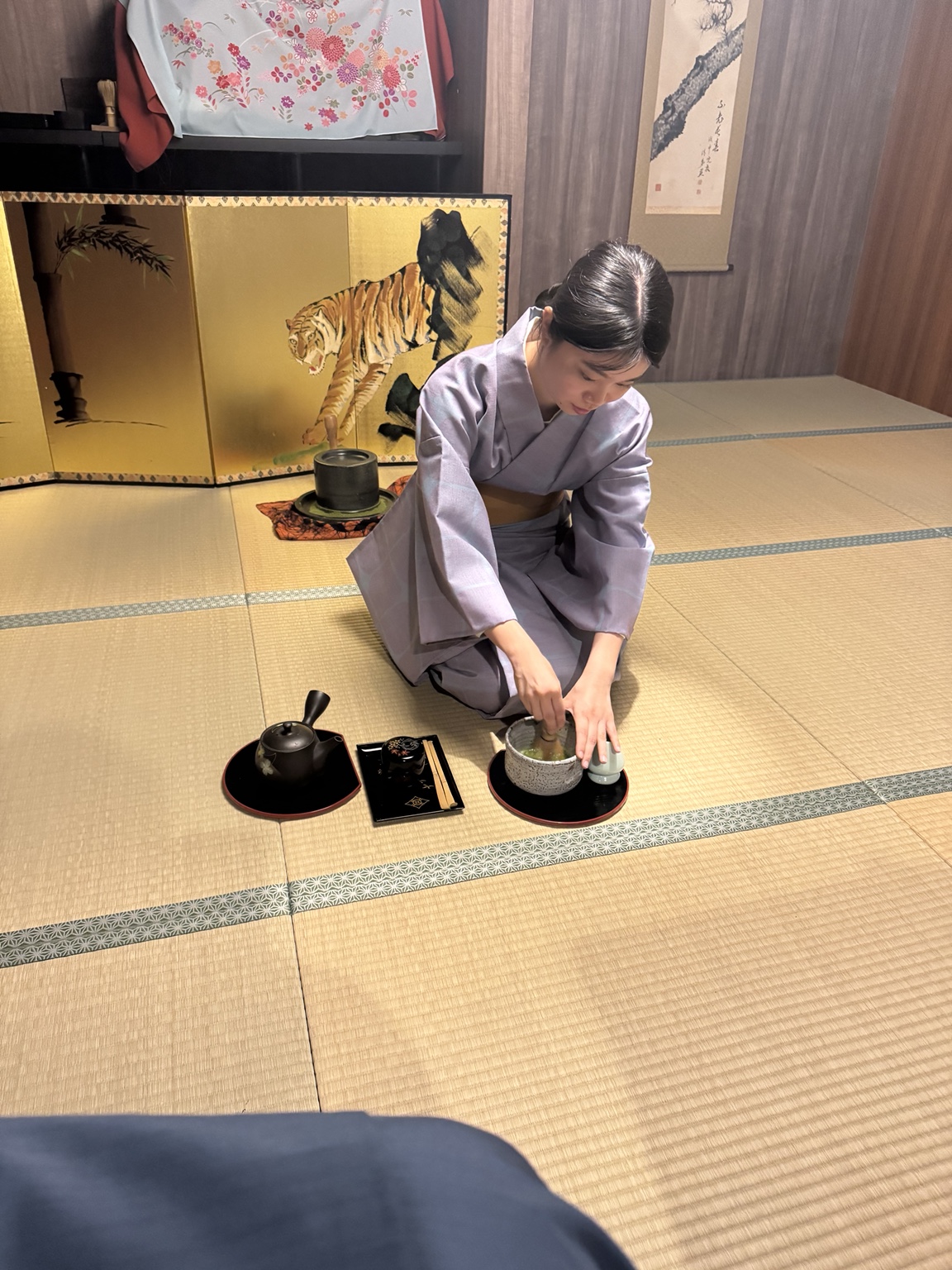
In reality, two young people in kimono welcomed us. They were friendly and taught us how to prepare matcha, very much in the style of a small class. We could put on kimonos ourselves and then practise a little calligraphy.

That morning I had smiled affectionately at tourists wearing kimonos—a little like our northern German visitors in Bavarian lederhosen. By evening, dressing up was on our own programme. Travel has a way with small punchlines.

150 euros for roughly an hour and a half. Friendly people, matcha, kimono and a brush: all of that was there. It simply was not the experience I had imagined. In my mind, a hands-on class and a ceremonial occasion are two different things.

Five stars to order?

The ending felt uncomfortable to me: I felt pressured to leave a five-star review. I would have preferred to make up my own mind. The people were likeable; I was still disappointed by the evening. Both things can be true.

So this Kyoto day ends with a small lesson that was not on the course programme: expectations travel in our luggage, too. Sometimes we need to unpack them to understand why what happened feels so different from what we had hoped for.

Our names in Japanese—and another side of the evening

An update with our photographs and clips from 17 October.

There is another side to add to my first impression of the evening: Anneliese and I sat in a 150-year-old wooden house, both wearing kimono, and learned a great deal. Preparing matcha, joining in ourselves, then practising calligraphy—it certainly was not dull.

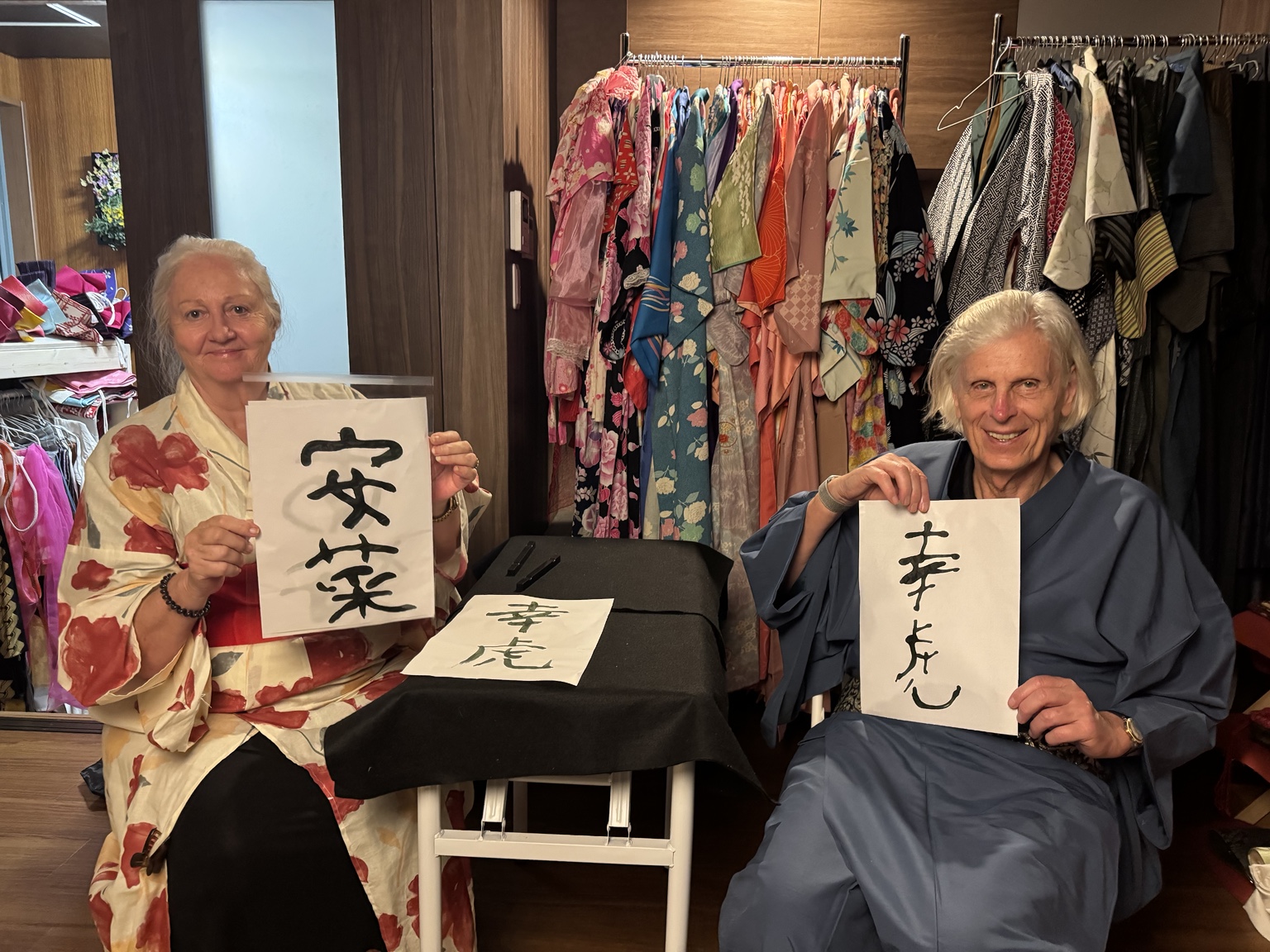
And then there were our names on the paper, in Japanese. Written by our own hands! We were proud of that. Between the kimono, the tea bowl and the brush, there was something to take away after all—and I do not just mean the sheets of calligraphy.

There was no geisha, but there was plenty to learn. That belongs to this evening just as much as my initially disappointed expectation. Our photographs can tell the other half of the story.

Our names in Japanese, written by our own hands. We were proud of that.
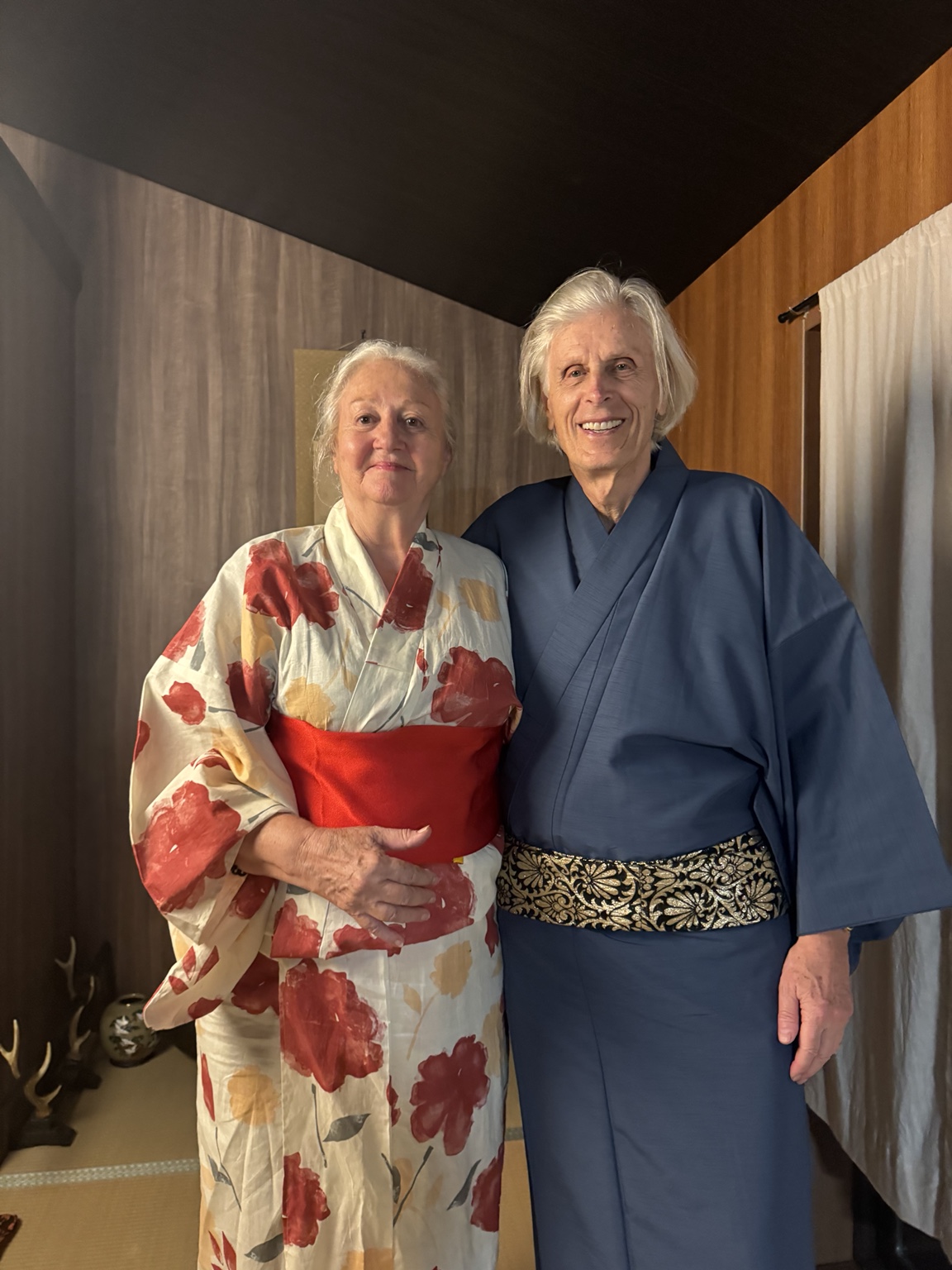
Our kimono portrait: Anneliese in a floral pattern, me in blue.
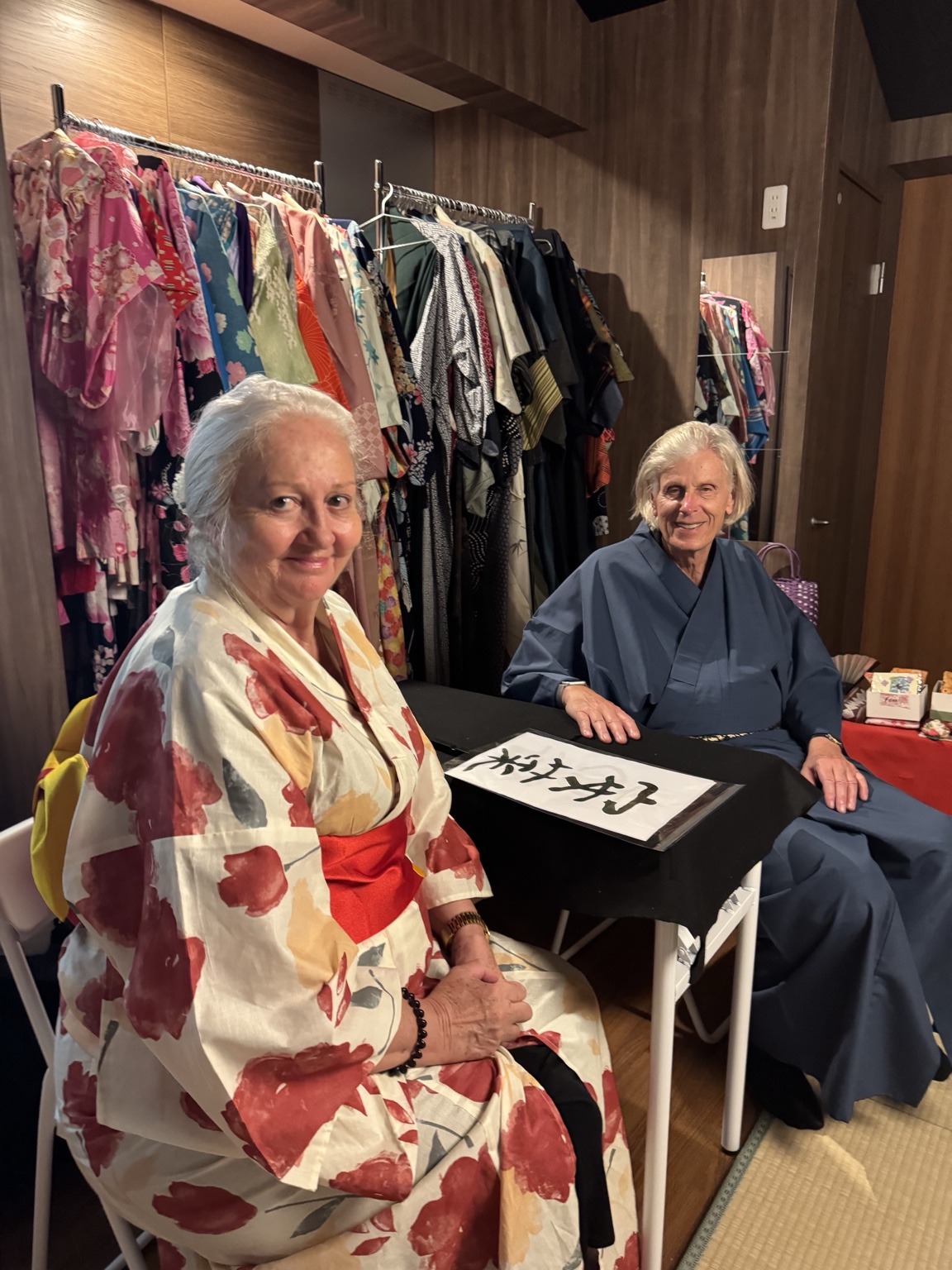
Anneliese and me in kimono, with a calligraphy sheet in front of us.
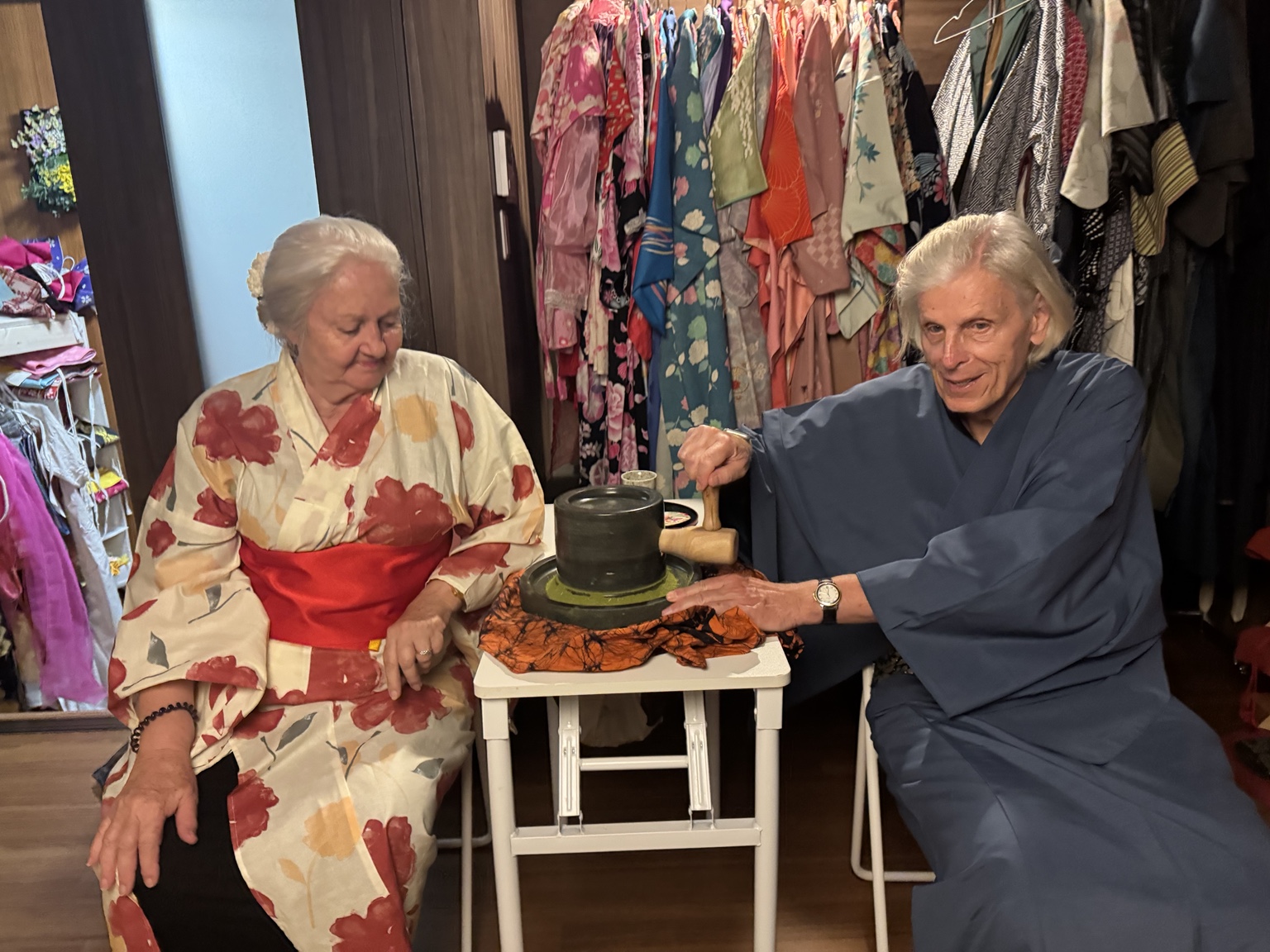
Joining in rather than just watching: at the small hand mill.
A demonstration of matcha preparation.
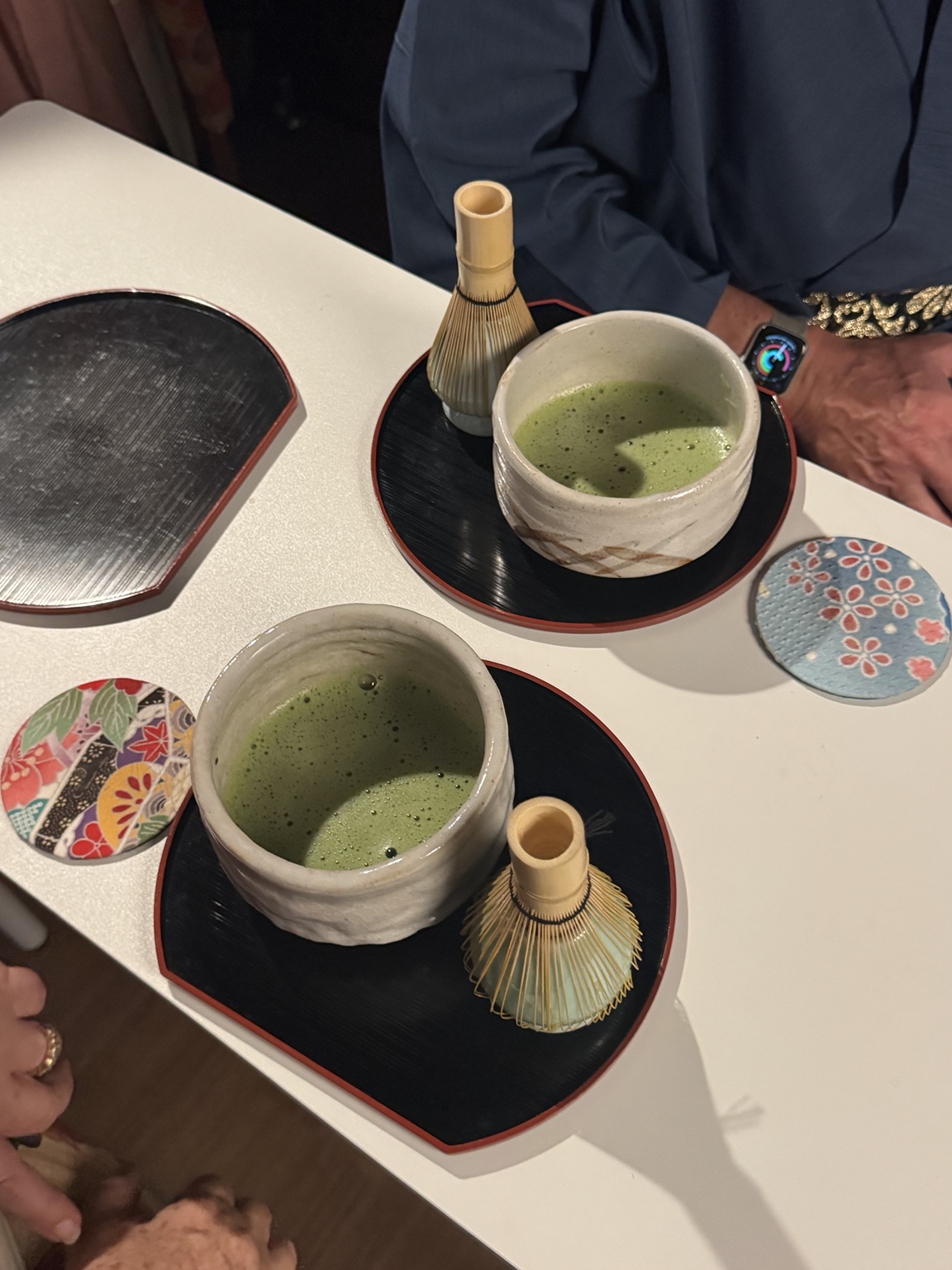
Two bowls of matcha and the bamboo whisks on our table.
Anneliese and me whisking matcha—with two bamboo whisks.
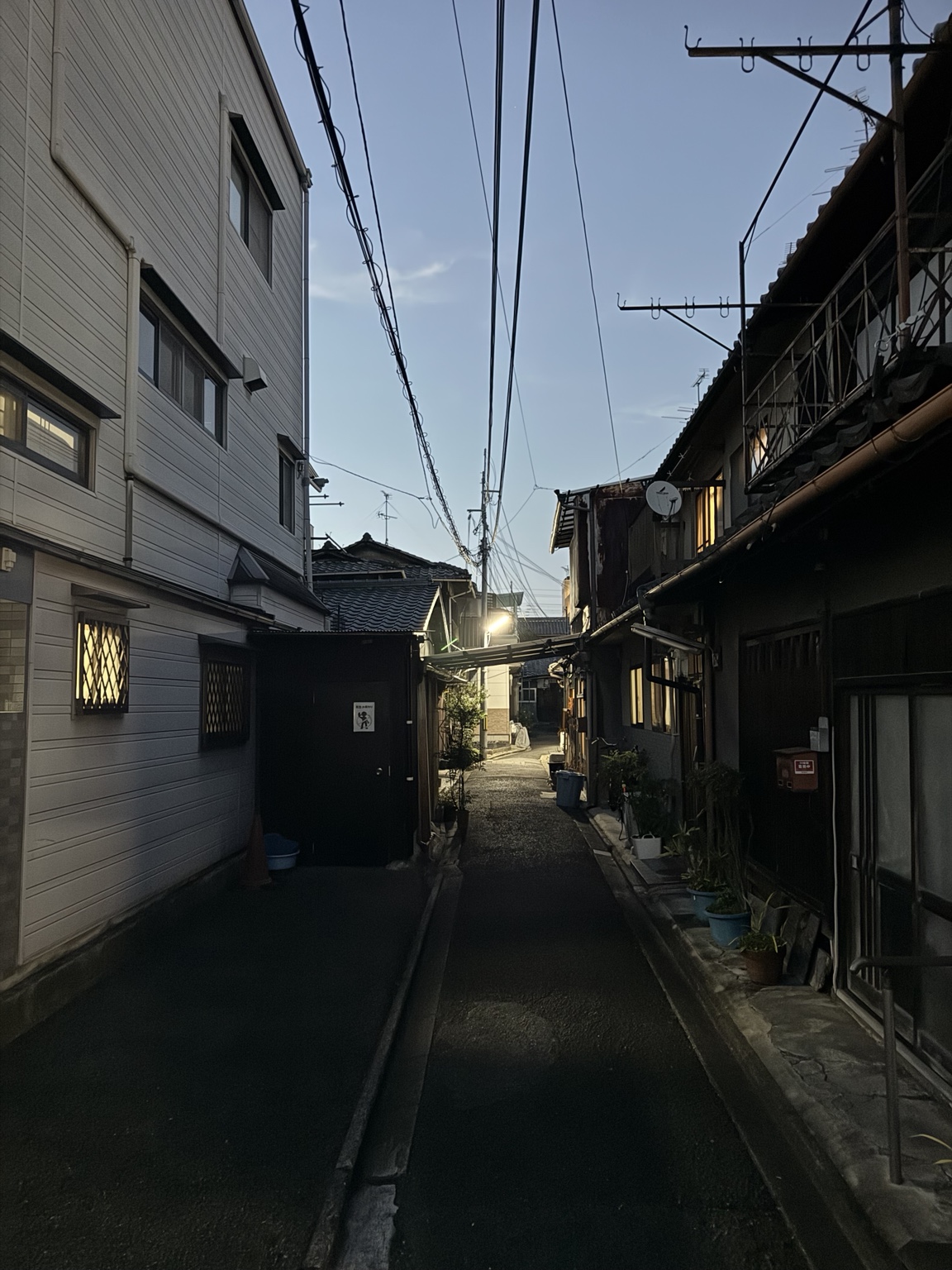
A narrow lane at dusk.
Anneliese in the lane that evening—a short clip of ours.
A short look around the wooden house, in the original camera orientation.
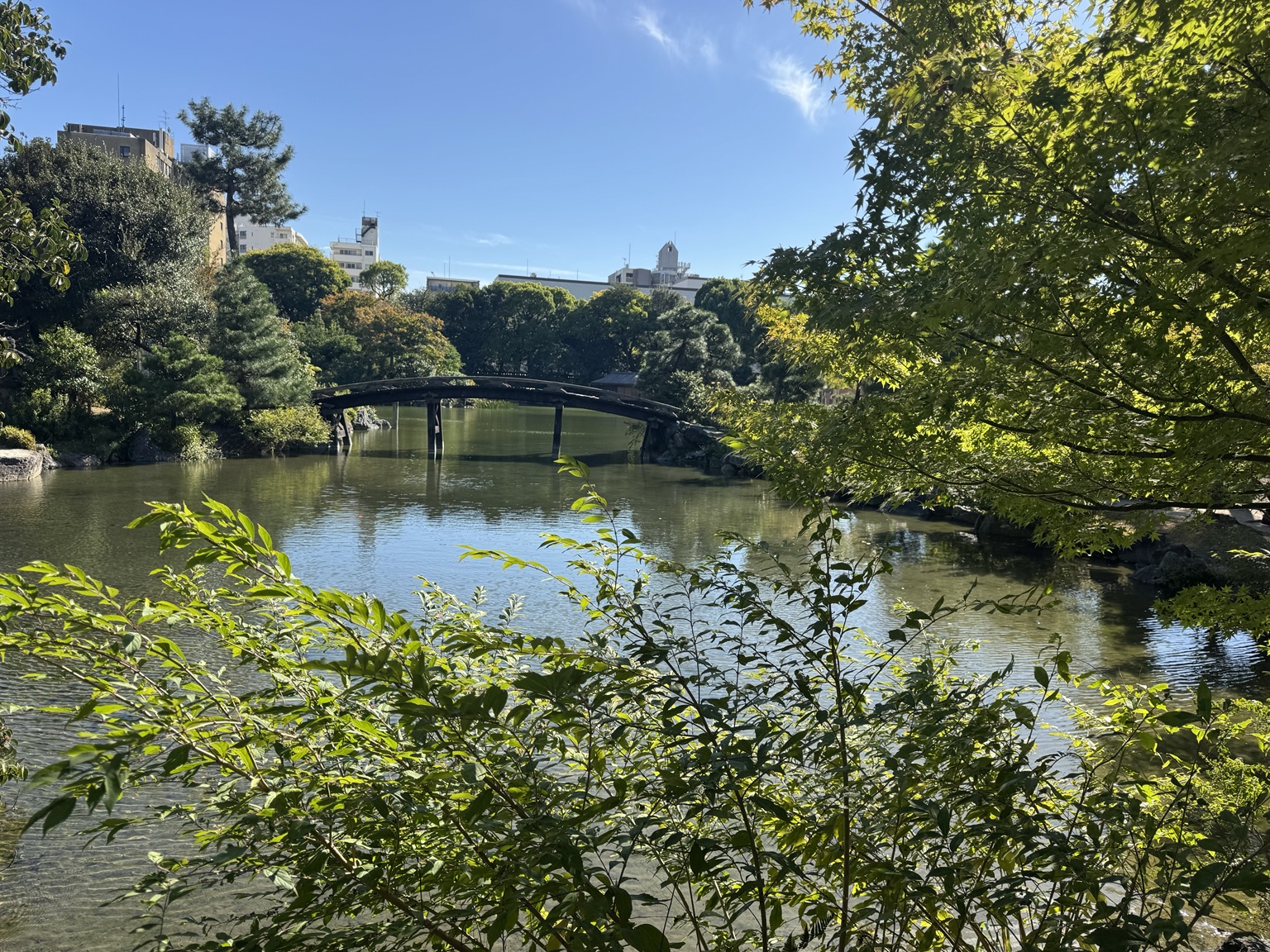
A garden pond and wooden bridge in Kyoto, photographed on the morning of 17 October 2026.
DE: Unser Gartenbesuch am Vormittag des 17. Oktober in Kyoto. Dieses eigene Foto ist ein Rückblick auf denselben Tag, keine Aufnahme vom Tee-Abend.
EN: Our morning garden visit in Kyoto on 17 October. This photograph of ours looks back at the same day; it does not show the evening tea experience.

← Chapter 25: Kyoto in the Morning · All chapters · Chapter 27: Farewell to Kyoto →

October 17, 2026 0 comments
0 FacebookTwitterPinterestEmail
Journals

Japan-Tagebuch 26: Matcha, Kimonos und fünf Sterne?

by KURT GASSNER October 17, 2026
written by KURT GASSNER

Deutsch | English

Kyoto · 17. Oktober 2026 · Abend

Manchmal reist die Erwartung schon voraus und hat sich den schönsten Platz reserviert. Heute Abend war das bei mir eindeutig der Fall.

Über GetYourGuide hatte ich eine private Teezeremonie mit Kimono und Kalligraphie gebucht. In meiner Vorstellung: Anneliese und ich, ein privater Rahmen, eine Geisha und eine festliche Begegnung mit japanischer Tradition. Das war mein inneres Bild – nicht die Behauptung, dass eine Geisha in der Buchung zugesichert gewesen wäre.

Ein Kurs statt meines Kopfkinos

Tatsächlich empfingen uns zwei junge Leute im Kimono. Sie waren nett und vermittelten uns die Zubereitung von Matcha, ganz im Stil eines kleinen Lehrkurses. Wir durften selbst Kimonos anziehen und anschließend noch ein wenig Kalligraphie üben.

Am Vormittag hatte ich noch liebevoll über Touristen im Kimono geschmunzelt – ein bisschen wie unsere Preußen in Lederhosen. Am Abend stand das Einkleiden nun auf unserem eigenen Programm. Die Reise versteht sich auf kleine Pointen.

150 Euro für ungefähr eineinhalb Stunden. Freundliche Menschen, Matcha, Kimono und Pinsel: Das alles war da. Nur war es überhaupt nicht das Erlebnis, das ich mir vorgestellt hatte. Ein Mitmachkurs und eine feierliche Zeremonie sind in meinem Kopf eben zwei verschiedene Dinge.

Fünf Sterne auf Bestellung?

Befremdlich wurde es für mich am Ende: Ich fühlte mich zu einer Fünf-Sterne-Bewertung gedrängt. Dabei hätte ich meinen Eindruck gern einfach selbst eingeordnet. Die Leute waren sympathisch; meine Enttäuschung über den Abend blieb trotzdem. Beides kann nebeneinander bestehen.

So endet dieser Kyoto-Tag mit einer kleinen Lektion, die nicht auf dem Kursprogramm stand: Auch Erwartungen gehören ins Reisegepäck. Und manchmal muss man sie erst auspacken, um zu sehen, warum das Erlebte so anders wirkt als das Erhoffte.

Unsere Namen auf Japanisch – und ein anderer Blick auf den Abend

Nachtrag mit unseren Fotos und Clips vom 17. Oktober.

Zu meinem ersten Eindruck gehört auch diese Seite des Abends: Wir saßen in einem 150 Jahre alten Holzhaus, Anneliese und ich im Kimono, und lernten eine Menge. Matcha zubereiten, selbst mitmachen, anschließend Kalligraphie – langweilig war das wahrlich nicht.

Und dann standen unsere Namen auf Japanisch auf dem Papier. Selbst geschrieben! Darauf waren wir stolz. Zwischen Kimono, Teeschale und Pinsel gab es also durchaus etwas mitzunehmen – und ich meine nicht nur die Schriftblätter.

Eine Geisha gab es keine, dafür viel Lehrreiches. Das gehört genauso zu diesem Abend wie meine zunächst enttäuschte Erwartung. Unsere Bilder dürfen deshalb die andere Hälfte der Geschichte erzählen.

Unsere Namen auf Japanisch, selbst geschrieben. Darauf waren wir stolz.
Unser Kimono-Porträt: Anneliese mit Blütenmuster, ich in Blau.
Anneliese und ich im Kimono, mit einem Kalligraphieblatt vor uns.
Mitmachen statt nur zuschauen: an der kleinen Handmühle.
Die Matcha-Zubereitung wird uns vorgeführt.
Zwei Schalen Matcha und die Bambusbesen auf unserem Tisch.
Anneliese und ich beim Matcha-Aufschlagen – mit zwei Bambusbesen.
Eine schmale Gasse in der Abenddämmerung.
Anneliese in der Gasse am Abend – ein kurzer eigener Clip.
Ein kurzer Schwenk durch das Holzhaus, in der ursprünglichen Kameraausrichtung.
Garten mit Teich und Holzbrücke in Kyoto, aufgenommen am Vormittag des 17. Oktober 2026.
DE: Unser Gartenbesuch am Vormittag des 17. Oktober in Kyoto. Dieses eigene Foto ist ein Rückblick auf denselben Tag, keine Aufnahme vom Tee-Abend.
EN: Our morning garden visit in Kyoto on 17 October. This photograph of ours looks back at the same day; it does not show the evening tea experience.

← Kapitel 25: Kyoto am Vormittag · Alle Kapitel · Kapitel 27: Abschied von Kyoto →

October 17, 2026 0 comments
0 FacebookTwitterPinterestEmail
Journals

Japan Diary 25: Kimonos, Old Lanes and a Garden to Catch Our Breath

by KURT GASSNER October 17, 2026
written by KURT GASSNER

Deutsch | English

17 October 2026 · Morning

A morning in Kyoto — and a rest at the Hyatt before the tea ceremony planned for this evening.

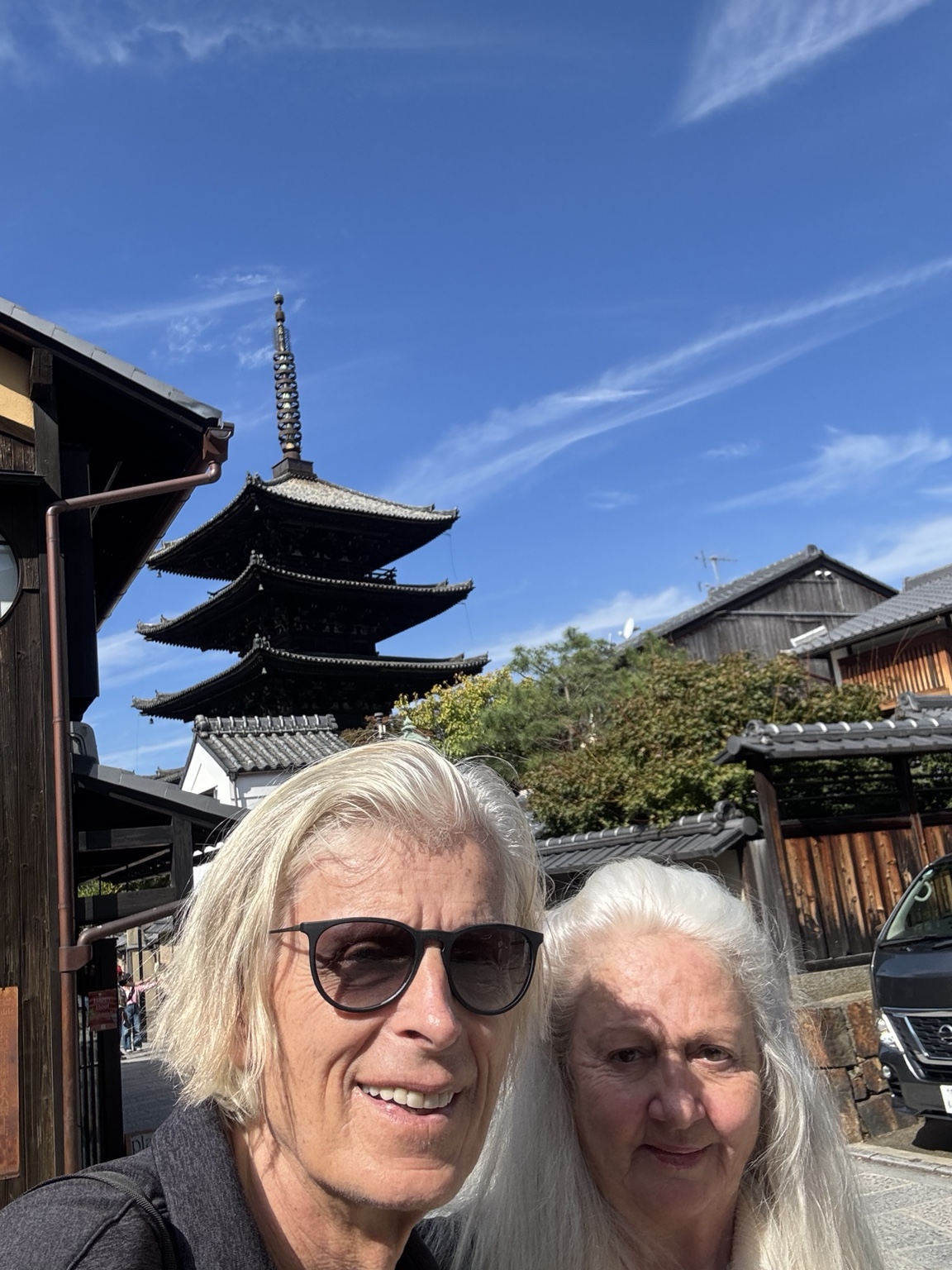
Anneliese and me in front of the Yasaka Pagoda in Kyoto’s old town.
DE Anneliese und ich vor der Yasaka-Pagode in Kyotos Altstadt.EN Anneliese and me in front of the Yasaka Pagoda in Kyoto’s old town.

This morning we were back on foot in Kyoto. Blue skies, sunshine on old wooden façades, and lanes that make you want to stop every few steps. Anneliese and I explored the old Higashiyama district, among little shops, teahouses, temples and ever-changing views across the roofs of the former imperial capital.

One particularly lovely sight was the Yasaka Pagoda, suddenly appearing between the houses. Its five storeys rise above the narrow streets, and the view changes as you walk. Just a few steps, and you want another photograph. Naturally, we took our own souvenir picture in front of it.

Kimonos, with a little nod to lederhosen

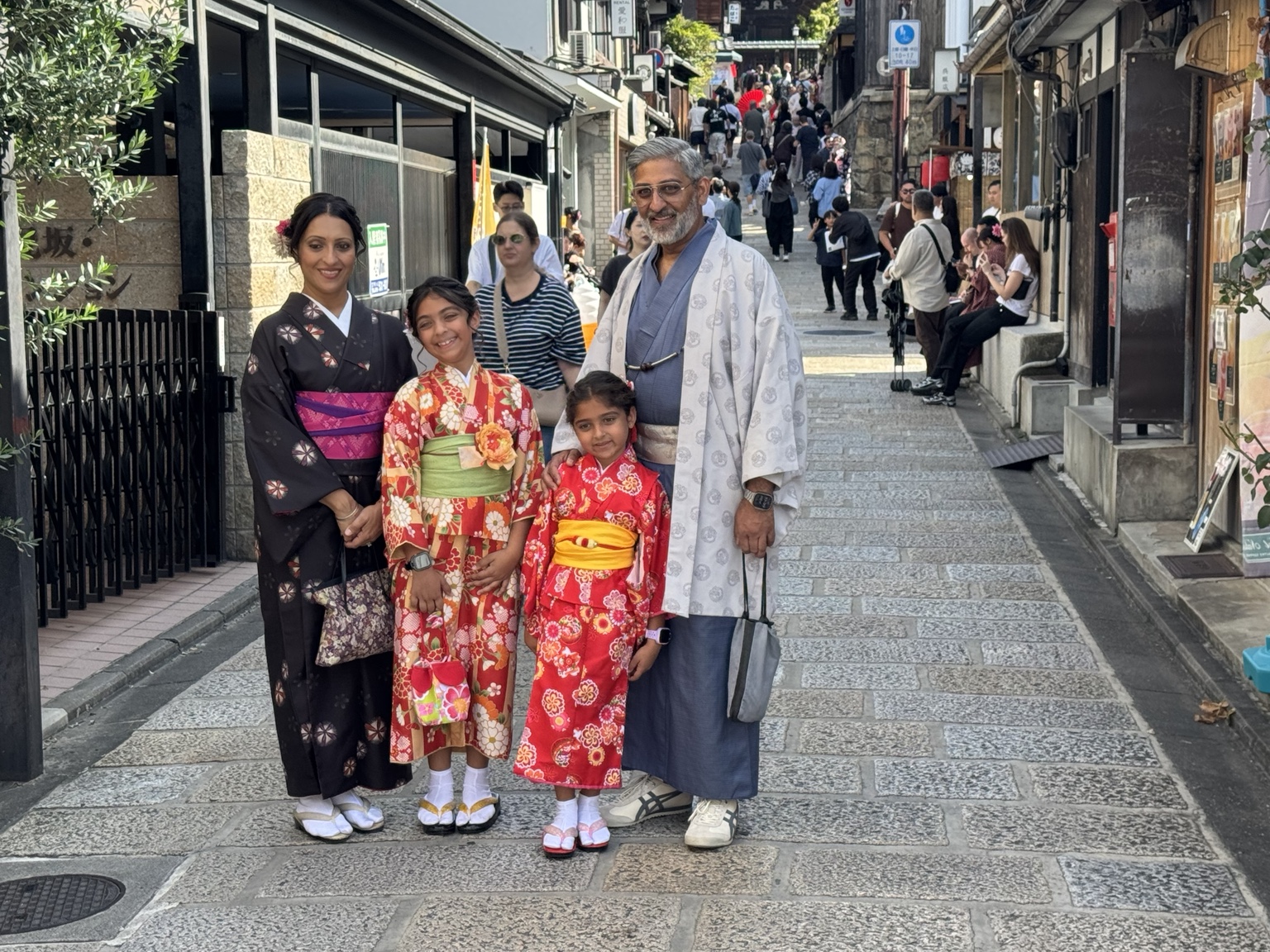
Everywhere we met people wearing kimonos. Delicate colours, bold patterns, beautifully tied sashes and flowers in their hair. Many Japanese women and men wear this wonderful clothing — and some tourists want to join in for a day, too.

I had to smile. It reminded me a little of the “Prussians in lederhosen” back home: visitors enthusiastically dressing in our local traditions. Here, it is a kimono rather than leather breeches.

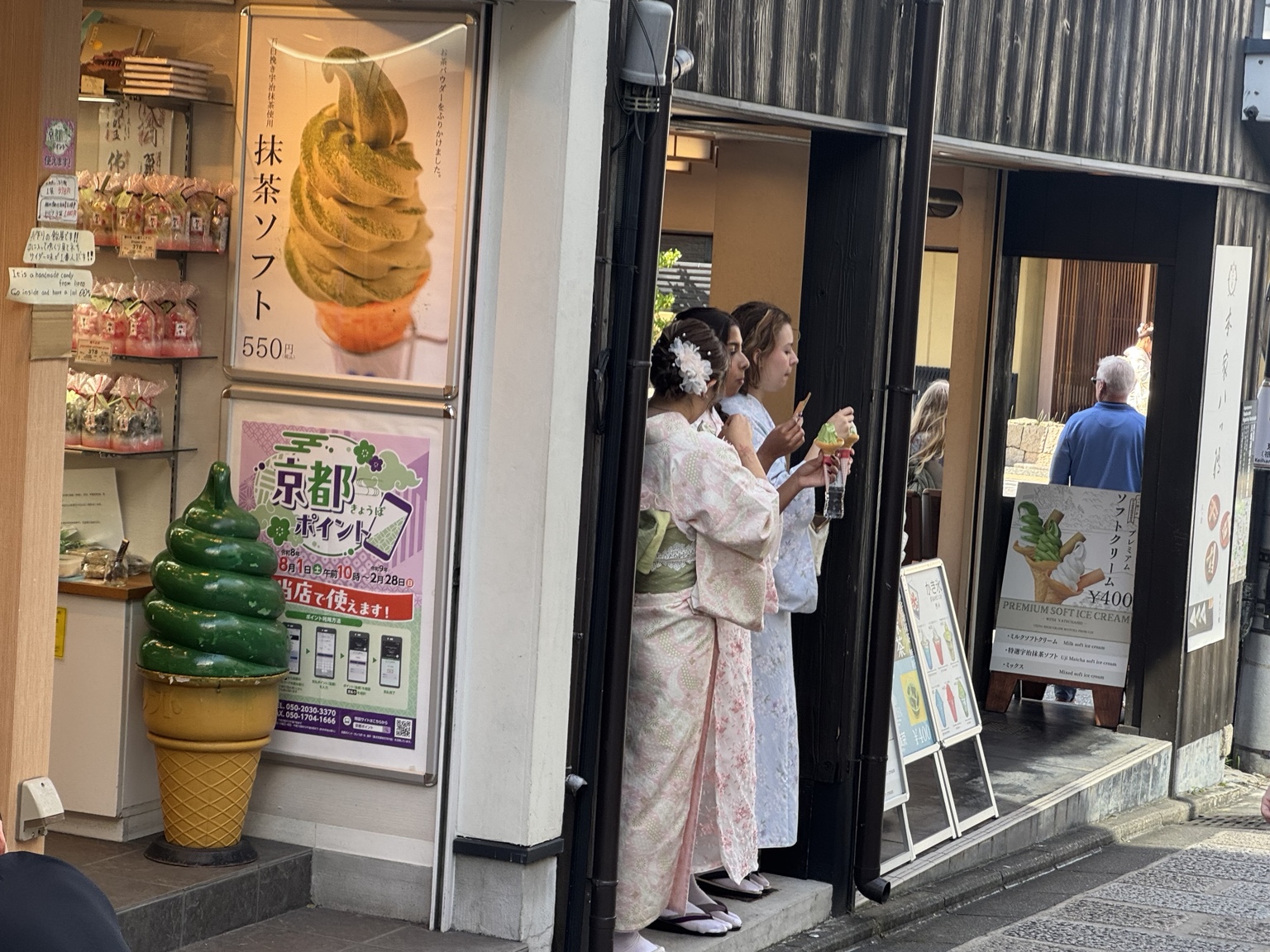
And it is rather endearing. You can see the pleasure it gives people, and it fits these streets beautifully. Groups pose for photographs together, and we even encounter kimonos outside the ice cream shop. A grand cultural journey is surely allowed a little ice cream break.

A group in colourful kimonos, right in the heart of the old lanes.
DE Eine Gruppe in farbenfrohen Kimonos – mitten in den alten Gassen.EN A group in colourful kimonos, right in the heart of the old lanes.
Kimonos outside an ice cream shop in Kyoto’s old lanes.
DE Kimonos vor einem Eisladen in Kyotos alten Gassen.EN Kimonos outside an ice cream shop in Kyoto’s old lanes.

For me, there is something especially beautiful about the kimono: it makes every woman look like a lotus flower. The colours, the lines, the carefully arranged fabric — everything gives her a special setting. Some garments were very simple, others richly decorated. There were playful versions, too, with lace, frills and enormous bows. Plenty to look at.

We even caught a glimpse of a wedding. One of those encounters you cannot plan, and that stays with you long after a walk.

Small discoveries between the big sights

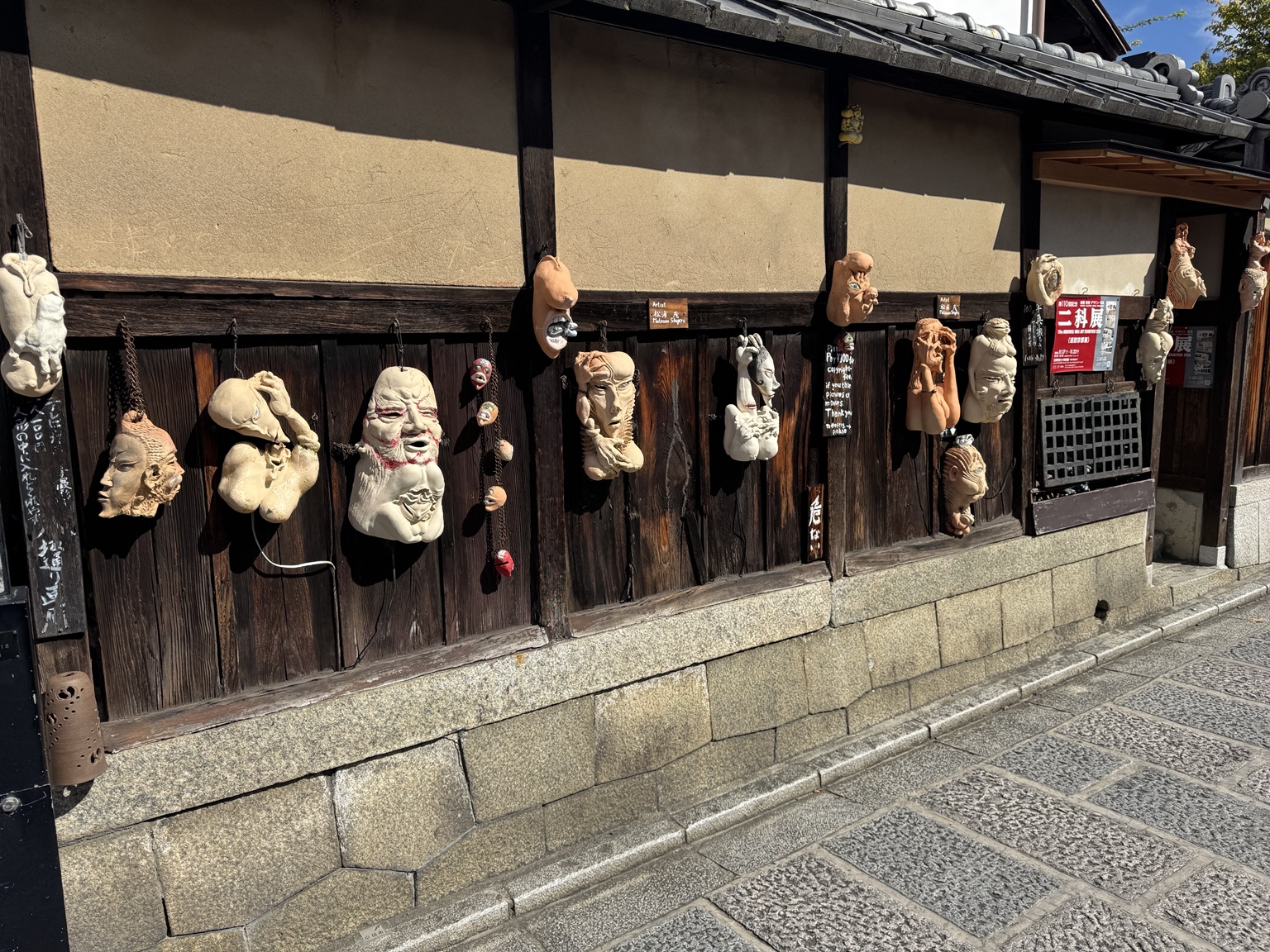
Expressive masks and figures hung on a wooden façade: mischievous faces, fierce grimaces, curious creatures. A little further along, a large red lantern marked the entrance to a small restaurant. Beyond it lay a little courtyard, wood, shade and carefully arranged objects.

Masks and quirky figures on a wooden façade: Kyoto is full of small surprises.
DE Masken und skurrile Figuren an einer Holzfassade: Kyoto steckt voller kleiner Überraschungen.EN Masks and quirky figures on a wooden façade: Kyoto is full of small surprises.

And then more steps. Kyoto keeps its visitors moving. Up and down between closely packed houses, with views over grey tiled roofs towards the green hills.

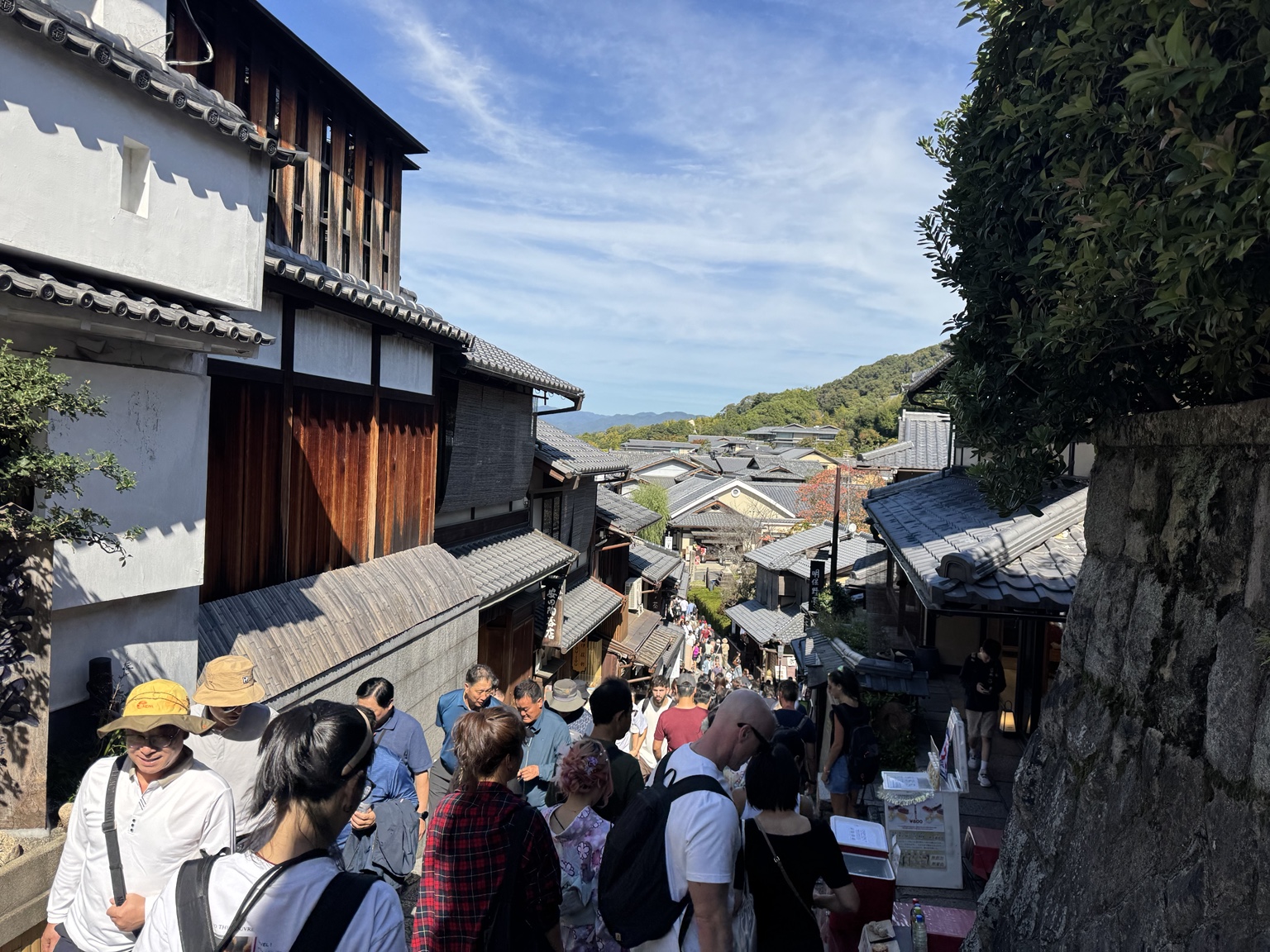
Stone steps, old wooden houses and plenty of visitors in Higashiyama.
DE Steinstufen, alte Holzhäuser und viele Besucher in Higashiyama.EN Stone steps, old wooden houses and plenty of visitors in Higashiyama.
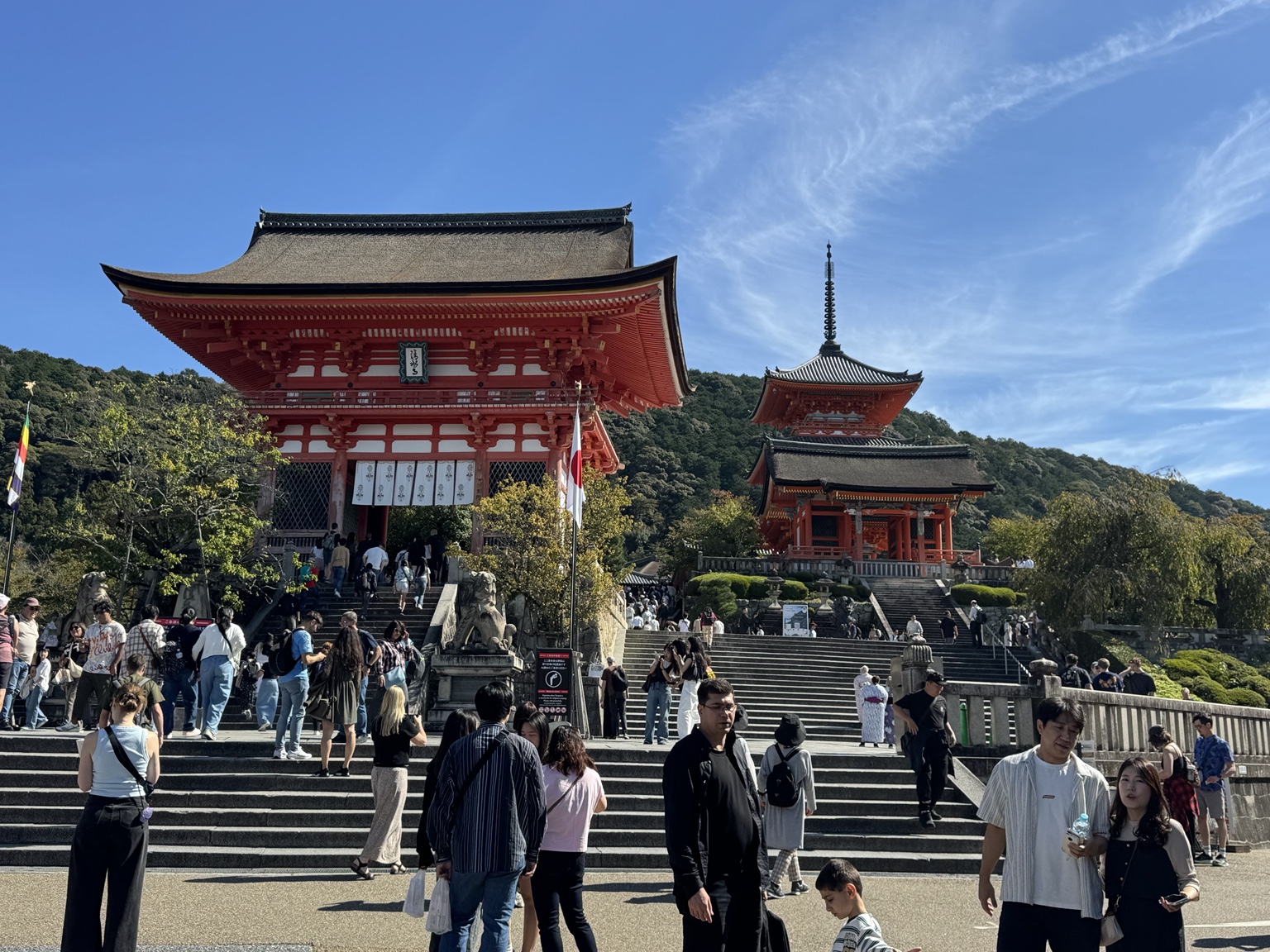
The red Niō-mon gate at Kiyomizu-dera beneath a brilliant blue sky.
DE Das rote Niō-mon-Tor am Kiyomizu-dera unter strahlend blauem Himmel.EN The red Niō-mon gate at Kiyomizu-dera beneath a brilliant blue sky.

At Kiyomizu-dera, the red temple gates glowed against the blue sky. The steps were busy. Apparently, we were not the only ones who had thought of a lovely Saturday walk.

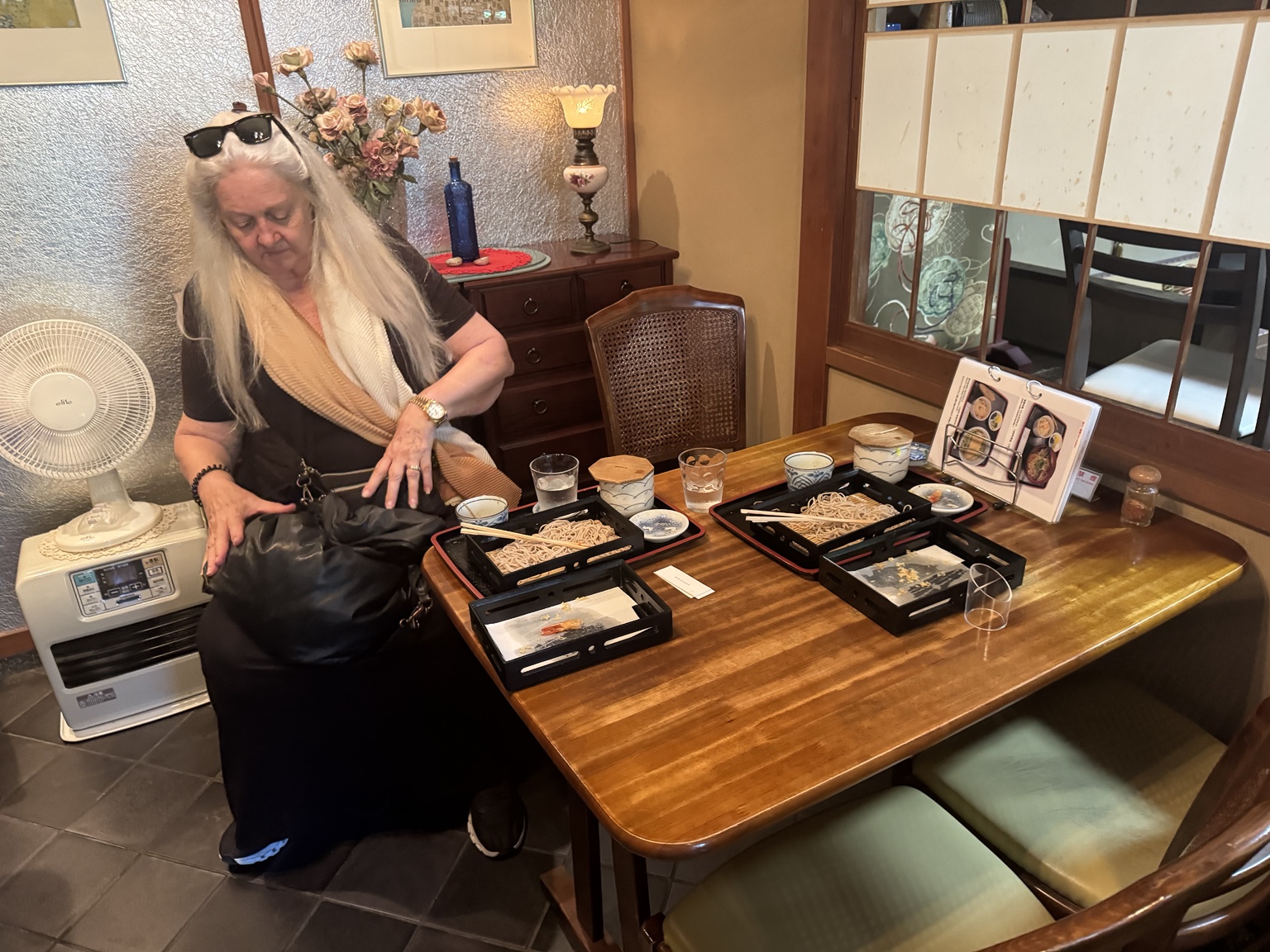
Along the way, we stopped for soba noodles in a small restaurant. A wooden table, pretty little bowls, noodles on dark trays. After so many impressions, it felt good simply to sit down.

A break over soba noodles in a small restaurant.
DE Eine Pause bei Soba-Nudeln in einem kleinen Lokal.EN A break over soba noodles in a small restaurant.

The morning grows quieter beside the water

Our morning also included a Buddhist garden. A beautiful garden with a large pond, little islands, old trees and bridges curving gently across the water.

Water, trees and an arched wooden bridge in the Buddhist garden.
DE Wasser, Bäume und eine geschwungene Holzbrücke im buddhistischen Garten.EN Water, trees and an arched wooden bridge in the Buddhist garden.

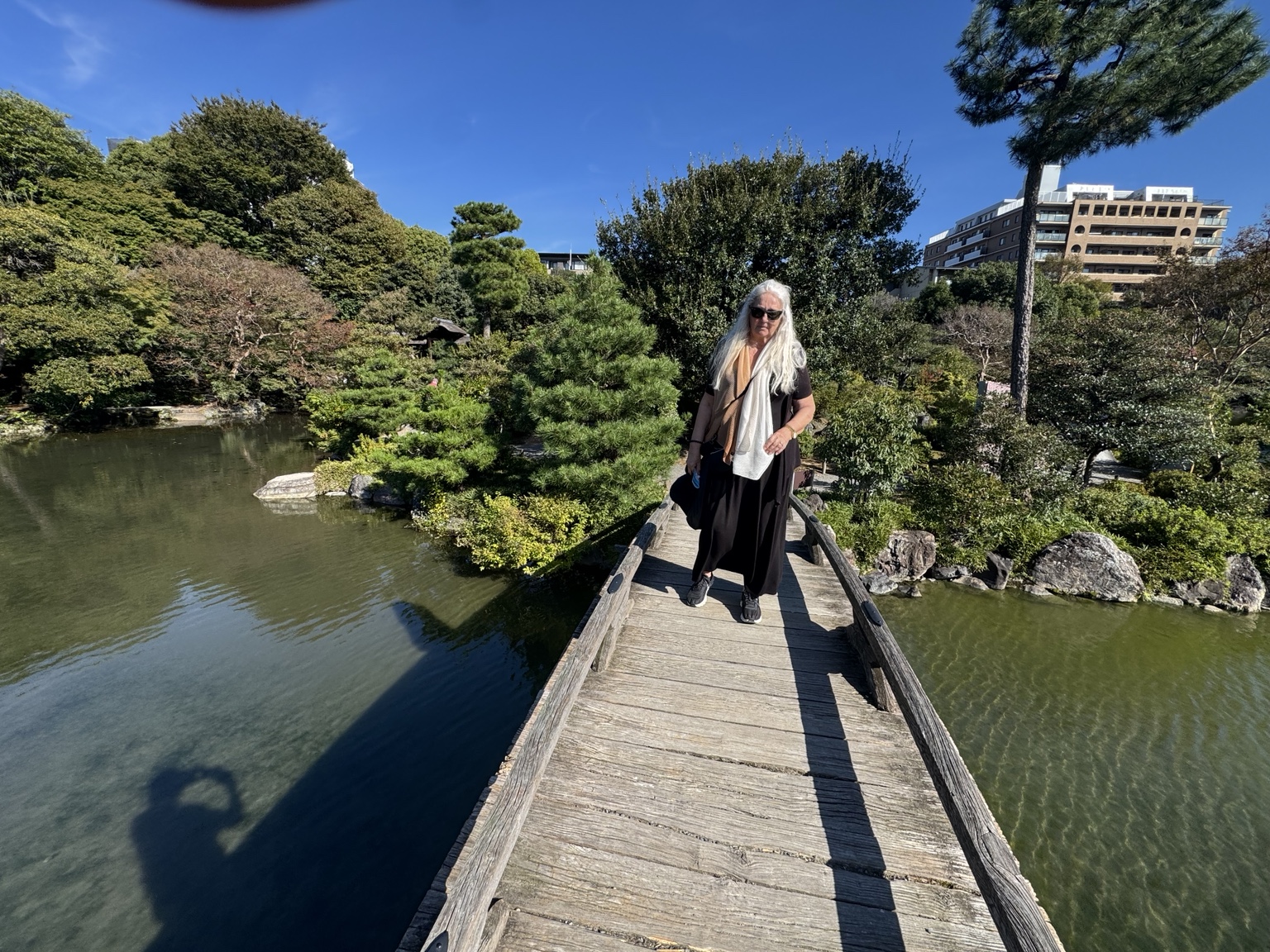
Here, different things caught the eye: reflected branches, the first yellow and red leaves, a pine tree beside the water. Large stone slabs crossed a narrow stream. Anneliese paused on the arched wooden bridge for a photograph.

Anneliese on the wooden bridge – a quiet moment above the pond.
DE Anneliese auf der Holzbrücke – ein ruhiger Moment über dem Teich.EN Anneliese on the wooden bridge – a quiet moment above the pond.

Kyoto Tower was visible above the trees. The modern city was very close, then. Yet among the water, stones and greenery, it was possible to forget it for a while.

That was what I particularly liked about this morning: first the crowds, the kimonos, the little shops and the magnificent temple gates. Then this garden, where there was time to let it all settle.

Time to put our feet up

We are now back at the Hyatt, resting. Our feet have earned their break, and we are gathering fresh energy. The day is not over yet: a tea ceremony is planned for this evening.

After such a beautiful morning in the old imperial capital, we are looking forward to the next part of our Kyoto day.


← Chapter 24: Genji and Gion · All chapters · Chapter 26: The Tea Evening →

October 17, 2026 0 comments
0 FacebookTwitterPinterestEmail
Journals

Japan-Tagebuch 25: Kimonos, alte Gassen und ein Garten zum Durchatmen

by KURT GASSNER October 17, 2026
written by KURT GASSNER

Deutsch | English

17. Oktober 2026 · Vormittag

Ein Vormittag in Kyoto – und eine Ruhepause im Hyatt, bevor am Abend die geplante Teezeremonie auf uns wartet.

Anneliese und ich vor der Yasaka-Pagode in Kyotos Altstadt.
DE Anneliese und ich vor der Yasaka-Pagode in Kyotos Altstadt.EN Anneliese and me in front of the Yasaka Pagoda in Kyoto’s old town.

Heute Vormittag ging es wieder zu Fuß durch Kyoto. Blauer Himmel, Sonne auf den alten Holzfassaden und vor uns diese Gassen, in denen man ständig stehen bleiben möchte. Anneliese und ich waren in der Altstadt von Higashiyama unterwegs, zwischen kleinen Läden, Teehäusern, Tempeln und immer neuen Blicken auf die Dächer der alten Kaiserstadt.

Besonders schön: die Yasaka-Pagode, die plötzlich zwischen den Häusern auftaucht. Ihre fünf Stockwerke stehen über den schmalen Straßen, und beim Weitergehen verändert sich der Blick immer wieder. Ein paar Schritte genügen, schon möchte man das nächste Foto machen. Natürlich haben auch wir unser Erinnerungsbild davor aufgenommen.

Kimonos und ein kleiner Gruß an die Lederhose

Überall begegneten uns Menschen im Kimono. Zarte Farben, kräftige Muster, kunstvoll gebundene Gürtel und Blumen im Haar. Viele Japanerinnen und Japaner tragen diese wunderschöne Kleidung – und manche Touristen möchten für einen Tag ebenfalls dazugehören.

Da musste ich schon schmunzeln. Ein bisschen erinnert mich das an unsere „Preußen in Lederhosen“, die sich bei uns voller Begeisterung in die heimische Tradition einkleiden. Hier eben Kimono statt Krachlederner.

Aber durchaus sympathisch. Man sieht die Freude daran, und die passt wunderbar in diese Gassen. Gruppen lassen sich gemeinsam fotografieren, und selbst vor dem Eisladen begegnen uns Kimonos. Die große Kulturreise darf schließlich auch eine kleine Eispause haben.

Eine Gruppe in farbenfrohen Kimonos – mitten in den alten Gassen.
DE Eine Gruppe in farbenfrohen Kimonos – mitten in den alten Gassen.EN A group in colourful kimonos, right in the heart of the old lanes.
Kimonos vor einem Eisladen in Kyotos alten Gassen.
DE Kimonos vor einem Eisladen in Kyotos alten Gassen.EN Kimonos outside an ice cream shop in Kyoto’s old lanes.

Für mich hat der Kimono etwas besonders Schönes: Er lässt jede Frau wie eine Lotusblume erscheinen. Die Farben, die Linien, die sorgfältig gelegten Stoffe – alles gibt ihr einen besonderen Rahmen. Manche Gewänder waren ganz schlicht, andere reich verziert. Dazwischen auch verspielte Varianten mit Spitze, Rüschen und riesigen Schleifen. Es gab viel zu schauen.

Am Rande durften wir sogar eine Hochzeit miterleben. Eine dieser Begegnungen, die man nicht planen kann und die einem von einem Spaziergang besonders in Erinnerung bleiben.

Kleine Entdeckungen zwischen den großen Sehenswürdigkeiten

An einer Holzfassade hingen ausdrucksstarke Masken und Figuren: verschmitzte Gesichter, wilde Grimassen, seltsame Gestalten. Ein Stück weiter lockte der Eingang eines kleinen Lokals mit einer großen roten Laterne. Dahinter ein kleiner Hof, Holz, Schatten und sorgfältig angeordnete Gegenstände.

Masken und skurrile Figuren an einer Holzfassade: Kyoto steckt voller kleiner Überraschungen.
DE Masken und skurrile Figuren an einer Holzfassade: Kyoto steckt voller kleiner Überraschungen.EN Masks and quirky figures on a wooden façade: Kyoto is full of small surprises.

Und dann wieder Treppen. Kyoto hält seine Besucher in Bewegung. Zwischen den eng stehenden Häusern ging es auf und ab, mit Blicken über graue Ziegeldächer bis zu den grünen Hügeln.

Steinstufen, alte Holzhäuser und viele Besucher in Higashiyama.
DE Steinstufen, alte Holzhäuser und viele Besucher in Higashiyama.EN Stone steps, old wooden houses and plenty of visitors in Higashiyama.
Das rote Niō-mon-Tor am Kiyomizu-dera unter strahlend blauem Himmel.
DE Das rote Niō-mon-Tor am Kiyomizu-dera unter strahlend blauem Himmel.EN The red Niō-mon gate at Kiyomizu-dera beneath a brilliant blue sky.

Am Kiyomizu-dera leuchteten die roten Tempeltore gegen den blauen Himmel. Auf den Stufen war einiges los. Wir hatten die Idee mit dem schönen Samstagsspaziergang offenbar nicht allein.

Zwischendurch machten wir eine Pause bei Soba-Nudeln in einem kleinen Lokal. Ein Holztisch, hübsche Schälchen, die Nudeln auf dunklen Tabletts. Nach den vielen Eindrücken tat es gut, einfach einmal Platz zu nehmen.

Eine Pause bei Soba-Nudeln in einem kleinen Lokal.
DE Eine Pause bei Soba-Nudeln in einem kleinen Lokal.EN A break over soba noodles in a small restaurant.

Am Wasser wird der Vormittag ruhiger

Zu unserem Vormittag gehörte auch ein buddhistischer Garten. Ein wunderschöner Garten mit einem großen Teich, kleinen Inseln, alten Bäumen und Brücken, die sich sanft über das Wasser spannen.

Wasser, Bäume und eine geschwungene Holzbrücke im buddhistischen Garten.
DE Wasser, Bäume und eine geschwungene Holzbrücke im buddhistischen Garten.EN Water, trees and an arched wooden bridge in the Buddhist garden.

Hier blieb der Blick an anderen Dingen hängen: an den Spiegelungen der Zweige, den ersten gelben und roten Blättern, einer Kiefer am Ufer. Große Steinplatten führten über einen schmalen Wasserlauf. Auf der geschwungenen Holzbrücke blieb Anneliese für ein Foto stehen.

Anneliese auf der Holzbrücke – ein ruhiger Moment über dem Teich.
DE Anneliese auf der Holzbrücke – ein ruhiger Moment über dem Teich.EN Anneliese on the wooden bridge – a quiet moment above the pond.

Über den Bäumen war der Kyoto Tower zu sehen. Die heutige Stadt war also ganz nah. Zwischen Wasser, Steinen und Grün konnte man sie trotzdem für eine Weile vergessen.

Das gefiel mir besonders an diesem Vormittag: erst die vielen Menschen, die Kimonos, die kleinen Geschäfte und die prächtigen Tempeltore. Danach dieser Garten, in dem man Zeit hatte, die Eindrücke ein wenig nachklingen zu lassen.

Jetzt erst einmal die Füße hoch

Inzwischen sind wir zurück im Hyatt und ruhen uns aus. Die Füße haben ihre Pause verdient, und wir tanken neue Kräfte. Denn der Tag geht noch weiter: Heute Abend wartet die Teezeremonie auf uns.

Nach diesem wunderschönen Vormittag in der alten Kaiserstadt freuen wir uns auf den nächsten Teil unseres Kyoto-Tages.


← Kapitel 24: Genji und Gion · Alle Kapitel · Kapitel 26: Der Tee-Abend →

October 17, 2026 0 comments
0 FacebookTwitterPinterestEmail
Journals

Japan Diary 24: From Prince Genji to the Lanterns of Gion

by KURT GASSNER October 17, 2026
written by KURT GASSNER

Deutsch | English

16 October 2026 · Kyoto

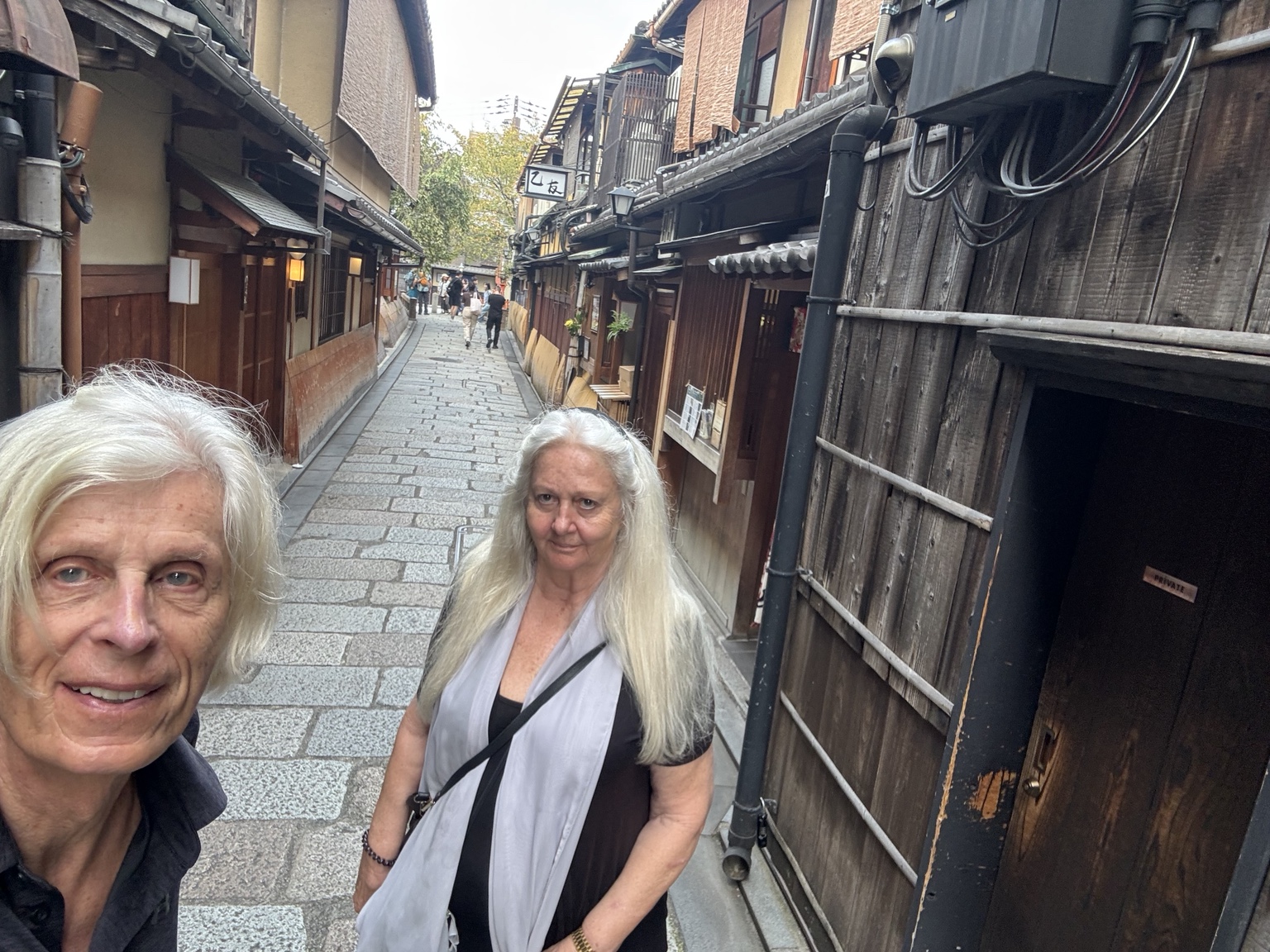
Kurt and Anneliese in a narrow lane

Today we set out to explore Kyoto on foot. And Kyoto, apparently, had plans for us too. By the evening we were certainly tired. But in between lay a day full of small discoveries worth taking time over: an enchanting exhibition, narrow lanes, old wooden houses, tiny entrances and one thing after another that made us stop and look.

In the morning we visited the Genji exhibition at the National Museum opposite our hotel. At its heart is The Tale of Genji, one of Japan’s great literary classics. Written by Murasaki Shikibu over a thousand years ago, it is often called the world’s first novel. It follows Hikaru Genji, the ‘Shining Prince’, his romantic relationships and the human entanglements of life at the imperial court. Paintings, manuscripts and decorative works reveal the story’s lasting influence on Japanese culture. An enchanting world, and a special beginning to our day in Kyoto.

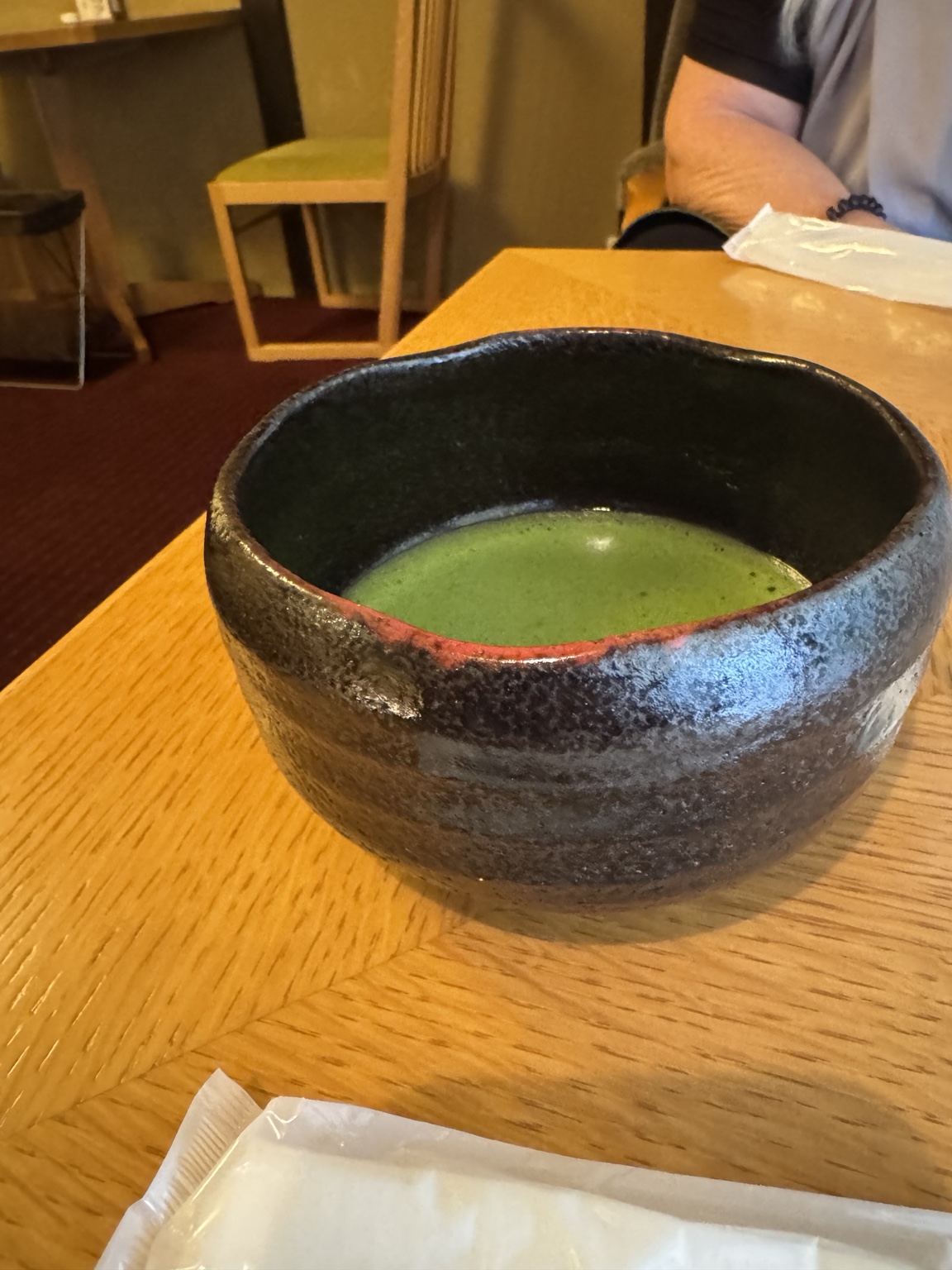
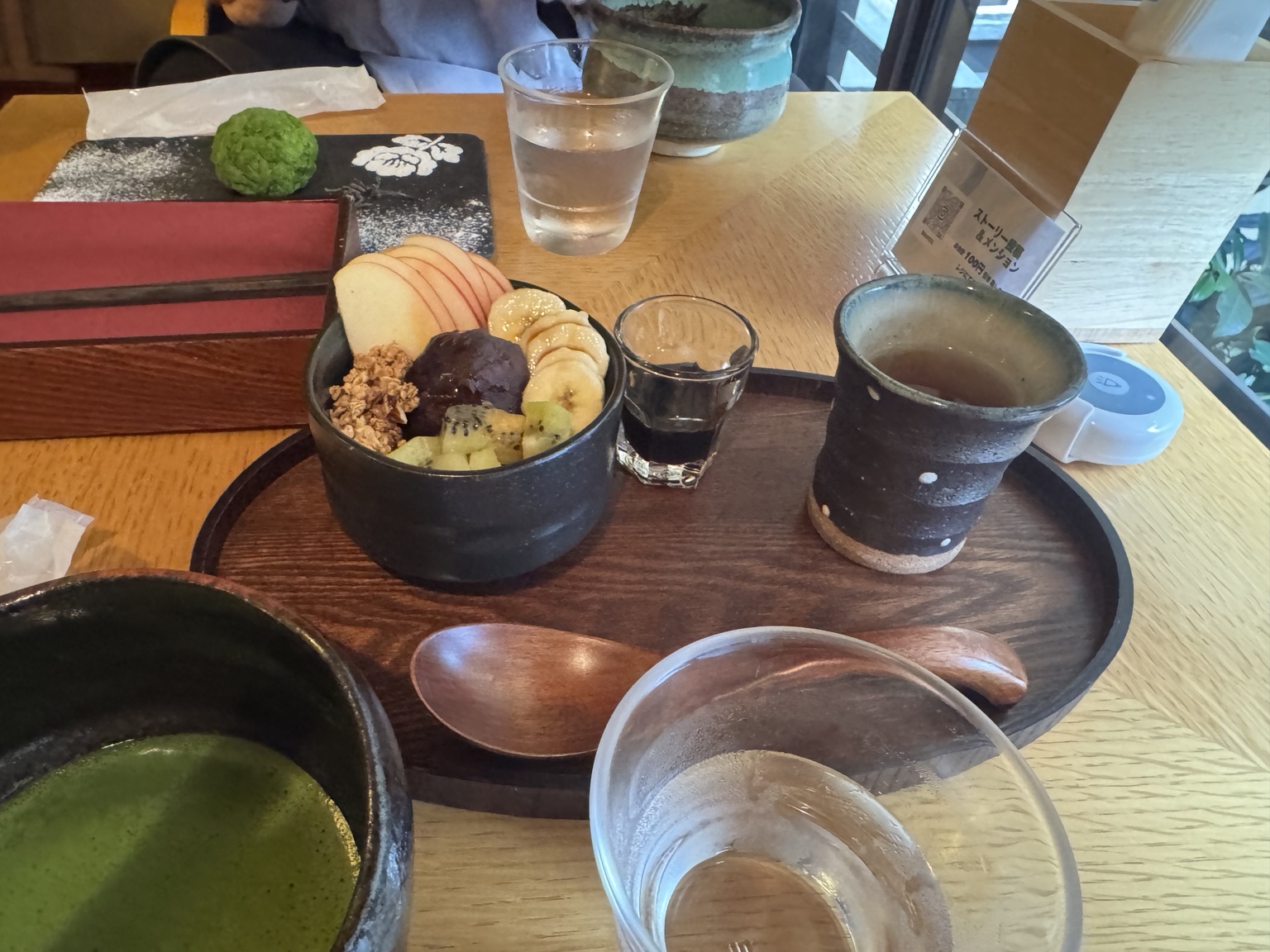
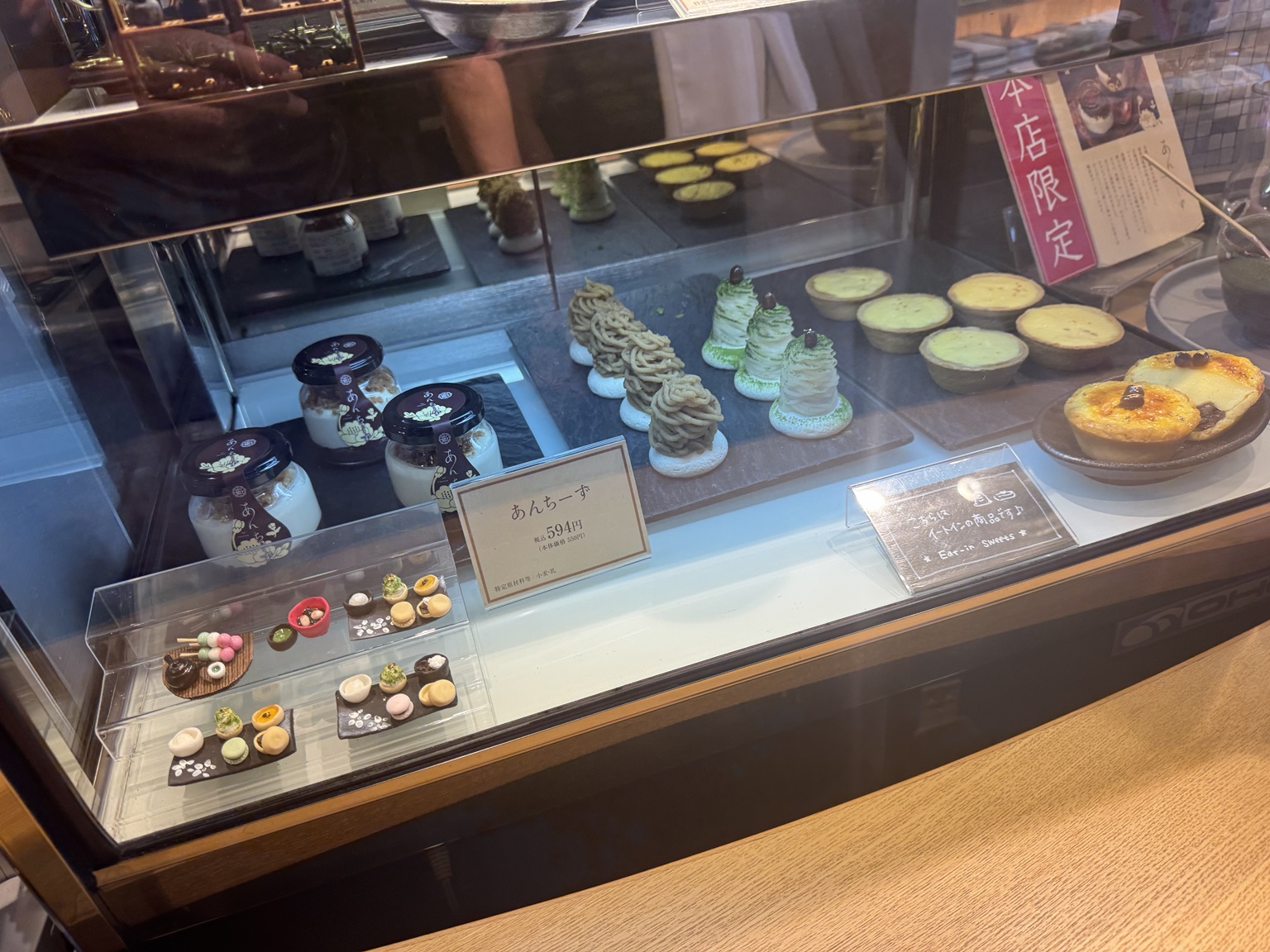
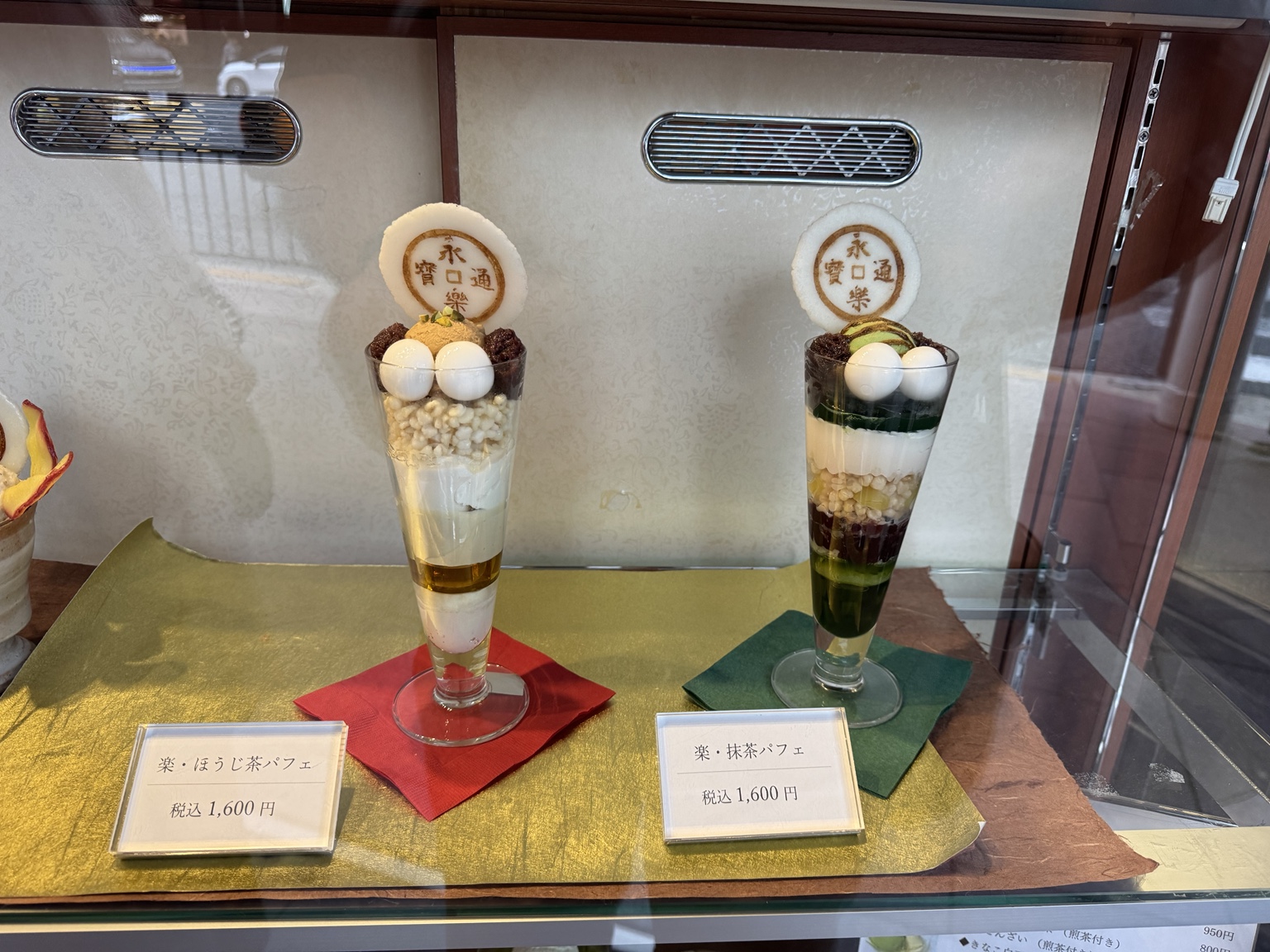
Then we headed out into the city. Even our tea break made a picture of its own. Brilliant green matcha in a dark, irregularly shaped ceramic bowl. Fruit carefully arranged in a fan, and little sweets alongside. The displays held elaborate creations, some like miniature towers, others in bowls or tall glasses. Here, even a short break has its own setting.

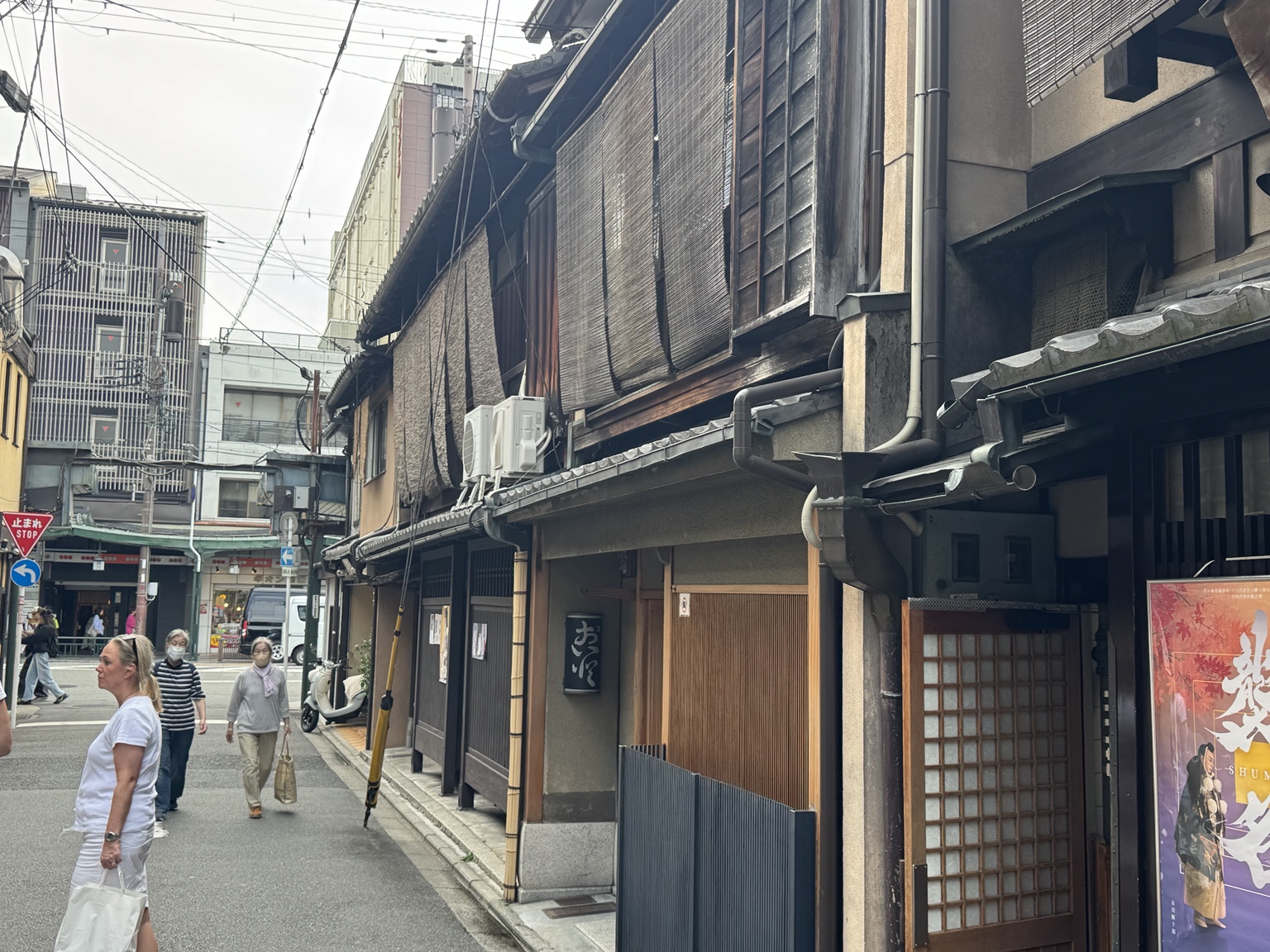
We continued through the old lanes. The houses stand close together, with weathered timber, narrow windows and bamboo blinds across the upper floors. Sometimes you can see only as far as the next bend. That is precisely what makes you curious. What lies beyond it?

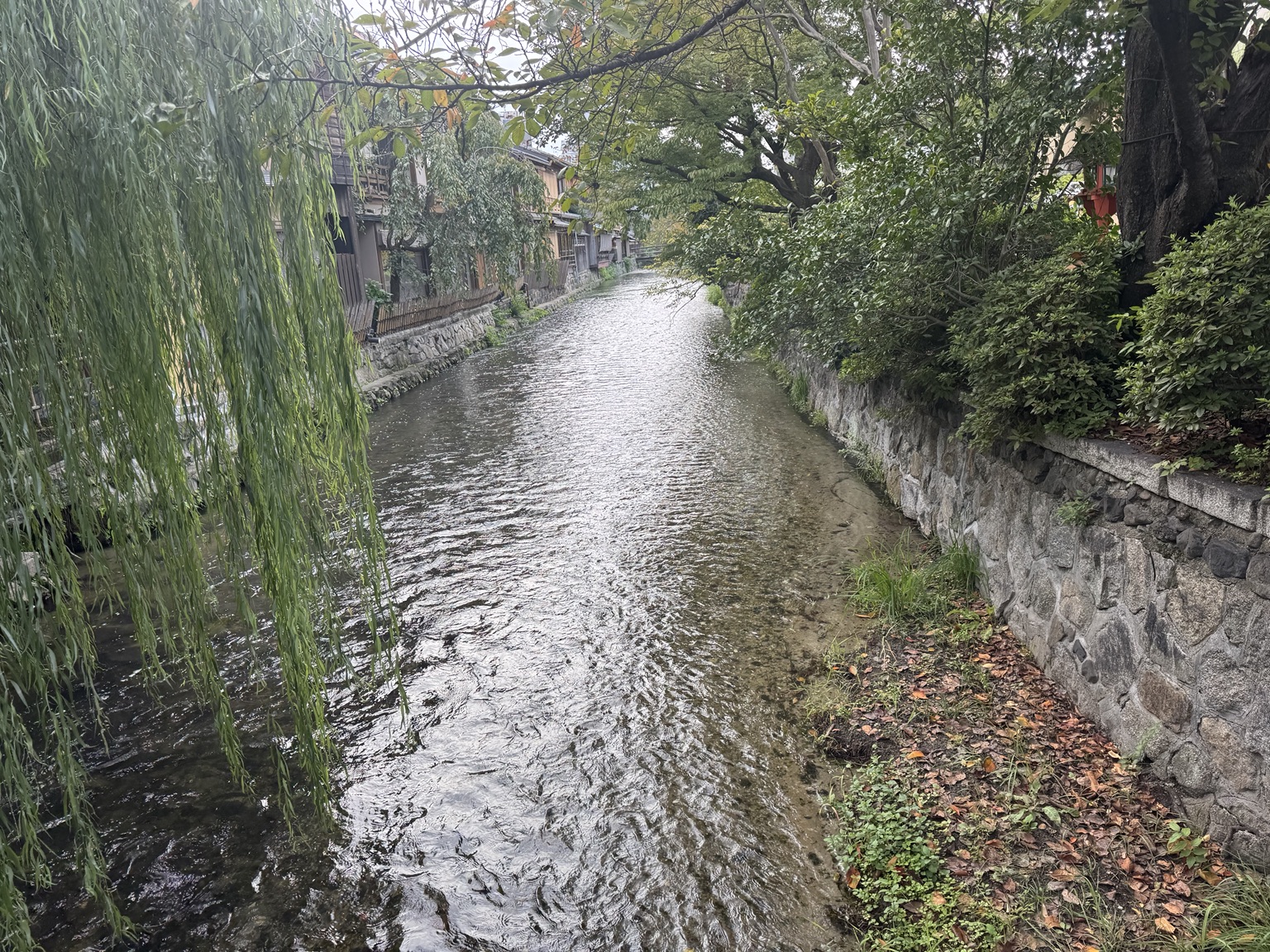
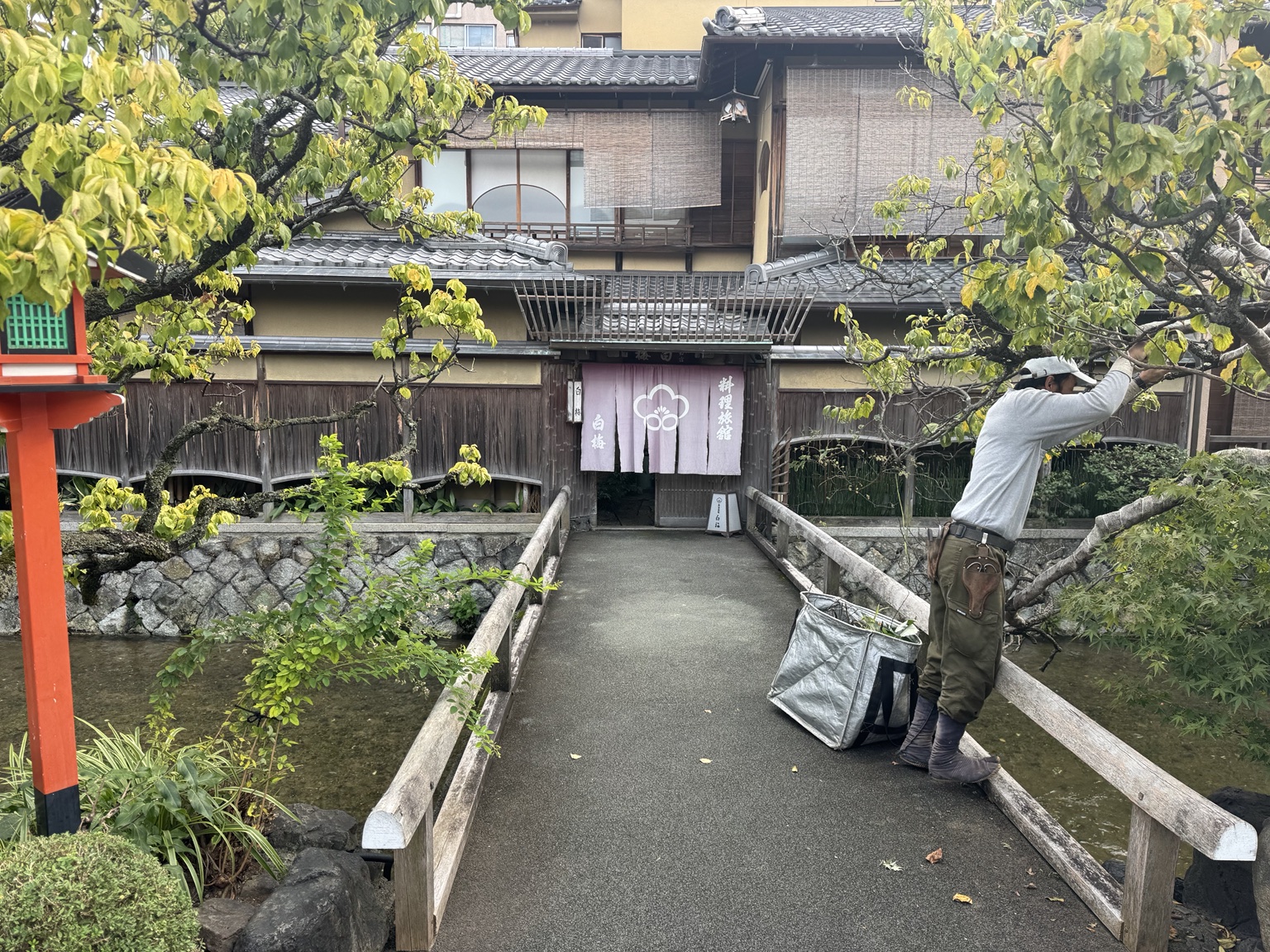
It was particularly lovely by the water. Willow branches hang low over the stream, old houses line the bank, and small bridges lead straight to their entrances. Outside a house with a pale violet doorway curtain, a man was pruning a tree. An everyday moment in surroundings that felt like another world to us.

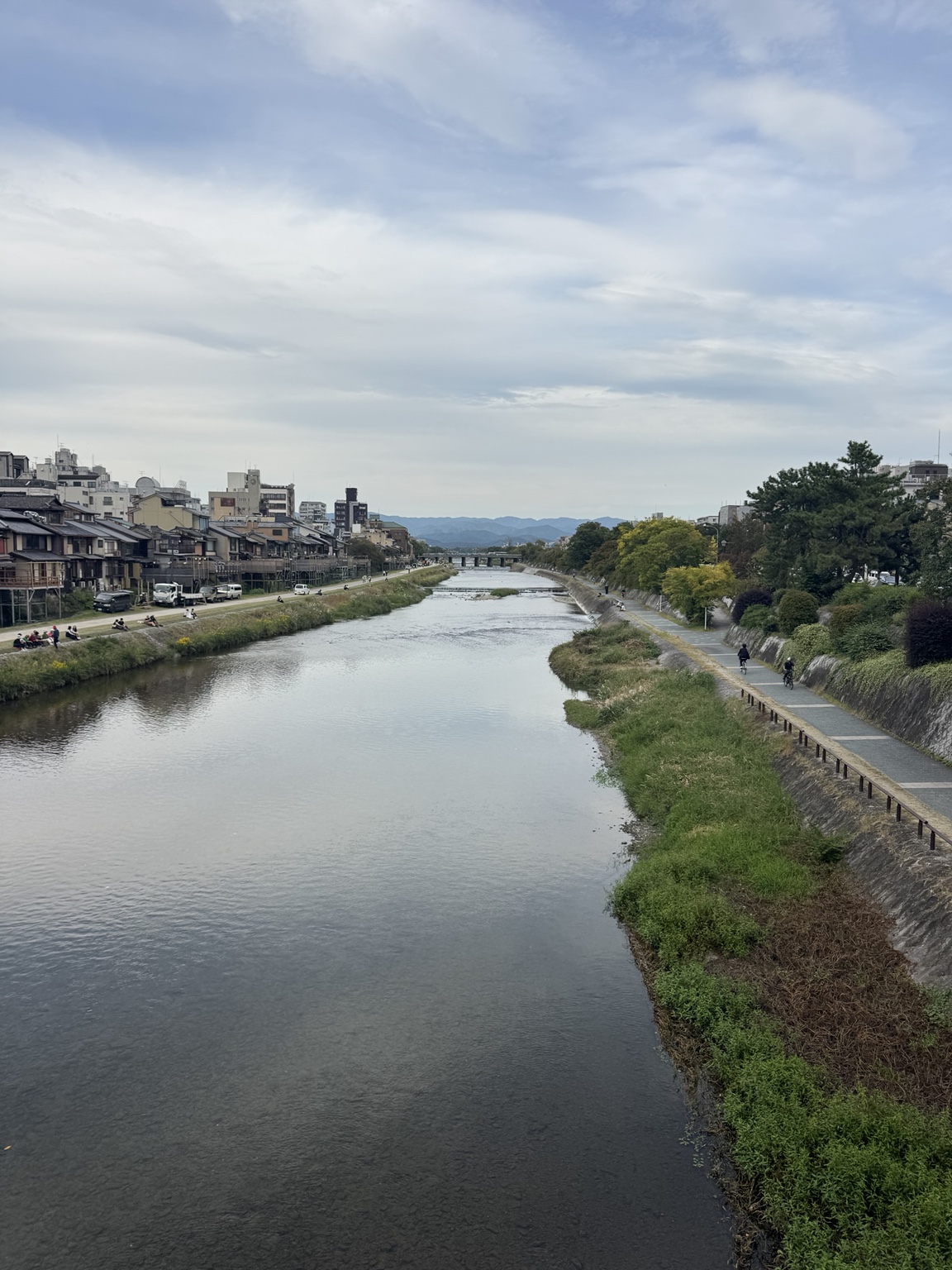
Every so often, the view opens out across the river. After the narrow lanes, suddenly there is so much sky and space. People sit on the banks; others stroll or cycle past. Houses crowd along the water on one side, trees stand opposite, and mountains appear in the distance. This, too, is Kyoto: you emerge from a tangle of little streets and suddenly have room to take a deep breath.

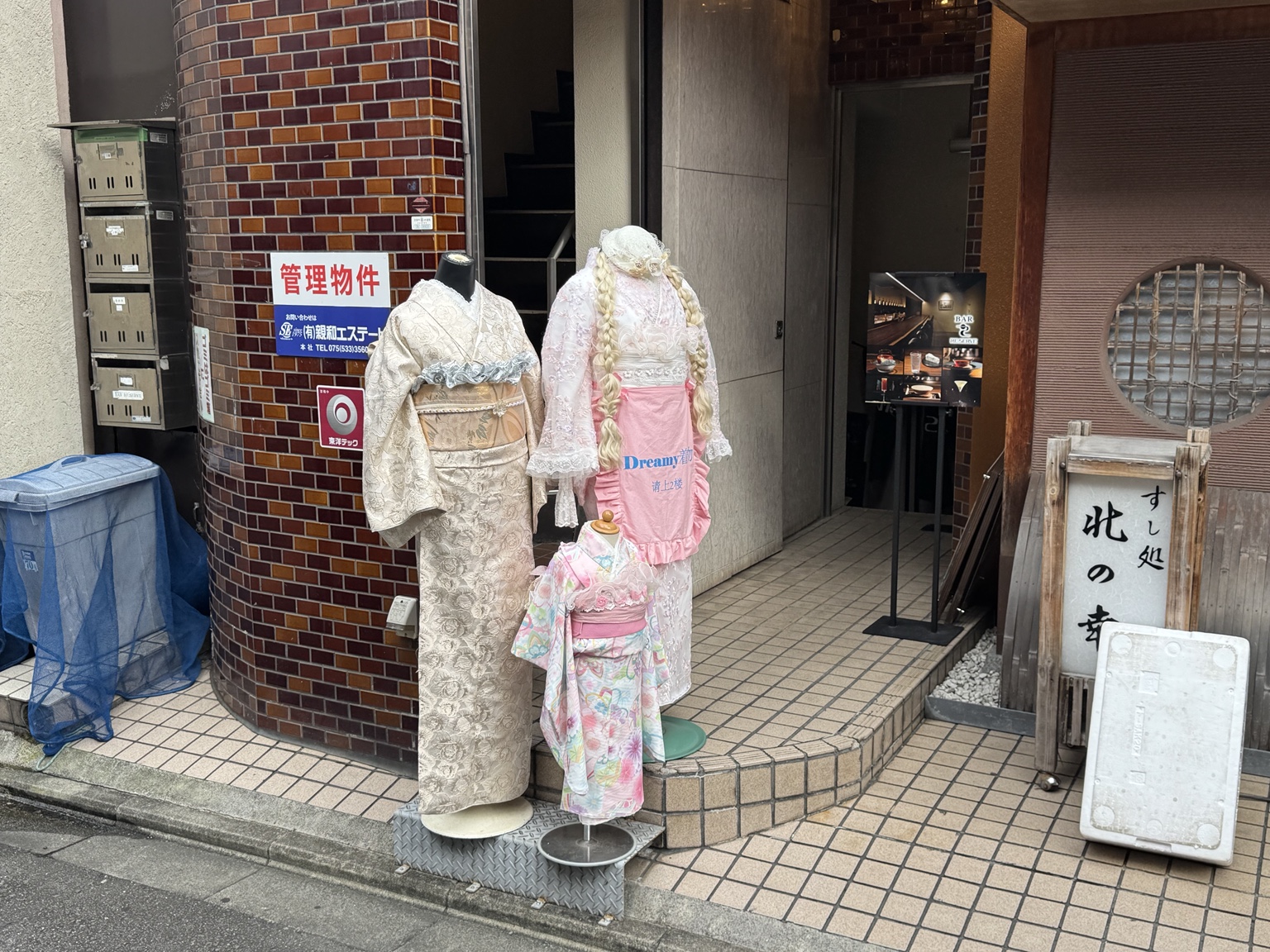
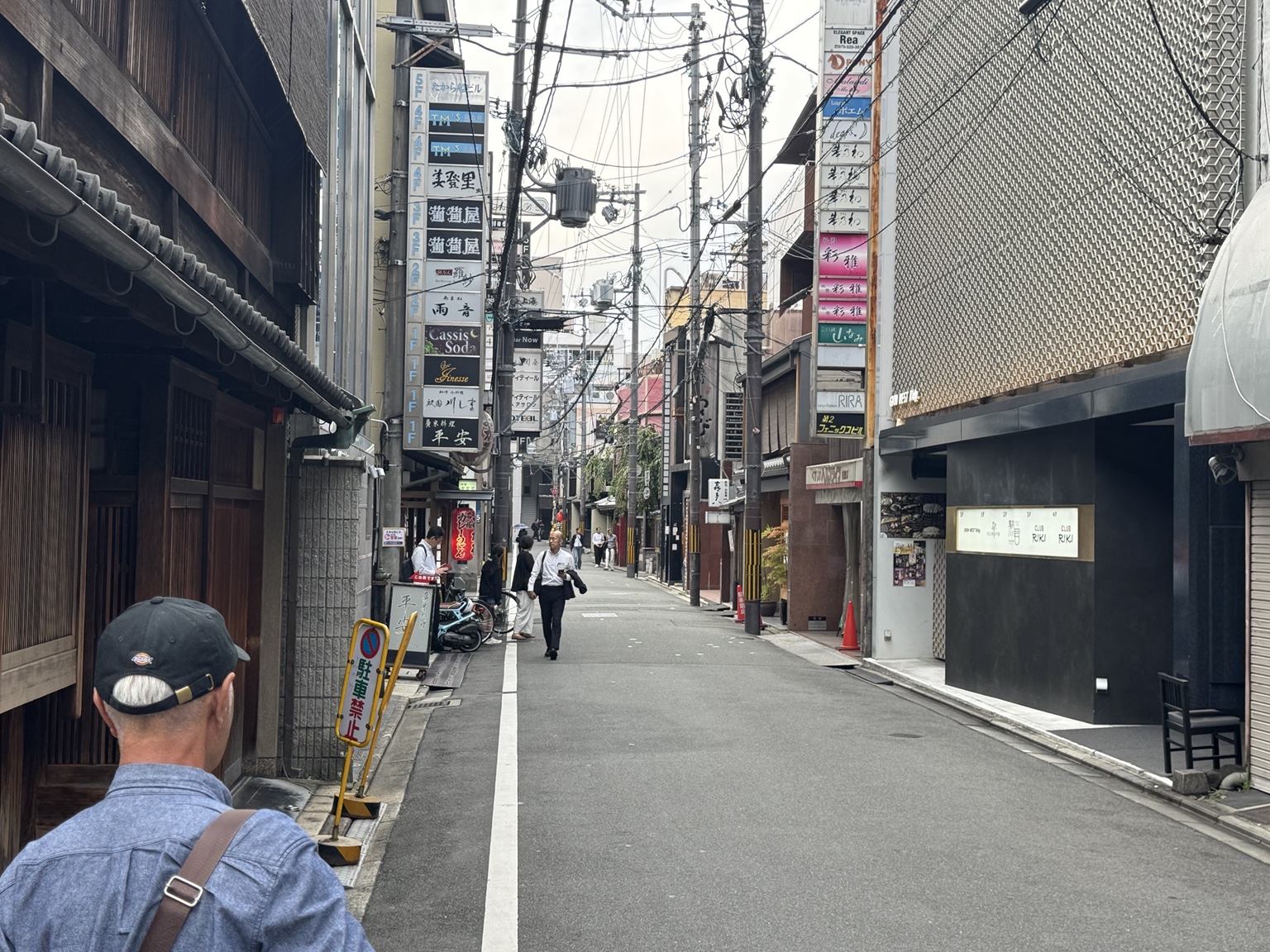
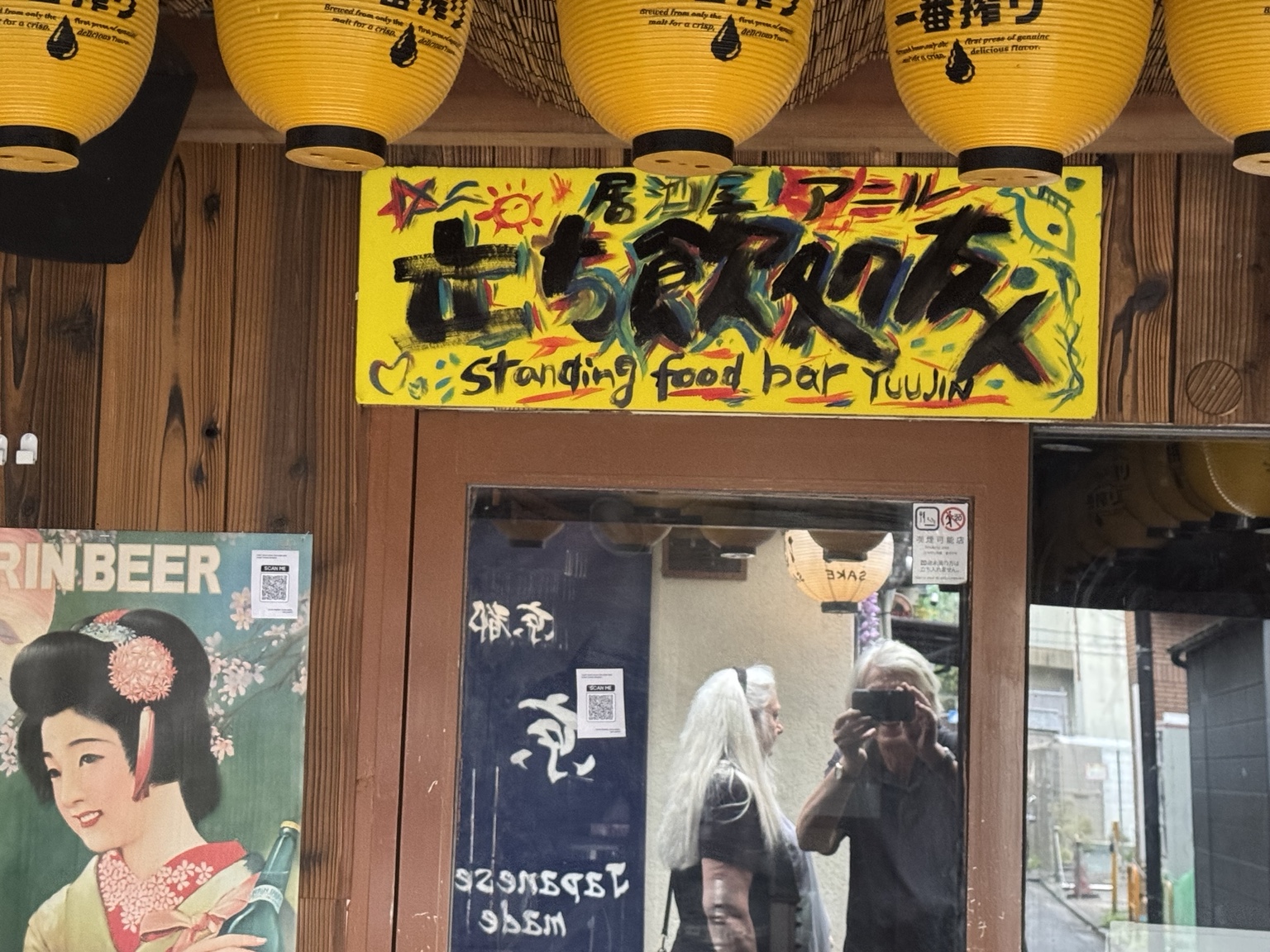
Old Japan sits right in the middle of everyday modern life. Bamboo blinds hang in front of the wooden façades, while power lines crisscross overhead. Next door, signs for little establishments rise several storeys up the buildings. Outside one entrance, mannequins wear pastel-coloured kimonos with lace and frills. Between old teahouses, bars and playful displays like these, there is always something new to notice.

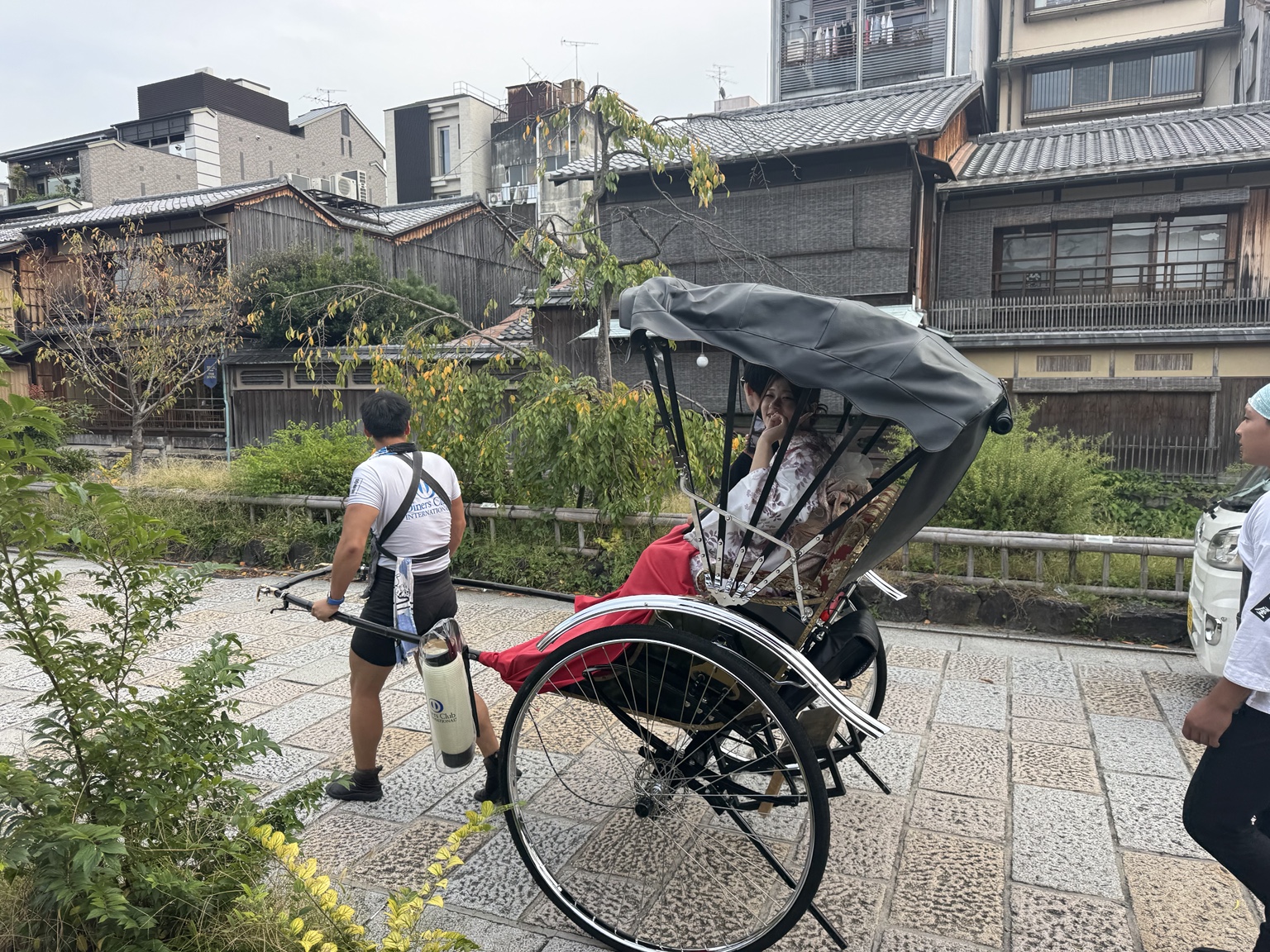
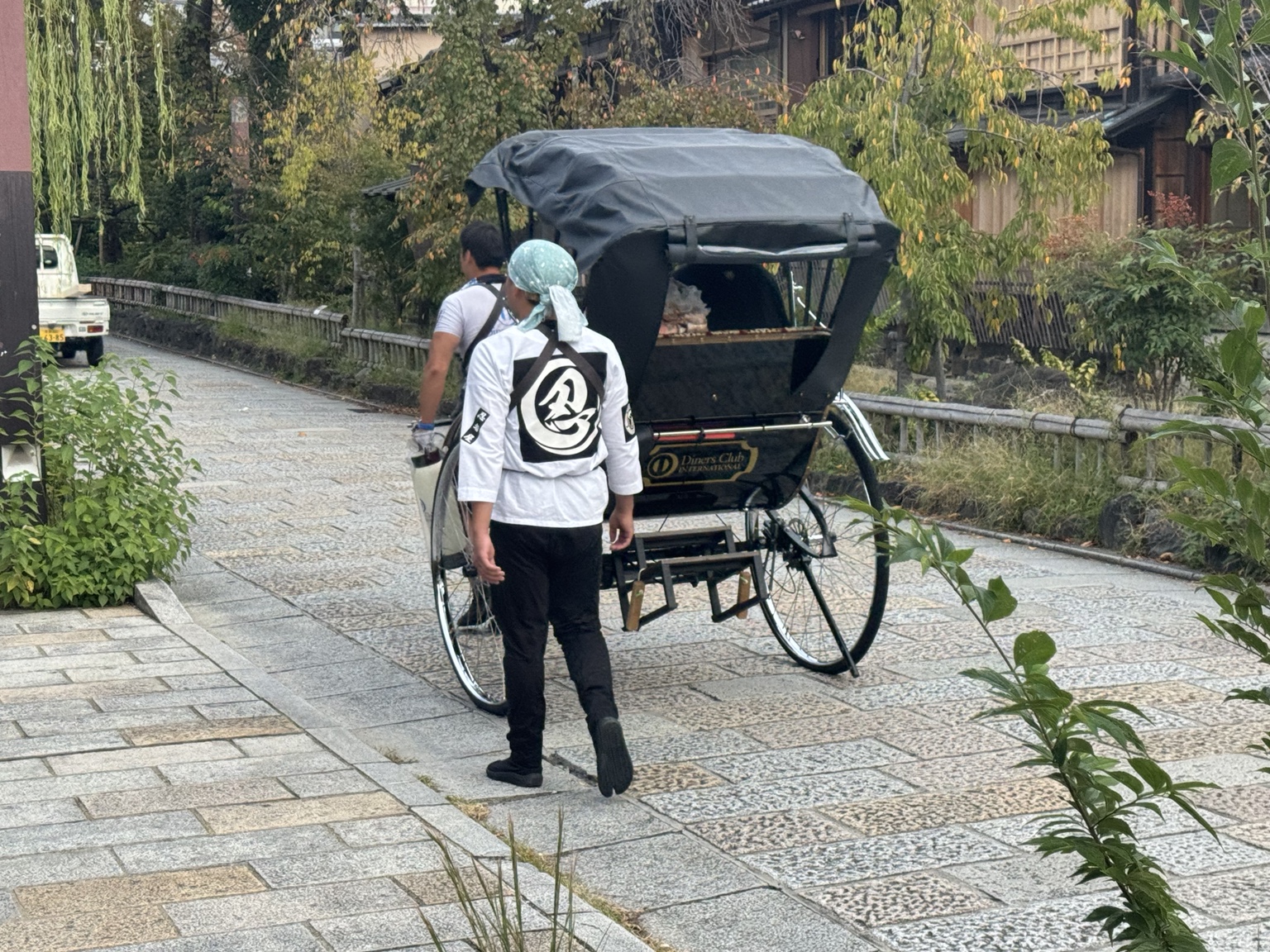
A rickshaw beside the water: large wheels, a black canopy and red fabric on the seat. We stuck with our own feet. They would have something to say about that later.

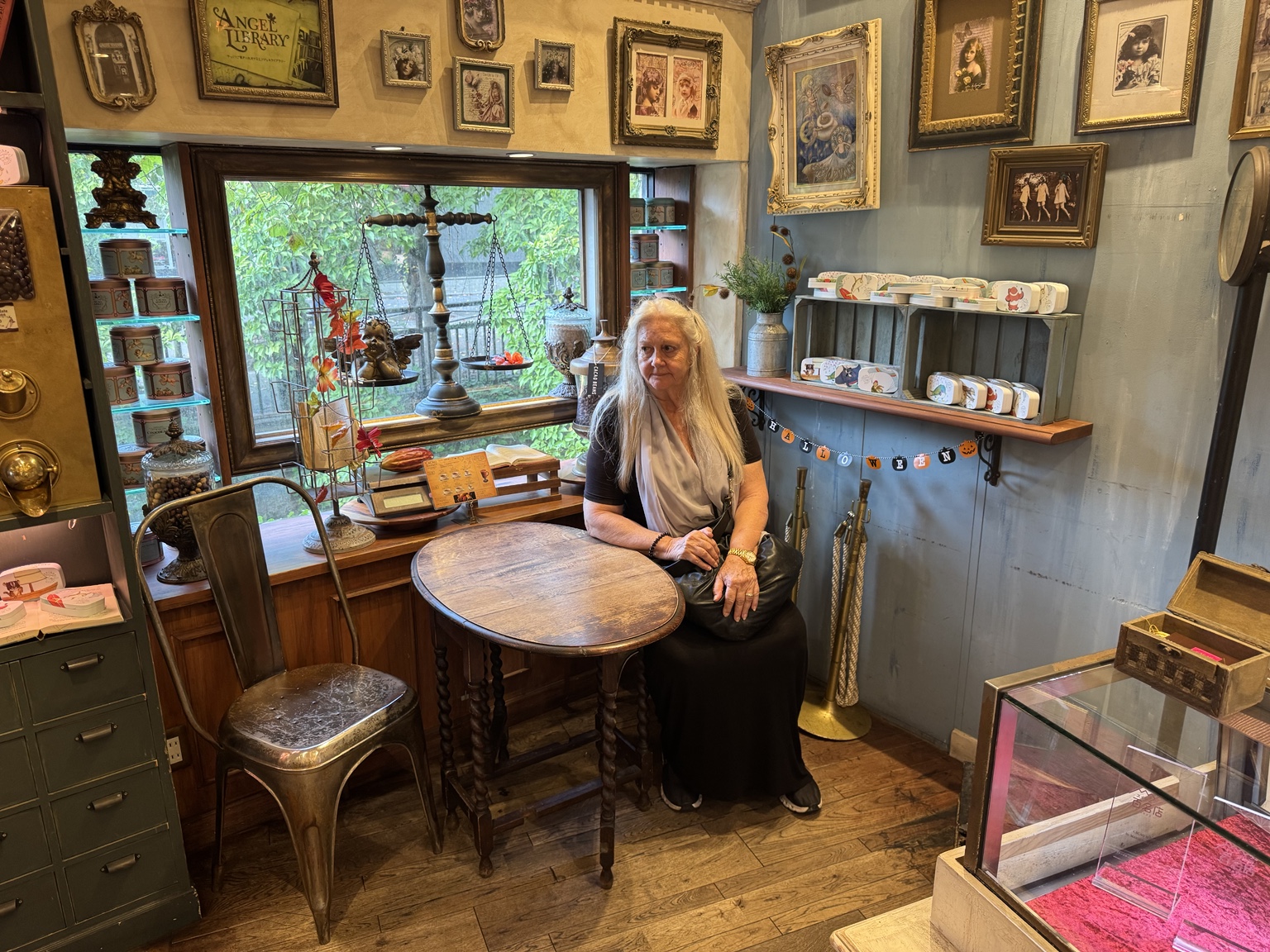
Along the way there was also a little shop where Anneliese sat down at a round wooden table. Around her were pictures in gilded frames, decorated tins, angels and an old set of scales in front of the window. ‘Angel Library’ was written on one of the pictures. A playful, almost fairy-tale room, with a surprising amount to discover in just a few square metres.

In the evening, Gion took on another mood. Red lanterns glowed against the dark façades, and warm light fell across the paving stones. From outside, the old teahouses seemed discreet, almost closed off. That is just what sets the imagination going.

There is something particularly fascinating about geisha culture for me. Wandering through these lanes, you feel transported to an earlier time. You look at the bamboo blinds and imagine that a geisha might be sitting behind them, watching us walk past. We gaze curiously at the houses—and perhaps someone is looking back with just as much curiosity. A thought that suits this neighbourhood, which reveals so much while keeping so much hidden.

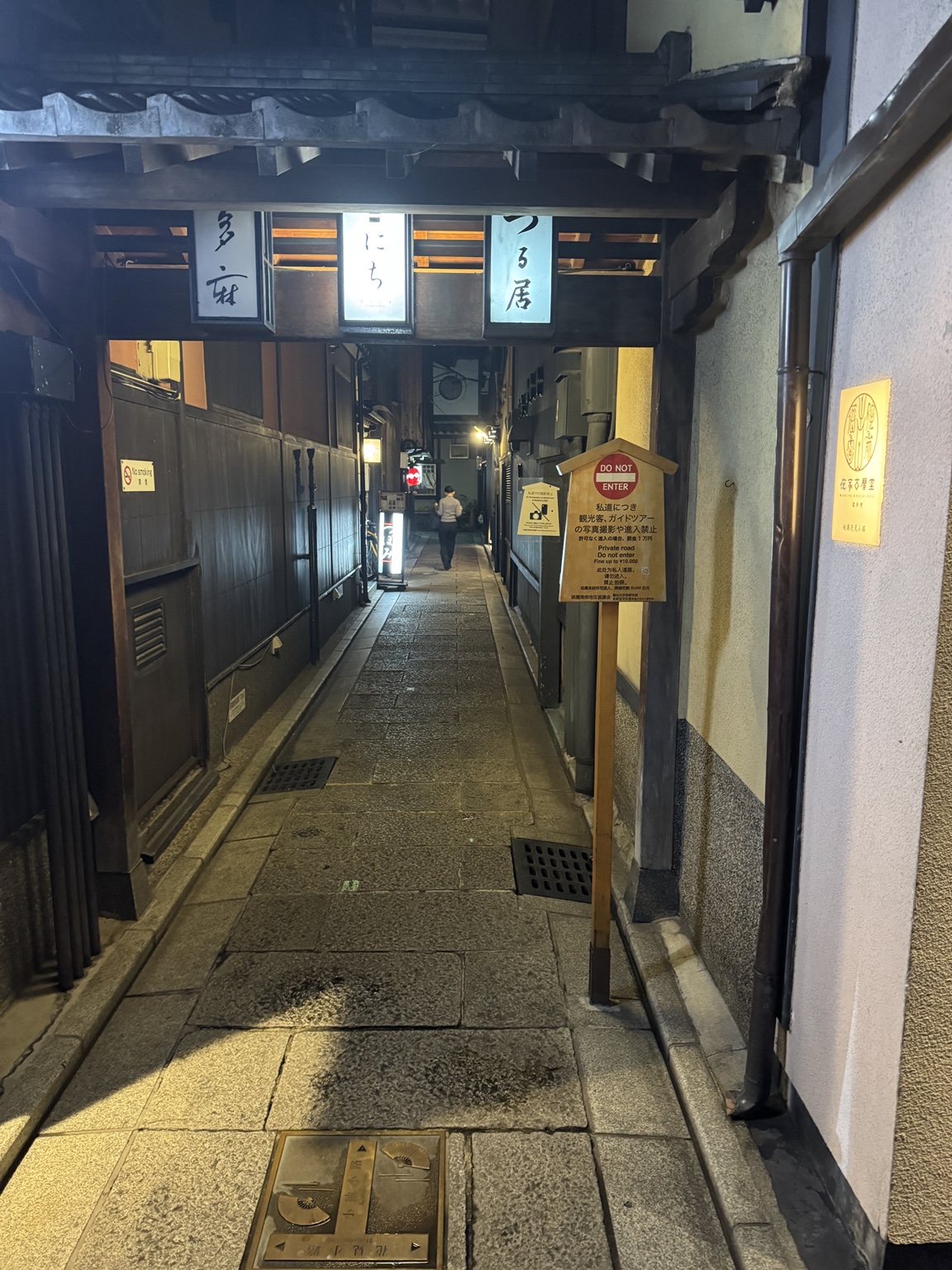
Some of the narrow private lanes are closed to visitors. Seeing the crowds, that is easy to understand. People live and work behind these façades. Even in such an enchanting neighbourhood, there has to be somewhere to retreat.

Later, we had a very good dinner in an old teahouse. After all that looking and walking, it was a lovely way to finish the day.

By then, Anneliese had been groaning a little about all the walking. And yes, we were both tired in the end. Gion is simply easier to enjoy with your eyes than with your feet.

Still, it was worth every step.

Kyoto in pictures

Wooden façades with bamboo blinds
Pastel-coloured kimonos outside an entrance
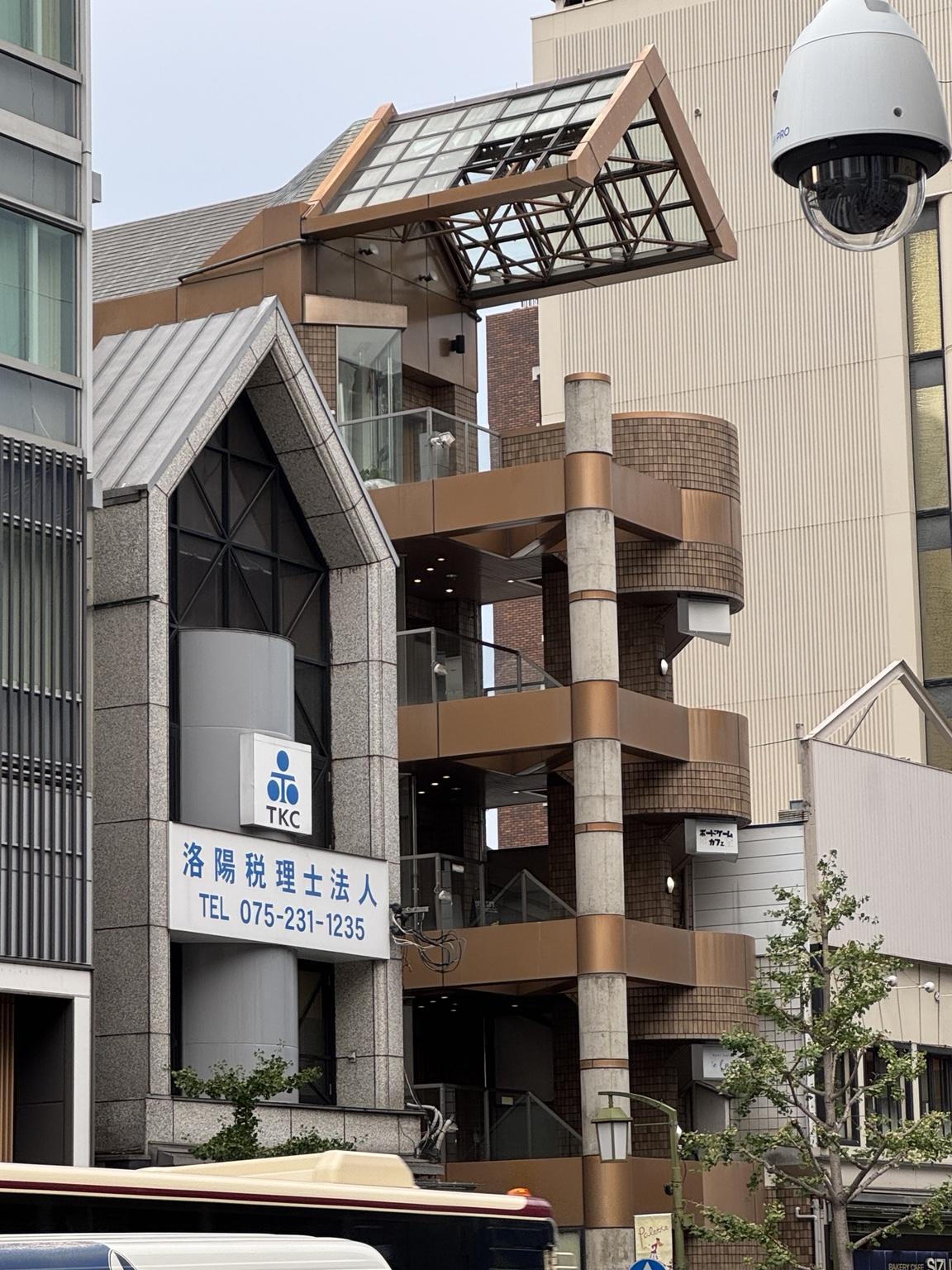
Old and modern façades in Kyoto
Green matcha in a dark ceramic bowl
A tea break with fruit and sweets
Elaborate desserts on display
Willow branches above the water
A rickshaw beside the water
A rickshaw and attendant on the riverside path
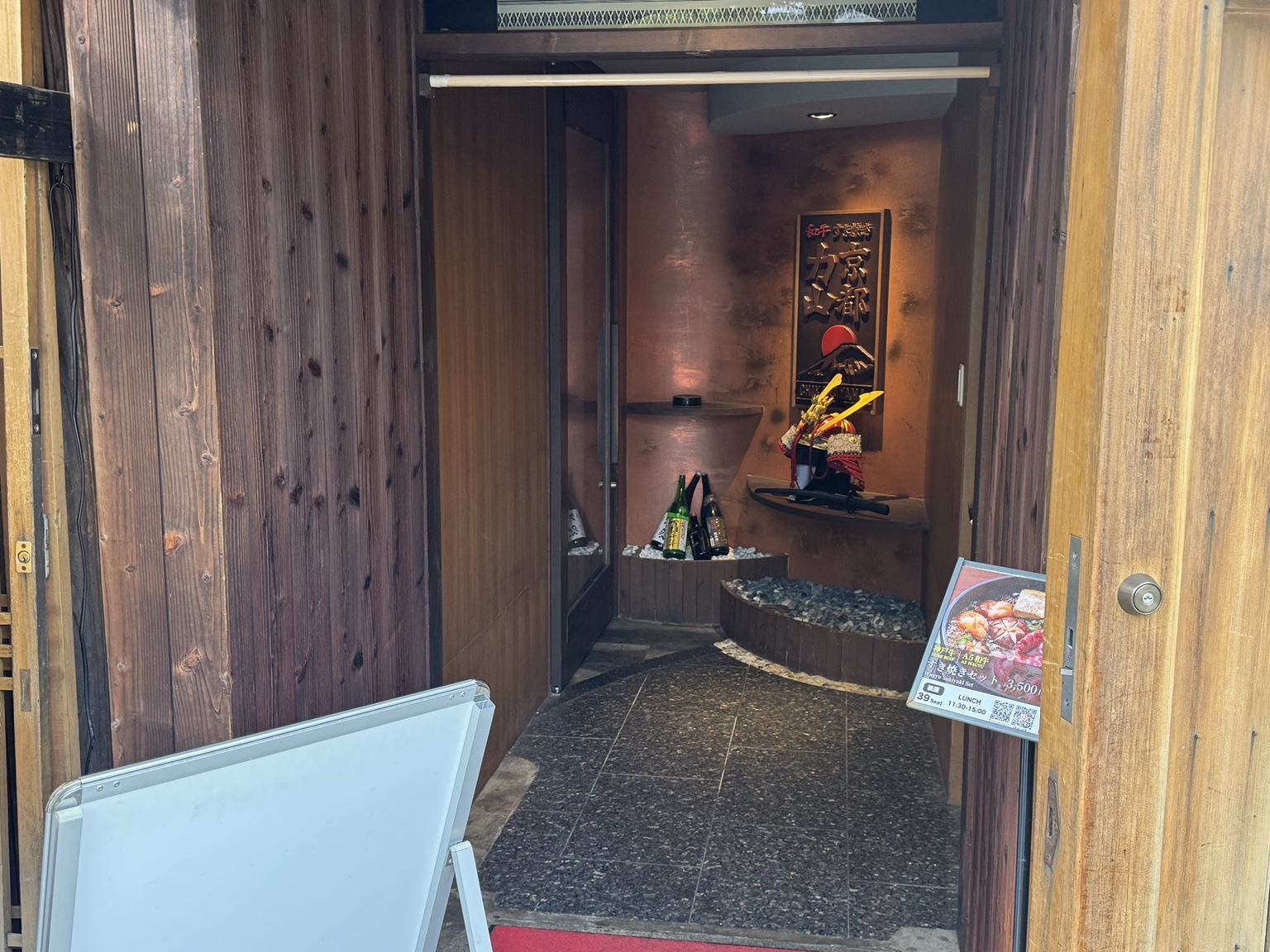
A narrow restaurant entrance
A bridge to a house and tree maintenance by the water
Anneliese in the little shop with angel motifs
A wide view across the river and riverside paths
A colourful bar façade with reflections
Desserts in tall glasses on display
Modern architecture in Kyoto
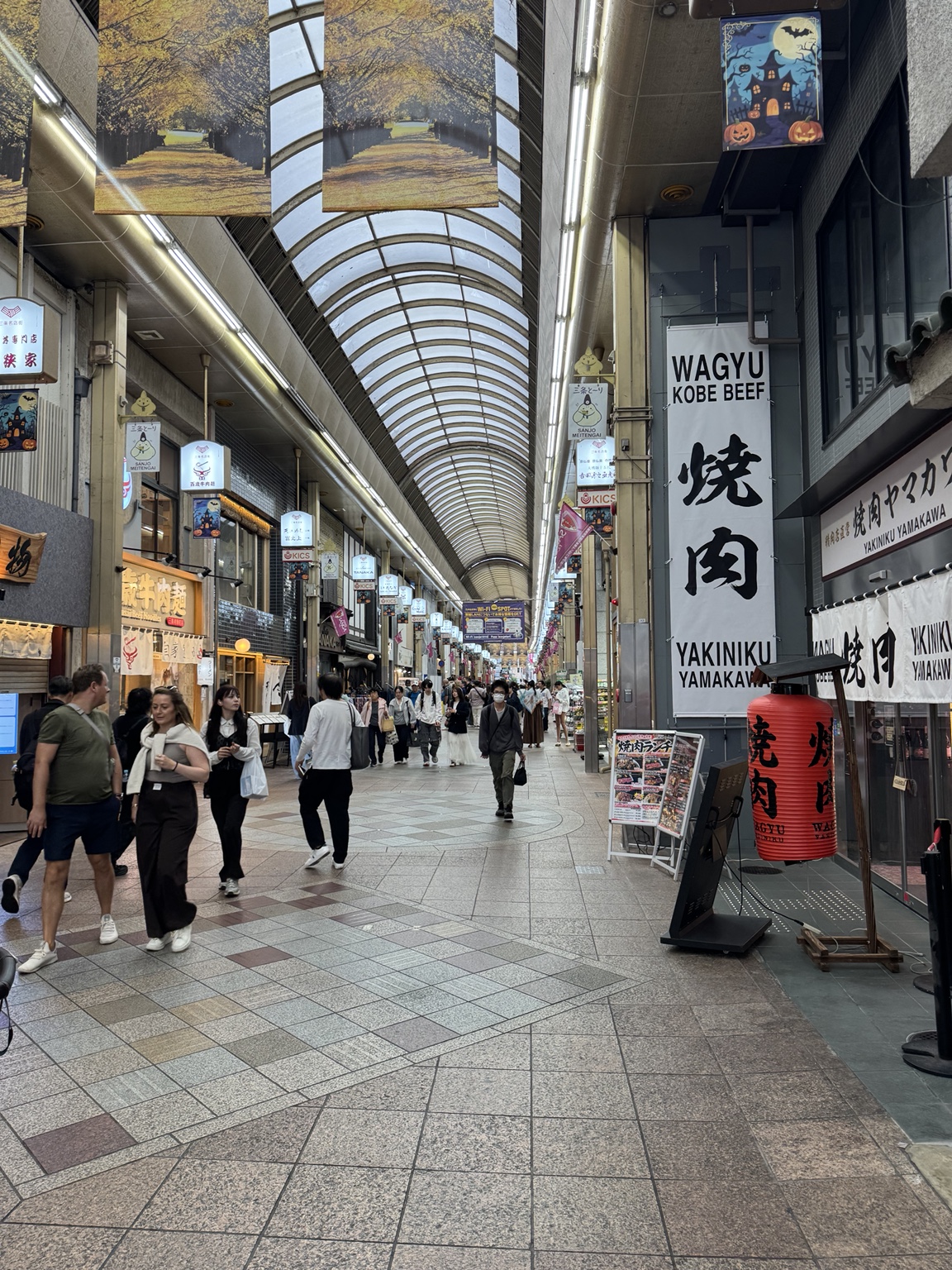
A covered shopping arcade
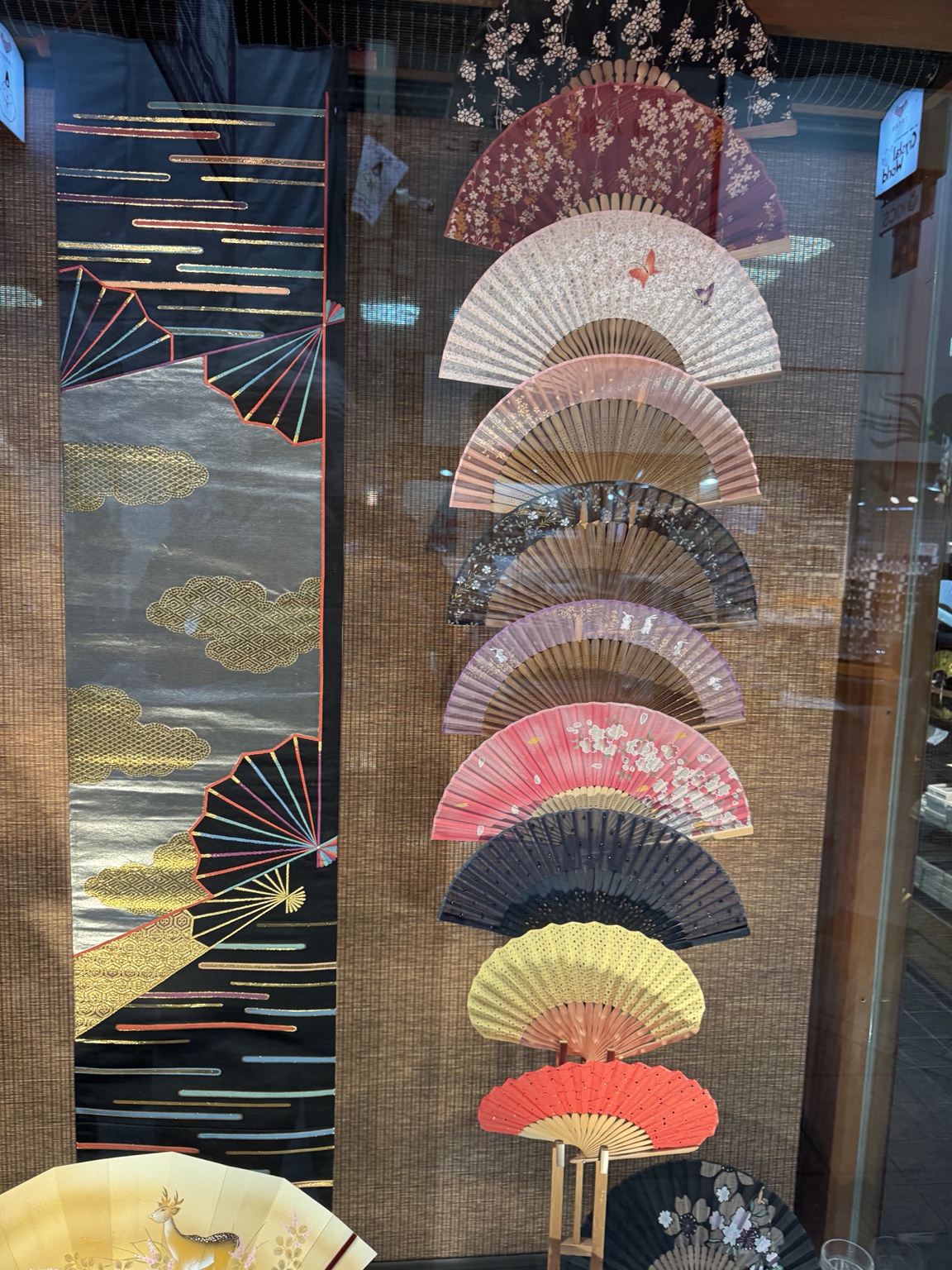
Decorative folding fans on display
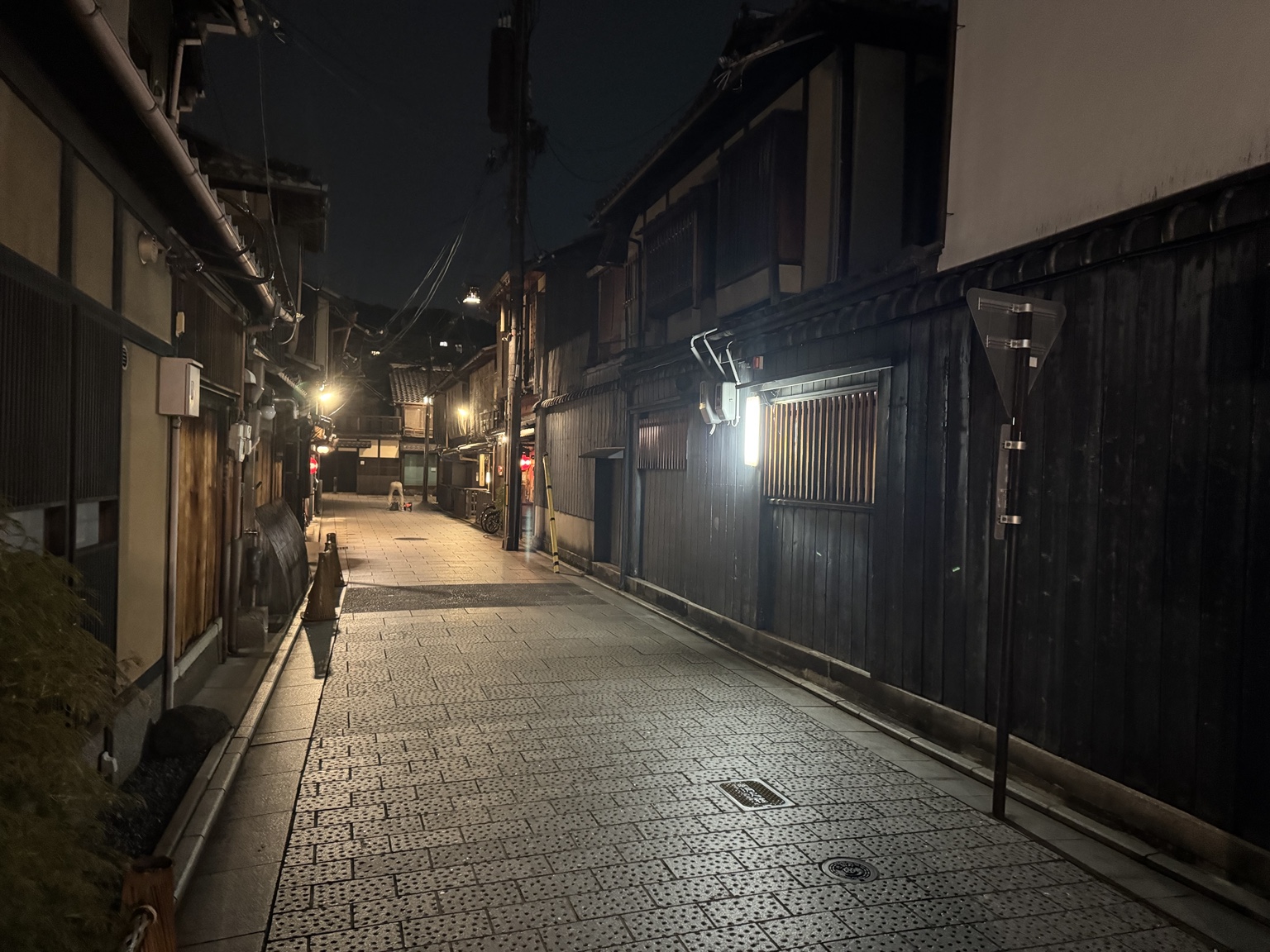
A narrow lane in the evening
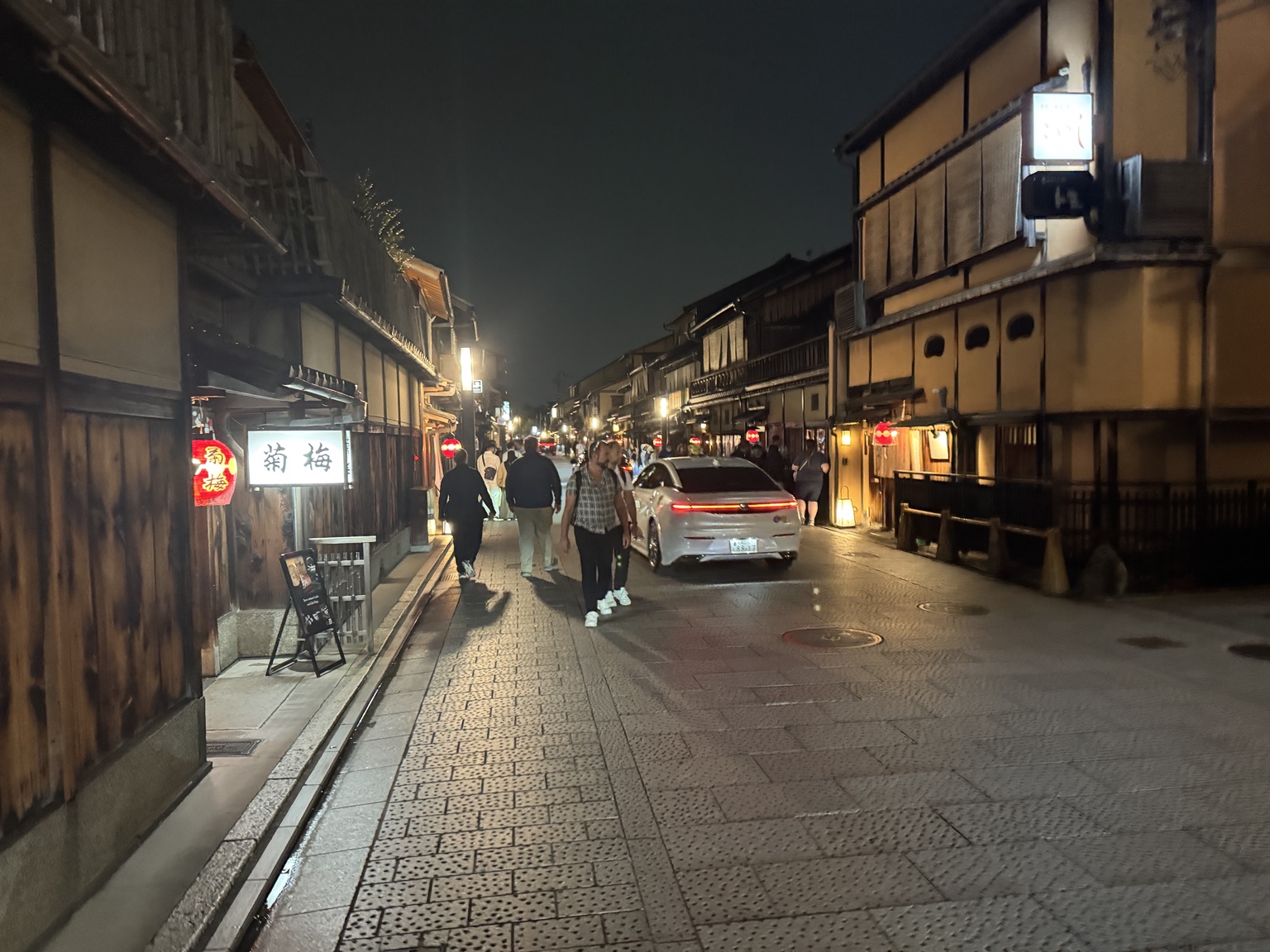
Gion with lanterns and old wooden façades
A notice at a private lane
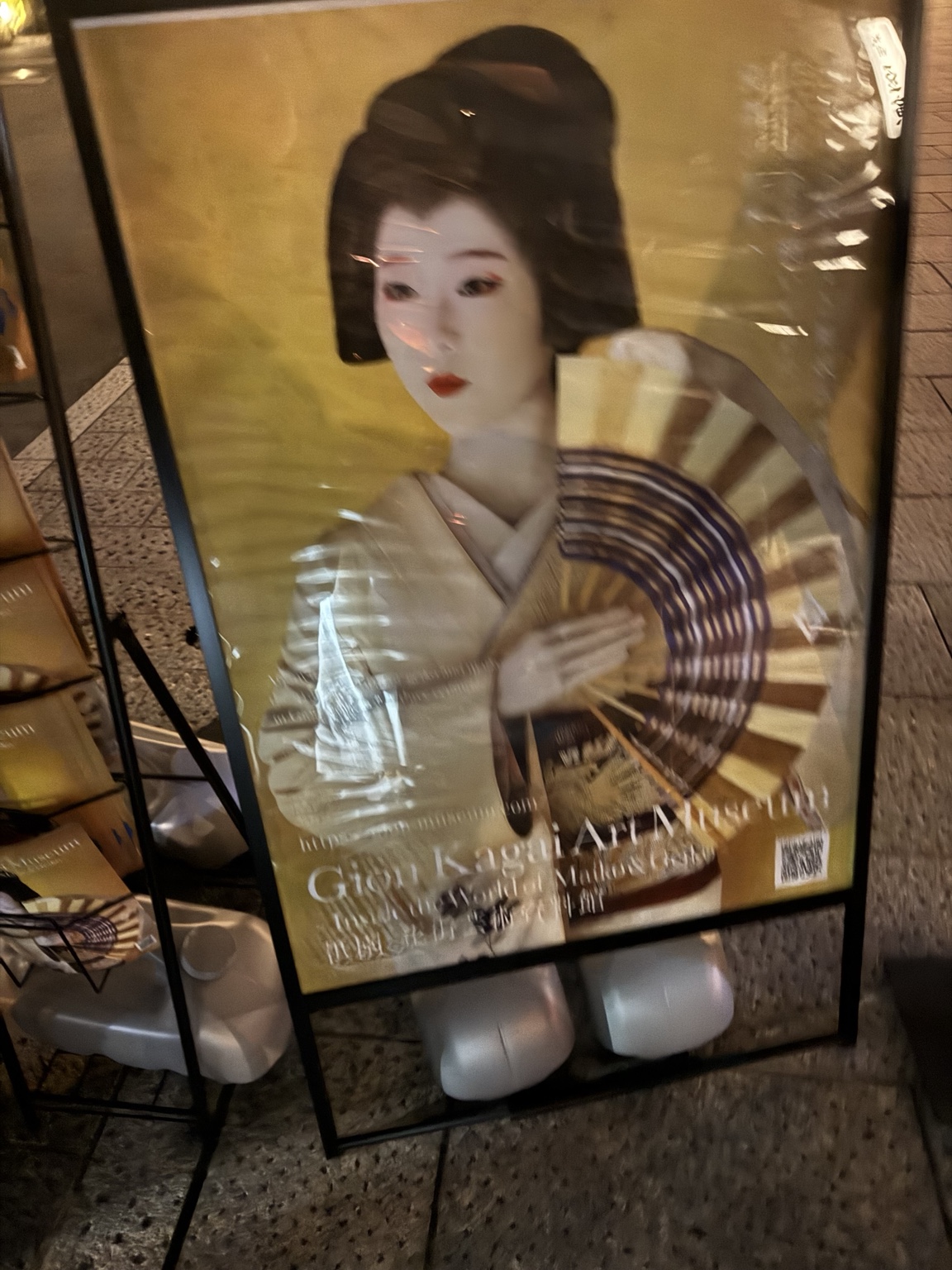
A poster for Gion Kagai Art Museum
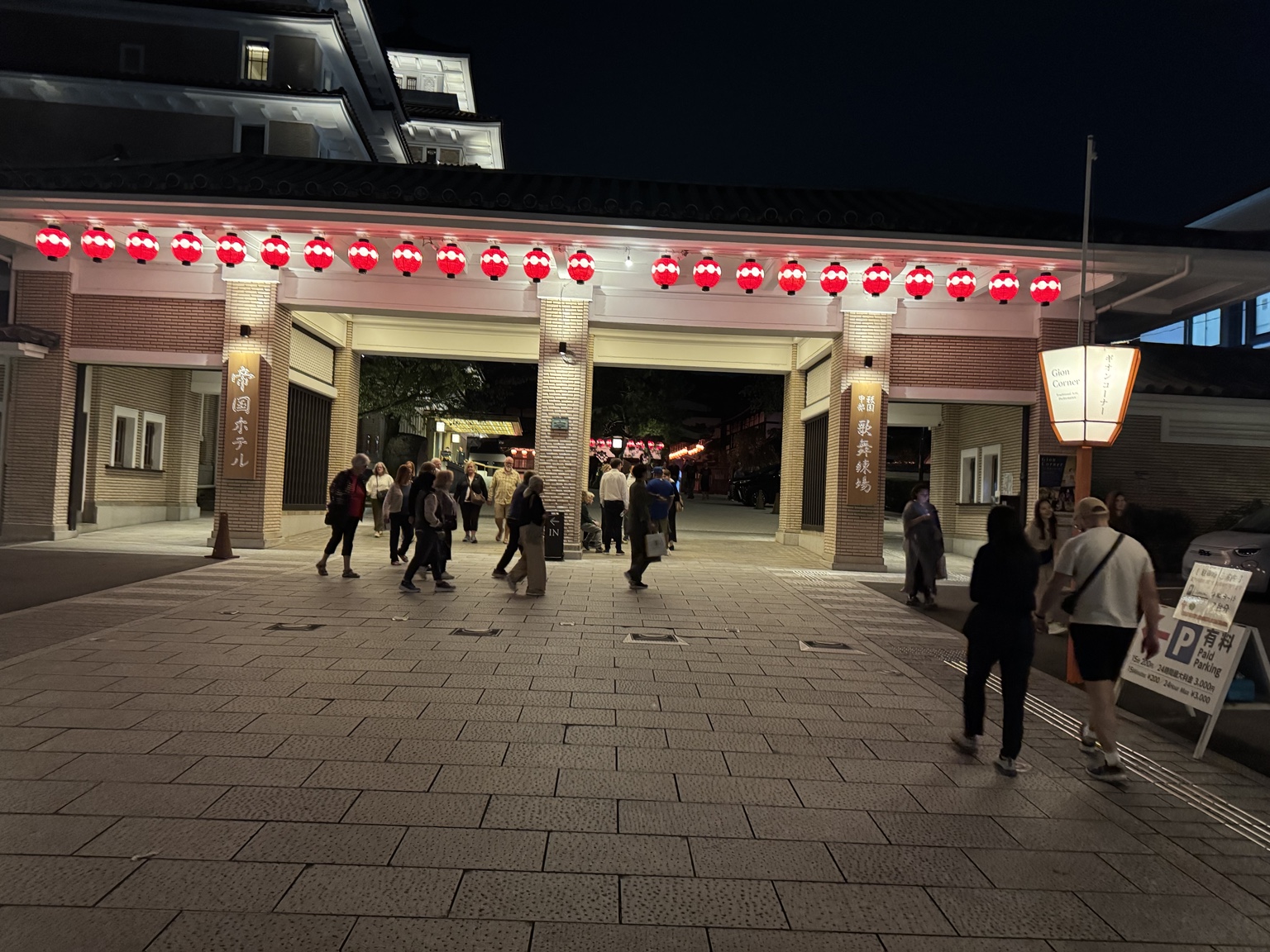
Gion Corner beneath red lanterns

Exhibition background: Kyoto National Museum – The Tale of Genji

← Previous chapter · All chapters · Chapter 25: Kyoto in the Morning →
October 17, 2026 0 comments
0 FacebookTwitterPinterestEmail
Journals

Japan-Tagebuch 24: Von Prinz Genji zu den Laternen von Gion

by KURT GASSNER October 17, 2026
written by KURT GASSNER

Deutsch | English

16. Oktober 2026 · Kyoto

Kurt und Anneliese in einer schmalen Gasse

Heute haben wir uns Kyoto zu Fuß vorgenommen. Und Kyoto uns offenbar auch. Am Abend waren wir jedenfalls ziemlich müde. Aber dazwischen lag ein Tag voller kleiner Entdeckungen, für die man sich Zeit nehmen muss: eine märchenhafte Ausstellung, schmale Gassen, alte Holzhäuser, winzige Eingänge und immer wieder etwas, das einen stehen bleiben lässt.

Am Vormittag besuchten wir im Nationalmuseum gegenüber unserem Hotel die Genji-Ausstellung. Im Mittelpunkt steht die Geschichte vom Prinzen Genji, einer der großen Klassiker Japans. Murasaki Shikibu schrieb sie vor mehr als tausend Jahren; häufig wird sie als erster Roman der Welt bezeichnet. Sie erzählt von Hikaru Genji, dem ‚strahlenden Prinzen‘, seinen Liebesbeziehungen und den menschlichen Verwicklungen am Kaiserhof. Gemälde, Handschriften und kunstvolle Gegenstände zeigen, wie weit diese Geschichte in die japanische Kultur hineingewirkt hat. Eine märchenhafte Welt – und ein besonderer Auftakt für unseren Tag in Kyoto.

Danach ging es hinaus in die Stadt. Schon die Teepause war ein kleines Bild für sich. Leuchtend grüner Matcha in einer dunklen, unregelmäßig geformten Keramikschale. Dazu Obst, sorgfältig aufgefächert, und kleine Süßigkeiten. In den Auslagen standen kunstvolle Gebilde, manche wie winzige Türmchen, andere in Schälchen oder hohen Gläsern. Hier bekommt selbst eine kleine Pause ihren eigenen Rahmen.

Dann ging es weiter durch die alten Gassen. Die Häuser stehen dicht beieinander, mit verwitterten Holzbrettern, schmalen Fenstern und Bambusrollos vor den oberen Stockwerken. Manchmal reicht der Blick nur bis zur nächsten Biegung. Gerade das macht neugierig. Was kommt dahinter?

Besonders schön war es am Wasser. Die Zweige der Weiden hängen tief über den Bach, am Ufer stehen die alten Häuser, und kleine Brücken führen direkt zu den Eingängen. Vor einem Haus mit einem hellvioletten Türvorhang war ein Mann damit beschäftigt, die Zweige eines Baumes zu schneiden. Ein ganz alltäglicher Moment in einer Umgebung, die für uns wie eine andere Welt wirkt.

Zwischendurch öffnet sich der Blick über den Fluss. Nach den schmalen Gassen plötzlich so viel Himmel und Weite. An den Ufern sitzen Menschen, andere spazieren oder fahren mit dem Rad. Auf der einen Seite drängen sich die Häuser am Wasser, gegenüber stehen Bäume, und in der Ferne sieht man die Berge. Auch das ist Kyoto: Man kommt aus einem Gewirr von kleinen Straßen und kann auf einmal weit durchatmen.

Dabei liegt das alte Japan mitten im heutigen Alltag. Vor den Holzfassaden hängen Bambusrollos, darüber ziehen sich Stromleitungen kreuz und quer durch die Luft. Gleich daneben stapeln sich die Schilder kleiner Lokale über mehrere Stockwerke. Vor einem Eingang stehen auf Puppen pastellfarbene Kimonos mit Spitze und Rüschen. Zwischen alten Teehäusern, Bars und solchen verspielten Auslagen gibt es ständig etwas Neues zu entdecken.

Eine Rikscha am Wasser: große Räder, schwarzes Verdeck und roter Stoff auf dem Sitz. Wir blieben bei unseren eigenen Füßen. Die sollten sich später noch melden.

Unterwegs auch ein kleiner Laden, in dem Anneliese an einem runden Holztisch Platz nahm. Ringsum Bilder in goldenen Rahmen, verzierte Dosen, Engel und eine alte Waage vor dem Fenster. ‚Angel Library‘ stand auf einem der Bilder. Ein verspielter, fast märchenhafter Raum, in dem sich auf wenigen Quadratmetern erstaunlich viel entdecken ließ.

Am Abend bekam Gion dann noch einmal eine andere Stimmung. Rote Laternen leuchteten vor den dunklen Fassaden, warmes Licht fiel auf das Pflaster. Die alten Teehäuser wirkten von außen zurückhaltend, fast verschlossen. Gerade dadurch beginnt die Fantasie zu arbeiten.

Die Geisha-Kultur hat für mich etwas besonders Faszinierendes. Beim Schlendern durch diese Gassen fühlt man sich in eine frühere Zeit zurückversetzt. Man schaut auf die Bambusrollos und stellt sich vor, dass dahinter vielleicht eine Geisha sitzt und uns Vorübergehende beobachtet. Wir schauen neugierig auf die Häuser – und vielleicht schaut jemand genauso neugierig zurück. Ein Gedanke, der gut zu diesem Viertel passt, das einem so viel zeigt und doch vieles verborgen hält.

Manche schmalen Privatgassen sind für Besucher gesperrt. Wenn man den Andrang sieht, versteht man das gut. Hinter diesen Fassaden leben und arbeiten Menschen. Auch in einem so bezaubernden Viertel braucht es Rückzugsorte.

Später haben wir in einem alten Teehaus sehr gut gegessen. Nach all dem Schauen und Gehen war das ein schöner Abschluss.

Anneliese hatte inzwischen schon ein wenig gestöhnt und gejammert über die viele Lauferei. Und ja, am Ende waren wir beide müde. Gion lässt sich eben leichter mit den Augen genießen als mit den Füßen.

Trotzdem: Es war jeden Schritt wert.

Unterwegs in Kyoto

Holzfassaden mit Bambusrollos
Pastellfarbene Kimonos vor einem Eingang
Alte und moderne Fassaden in Kyoto
Grüner Matcha in einer dunklen Keramikschale
Teepause mit Obst und Süßigkeiten
Kunstvoll gestaltete Süßspeisen in der Auslage
Weidenzweige über dem Wasser
Rikscha am Wasser
Rikscha am Wasser
Rikscha und Begleiter auf dem Uferweg
Ein schmaler Restauranteingang
Brücke zu einem Haus und Baumpflege am Ufer
Anneliese im kleinen Laden mit Engelmotiven
Weiter Blick über den Fluss und die Uferwege
Eine bunte Barfassade mit Spiegelung
Dessertauslage mit hohen Gläsern
Moderne Architektur in Kyoto
Überdachte Einkaufspassage
Dekorative Fächer in der Auslage
Schmale Gasse am Abend
Gion mit Laternen und alten Holzfassaden
Hinweisschild an einer privaten Gasse
Plakat für Gion Kagai Art Museum
Gion Corner im Licht roter Laternen

Hintergrund zur Ausstellung: Kyoto National Museum – The Tale of Genji

← Vorheriges Kapitel · Alle Kapitel · Kapitel 25: Kyoto am Vormittag →
October 17, 2026 0 comments
0 FacebookTwitterPinterestEmail
Newer Posts
Older Posts

Recent Posts

  • Japan Diary 33: Five Floors of Art and Ice Cream with a Footbath
  • Japan-Tagebuch 33: Fünf Etagen Kunst und Eis mit Fußbad
  • Japan Diary 32: Tokyo at Full Speed, Hakone at Our Own Pace
  • Japan-Tagebuch 32: Tokio im Eiltempo, Hakone zum Durchatmen
  • Japan Diary 31: Kanazawa – Samurai, Sweets and a Moment of Stillness

Recent Comments

No comments to show.

Archives

  • October 2026
  • August 2026

Categories

  • Books
  • Country club
  • english
  • English
  • English films
  • Entrepreneurship & Brands
  • Films
  • French
  • German
  • German
  • German-films
  • Journals
  • Journeys & Stories
  • Mind & Soul
  • Our Stories
  • Reflections
  • Spanish
  • Travel stories
  • Unkategorisiert

Keep in touch

Facebook Twitter Instagram Pinterest Youtube Email

Search

Recent Posts

  • Japan Diary 33: Five Floors of Art and Ice Cream with a Footbath

  • Japan-Tagebuch 33: Fünf Etagen Kunst und Eis mit Fußbad

  • Japan Diary 32: Tokyo at Full Speed, Hakone at Our Own Pace

  • Japan-Tagebuch 32: Tokio im Eiltempo, Hakone zum Durchatmen

  • Japan Diary 31: Kanazawa – Samurai, Sweets and a Moment of Stillness

Newsletter

Categories

  • Books (20)
    • English (11)
    • Entrepreneurship & Brands (7)
    • French (1)
    • German (7)
    • Journeys & Stories (9)
    • Mind & Soul (4)
    • Spanish (1)
  • Country club (2)
    • english (1)
    • German (1)
  • Films (20)
    • English films (14)
    • German-films (6)
  • Journals (64)
  • Our Stories (12)
    • Travel stories (12)
  • Reflections (2)
  • Unkategorisiert (2)

JOIN THE JOURNEY

New journeys, honest reflections and short audio inspirations—sent occasionally, never excessively.

Subscribe to the newsletter

EXPLORE

  • Home
  • Journey
    • Destinations
    • Stories
    • Films
    • audio journey
    • Future journey
  • Insights
    • Stop Waiting Principles
    • Brand Auditor
    • Leadership
    • Creativity
    • Human Behaviour
    • Entrepreneurship
  • Mind • Body • Soul
    • Mind
    • Body
    • Soul
  • Books
  • Daily inspirations
  • About
  • Contact Us

QUICK LINKS

  • News
  • Privacy Policy
  • Terms & Conditions
  • Imprint / Legal Notice
  • Cookie Policy
  • News
  • Privacy Policy
  • Terms & Conditions
  • Imprint / Legal Notice
  • Cookie Policy

STAY CONNECTED

Follow the daily inspirations, behind-the-scenes stories, and updates

SOCIAL

Facebook X-twitter Youtube Linkedin Tiktok

© 2026 STOP WAITING Operated by: Trendguide KG All rights reserved.

STOP WAITING
  • Home
  • Journey
    • Destinations
    • Stories
    • Films
    • audio journey
    • Future journey
  • Insights
    • Stop Waiting Principles
    • Brand Auditor
    • Leadership
    • Creativity
    • Human Behaviour
    • Entrepreneurship
  • Mind • Body • Soul
    • Mind
    • Body
    • Soul
  • Books
  • Daily inspirations
  • About
  • Contact Us